Basic problem-solving Worksheets for Ages 6-9
3 filtered results
-
From - To
Unlock your child's potential with our engaging Basic Problem-Solving Worksheets designed for ages 6-9! These worksheets provide interactive and fun exercises that enhance critical thinking and reasoning skills. Each activity is tailored to promote logical thinking, allowing young learners to approach challenges confidently. From puzzles to simple real-life scenarios, our diverse range of tasks encourages creativity while strengthening essential problem-solving abilities. Ideal for home or classroom use, these worksheets not only boost academic performance but also foster a love for learning. Start your child’s journey toward becoming a problem solver today with our captivating, easy-to-use worksheets!
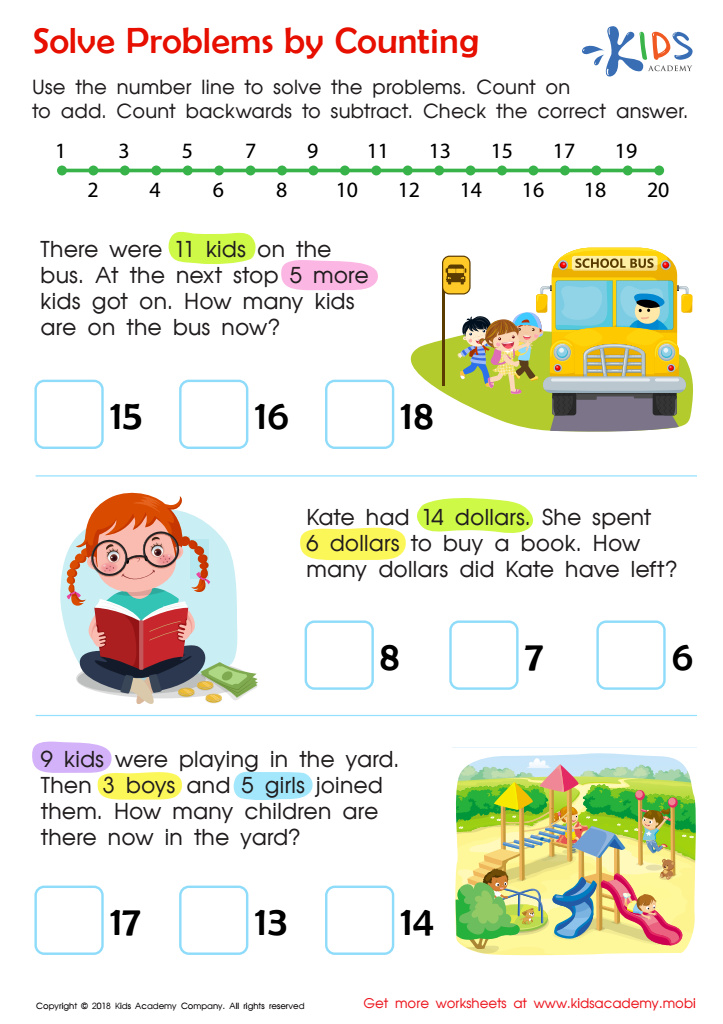
Solve Problems by Counting Worksheet
 Assign to My Students
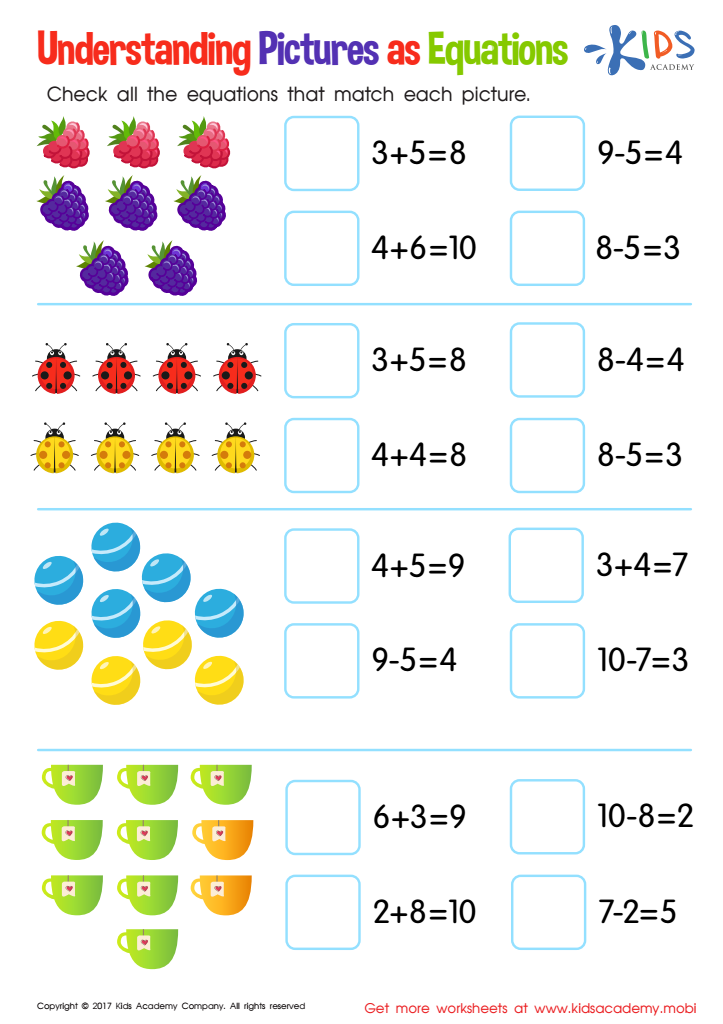
Understanding Pictures as Equations Worksheet
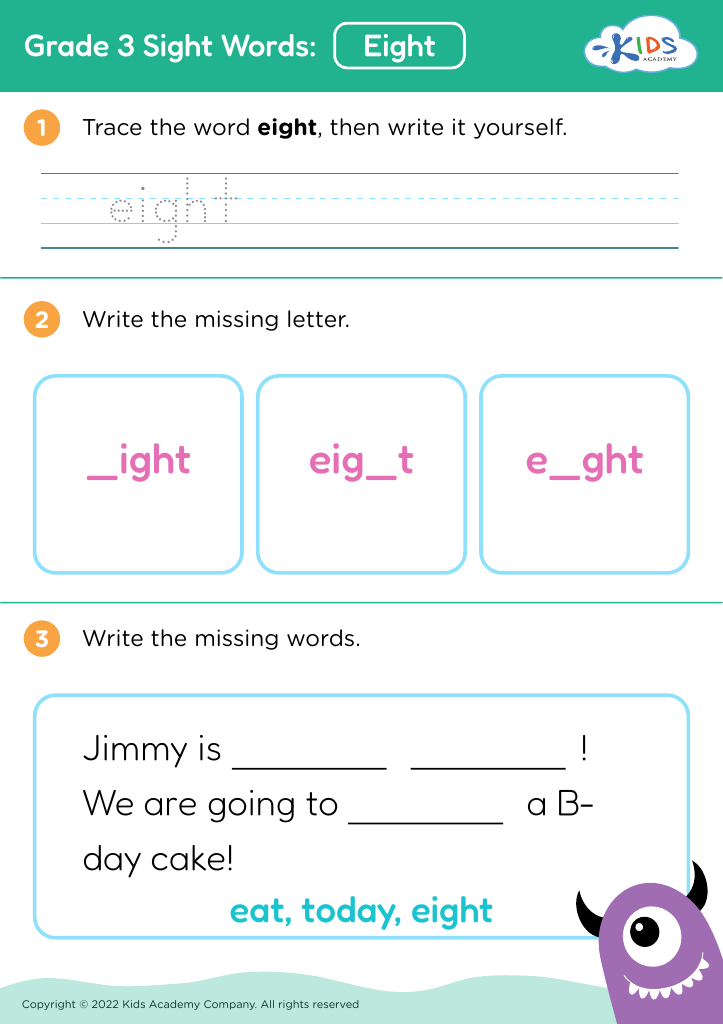







Basic problem-solving skills are essential for children aged 6-9 as they lay the foundation for critical thinking, resilience, and life skills. At this stage, children are developing cognitive abilities and are increasingly capable of tackling more complex tasks. By fostering problem-solving skills, parents and teachers encourage independent thinking, which helps children learn to navigate everyday challenges, both academic and social.
Engaging in problem-solving activities aids in improving cognitive functions such as reasoning, analysis, and decision-making. When children approach problems methodically, they develop a mindset that encourages perseverance and adaptability. This resilience is crucial in a world where challenges and setbacks are inevitable.
Moreover, problem-solving fosters collaboration and communication. When working through problems together—whether in pairs or groups—children learn to express their ideas and listen to others, promoting teamwork.
For parents and teachers, it’s vital to integrate problem-solving into everyday activities, as it not only enhances academic performance but also builds self-confidence in children. A strong foundation in problem-solving equips children with skills they will use throughout their lives, helping them grow into effective, solution-oriented individuals. Nurturing these abilities now ultimately contributes to a well-rounded, capable future generation.








