
Character analysis Worksheets for Ages 6-9
6 filtered results
Difficulty Level
Grade
Age
-
From - To
Subject
Activity
Standards
Unlock your child's imagination with our engaging character analysis worksheets designed specifically for ages 6-9! These interactive resources encourage young learners to explore and understand the personalities, motivations, and relationships of characters in their favorite stories. Each worksheet stimulates critical thinking, boosts comprehension skills, and cultivates a love for reading. With fun illustrations and thought-provoking questions, kids will analyze characters and relate their traits to their own lives. Perfect for both home and classroom use, these worksheets offer valuable insights while making learning enjoyable. Dive into character analysis and watch your child's storytelling skills flourish!
Favorites
With answer key
Interactive
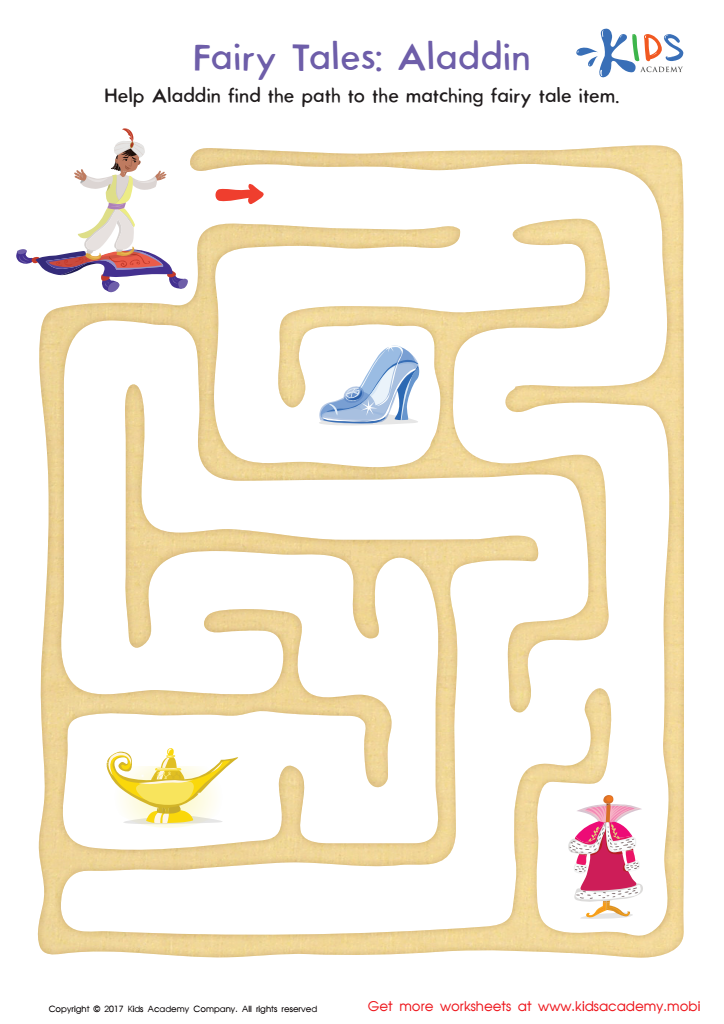
Fairy Tales Aladdin Printable
Test your child's reading recall with this challenge: the Aladdin maze worksheet! Guide your learner to identify objects linked to the story, then ask them to retell it afterwards. Hone those memory skills while having fun!
 Assign to My Students
Fairy Tales Aladdin Printable
Worksheet
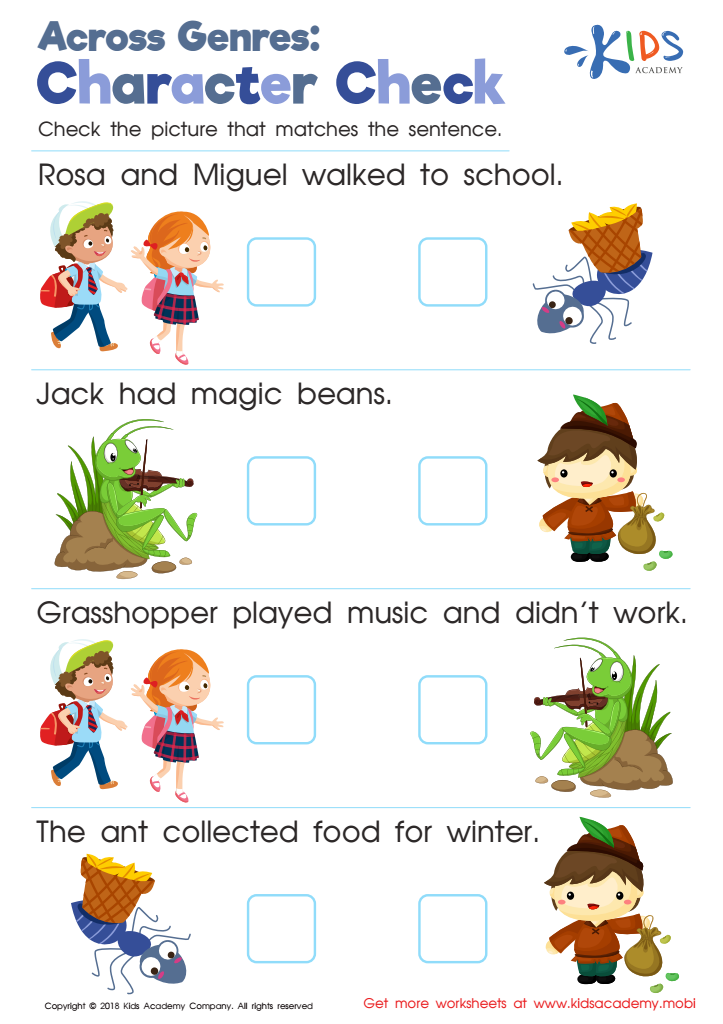
Across Genres: Character Check Worksheet
Read the sentences to your kids, then have them match the pictures to them. Ask them to look at the pictures and help them check which one goes with the sentence. The aim is to see how well they can do this exercise. (80 words)
Across Genres: Character Check Worksheet
Worksheet
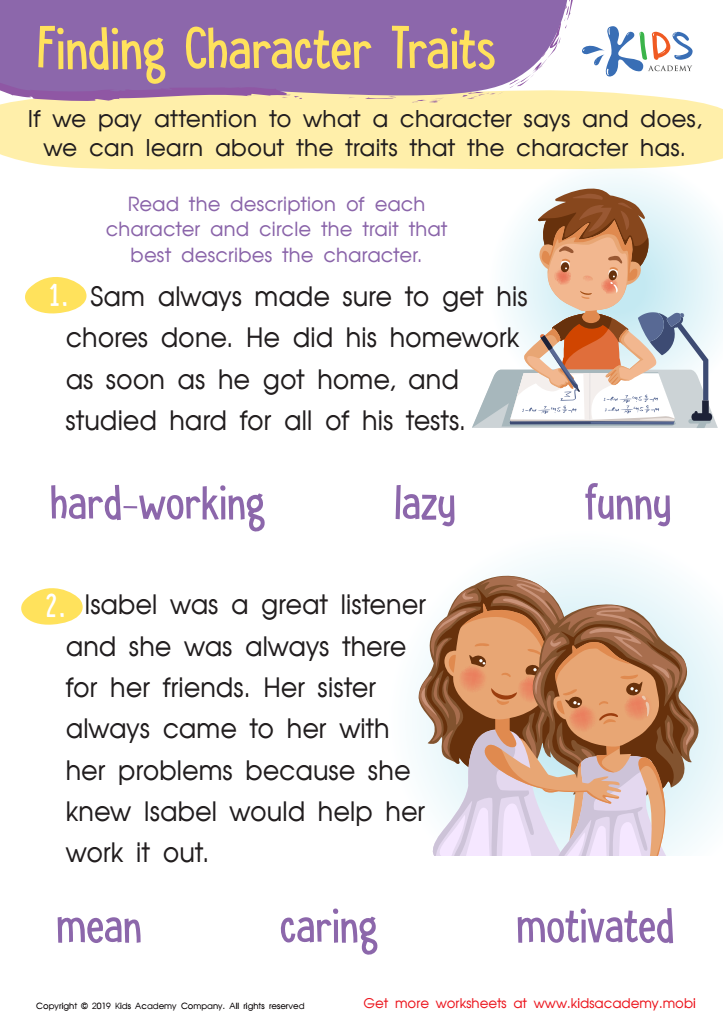
Finding Character Traits Worksheet
Before you start, make sure your kids know the difference between a character trait and a feeling. Traits are part of a character's entire personality and can be inferred from what they say and do in a story. Read the character descriptions on the worksheet and help your kids circle the best trait for each.
Finding Character Traits Worksheet
Worksheet
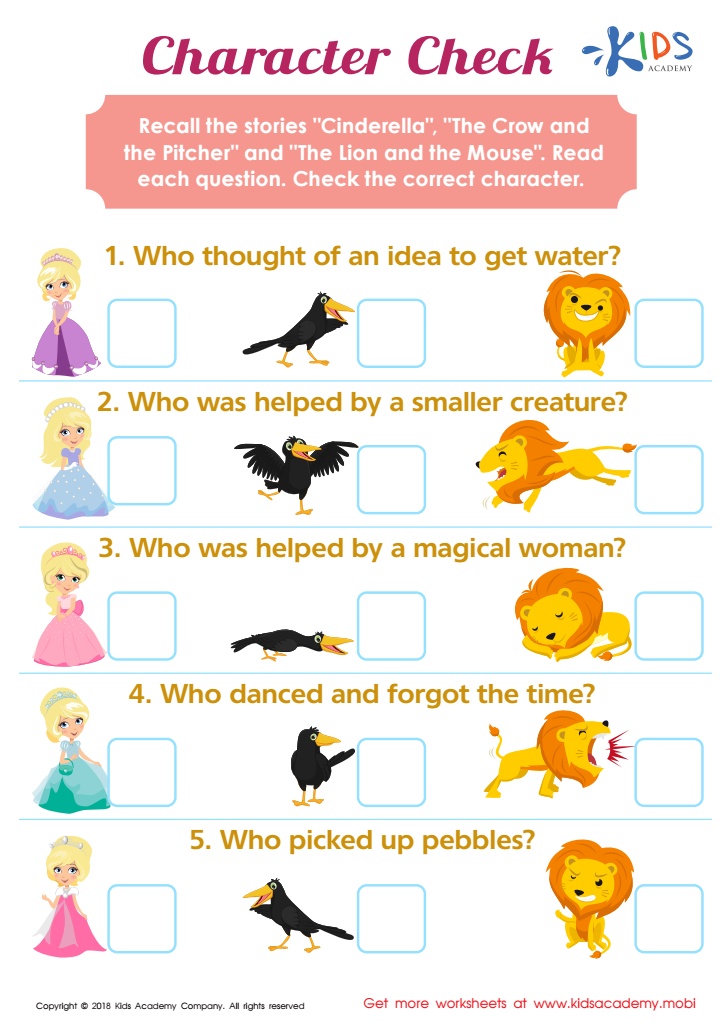
Character Check Worksheet
Ensure your child has read "Cinderella," "The Crow and the Pitcher" and "The Lion and the Mouse" before using this worksheet to assess their reading comprehension and characterization skills. Read each question and have them check the box next to the correct character to complete the task!
Character Check Worksheet
Worksheet
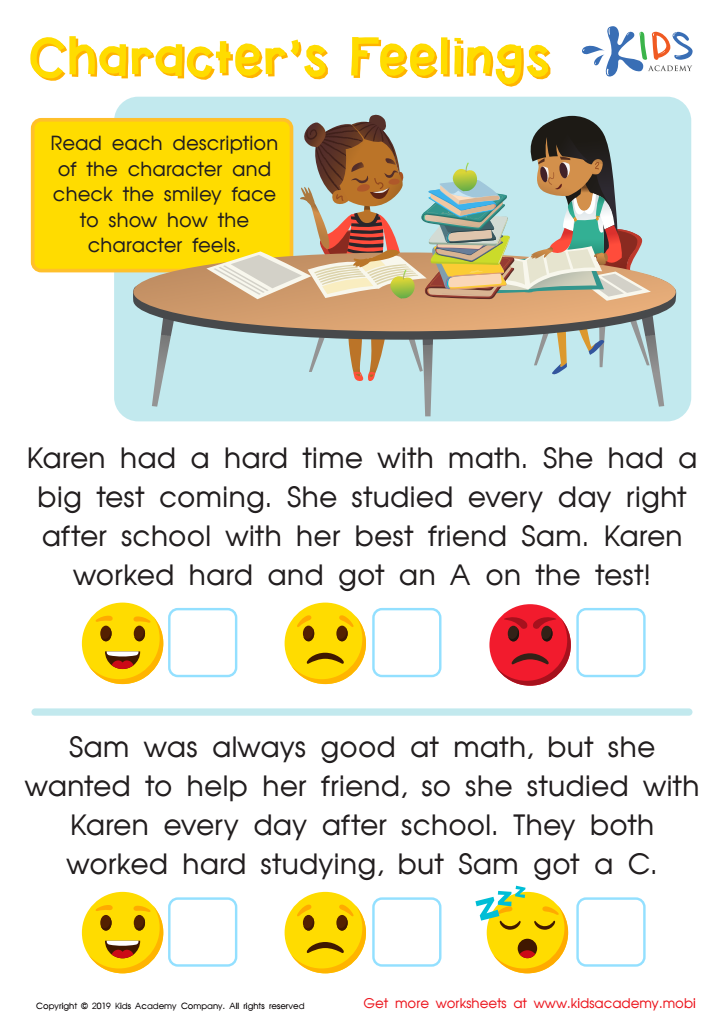
Character’s Feelings Worksheet
To help your child with reading and writing, encourage them to read simple texts and comprehension passages. This will help them learn new words, build their grammar and practice their reading skills. Go through a worksheet together, read the character descriptions then ask your child to pick the smiley face which shows how the character feels.
Character’s Feelings Worksheet
Worksheet
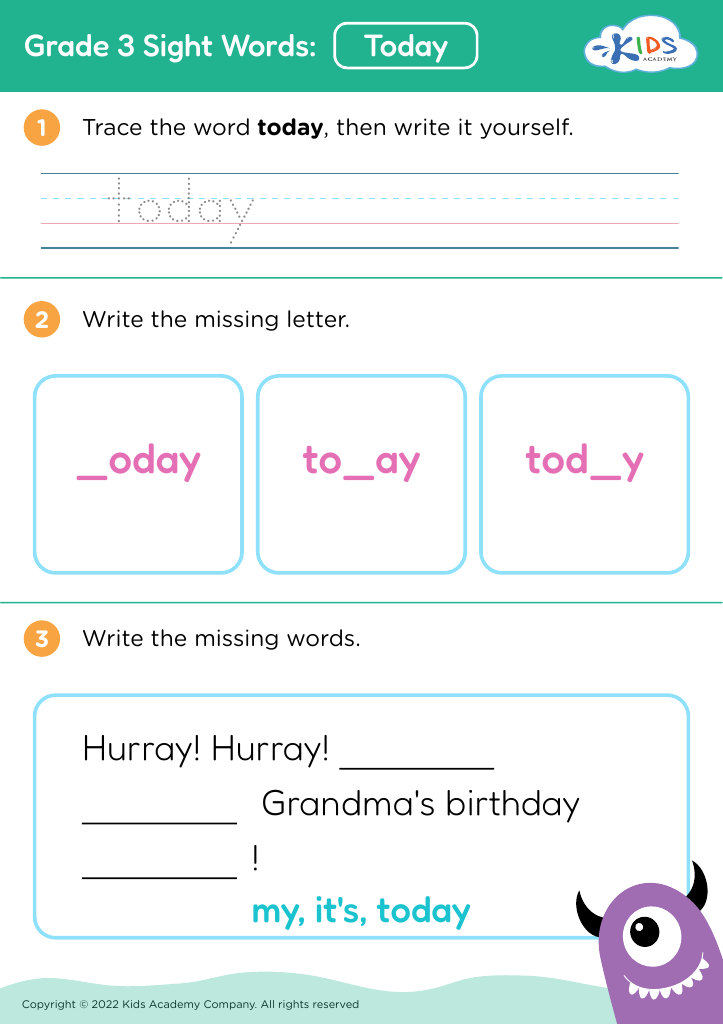
Join Kids Academy for Free
Who is primarily going to use this learning content?







Character analysis for children aged 6-9 is essential for fostering emotional intelligence and critical thinking skills. At this age, children begin to understand complex emotions, motivations, and interpersonal relationships, which are crucial for their social development. By examining characters in stories, children learn to empathize—recognizing and understanding both their feelings and the responses of others. This practice fosters a connection to moral and ethical values, helping them differentiate right from wrong.
Moreover, character analysis encourages reflective thinking. As children identify with or critique characters' actions and choices, they learn to articulate their ideas, enhancing their verbal skills and overall communication. This analysis also supports the development of problem-solving strategies, as children consider different perspectives and outcomes based on character decisions.
Teachers and parents should emphasize this skill as it not only enriches literary experiences but also equips children with tools to navigate their social worlds. They become better friends, listeners, and peers, which is vital for collaborative experiences in and out of school. Ultimately, character analysis cultivates a generation of thoughtful individuals who are not only academically prepared but also emotionally intelligent and socially aware.








