
Cognitive skill development Worksheets for Ages 6-9
5 filtered results
Difficulty Level
Grade
Age
-
From - To
Subject
Activity
Standards
Unlock your child’s potential with Kids Academy's cognitive skill development worksheets for ages 6-9. Our expertly designed printable resources focus on nurturing crucial brain functions such as memory, attention, problem-solving, and logical thinking. Each worksheet combines engaging activities with educational content to keep young learners motivated and eager to explore new concepts. Perfect for classroom use or at-home practice, our worksheets align with core educational standards to ensure your child gains essential foundational skills. Whether it's through puzzles, memory games, or logical challenges, your child will enjoy learning while developing critical cognitive abilities that set the stage for lifelong success.
Favorites
With answer key
Interactive
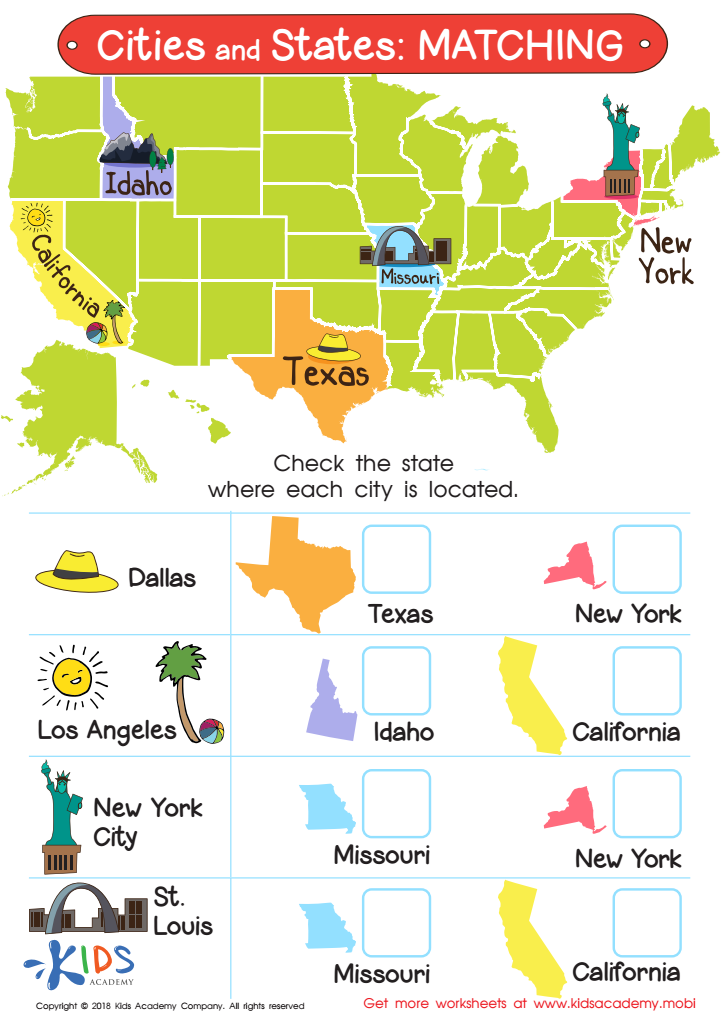
Cities and States: Matching Worksheet
Ask your child if they can name some of the states in your country. If they can, great! If not, use this worksheet to have them learn some states. Show them the map and ask them to observe the shape and color of each state. Then, have them answer the questions by checking the state where each city is located.
 Assign to My Students
Cities and States: Matching Worksheet
Worksheet
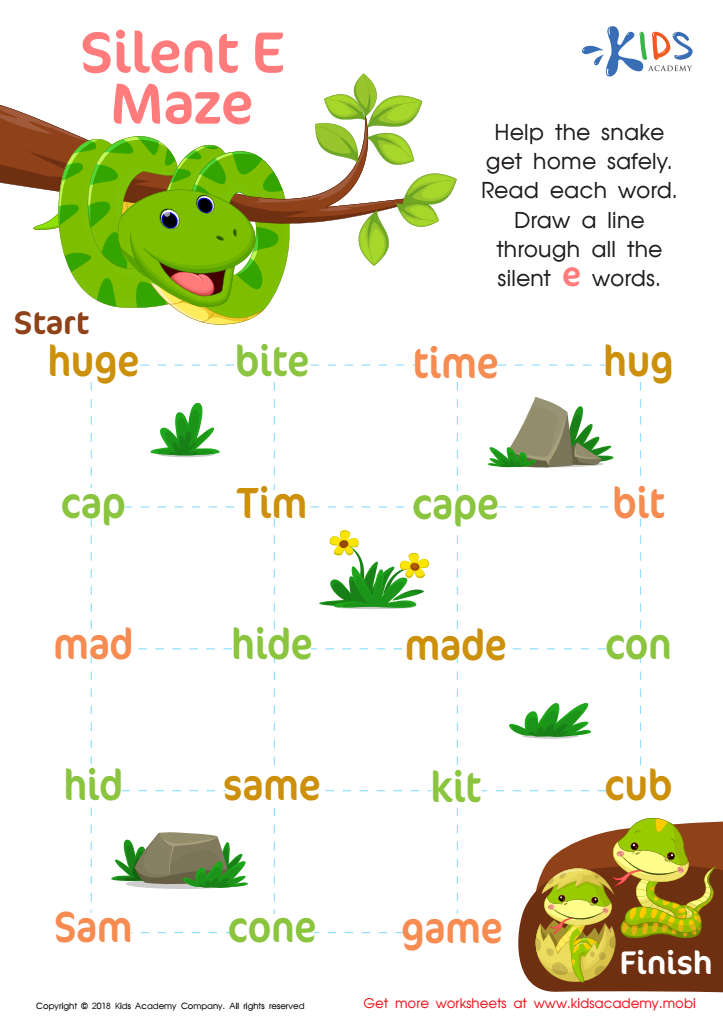
Silent E Maze Worksheet
Kids love mazes! This fun printable worksheet lets them help a mama snake get home to her babies, using Silent E words. They'll practice fine motor skills, while they draw lines through words that have Silent E and words with closed syllables that don't. It's a great way to help them recognize Silent E words!
Silent E Maze Worksheet
Worksheet
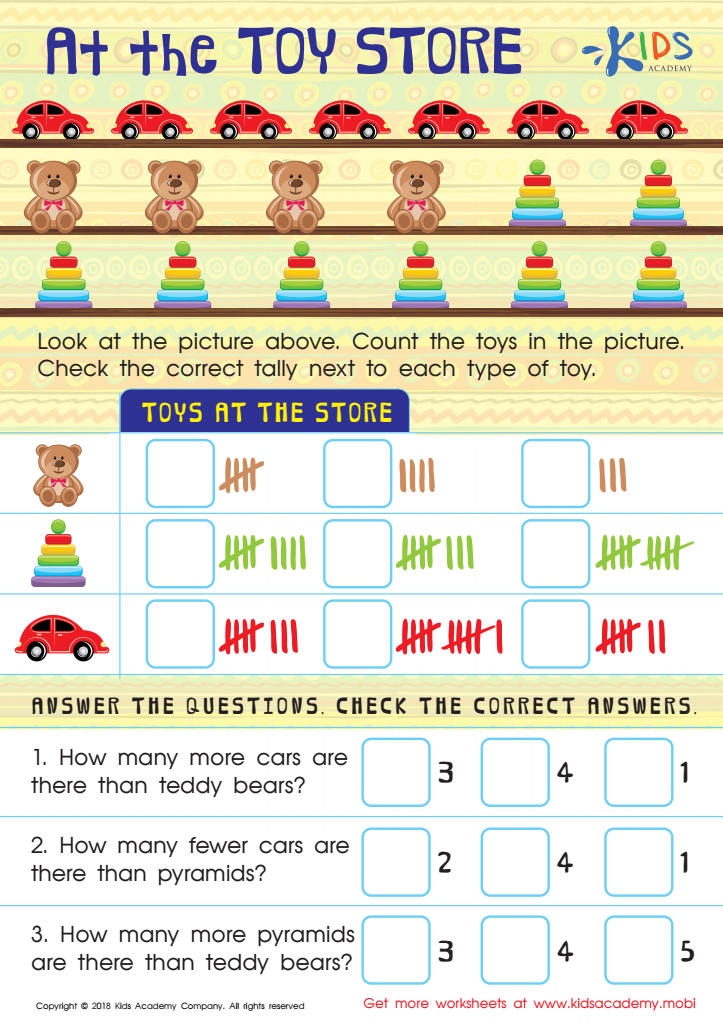
Tally Chart: At the Toy Store Worksheet
Kids Academy has a fun worksheet to help kids practice counting and using tally marks! They can think about the number of toys and compare them. At the bottom, help them answer the questions about the toys on this math page. It's an easy way to learn that one tally mark equals one item.
Tally Chart: At the Toy Store Worksheet
Worksheet
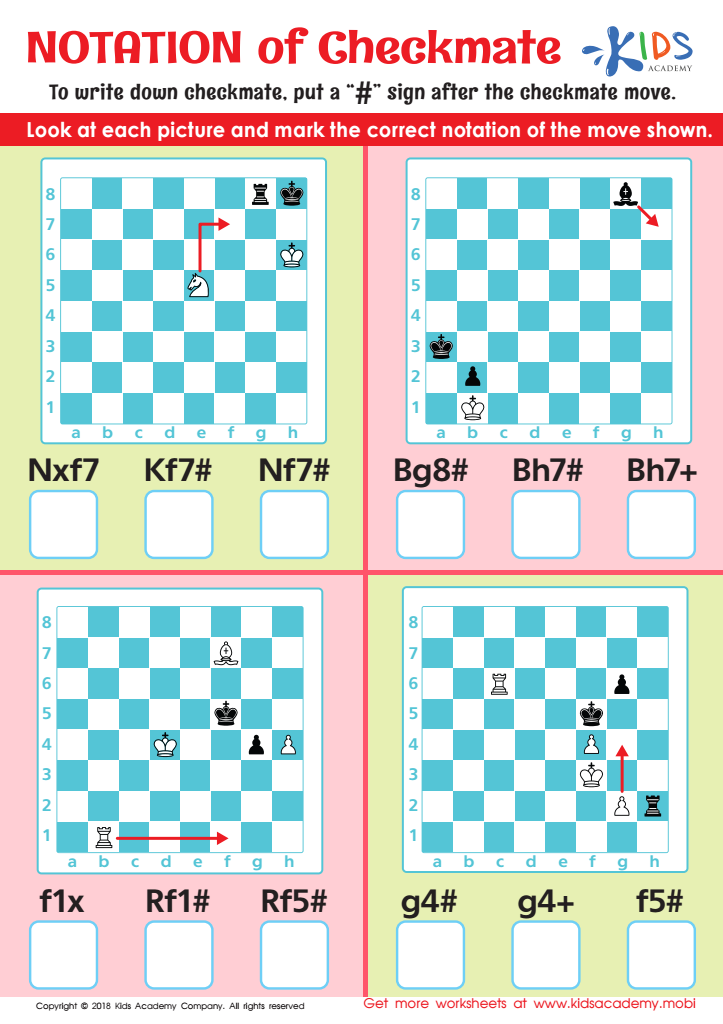
Notation of Checkmate Worksheet
Checkmate is the thrilling, ultimate move in chess! Teach your child to make it and notate it properly with this free worksheet. They'll love being able to capture the king and it's great for brain-building too! Have them look at the sample boards and place a # sign after the checkmate move for notation.
Notation of Checkmate Worksheet
Worksheet
Join Kids Academy for Free
Who is primarily going to use this learning content?








Cognitive skill development for children aged 6-9 is crucial because it forms the foundation for lifelong learning and problem-solving abilities. During this period, children are in the early stages of formal education and are absorbing new information rapidly. Parents and teachers who prioritize cognitive development help enhance children's ability to think critically, understand concepts, and apply knowledge in practical situations.
Firstly, cognitive skills such as memory, attention, and logical thinking are essential for academic success. Children who develop these skills are more likely to excel in subjects like math, reading, and science. For instance, a strong memory supports better retention of facts and concepts learned in class.
Secondly, cognitive development fosters social and emotional well-being. As children improve their problem-solving skills, they gain confidence and become more independent. This independence translates into better social interactions, as they can navigate challenges and relationships more effectively.
Moreover, early cognitive development has long-term benefits, including improved mental agility and creative thinking. Engaging activities such as puzzles, reading, and educational games stimulate brain development and set the stage for advanced learning and innovation in later years.
In summary, prioritizing cognitive skill development for ages 6-9 not only boosts immediate academic performance but also equips children with essential tools for emotional resilience and lifelong intellectual growth.








