Comparative skills Worksheets for Ages 6-9
3 filtered results
-
From - To
Enhance your child’s learning experience with our comprehensive Comparative Skills Worksheets, designed specifically for ages 6-9. These engaging resources help young learners grasp the concepts of comparison through fun activities focused on distinguishing similarities and differences. With a variety of exercises, including images, written prompts, and interactive tasks, children will develop critical thinking and analytical skills in an enjoyable way. Our worksheets encourage exploration while aligning with educational standards, making them perfect for homeschooling or classroom use. Inspire curiosity and learning—download these worksheets today and watch your child thrive as they improve their comparative reasoning skills!
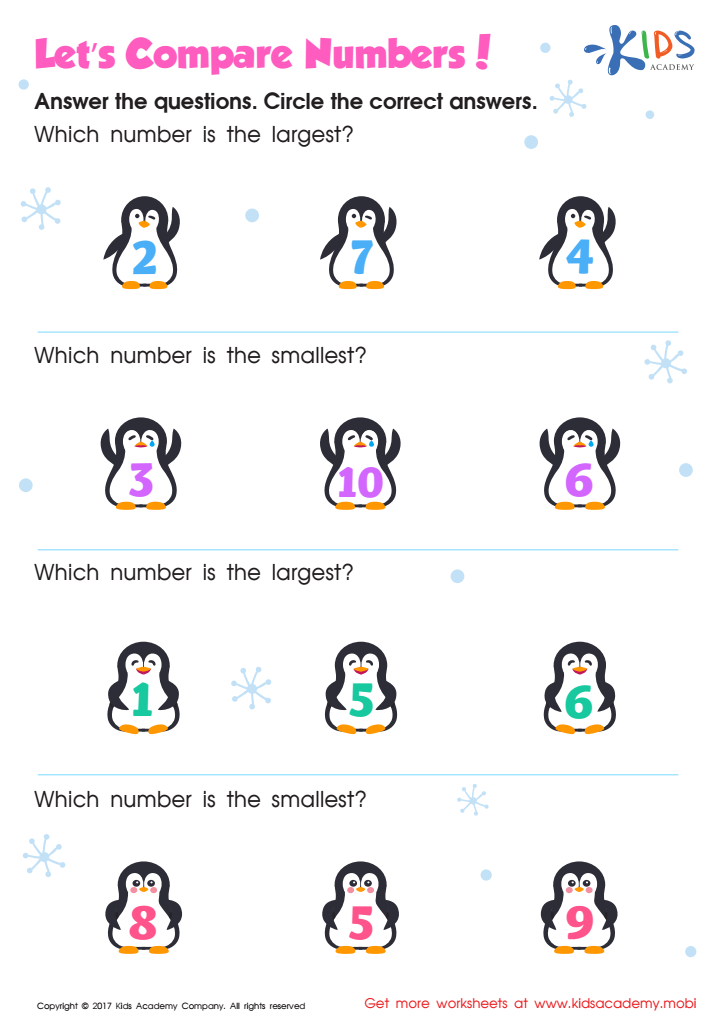
Comparing Numbers 1–10 Worksheet Kindergarten
 Assign to My Students
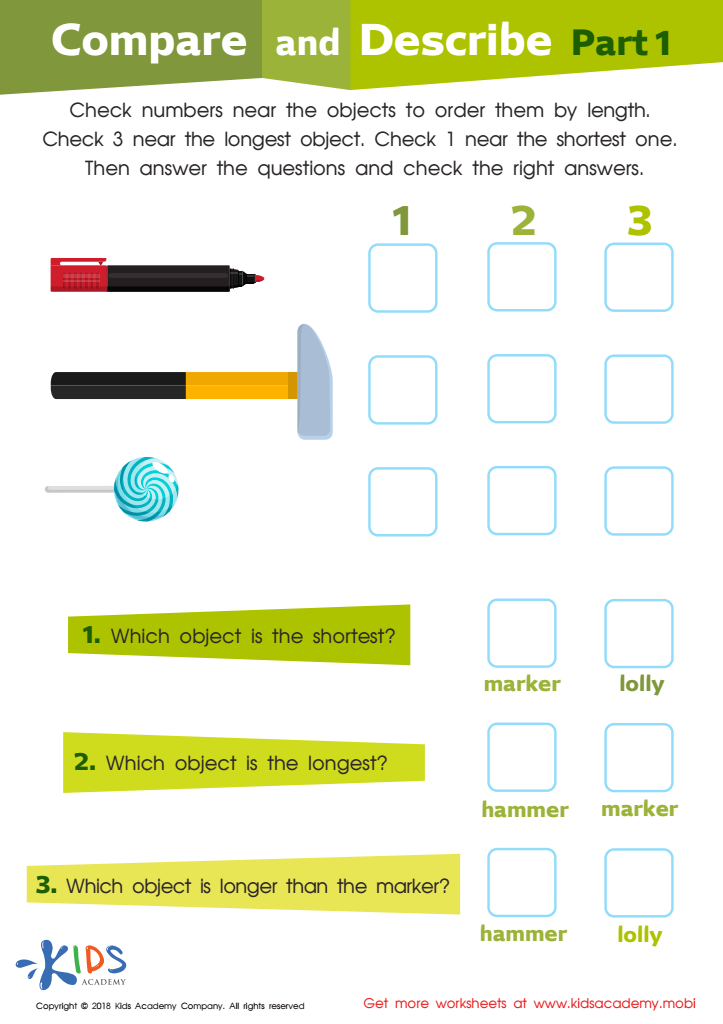
Compare and Describe: Part 1 Worksheet
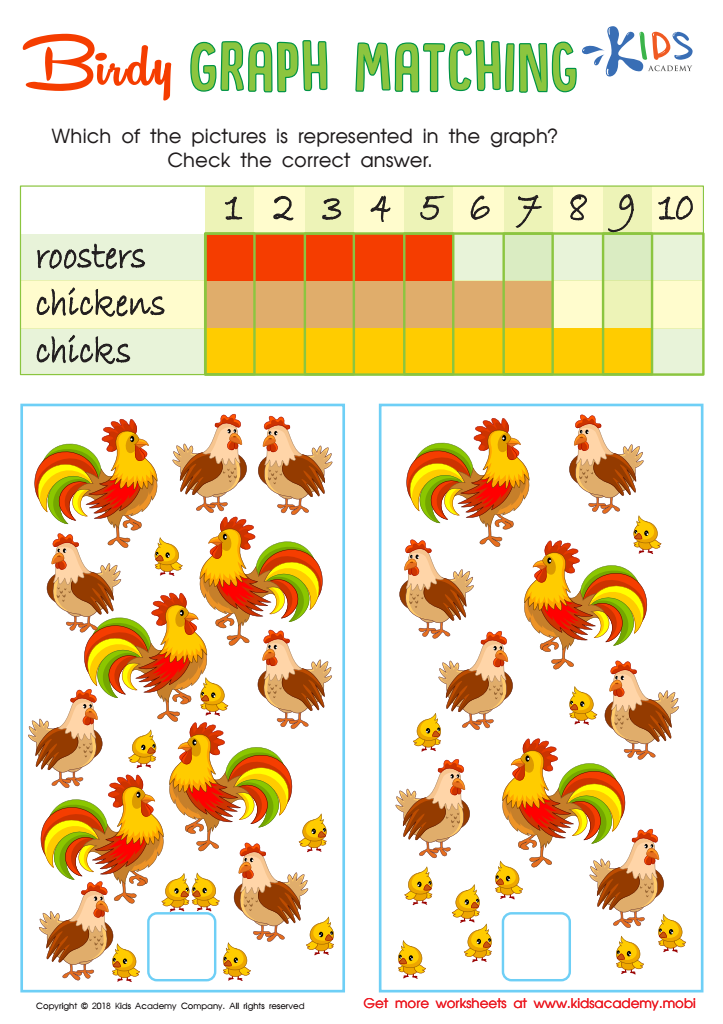
Birdy Graph Matching Worksheet






Comparative skills are crucial for children aged 6-9 as they facilitate critical thinking and cognitive development. At this stage, children begin to grasp the concepts of size, quantity, and quality through comparisons, which lays the foundation for understanding mathematics and science. By developing these skills, children learn to categorize, analyze, and evaluate information.
Understanding comparative skills encourages children to make connections between different concepts, thus enhancing their problem-solving abilities. This cognitive flexibility allows them to adapt their thinking to new situations, a vital skill for future learning. Furthermore, comparative thinking fosters communication and social interaction. When children articulate their comparisons, they practice vocabulary, enhance language skills, and learn to express their ideas clearly.
For parents and teachers, nurturing comparative skills can lead to more engaged and confident learners. Activities such as sorting objects, discussing similarities and differences in stories, or comparing sizes and shapes in nature can be integrated into everyday learning. Supporting children in this way helps stimulate curiosity, encouraging them to explore and ask questions about the world around them. In essence, honing comparative skills in early education sets children on the path toward lifelong learning and valuable analytical skills.








