Counting shapes Worksheets for Ages 6-9
3 filtered results
-
From - To
Enhance your child’s mathematical skills with our engaging Counting Shapes Worksheets for Ages 6-9 at Kids Academy! Our carefully designed worksheets are perfect for young learners to master basic geometry and counting through fun, interactive activities. Children will enjoy identifying, counting, and categorizing various shapes, helping them build strong foundational skills in math. Each worksheet is tailored to meet the developmental needs of kids, promoting visual learning and critical thinking. Suitable for home or classroom use, these worksheets provide an excellent resource for parents and teachers alike. Make learning exciting and effective with Kids Academy's Counting Shapes Worksheets!
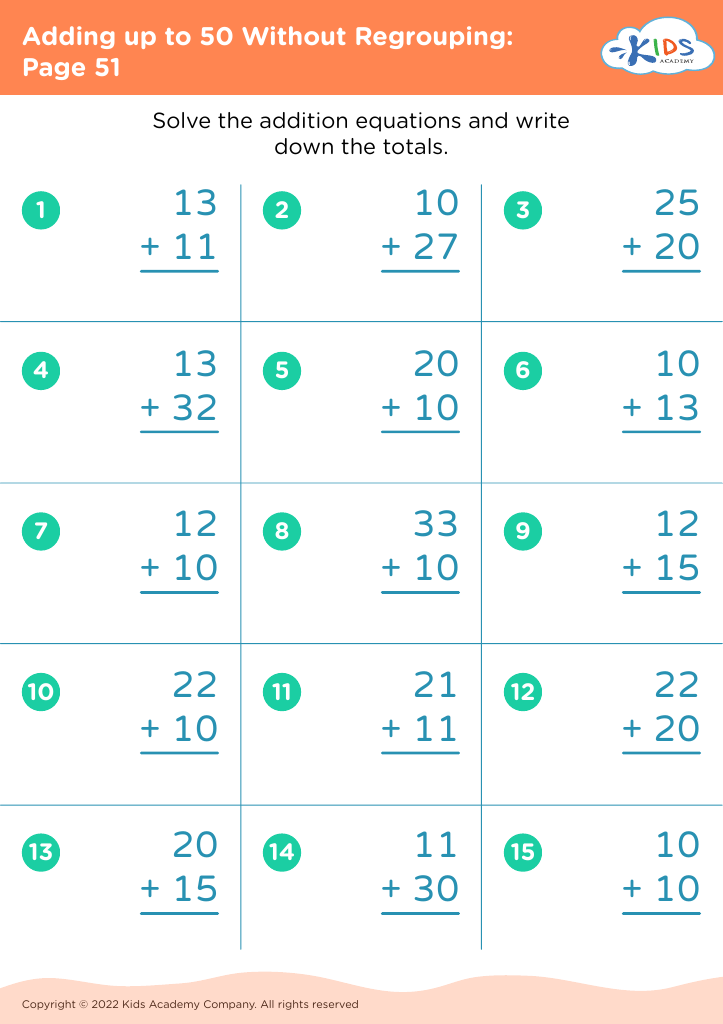
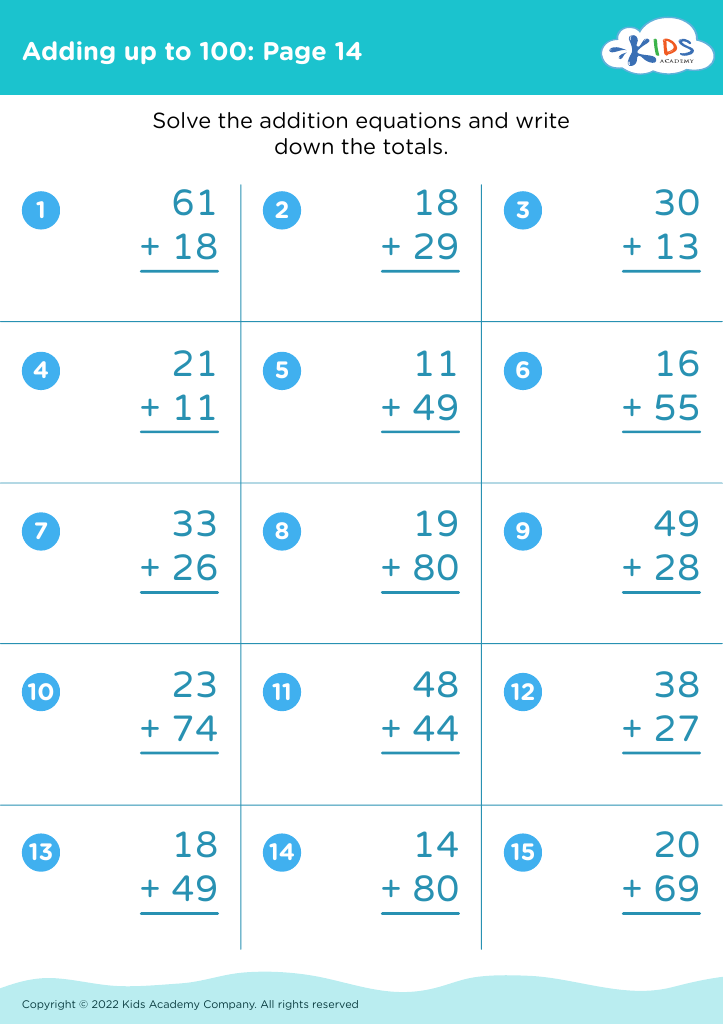
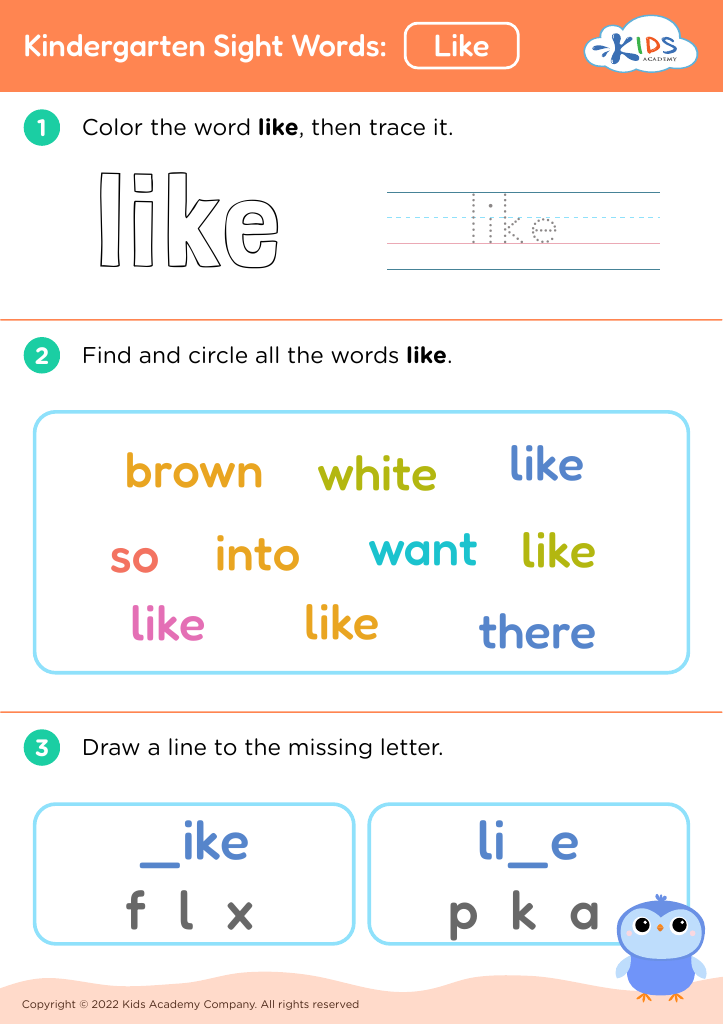








Counting shapes for children aged 6-9 is essential for several developmental reasons. At this stage, kids are building foundational math skills that are crucial for their future academic success. Engaging in activities that involve counting shapes helps them understand various mathematical concepts such as geometry, number sense, and spatial awareness.
Geometry, which involves understanding shapes and their properties, is a critical part of the elementary math curriculum. By counting shapes, children learn to recognize and distinguish between different geometric figures, which in turn supports their learning in more complex topics later on. For example, identifying a triangle and counting its sides helps them understand the concept of polygons, a skill they will build on in later grades.
Number sense, the ability to understand and work with numbers, is also enhanced through shape-counting exercises. When children count sides or corners, they practice basic arithmetic skills like addition and subtraction in a concrete and engaging way.
Moreover, spatial awareness, which involves understanding the positions of shapes in space, is vital for everyday activities and problem-solving in subjects like science, technology, and engineering. Counting shapes can bolster children's ability to visualize patterns and understand the spatial relations of objects.
Therefore, incorporating counting shapes in activities or lessons is beneficial as it fosters a comprehensive mathematical foundation and supports broader cognitive development.








