Counting skills Worksheets for Ages 6-9 - Page 17
389 filtered results
-
From - To
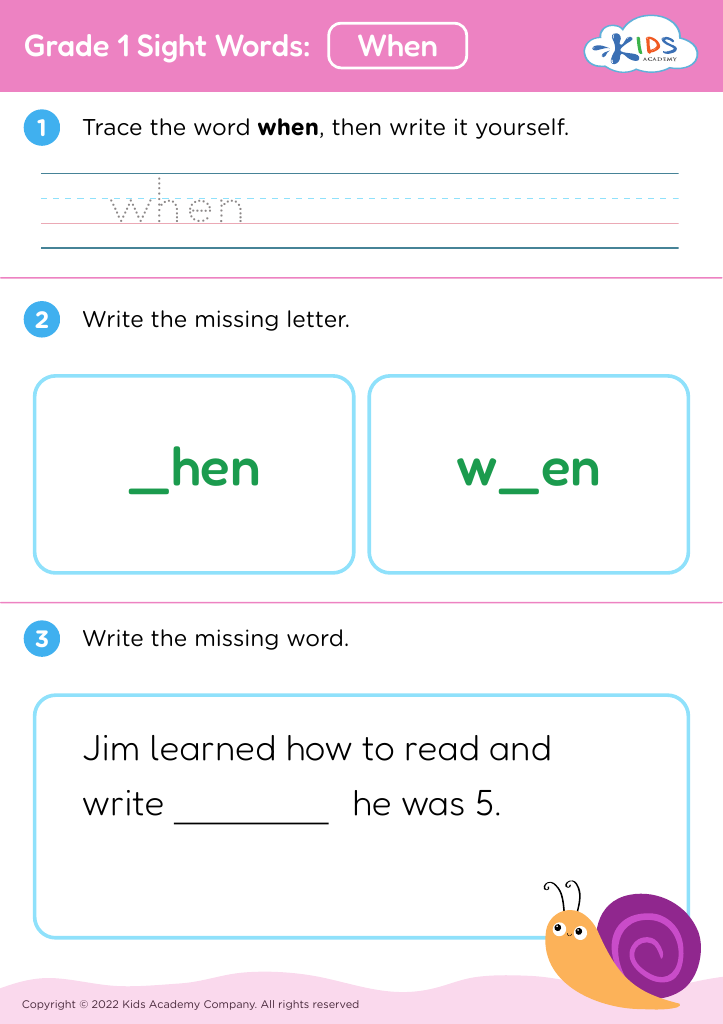








Counting skills are fundamental for children ages 6-9, laying the groundwork for their mathematical understanding. Parents and teachers should prioritize these skills because they are essential for everyday life and academic success. At this age, children begin to grasp number sense, recognizing quantity and relationships between numbers, which is crucial for problem-solving and critical thinking.
Developing strong counting skills boosts confidence in young learners. When they can confidently count and manipulate numbers, they're more likely to actively participate in classroom activities and tackle more complex math concepts. Moreover, these skills enhance cognitive development, improving memory and concentration through practice in sequential ordering and pattern recognition.
Furthermore, counting skills permeate various subjects beyond math, contributing to reading (number words), science (measuring), and even social studies (understanding timelines). Through games, everyday activities, and structured lessons, parents and teachers can make counting engaging and relevant, fostering a lifelong appreciation for learning.
Finally, an emphasis on counting skills can help identify learning challenges early on, allowing for timely interventions that ensure every child has a solid foundation in mathematics, which will serve them throughout their educational journey and beyond.








