Detail identification Worksheets for Ages 6-9
4 filtered results
-
From - To
Discover our engaging Detail Identification Worksheets designed specifically for children aged 6-9! These interactive resources help young learners sharpen their observation skills, critical thinking, and attention to detail through fun exercises. Each worksheet features bright, eye-catching visuals and educational activities that make learning enjoyable while enhancing cognitive abilities. Perfect for reinforcing classroom lessons or enriching home learning, these worksheets encourage kids to analyze pictures and texts, fostering their ability to distinguish subtle differences. Encourage your child's growth and confidence with our thoughtfully crafted Detail Identification Worksheets that pave the way for future learning success. Explore today for a brighter tomorrow!
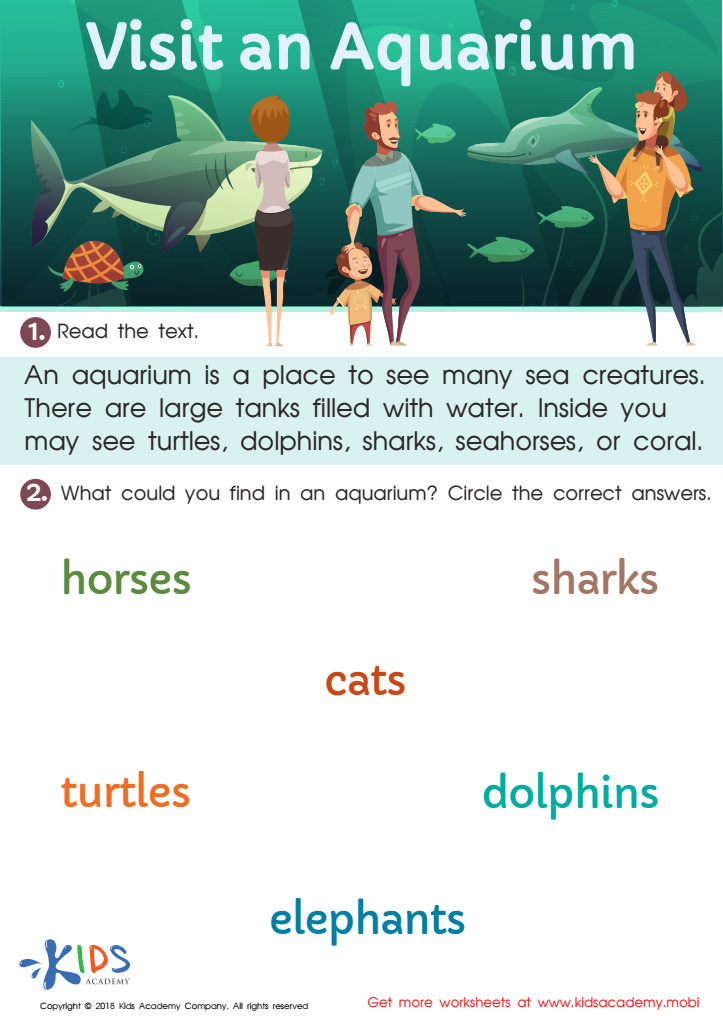
Visit an Aquarium Worksheet
 Assign to My Students
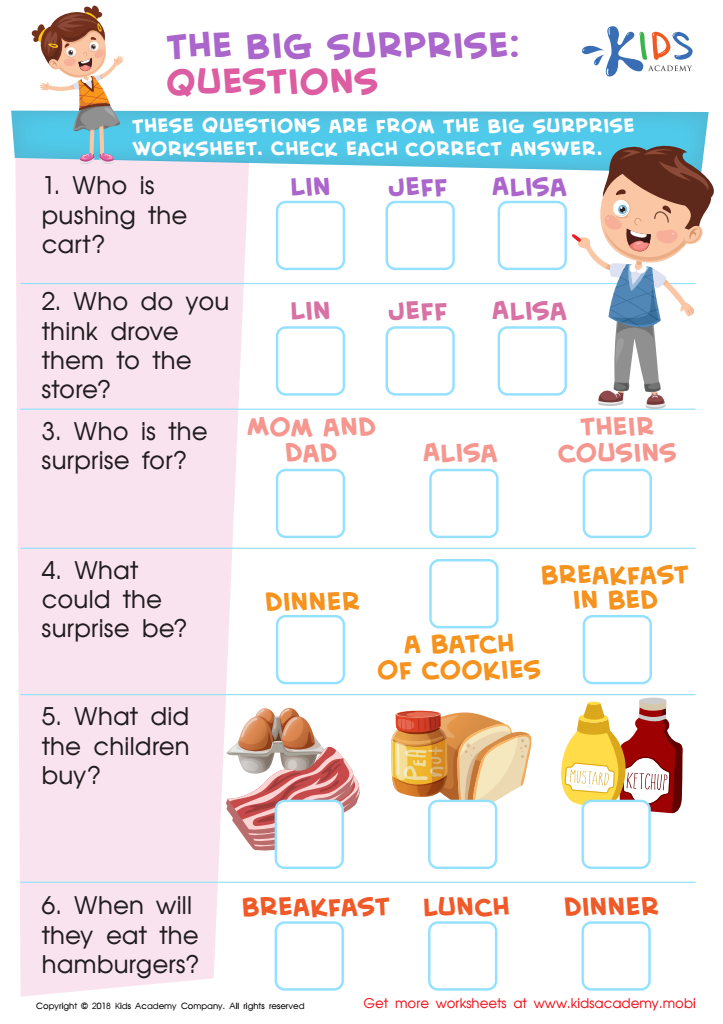
The Big Surprise: Questions Worksheet
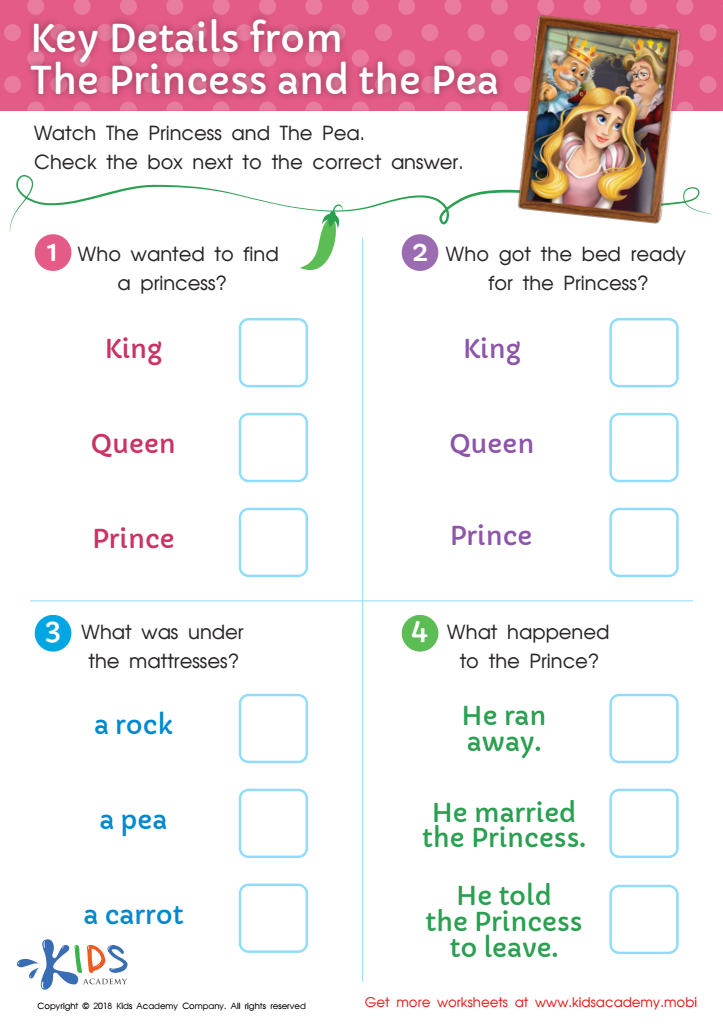
Key Details from the Princess and the Pea Worksheet
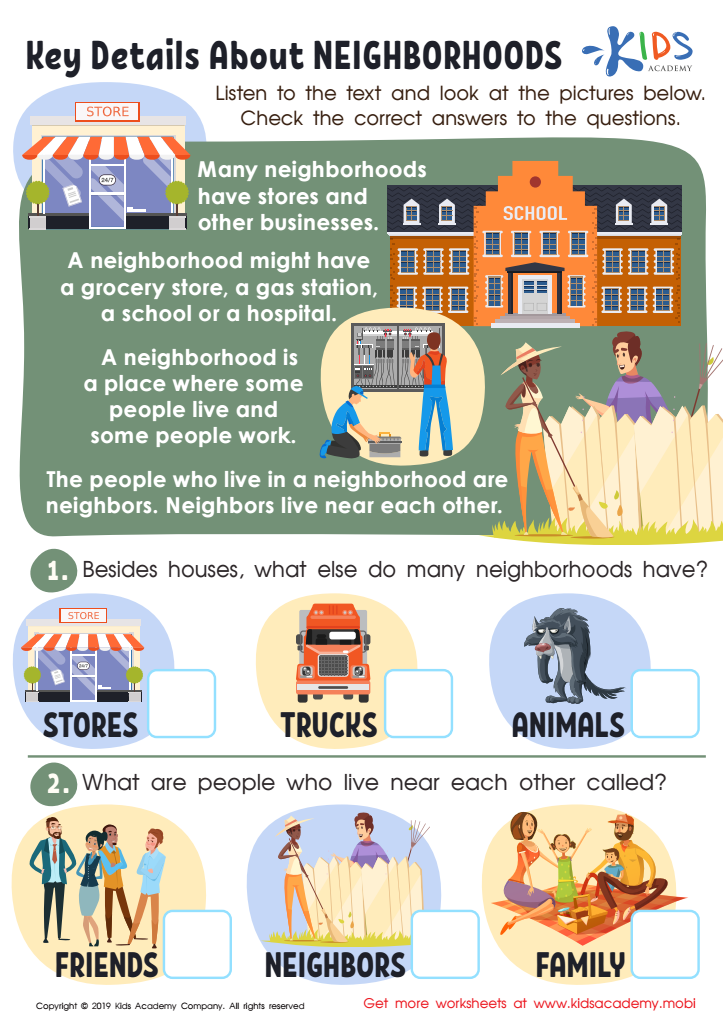
Key Details Neighborhoods Worksheet




%20(1).jpg)

Detail identification is a crucial skill for children aged 6-9 as it lays the foundation for critical reading and comprehension abilities. At this age, children are transitioning from learning to read to reading to learn, making the ability to identify and understand details essential for their academic growth.
When children focus on specific details within texts, they enhance their understanding of the main ideas and can draw inferences from what they read. This skill not only aids in reading comprehension but also supports their ability to summarize information, respond to questions, and engage in discussions about the material.
For parents and teachers, promoting detail identification encourages active engagement with reading materials, fostering a love for learning. It empowers children to pay attention to their environment, improving observation skills in various subjects such as science, history, and even social interactions.
Additionally, strong detail identification skills aid in crucial life skills such as listening, following instructions, and problem-solving. Engaging children in activities that emphasize recognizing important elements in stories or information equips them with tools for lifelong learning and critical thinking. Overall, supporting detail identification from an early age promotes academic success and enriches children's overall cognitive development.








