
Drawing conclusions Worksheets for Ages 6-9
3 filtered results
Difficulty Level
Grade
Age
-
From - To
Subject
Activity
Standards
Discover our engaging "Drawing Conclusions Worksheets" designed specifically for children aged 6-9! These worksheets aim to enhance critical thinking skills by guiding young learners in making inferences and drawing conclusions from texts and images. Each activity encourages children to think analytically, helping them connect information presented in different formats. With colorful illustrations and age-appropriate exercises, our worksheets make learning fun and enjoyable. Perfect for classroom use or at-home learning, these resources will boost your child’s comprehension abilities and foster a love for reading. Explore our collection today and support your child's educational journey with enjoyable, skill-building activities!
Favorites
With answer key
Interactive
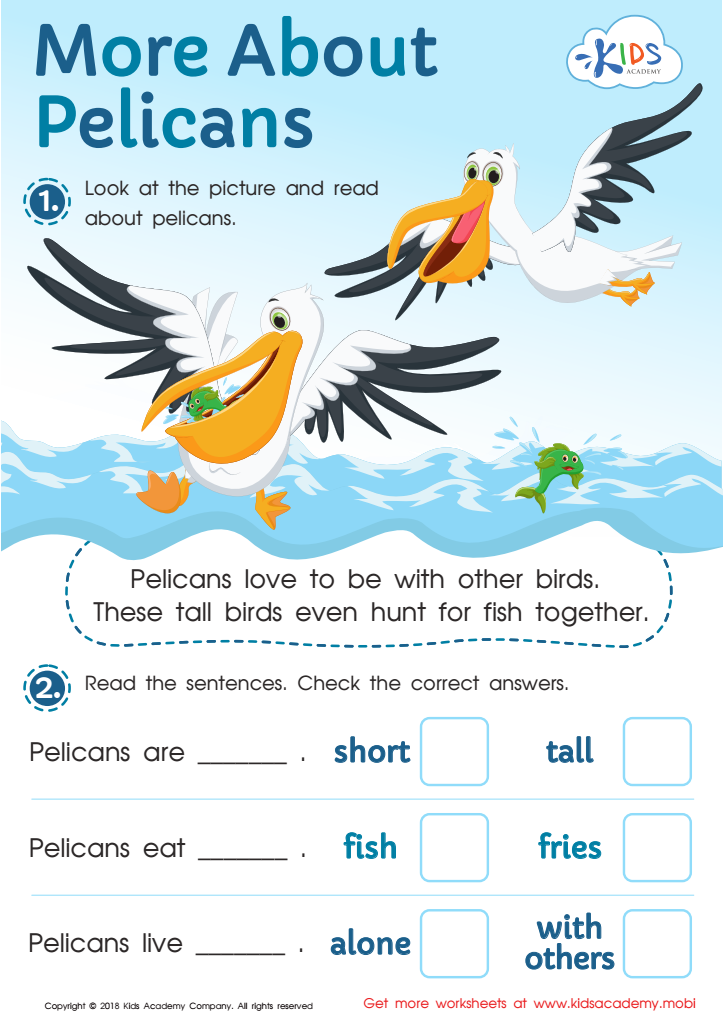
More About Pelicans Worksheet
Train your reader to look for clues in words with this fun worksheet about pelicans! As they read each sentence, they'll learn more about these majestic birds. Once they finish, answer the questions and explore even more!
 Assign to My Students
More About Pelicans Worksheet
Worksheet
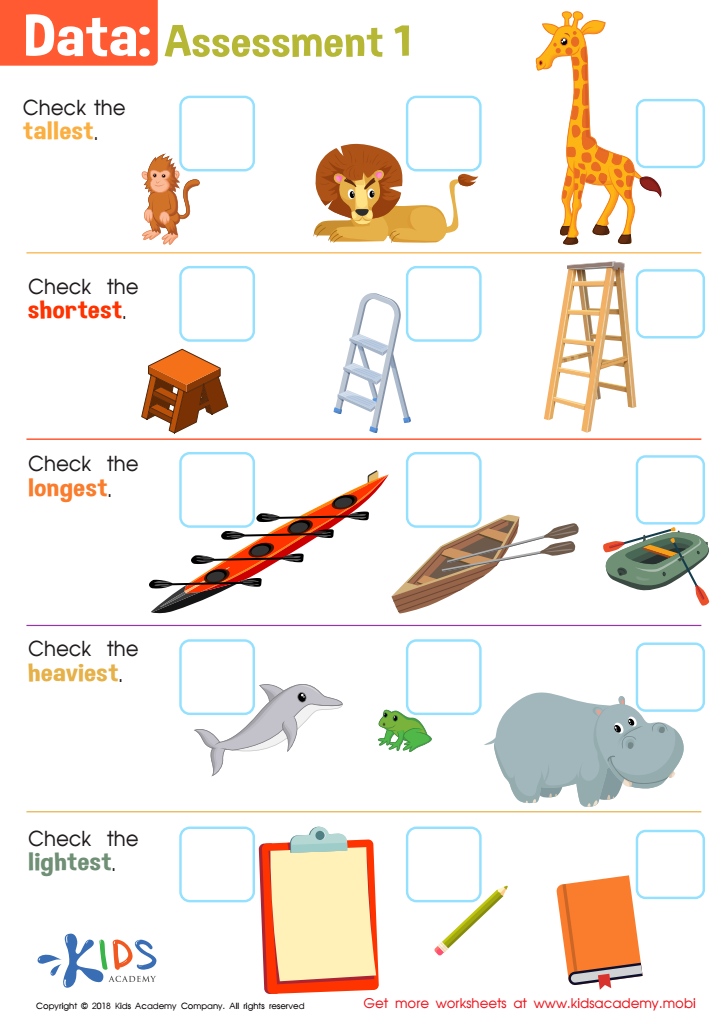
Data: Assessment 1 Worksheet
This free worksheet helps you assess where your young students are with measurement superlatives like tallest, shortest, heaviest, longest and lightest. It features cute, colorful pics of familiar objects so your kids have a reference, and helps you identify areas to work on.
Data: Assessment 1 Worksheet
Worksheet
Join Kids Academy for Free
Who is primarily going to use this learning content?







Drawing conclusions is a critical cognitive skill that empowers children aged 6-9 to make sense of the world around them. During these formative years, children are developing their reasoning and analytical abilities, making it essential for parents and teachers to nurture this skill. When children learn to draw conclusions, they enhance their reading comprehension, as they go beyond mere facts to understand themes, character motivations, and hidden messages in texts.
Additionally, drawing conclusions fosters critical thinking, enabling children to synthesize information and make informed decisions. This skill is vital in everyday life; whether they are interpreting social cues, solving problems in math, or making judgments in their interactions with peers. By engaging in activities that prompt children to infer and conclude, educators and parents can instill confidence in them and improve their communication skills.
Furthermore, nurturing this ability promotes independence in learning. Children who can draw conclusions learn to trust their instincts and lead their exploration, setting a foundation for lifelong learning. Overall, investing time and effort into developing this skill ensures that children are better prepared for more complex concepts in the future and equipped with the tools they need to understand not just academia, but also the world around them.








