
Enhance logical thinking Worksheets for Ages 6-9
5 filtered results
Difficulty Level
Grade
Age
-
From - To
Subject
Activity
Standards
Boost your child's critical thinking and problem-solving skills with our "Enhance Logical Thinking Worksheets for Ages 6-9." Tailored to captivate young minds, these engaging worksheets feature a variety of puzzles, patterns, and logical challenges. Perfect for kids aged 6-9, our activities are designed to improve cognitive skills, promote analytical thinking, and build a strong foundation for future learning. With fun themes and age-appropriate tasks, children will enjoy solving problems while developing essential skills. Give your child the tools to think logically and succeed academically with our expertly crafted worksheets.
Favorites
With answer key
Interactive
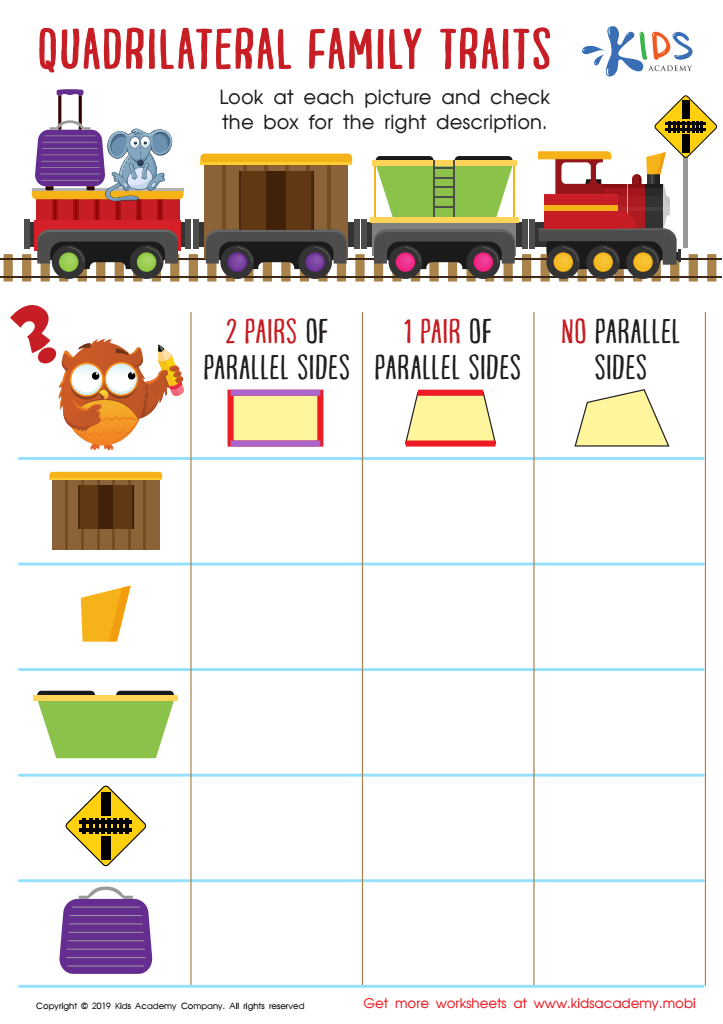
Quadrilateral Family Traits Worksheet
Review with your students what a quadrilateral is: four sides and angles. Now, go through the worksheet with them. Look at the pictures and help them check the boxes to identify the shapes.
 Assign to My Students
Quadrilateral Family Traits Worksheet
Worksheet
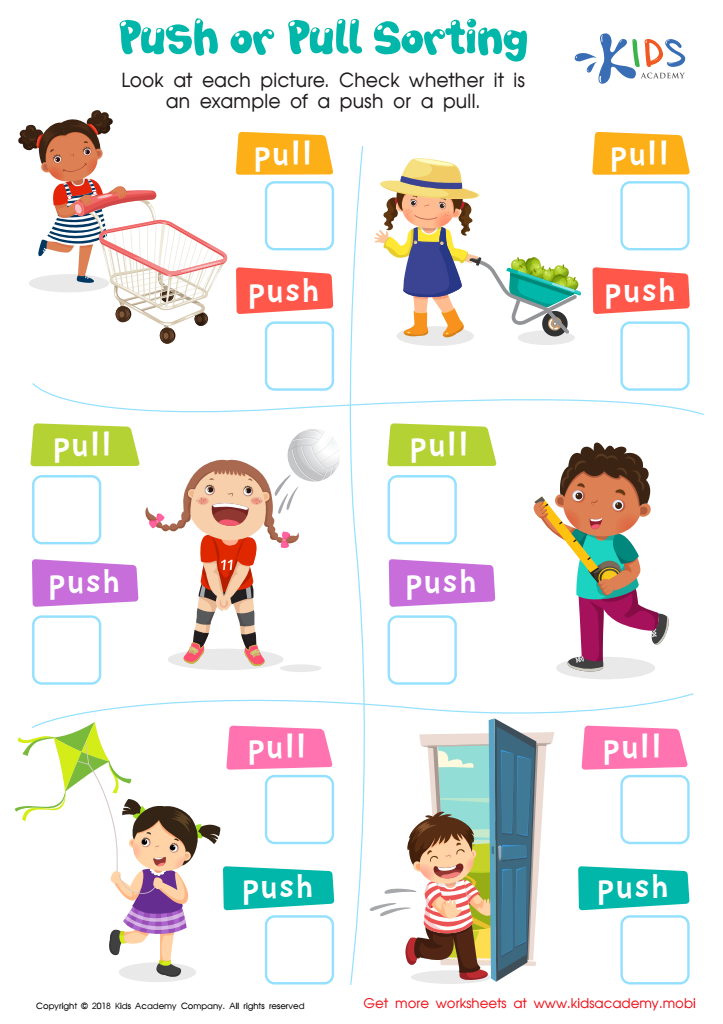
Push or Pull Sorting Worksheet
Show your child the pictures in this worksheet. Ask them to tell you what each child is doing. Then, ask them to identify whether it's an example of pushing or pulling. Ask if they know what these terms mean and if they can provide examples.
Push or Pull Sorting Worksheet
Worksheet
Join Kids Academy for Free
Who is primarily going to use this learning content?







.jpg)
Enhancing logical thinking in children aged 6-9 is crucial for their overall cognitive development and future academic success. At this formative age, children's brains are highly flexible and capable of developing essential problem-solving skills. Logical thinking promotes clear, structured thought processes, enabling children to approach challenges methodically and find effective solutions.
Parents and teachers should focus on enhancing these skills as they lay the groundwork for proficiency in core subjects such as mathematics and science. For example, grasping basic logical concepts helps children understand math operations and scientific reasoning, ensuring they build a strong academic foundation.
Moreover, logical thinking fosters critical decision-making skills. It encourages children to evaluate outcomes, consider alternatives, and make informed choices. This not only benefits academic achievement but also enhances their ability to navigate social interactions and daily responsibilities.
Activities that promote logical thinking, such as puzzles, games, and problem-based learning, also boost creativity and innovation. By nurturing these skills, parents and teachers empower children to become independent thinkers and effective communicators, prepared to tackle real-life problems confidently.
Overall, investing in logical thinking development during this critical age range sets children on a path toward lifelong learning and adaptability, essential for personal and professional success in an ever-evolving world.








