
Fine motor development Worksheets for Ages 6-9
10 filtered results
Difficulty Level
Grade
Age
-
From - To
Subject
Activity
Standards
Discover engaging fine motor development worksheets tailored for children aged 6 to 9! Our printable resources are designed to enhance essential skills such as hand-eye coordination, finger strength, and dexterity. Each worksheet features fun activities and creative exercises that motivate kids while reinforcing their fine motor skills needed for handwriting, drawing, and everyday tasks. Parents and teachers can use these worksheets to promote independence and confidence in young learners. Perfect for home or classroom use, our fine motor development tools aim to foster a love for learning and support cognitive growth. Visit our site to explore the full collection!
Favorites
With answer key
Interactive
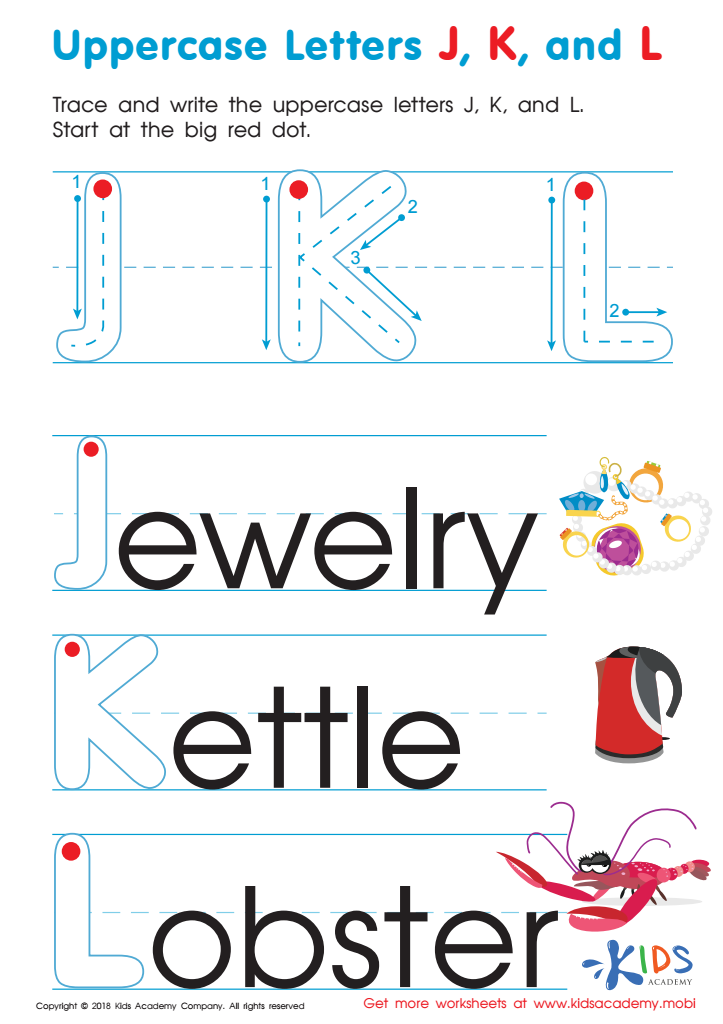
Uppercase Letters J, K, and L Worksheet
Jewelry, kettle and lobster share a common trait: their names start with J, K and L, 3 letter neighbors found in the middle of the alphabet. This traceable worksheet helps kids learn letter sounds and practice writing. Arrows and tracing lines make it easy to form neat pencil strokes. Red dot shows where kids should start. Perfect for preschoolers and kindergarteners!
 Assign to My Students
Uppercase Letters J, K, and L Worksheet
Worksheet
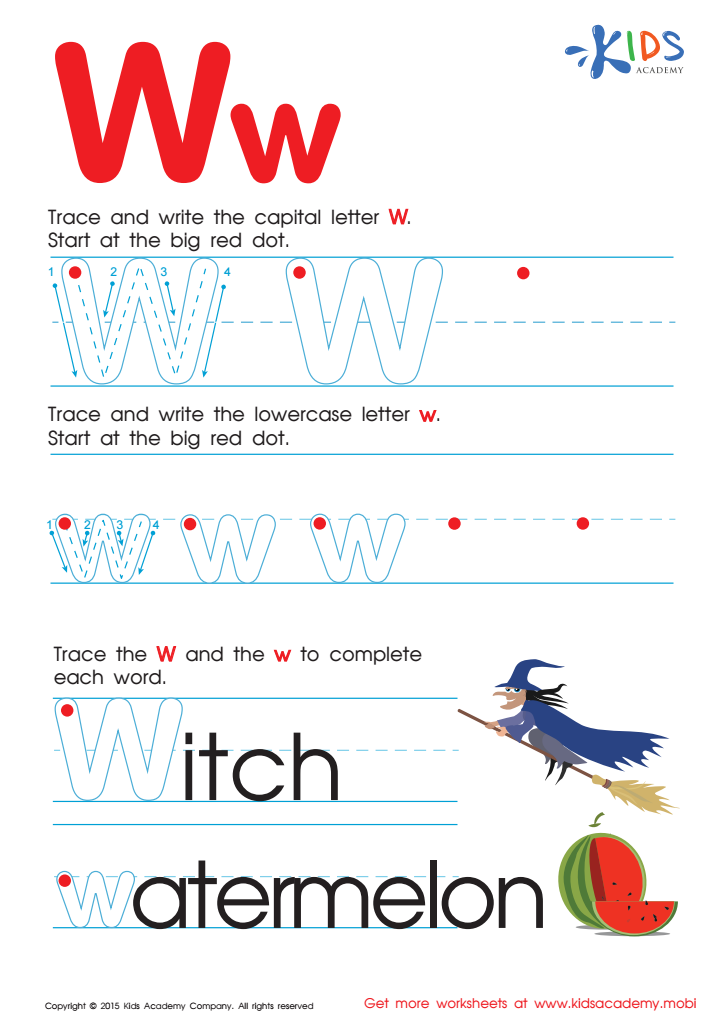
Letter W Tracing Page
Trace and write the capital and lowercase letter W with this free letter tracing worksheet by Kids Academy. Complete the words "Witch" (capital) and "watermelon" (lowercase). Check out our other kindergarten alphabet worksheets!
Letter W Tracing Page
Worksheet
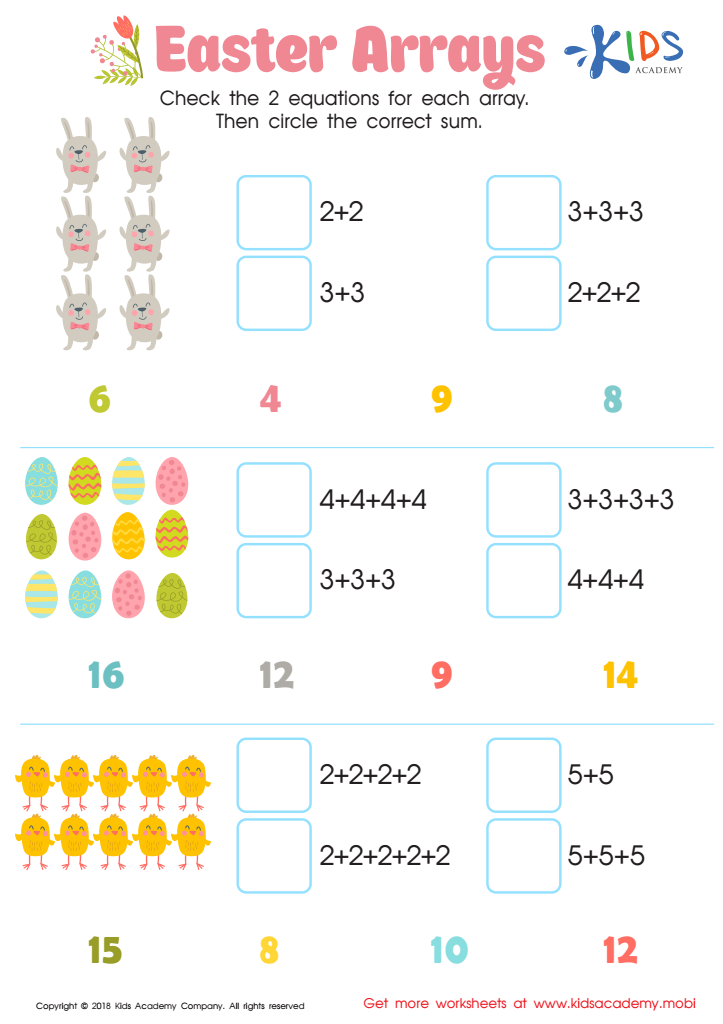
Easter Arrays Worksheet
Does your child love Easter? Do they adore the Easter bunny and egg hunts? Help them have fun with this worksheet! Go through it with them and check the equations for each array. Then, have them circle the correct sum. It's a great way to make the holiday extra exciting!
Easter Arrays Worksheet
Worksheet
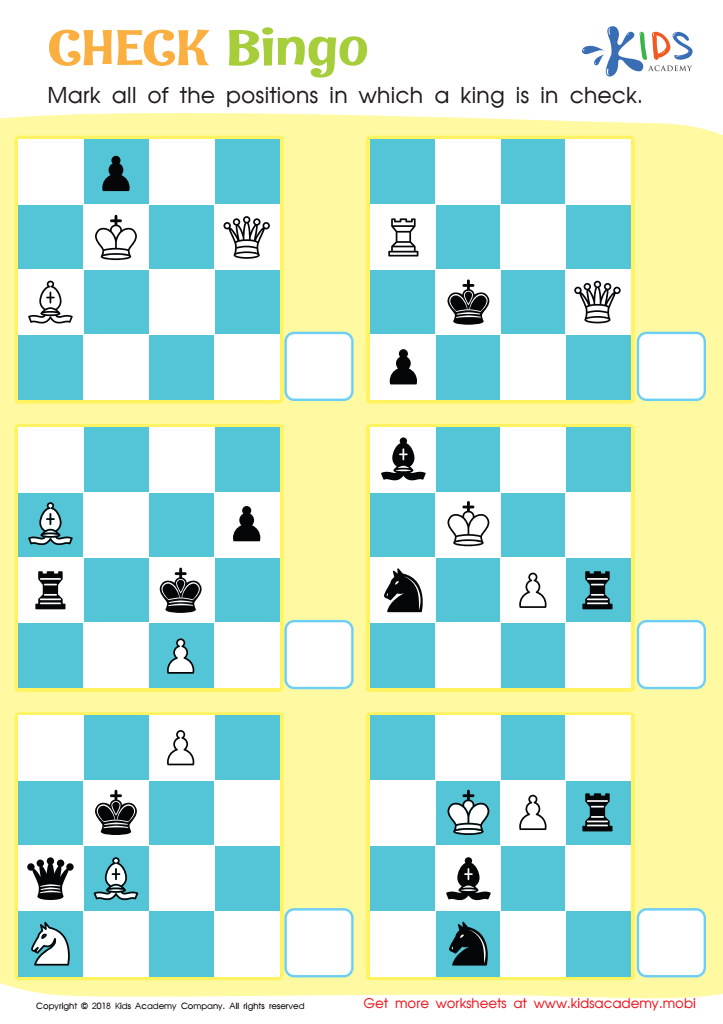
Check Bingo Worksheet
Chess helps young minds build critical thinking, problem-solving and logical reasoning skills. This free PDF worksheet is a fun way to teach these skills. It explains the concept of check and includes gameboards with kings in various positions. Students mark off the boards where a king isn't in check, and they're ready to move onto checkmate!
Check Bingo Worksheet
Worksheet
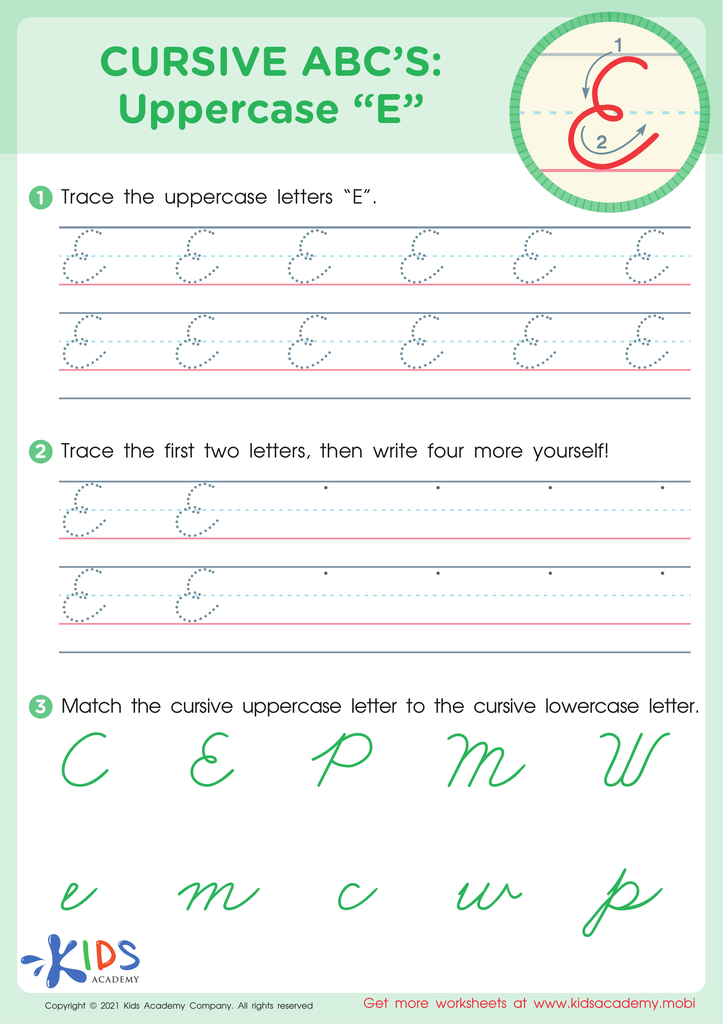
Cursive ABCs: Uppercase E
Ask your child if they can identify the letter 'E' and give examples. Each letter is unique, so provide coaching. Have them trace cursive 'E' to become familiar and boost confidence. Then, ask them to write it on their own.
Cursive ABCs: Uppercase E
Worksheet
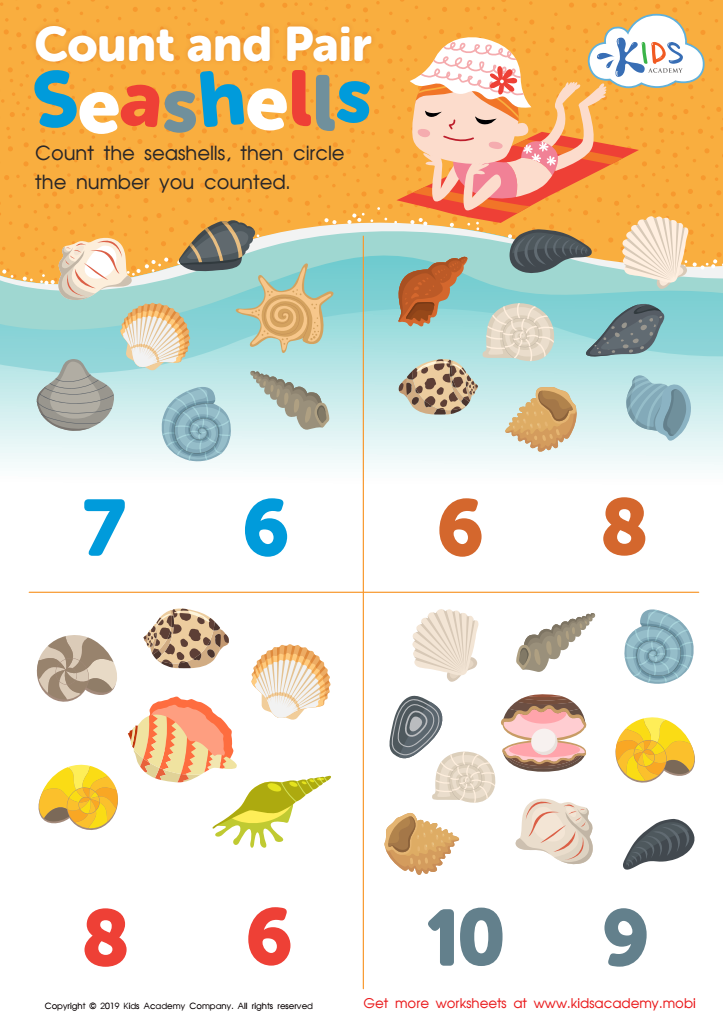
Count and Pair Seashells Worksheet
Kids love trips to the beach. Ask them to count the shells in the four sets of seashells in this printout - then circle the correct number beneath each set. Let them recall the happy memories of the beach and make this worksheet fun.
Count and Pair Seashells Worksheet
Worksheet
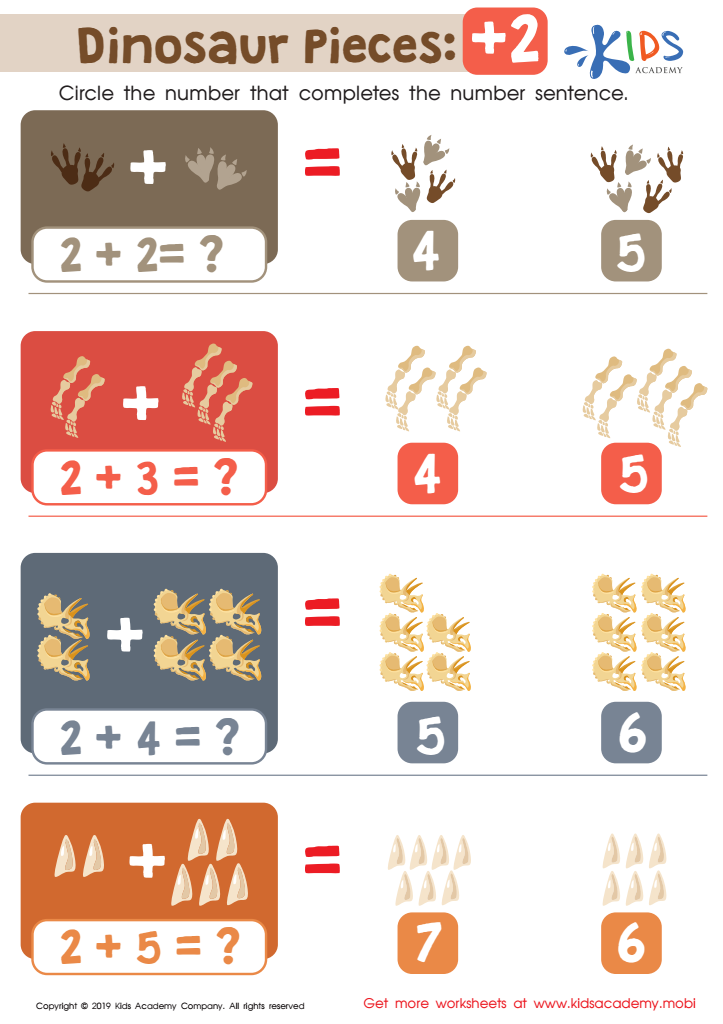
Dinosaur Pieces: +2 Worksheet
Kids love dinosaurs! See if your kids can solve these three equations featuring the mysterious creatures. Download the PDF and have them circle the number that completes each equation. Dinosaurs are extinct, not seen for thousands of years, but they can still help kids work on their math skills!
Dinosaur Pieces: +2 Worksheet
Worksheet
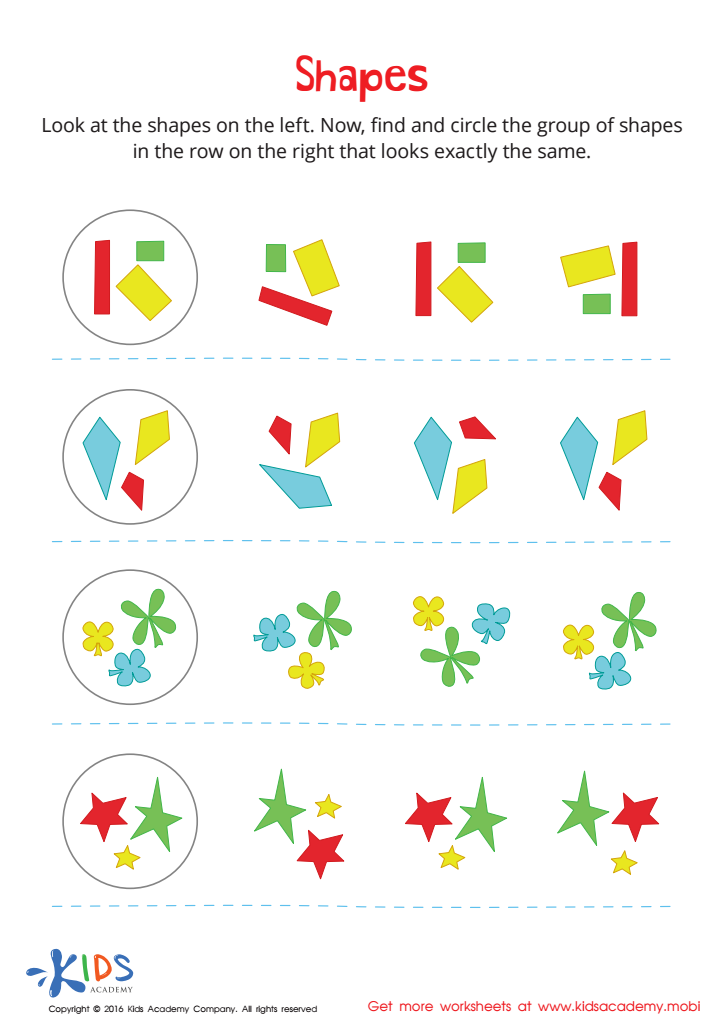
Shapes Worksheet
This fun worksheet will challenge your child to recognize tricky patterns, sort through similar ones, and create strategies to get the right answer. It'll also help them to strengthen problem-solving skills and build confidence. With more challenging tasks, your child will be ready to tackle higher level math and sequencing skills.
Shapes Worksheet
Worksheet
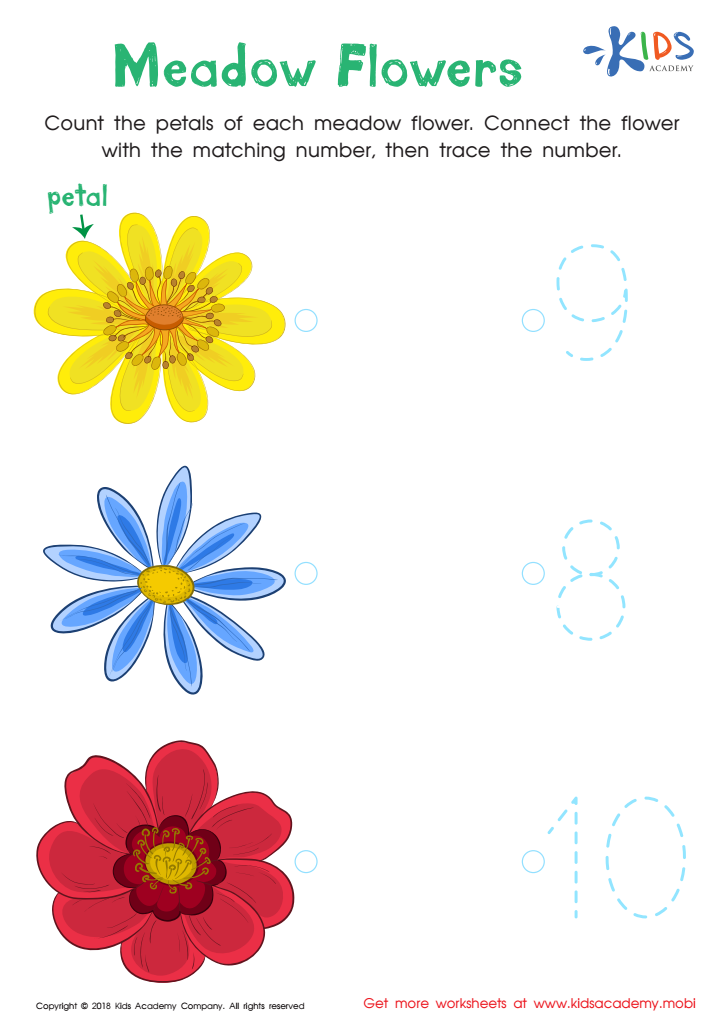
Kindergarten Number Tracing: Medow Flowers Worksheet
Take your child to the garden to count flower petals and trace numbers with this fun kindergarten PDF worksheet. They'll learn to count and write, all while enjoying the sweet scent of the flowers.
Kindergarten Number Tracing: Medow Flowers Worksheet
Worksheet
Join Kids Academy for Free
Who is primarily going to use this learning content?






Parents and teachers should prioritize fine motor development for children ages 6-9 because these skills are foundational for various daily activities and learning experiences. Fine motor skills involve the coordination of small muscles in the hands and fingers, which are essential for tasks like writing, drawing, cutting, and building. At this age, children are beginning to engage more deeply with academic work, and strong fine motor abilities can greatly enhance their confidence and performance in the classroom.
Furthermore, fine motor development supports cognitive growth, as many activities that refine these skills also encourage problem-solving and creativity. Tasks such as constructing with blocks or completing puzzles promote critical thinking and spatial awareness. In addition, a child adept in fine motor tasks often feels more proficient in self-care activities like buttoning clothes or tying shoes, which fosters independence and self-esteem.
Moreover, during this developmental stage, children are also mastering literacy skills. Good fine motor control is crucial for writing legibly, which can impact overall school performance. Therefore, investing time in activities that promote fine motor skills—like arts and crafts or interactive games—can significantly enhance a child's overall development and academic journey. Ultimately, nurturing these skills supports their future success in both school and beyond.








