Graph reading Worksheets for Ages 6-9
3 filtered results
-
From - To
Enhance your child's critical thinking skills with our engaging Graph Reading Worksheets, designed specifically for ages 6-9. These worksheets introduce young learners to the basics of graph interpretation, enabling them to analyze and understand data visually. Through fun illustrations and interactive activities, kids will learn to read bar graphs, line graphs, and pictographs, sharpening their analytical abilities while building essential math concepts. Our easy-to-follow instructions and colorful designs make learning enjoyable and effective. Perfect for home or classroom use, these worksheets provide an excellent resource for helping your child develop vital skills needed for future academic success. Start exploring today!
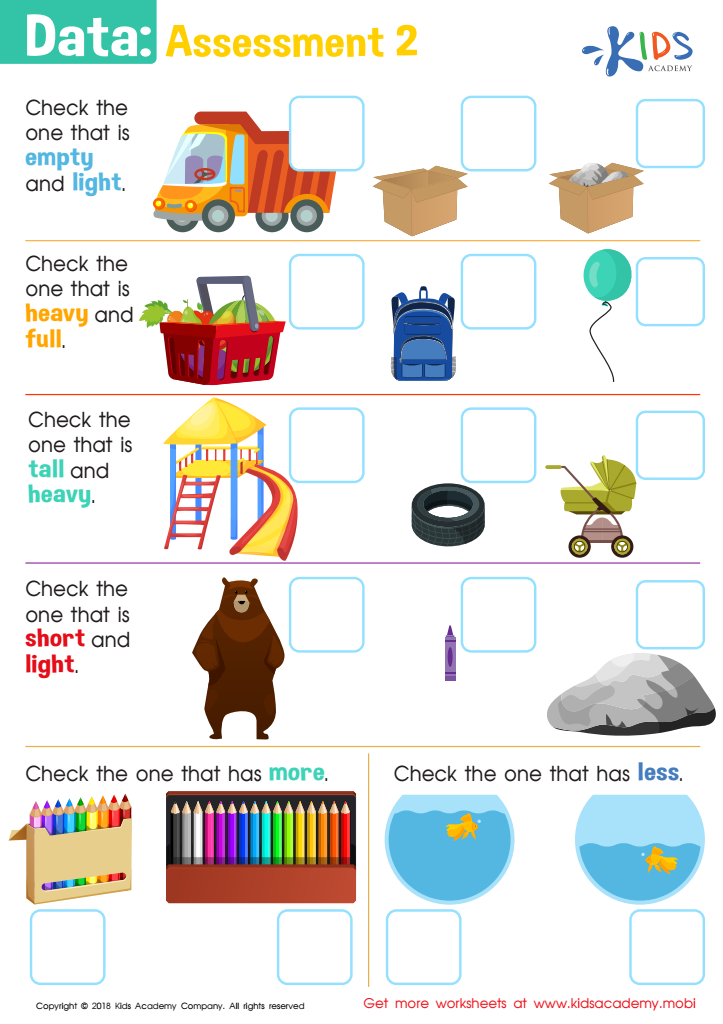
Data: Assessment 2 Worksheet
 Assign to My Students
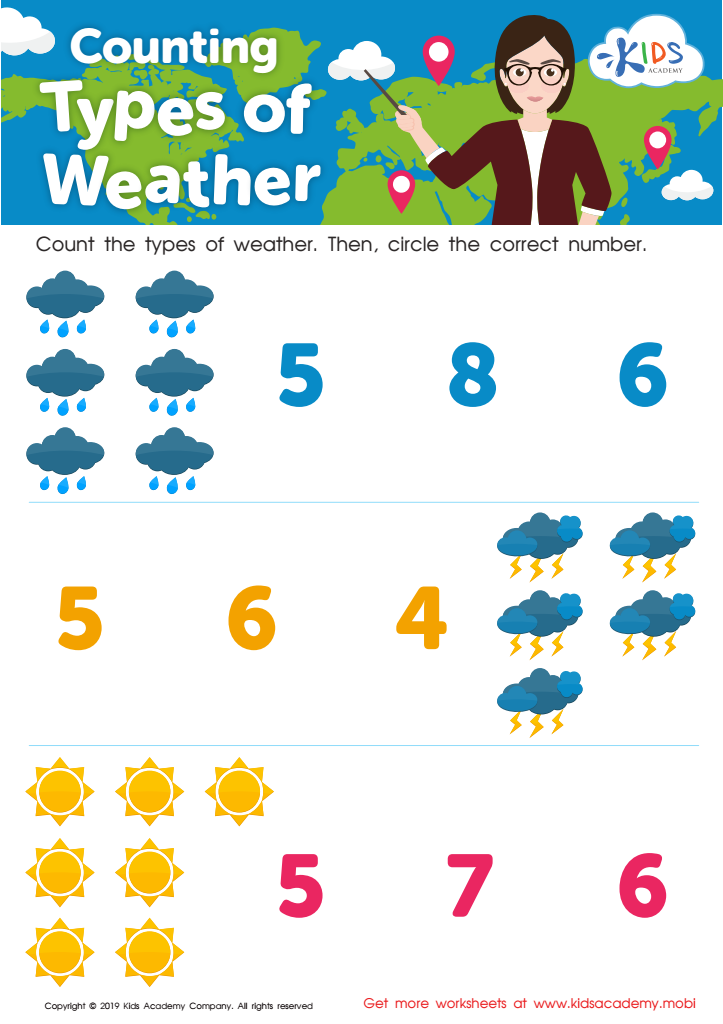
Counting Types of Weather Worksheet
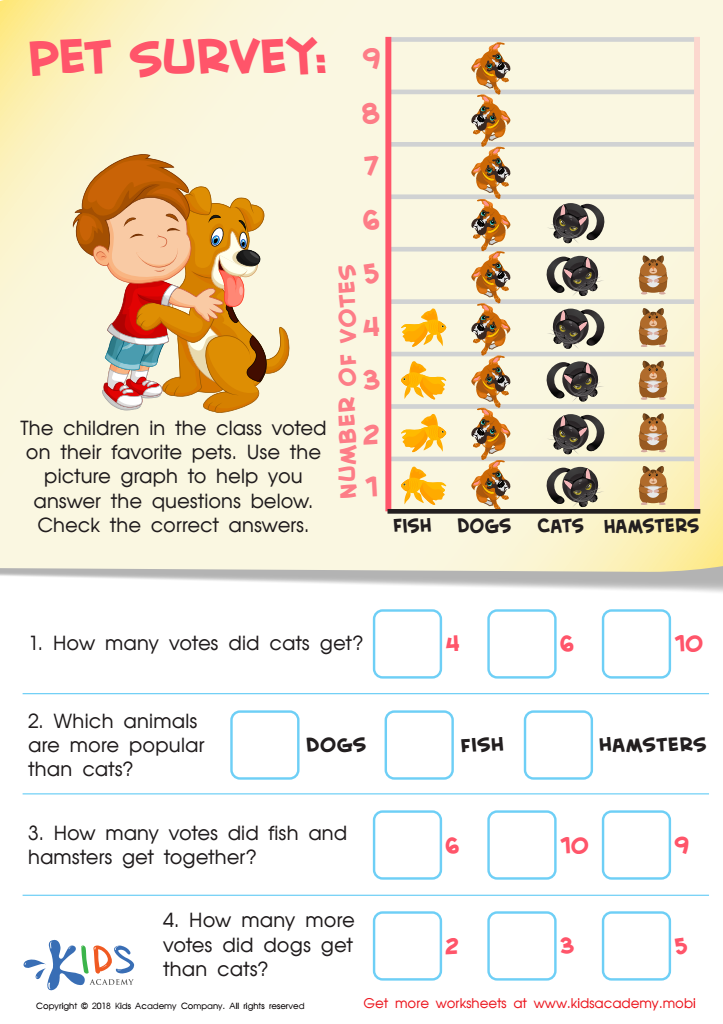
Pet Survey Worksheet




.jpg)



Graph reading is an essential skill for children aged 6-9, as it lays the foundation for critical thinking, data interpretation, and decision-making. At this developmental stage, children are naturally curious and starting to understand the world around them through visual representations. Teaching them to read graphs helps them make sense of information presented in various formats, whether in textbooks, newspapers, or digital media.
Incorporating graph reading into early education fosters analytical skills, encouraging children to interpret data trends and patterns. It enhances their ability to communicate ideas backed by evidence, which is crucial in many aspects of life. For instance, understanding graphs can empower children to grasp vital concepts in subjects like math and science, promoting a stronger connection to these disciplines.
Moreover, graph reading is integral to everyday discussions, such as evaluating weather forecasts or analyzing sports statistics. By learning this skill early on, children enhance their comprehension and engage with real-world problems creatively.
When parents and teachers prioritize graph reading, they contribute to well-rounded education that equips students for future academic success and responsible citizenship. In a world increasingly driven by information, these skills will enable children to navigate complexities and participate meaningfully in society.








