Improve observational skills Worksheets for Ages 6-9
3 filtered results
-
From - To
Enhance young minds with our "Improve Observational Skills Worksheets" designed for ages 6-9. These engaging, educational sheets encourage kids to notice details, identify patterns, and sharpen their focus through fun activities. Perfect for both classroom and home learning, our expertly crafted exercises help children boost their cognitive development while enjoying the process. With colorful illustrations and captivating tasks, children stay motivated and eager to learn. Give your child the tools to improve concentration, critical thinking, and visual perception skills, setting a solid foundation for academic success. Explore our wide range of worksheets to make learning an exciting adventure!
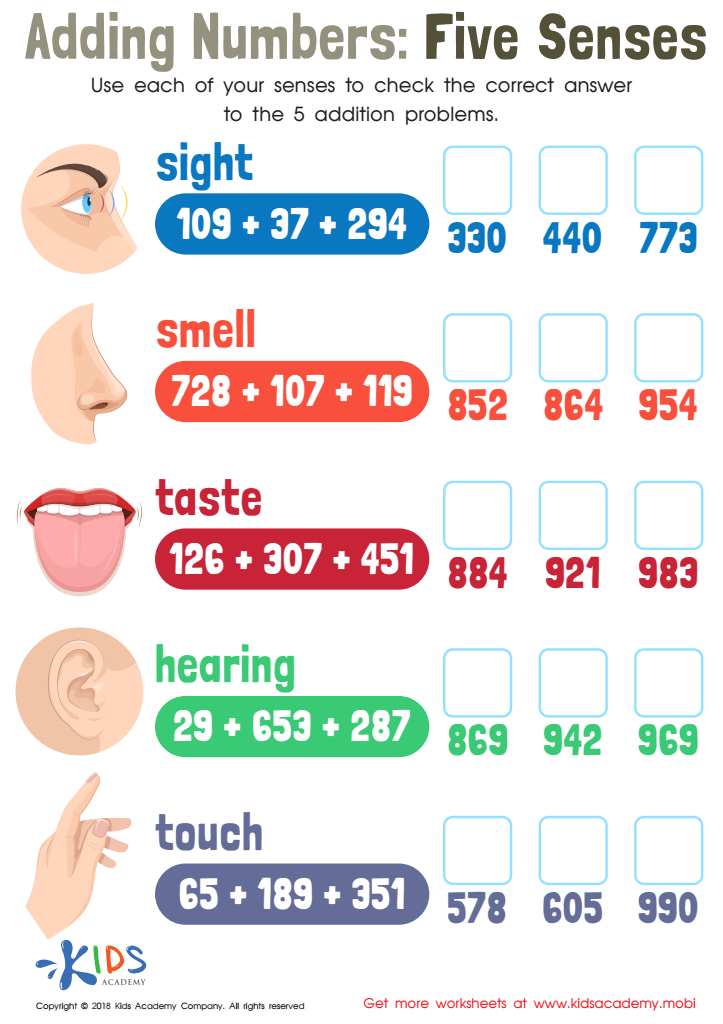
Adding Numbers: Five Senses Worksheet
 Assign to My Students
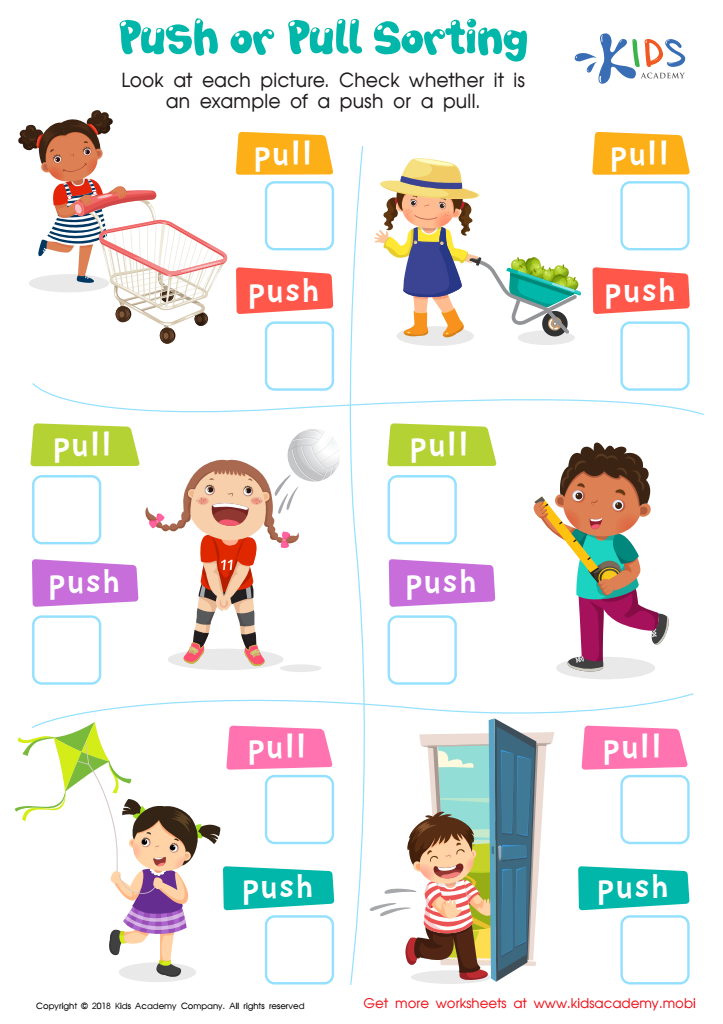
Push or Pull Sorting Worksheet








Improving observational skills in children aged 6-9 is crucial for several reasons. At this developmental stage, children are naturally curious and eager to explore the world around them. Enhancing their observational abilities can significantly contribute to cognitive, social, and emotional growth.
Firstly, strong observational skills lay the foundation for academic success. Observation aids in early literacy and numeracy as children learn to notice details in texts and patterns in numbers, thereby fostering better reading comprehension and mathematical understanding. Observing their environment also boosts scientific thinking, vital for problem-solving and critical thinking.
Secondly, improved observational skills drive social development. By paying attention to non-verbal cues, facial expressions, and body language, children become more empathetic and can better navigate social interactions. This awareness fosters improved communication skills and strengthens relationships with peers, teachers, and parents.
Emotionally, being observant helps children understand and manage their own emotions. They can recognize triggers for their feelings and explore constructive ways to express themselves.
Parents and teachers play a pivotal role in nurturing these skills through interactive activities, discussions, and supportive educational tools. Overall, sharp observational skills empower young children to be mindful learners and compassionate individuals, setting a solid groundwork for future learning and personal development.








