
Knowledge reinforcement Worksheets for Ages 6-9
3 filtered results
Difficulty Level
Grade
Age
-
From - To
Subject
Activity
Standards
Boost your child's learning journey with our Knowledge Reinforcement Worksheets, designed specially for ages 6-9. These engaging, educational resources support classroom learning by solidifying essential skills in math, reading, writing, and science. Each worksheet is crafted to be fun and interactive, ensuring kids stay motivated and excited about their progress. Ideal for at-home practice or supplemental schoolwork, our worksheets help young learners build confidence and proficiency. Visit our website to explore a wide range of topics and give your child the tools they need for academic success!
Favorites
With answer key
Interactive
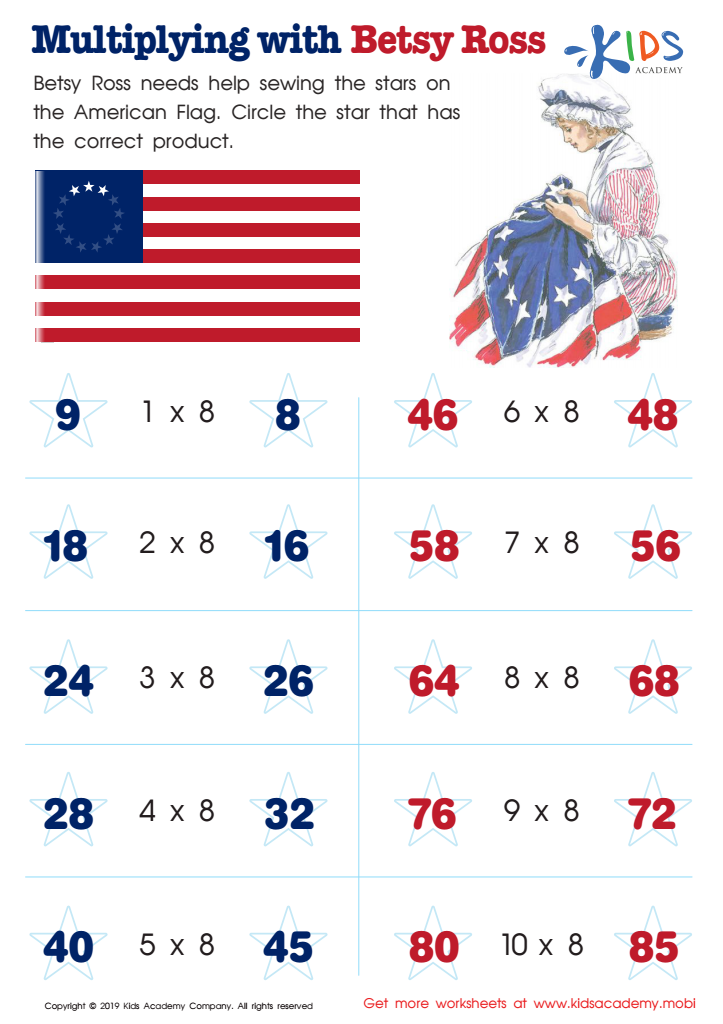
Multiplying with Betsy Ross Worksheet
Before getting into the worksheet, have your students take a quick history lesson on Betsy Ross. Ask them if they know her role in American history. On the printout, ask your kids to identify what Betsy Ross is doing - sewing the stars on the American Flag. Have them circle the star that has the correct pattern.
 Assign to My Students
Multiplying with Betsy Ross Worksheet
Worksheet
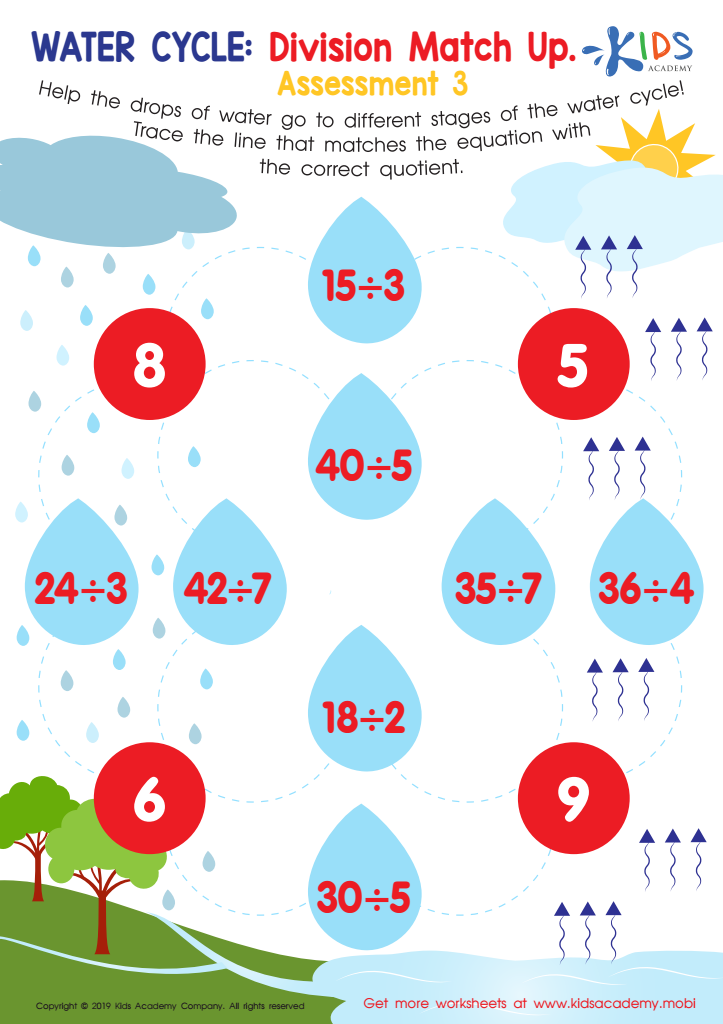
Water Cycle Division Match Up Assessment 3 Worksheet
Division is more fun than schoolwork with this assessment! Traceable lines let kids match equations to quotients, helping them build automaticity and giving you an easy way to see their progress.
Water Cycle Division Match Up Assessment 3 Worksheet
Worksheet
Join Kids Academy for Free
Who is primarily going to use this learning content?








Knowledge reinforcement for children aged 6-9 is crucial for several compelling reasons. At this formative stage, young minds are exceptionally impressionable and fertile for learning. Reinforcing knowledge helps anchor fundamental concepts in literacy, numeracy, and essential life skills, forming a sturdy educational foundation. This consistent reinforcement fosters confidence in children, making them more likely to participate actively in class and succeed academically.
Moreover, mastery of basic skills is not just about immediate academic success; it sets the stage for lifelong learning. Repetition and reinforcement ensure that concepts become second nature, equipping children with the skills required to tackle more complex subjects in later years. For example, fluency in reading at this age can dramatically improve vocabulary and comprehension skills, which are critical for all academic areas.
The role of reinforcement is further underpinned by cognitive development theories, which suggest that children need repeated exposure to new information to transfer it from short-term to long-term memory effectively. Furthermore, reinforcing positive learning habits can cultivate a love for learning, encouraging curiosity and resilience.
In summary, knowledge reinforcement for children aged 6-9 is essential as it consolidates foundational skills, boosts confidence, and promotes a lasting, positive attitude towards learning. Both parents and teachers play a pivotal role in this developmental phase, shaping future academic and personal success.








