Learn addition Worksheets for Ages 6-9
4 filtered results
-
From - To
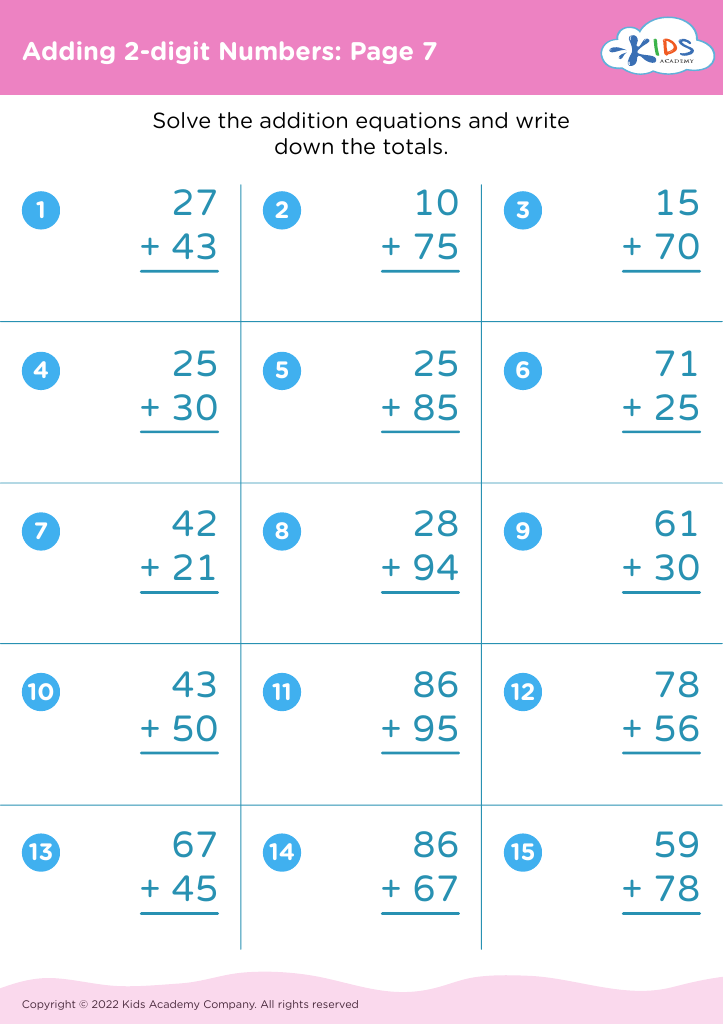
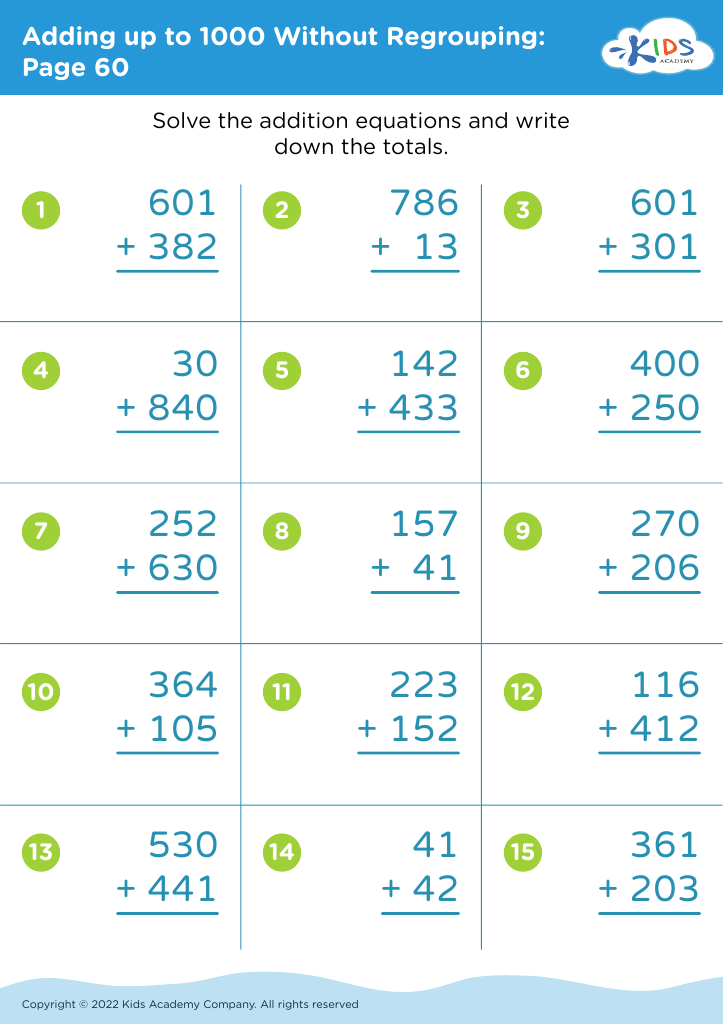
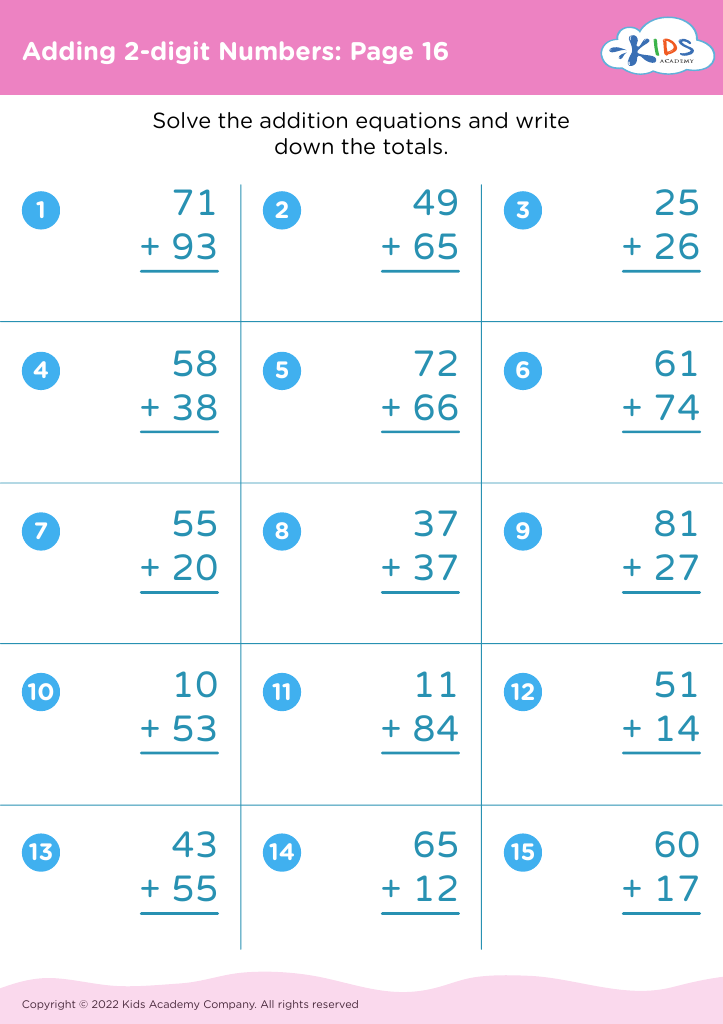
Unlock your child's math potential with our "Learn Addition Worksheets" designed specifically for ages 6-9! These engaging, printable worksheets provide a fun and interactive way for young learners to master basic addition skills. Tailored to promote fundamental math concepts, our activities encourage practice through colorful illustrations and real-world scenarios. Each worksheet progressively builds confidence, allowing students to solve addition problems, understand number relationships, and enhance critical thinking. Encourage a love for math while supporting your child’s learning journey. Explore our collection of addition worksheets today and watch your child gain valuable skills in a fun and effective way!




.jpg)


Learning addition in the early grades, particularly for children aged 6-9, is fundamental to their mathematical development and overall academic success. Mastery of addition lays the groundwork for more complex mathematical concepts such as subtraction, multiplication, and division. By becoming proficient in addition, children develop critical problem-solving and analytical skills that will benefit them in various contexts throughout their lives.
Parents and teachers should care about this skill because it fosters confidence and a positive attitude toward math. Early success creates a sense of achievement that can motivate kids to embrace more challenging aspects of mathematics. Additionally, addition helps children make sense of the world around them—whether they are figuring out how many apples they can buy with a certain amount of money or determining how many friends can join them for a playdate.
Moreover, learning addition touches on important cognitive and emotional skills, including perseverance and resilience. Engaging with addition also promotes social interactions in cooperative learning settings, enhancing communication and teamwork skills. Ultimately, ensuring that children have a strong foundation in addition supports their holistic development and prepares them for future educational challenges. Thus, it’s crucial for parents and teachers to invest in this critical area of learning.








