Plant identification Worksheets for Ages 6-9
5 filtered results
-
From - To
Nurture your child's curiosity with our engaging Plant Identification Worksheets for ages 6-9! Designed to enhance learning skills, these worksheets provide a hands-on approach to discovering the fascinating world of plants. Through fun activities and exercises, kids will learn to recognize different plant species, understand their unique features, and appreciate nature's diversity. Perfect for both classroom and home use, our worksheets support comprehension and retention, ensuring a rewarding educational experience. Give your young botanist the tools to explore and enjoy the natural world with our expertly crafted Plant Identification Worksheets.
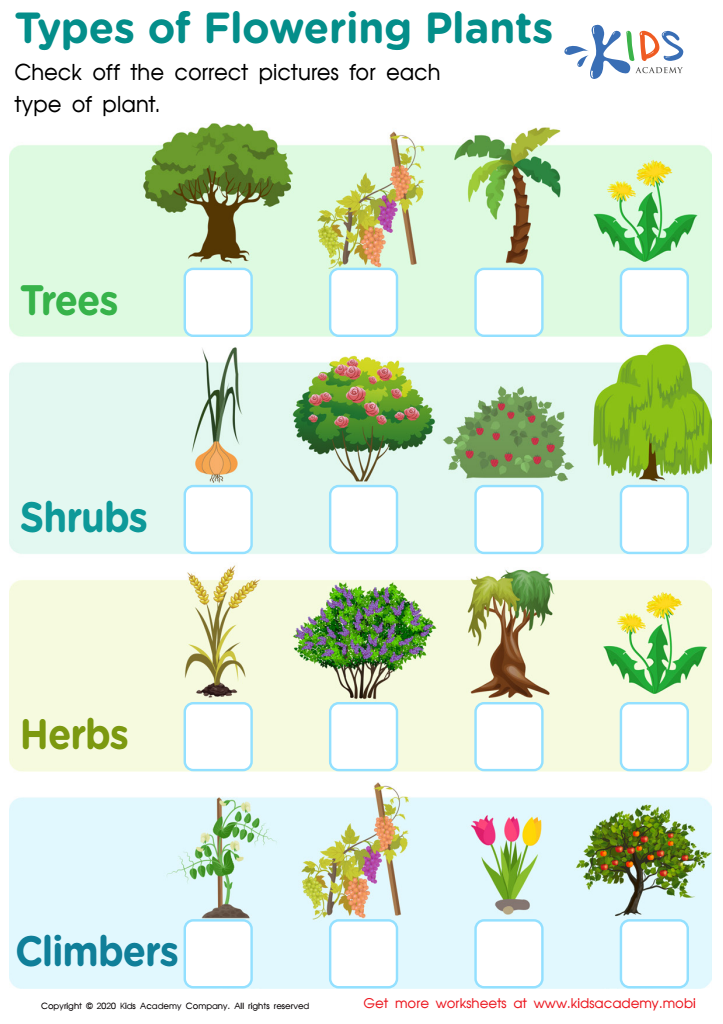
Types of Flowering Plants Worksheet
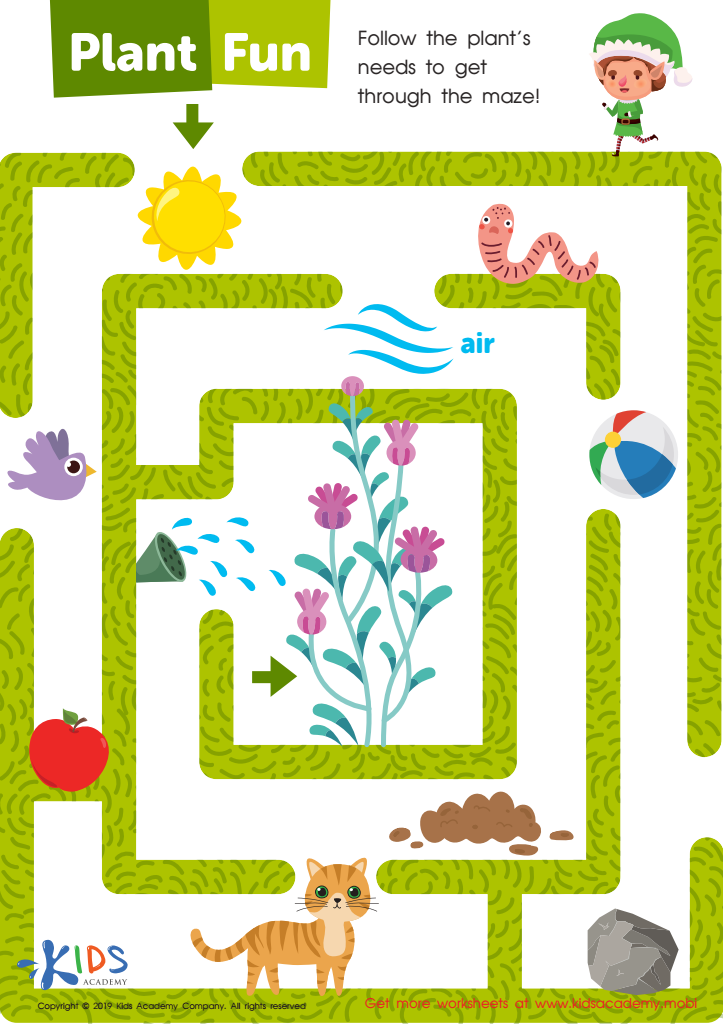
Plant Fun Worksheet
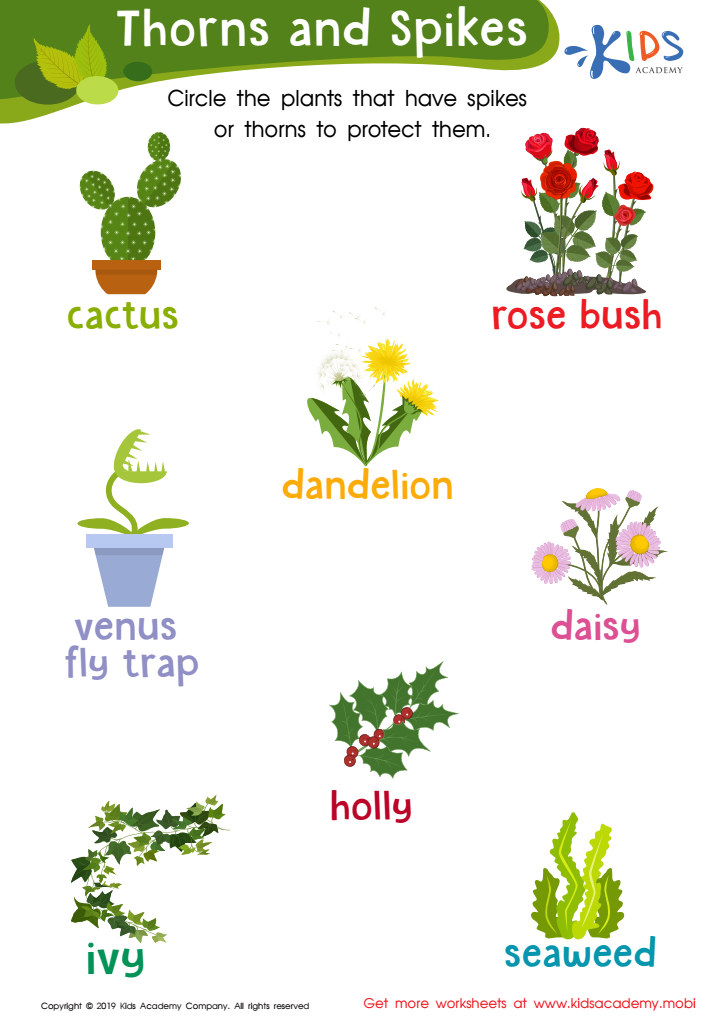
Thorns and Spikes Worksheet
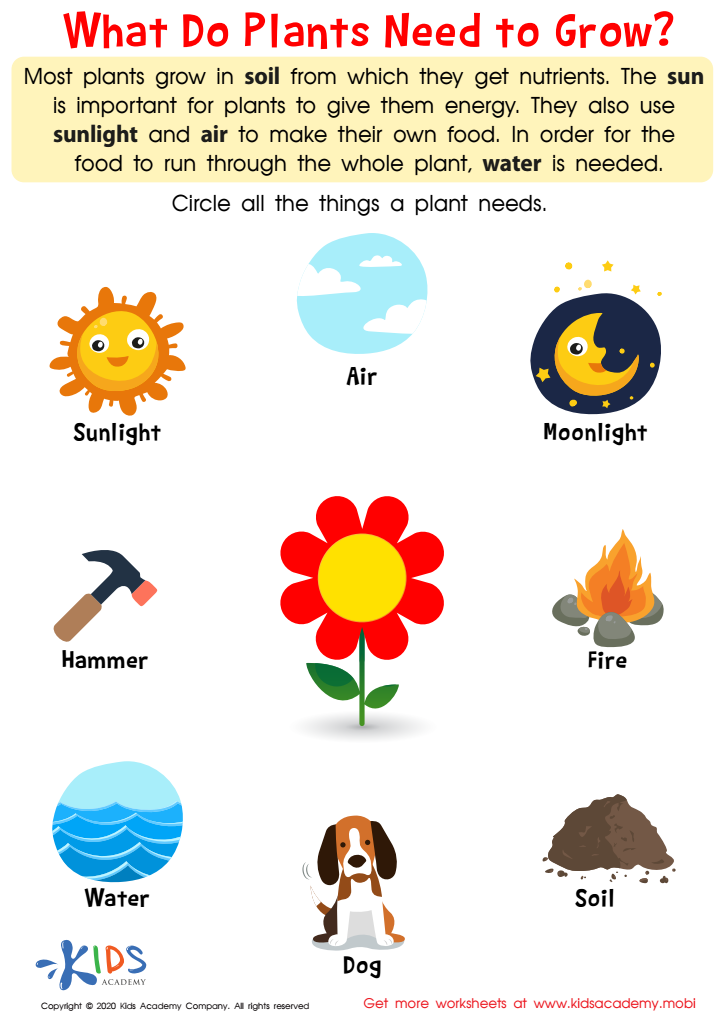
What Do Plants Need to Grow Worksheet
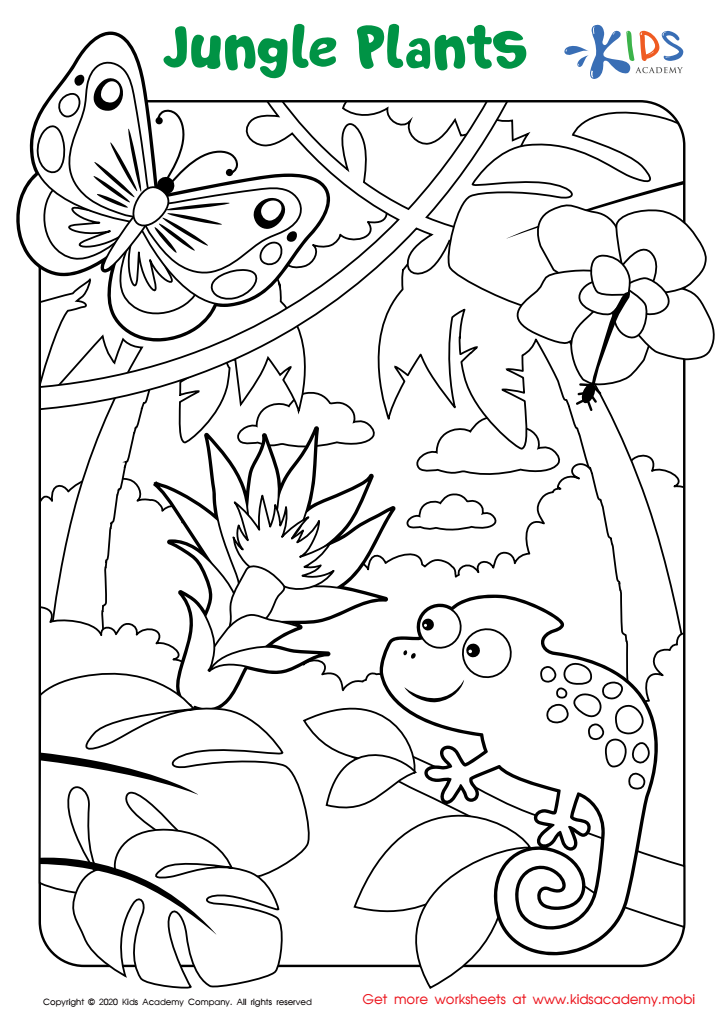
Jungle Plants Worksheet
 Assign to My Students







Plant identification for children aged 6-9 is crucial for several reasons, making it a worthwhile pursuit for both parents and teachers. Firstly, it fosters an appreciation for nature. Learning to identify various plants helps children develop a connection to their natural environment, encouraging them to spend time outdoors rather than being glued to screens.
Secondly, plant identification enhances cognitive skills. Recognizing different plants involves observation, comparison, and classification—key skills that benefit overall academic development. These activities also help improve memory retention and attention to detail, which are essential for learning in other subjects.
Moreover, understanding plants enriches science education. Children learn about life cycles, ecological relationships, and biological diversity, which lays a foundational knowledge for more complex biological and environmental sciences in the future. Educating children about which plants are safe to touch or eat can also prevent accidental poisoning, ensuring their safety.
Socially, activities like nature hikes and plant-identification projects can promote teamwork and cooperation among peers. They learn to share and respect different viewpoints while developing communication skills as they describe what they observe.
Lastly, fostering such environmental awareness at an early age sets the stage for responsible stewardship of the planet as these children grow into adults who understand the importance of preserving our natural world.








