Discover our engaging Practical Application Worksheets for Ages 6-9, designed to inspire young minds and put learning into action. These thoughtfully created worksheets seamlessly blend foundational skills with real-world scenarios, making concepts in math, science, reading, and critical thinking both relevant and fun. Ideal for students in grades 1-3, each worksheet provides practical exercises that enhance problem-solving abilities and foster a deeper understanding of everyday situations. Whether at home or in the classroom, these resources support holistic learning through hands-on activities, ensuring children not only learn but also apply their knowledge confidently. Explore, learn, and grow with us!

Check out this FREE "Practical application" Trial Lesson for age 6-9!

Measuring in Different Units

Favorites
With answer key
Interactive
  • 6-9
  • Practical application
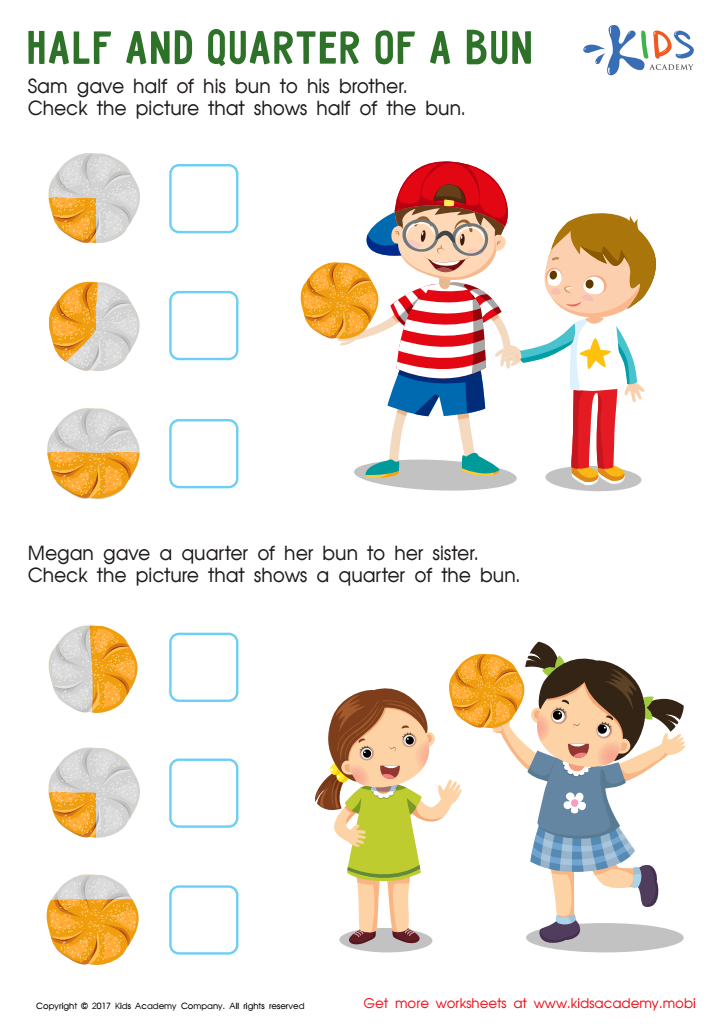
Half and Quarter of a Bun Worksheet

Half and Quarter of a Bun Worksheet

This worksheet introduces Sam, his brother and Megan, her sister, who are sharing buns. Show kids the picture of half and quarter to help them understand. Ask if they know what half and quarter of a shape is before progressing. Help them check the picture showing half and quarter of a bun.
Half and Quarter of a Bun Worksheet
Worksheet
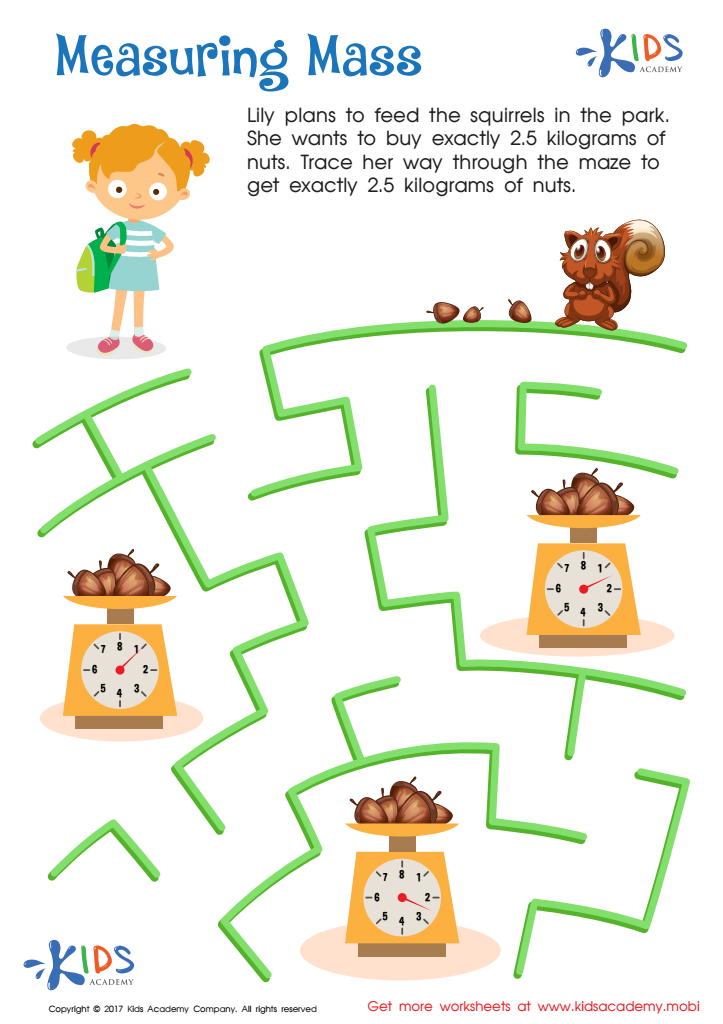
Measuring Mass Worksheet for 3rd Grade

Measuring Mass Worksheet

Lily needs your child's help to find the right number of nuts to feed the squirrels. Ideal for 3rd grade!
Measuring Mass Worksheet
Worksheet
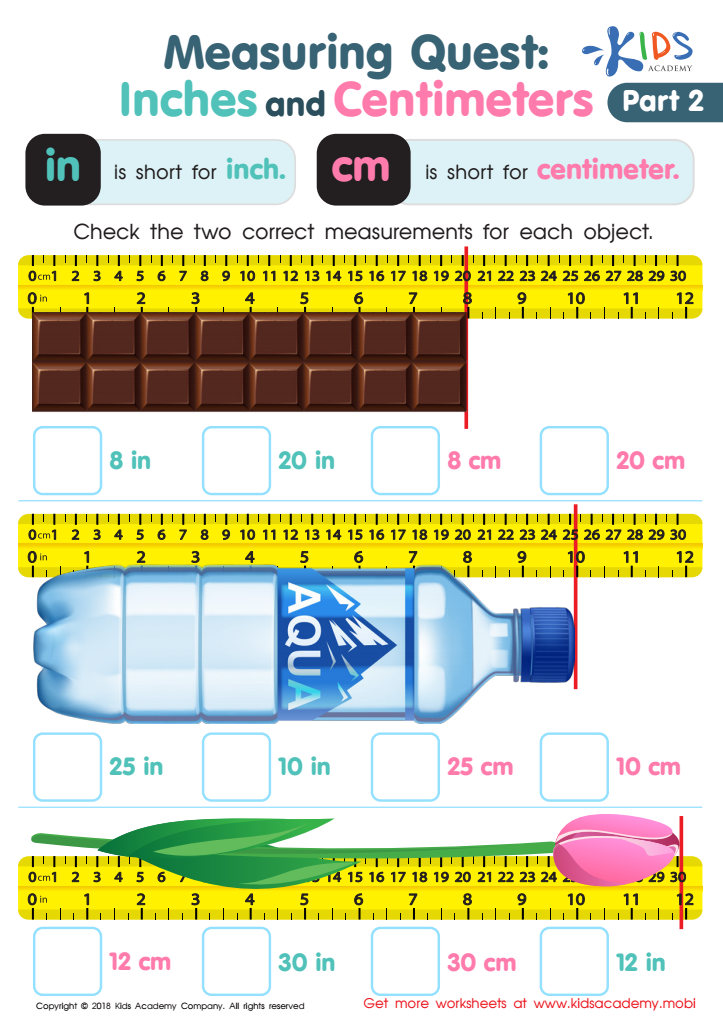
Measuring Quest: Inches and Centimeters - Part 2 Worksheet

Measuring Quest: Inches and Centimeters - Part 2 Worksheet

This worksheet teaches kids how inches and centimeters measure up. It features rulers with centimeter measurements at the top, and inches at the bottom. Kids must choose the correct measurement for each object among the options provided.
Measuring Quest: Inches and Centimeters - Part 2 Worksheet
Worksheet
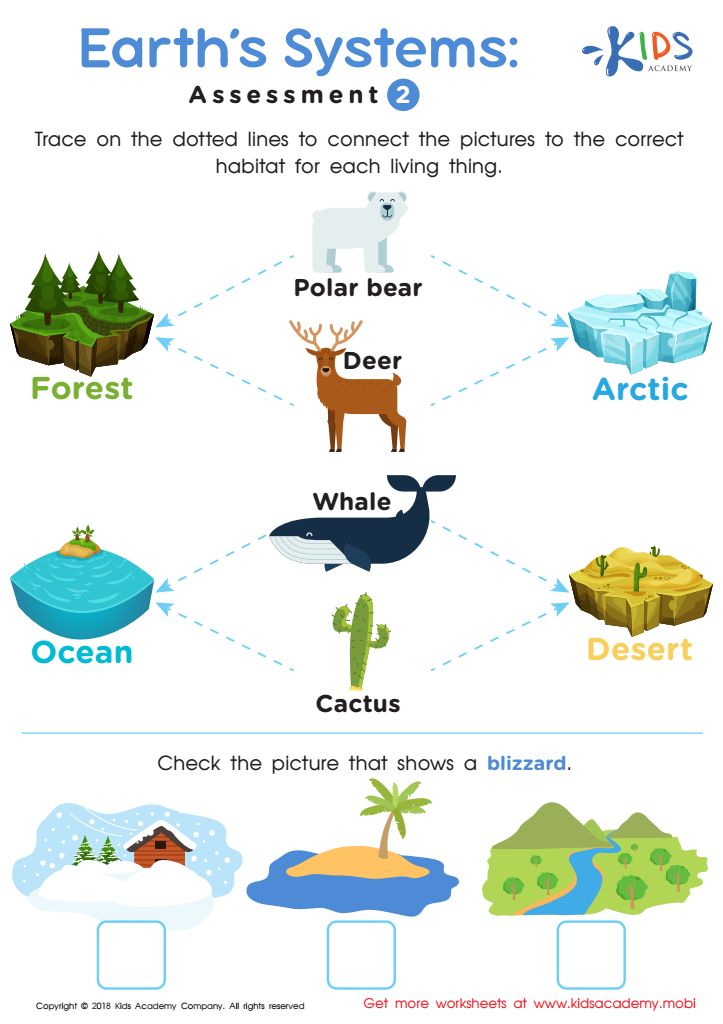
Earth's Systems: Assessment 2

Earth's Systems: Assessment 2

Kids will love this free printable worksheet to assess their knowledge of habitats and the living creatures found in them. They'll trace the dotted lines to connect the pictures of plants and animals to their respective habitat and identify the type of weather depicted. No, polar bears don't live in the ocean, but they do like to swim in icy waters! With this fun activity, your little learner will master earth science basics.
Earth's Systems: Assessment 2
Worksheet
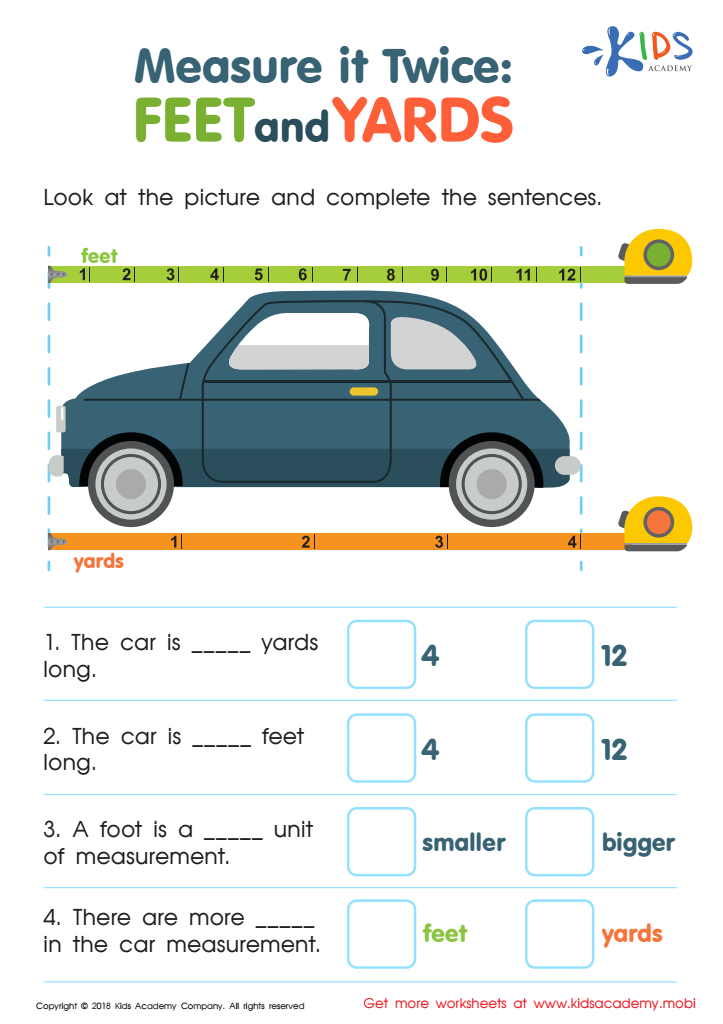
Measure It Twice: Feet and Yards Worksheet

Measure It Twice: Feet and Yards Worksheet

A car is pictured with a metric ruler in feet at the top and a yard ruler at the bottom. Get your child to look at the picture and complete sentences about it; for example, how many yards long is the car? Is a foot a bigger or smaller unit of measurement? It'll teach them that 1 yard is equal to 3 feet.
Measure It Twice: Feet and Yards Worksheet
Worksheet
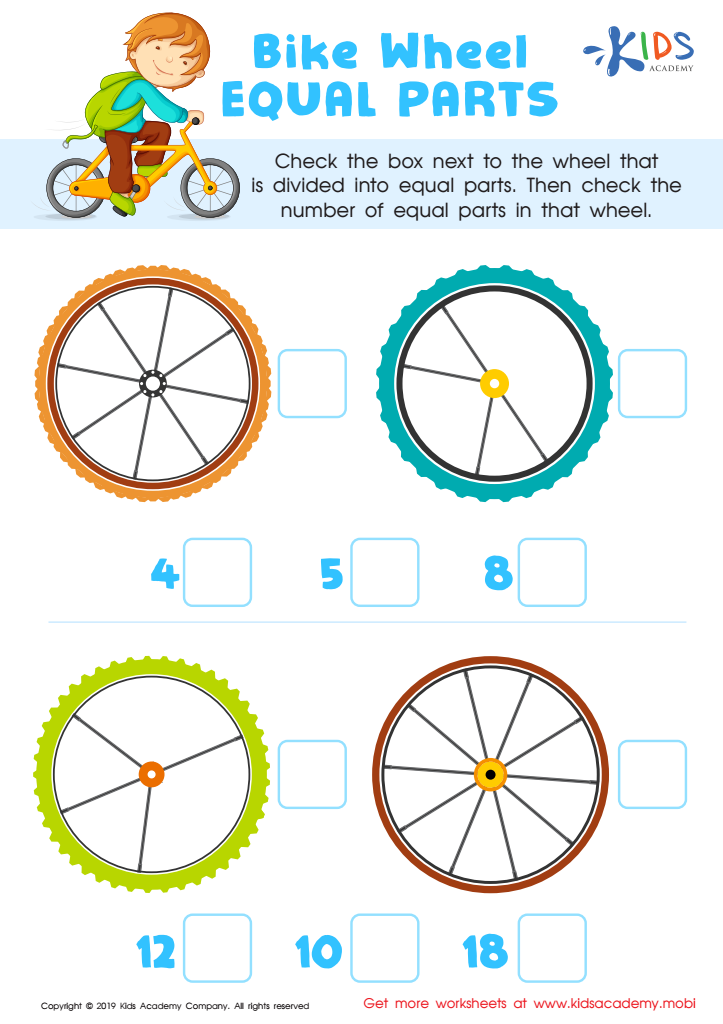
Bike Wheel Equal Parts Worksheet
Bike Wheel Equal Parts Worksheet

Help your kids have fun while they learn! Ask them to identify the object in the picture with four wheels. Guide them to count the spokes, then check the box on the wheel with equal parts. Lastly, check how many equal parts the wheel is divided into.
Bike Wheel Equal Parts Worksheet
Worksheet
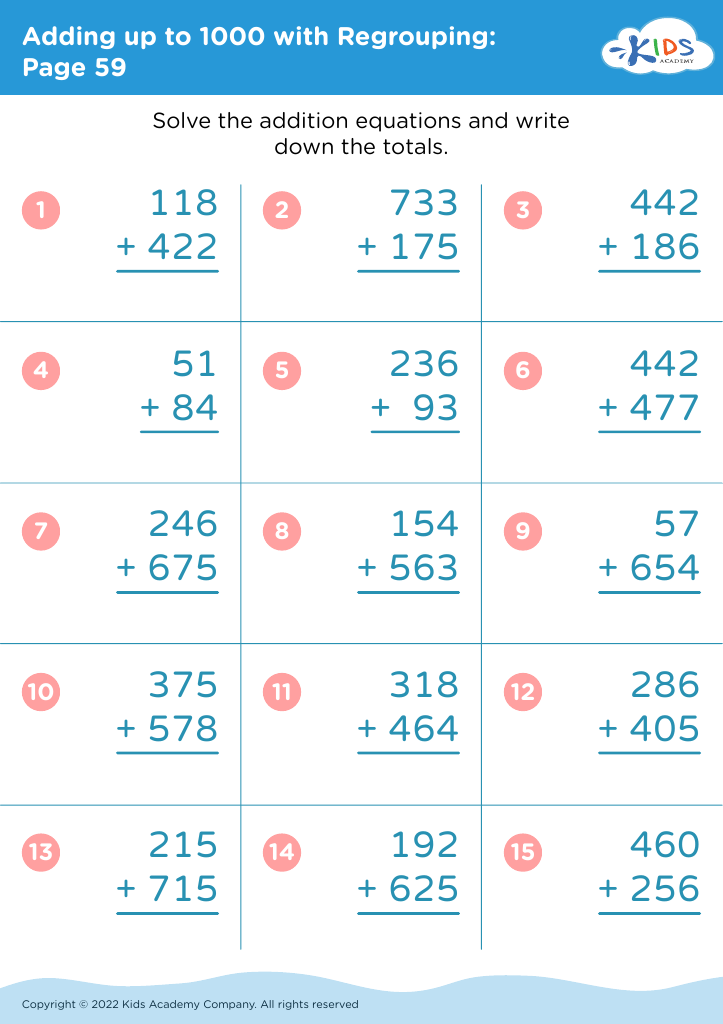
Adding up to 1000 with Regrouping: Page 59
Worksheet
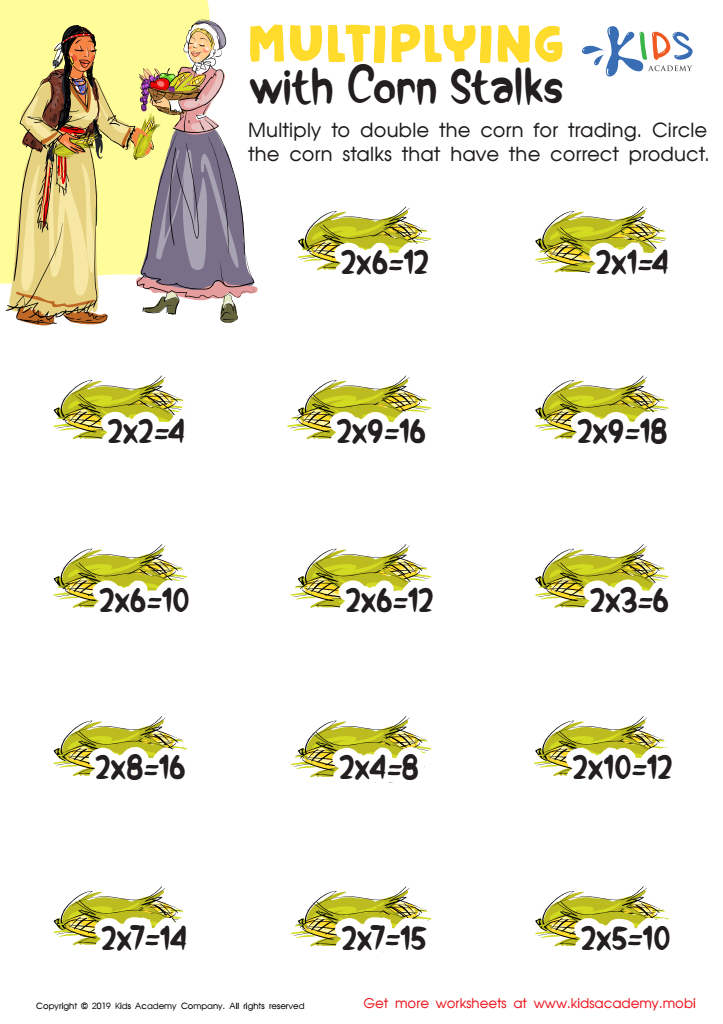
Multiplying With Corn Stalks Worksheet


Multiplying With Corn Stalks Worksheet

Farming is profitable; corn is a versatile crop used for many things. Ask your kids what products come from corn! This worksheet is a fun way to teach multiplying with corn stalks. Farmers must multiply the stalks to double their number for trading and increase their profits. Challenge your kids to circle the correct products.
Multiplying With Corn Stalks Worksheet
Worksheet


Practical application in education for children ages 6-9, often referred to as experiential learning, is pivotal for several reasons. During these formative years, young learners are highly curious and eager to explore the world around them. Integrating hands-on activities and real-life applications into the curriculum not only engages them but also enhances their understanding and retention of information.

When children can apply what they're learning to real-world contexts, the material becomes more meaningful and relevant. For instance, using math to count change at a pretend store, or conducting simple science experiments, helps them see the value of their lessons beyond the classroom. This approach also supports the development of critical thinking and problem-solving skills, as children learn to connect concepts with practical outcomes.

Moreover, practical application helps to differentiate instruction, catering to various learning styles. Visual, auditory, and kinesthetic learners benefit when lessons are dynamic and interactive. This inclusive strategy ensures that all students have the opportunity to grasp challenging concepts.

Finally, fostering a hands-on learning environment instills confidence and independence in young learners. By tackling real-world problems, they develop perseverance and adaptabilty, attributes that are essential for lifelong learning and personal growth. Thus, teachers and parents should prioritize practical applications to cultivate well-rounded, inquisitive, and proactive young minds.