Pronunciation practice Worksheets for Ages 6-9
3 filtered results
-
From - To
Welcome to our Pronunciation Practice Worksheets for Ages 6-9! Designed to enhance young learners' phonetic skills, our engaging worksheets support children in mastering essential sounds and improving their speaking abilities. Each worksheet is creatively crafted to make learning fun and interactive, featuring colorful illustrations and varied activities that encourage repetition and reinforcement. Perfect for classroom use or at-home practice, these resources cater to different learning styles, ensuring every child can thrive in their language development. Explore our collection and empower your child with clear pronunciation skills that will pave the way for their future academic success!
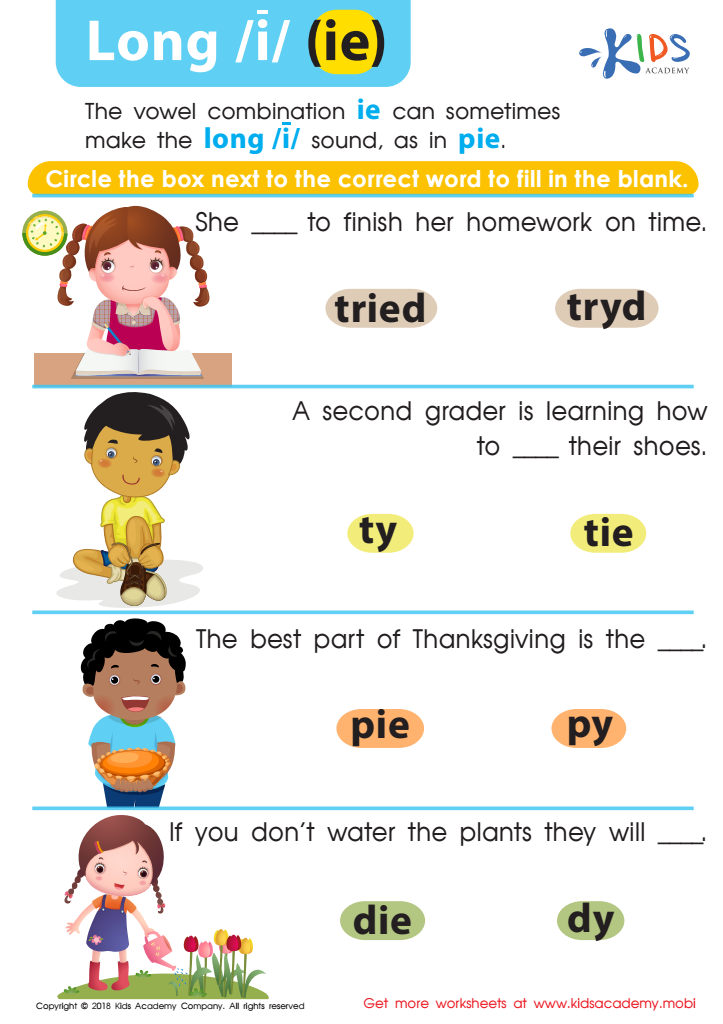
Reading: Long I and IE Worksheet
 Assign to My Students
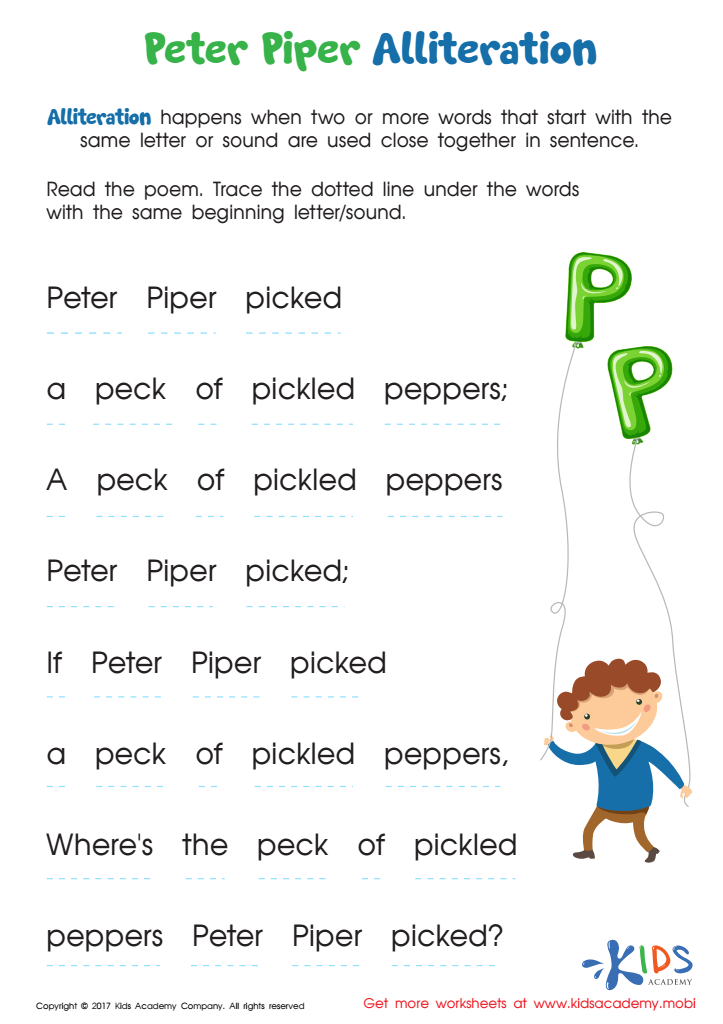
Peter Piper Alliteration Worksheet
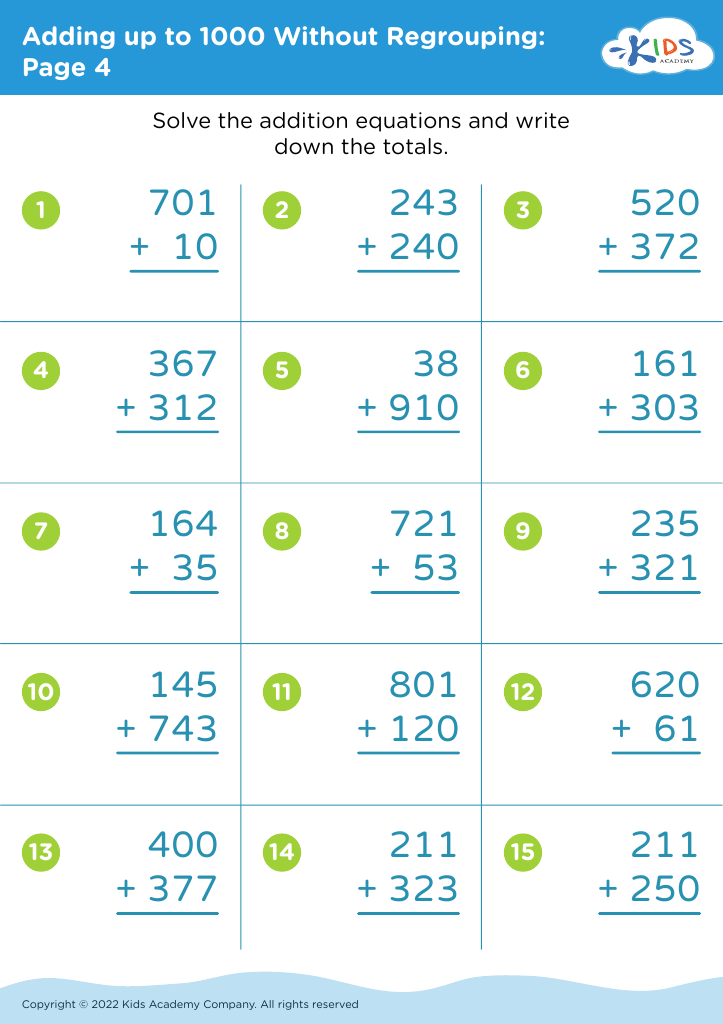






Pronunciation practice for children aged 6-9 is crucial for several reasons. First, at this developmental stage, children are forming the foundation of their language skills. Clear pronunciation aids in effective communication, allowing children to express their thoughts and needs clearly. This clarity boosts their confidence in speaking and encourages them to participate actively in conversations and classroom discussions.
Second, proper pronunciation is key to literacy development. Children who struggle with pronunciation may face challenges in reading and spelling, potentially hindering their overall academic performance. By focusing on pronunciation, teachers and parents can help enhance a child's reading ability, ensuring they recognize words and sounds accurately.
Furthermore, strong pronunciation skills promote better listening abilities. As children learn to articulate sounds correctly, they become more adept at discerning similar sounds in their surroundings, which is essential for language acquisition.
Lastly, fostering good pronunciation early on helps instill a love for languages, paving the way for cultural awareness and empathy. As children navigate diverse environments, good pronunciation skills enable them to connect with peers, reducing the likelihood of misunderstandings or social isolation. Thus, prioritizing pronunciation practice is essential for their holistic linguistic and social development.








