Reading thermometers Worksheets for Ages 6-9
3 filtered results
-
From - To
Enhance your child’s understanding of temperature with our engaging "Reading Thermometers Worksheets for Ages 6-9." These printable worksheets provide hands-on practice reading both Fahrenheit and Celsius scales. Perfect for young learners, they include colorful illustrations and simple exercises, making it fun and easy to grasp the concept of temperature measurement. Whether it’s identifying the freezing point or comparing temperature differences, these resources support key math and science skills. Ideal for classroom activities or at-home learning, our worksheets help your child become confident in interpreting thermometers, promoting critical thinking and problem-solving abilities. Start your educational journey today!
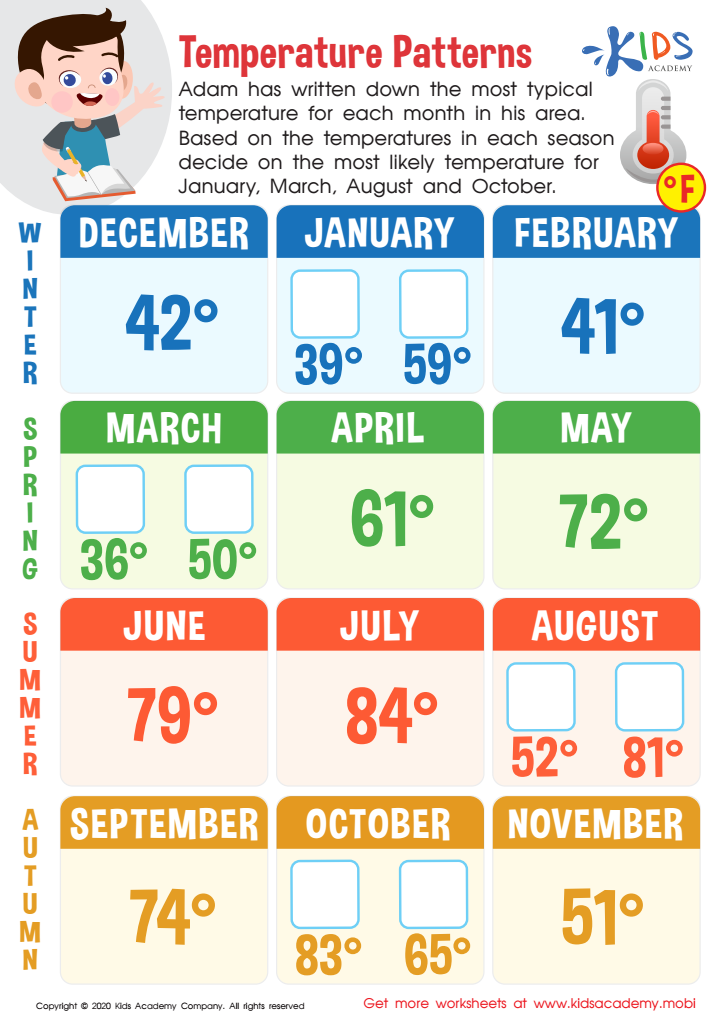
Temperature Patterns Worksheet
 Assign to My Students
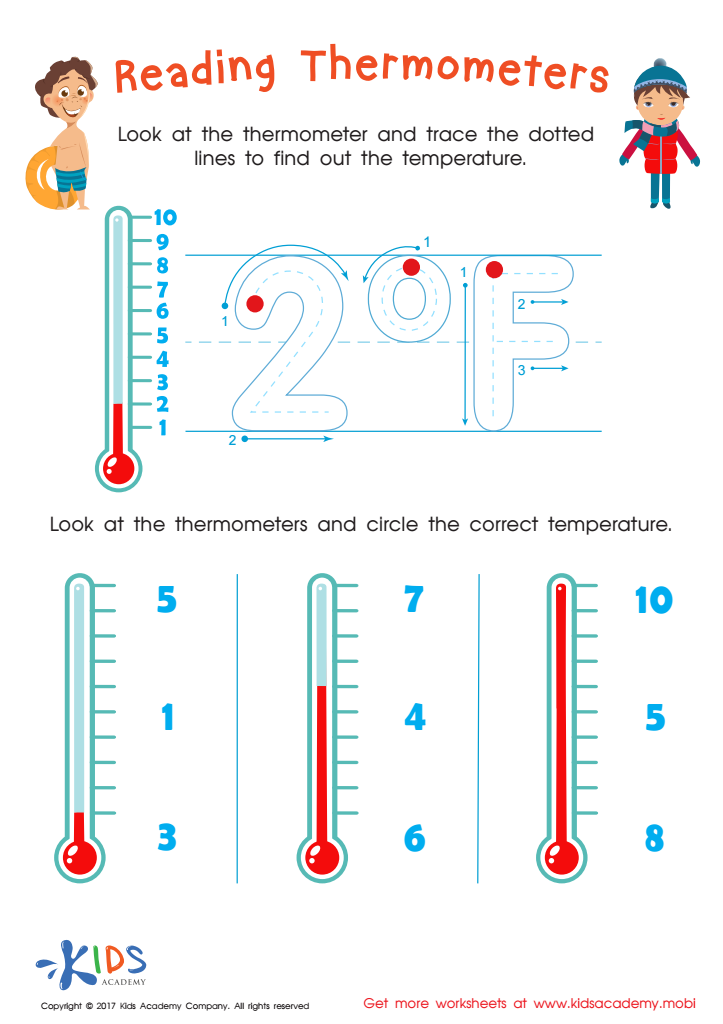
Reading Thermometers Printable
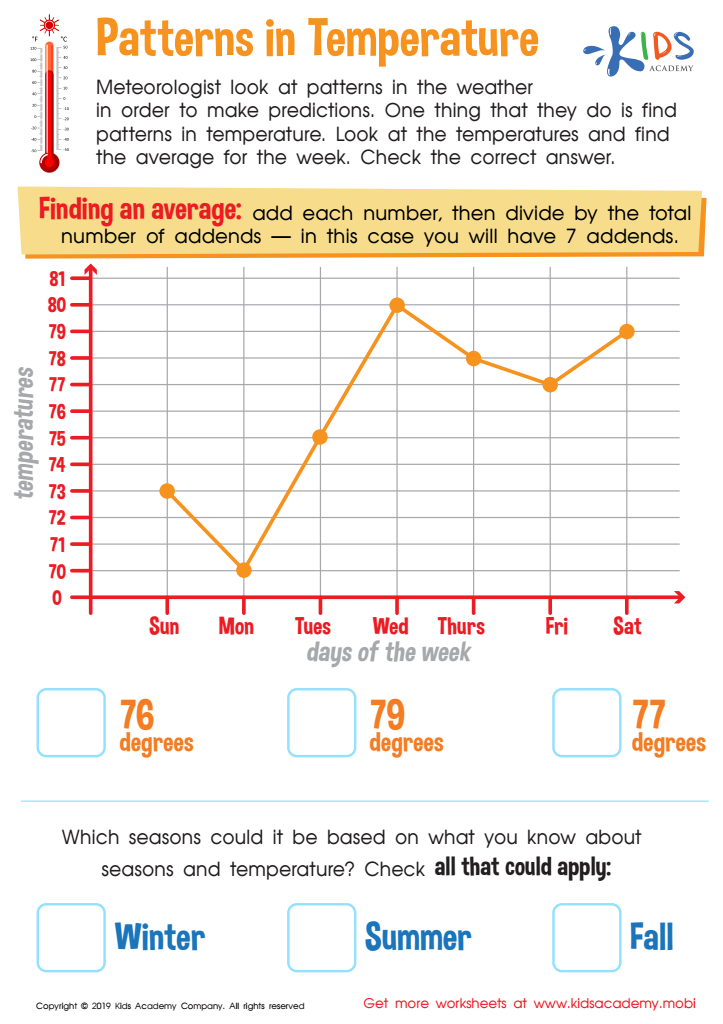
Patterns in Temperature Worksheet








Reading thermometers is an essential skill that parents and teachers should prioritize for children aged 6-9 because it integrates practical math, science, and health education into everyday life. At this formative age, children are developing their understanding of numbers and measurement, making it an ideal time to introduce thermometer reading, which reinforces these concepts through real-life application.
Knowing how to read a thermometer helps children grasp abstract ideas like temperature, enhancing their cognitive development. It introduces them to basic meteorology, fostering curiosity and understanding of the natural world. Children learn to predict weather conditions and make informed decisions about clothing and outdoor activities.
Teaching children to read thermometers also integrates health education. Understanding body temperature helps children recognize signs of illness in themselves or others, promoting empathy and self-awareness. They learn about fever and its relationship to health, which can aid in effective communication with adults about how they're feeling.
Moreover, developing this skill encourages observational skills, critical thinking, and responsibility. By teaching children aged 6-9 to read thermometers, parents and educators provide them with a foundational life skill that has wide-reaching educational and practical benefits, laying the groundwork for more complex scientific understanding in the future.








