Rhyming skills development Worksheets for Ages 6-9
4 filtered results
-
From - To
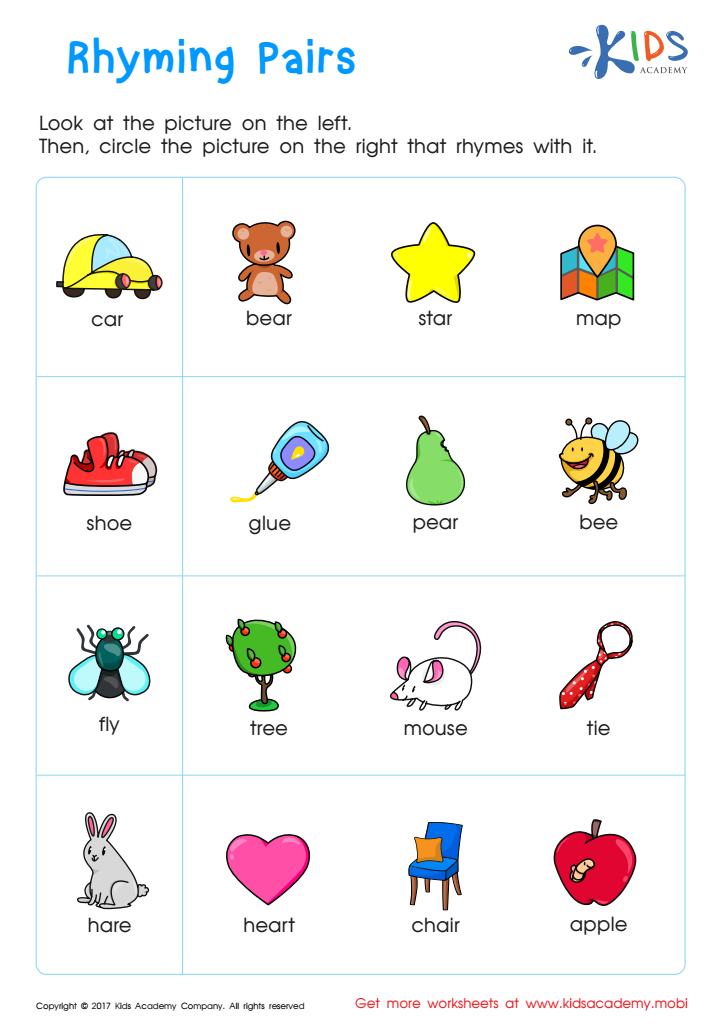
Discover our engaging Rhyming Skills Development Worksheets tailored for children aged 6-9. At Kids Academy, we offer a vibrant collection of printable activities designed to enhance phonemic awareness and vocabulary through fun, rhyming exercises. Perfectly suited for young learners, our worksheets help children recognize and produce rhymes, fostering essential language and reading skills. Each activity combines attractive visuals with interactive tasks, making learning both enjoyable and effective. Explore our diverse selection to support your child's literacy journey and build a strong foundation for their future reading success. Try them today to see the delight and progress in your young reader!

Rhyming Words Rhyming Worksheet
 Assign to My Students
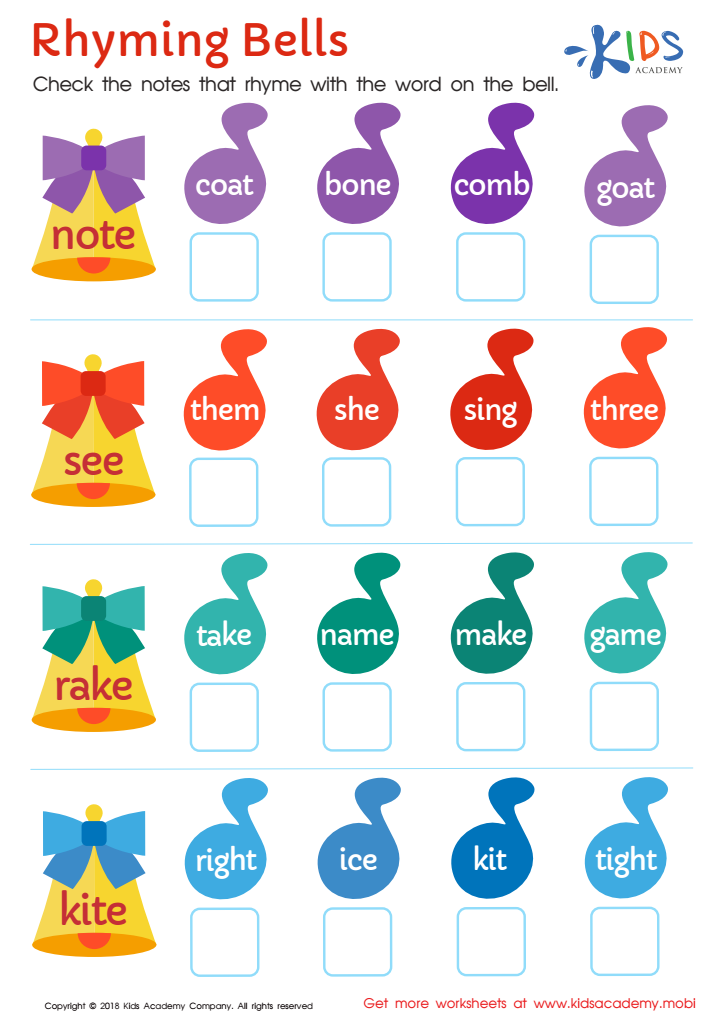
Rhyming Bells Worksheet

First Words: Picture Rhymes Worksheet






Rhyming skills are a crucial component of early literacy development for children aged 6-9. These skills underpin the understanding of phonological awareness, an essential building block in learning to read. When children recognize and produce rhymes, they are practicing the ability to hear and manipulate sounds within words, which directly supports their capacity to decode, or sound out, new words.
Moreover, rhyming enhances language development by expanding vocabulary and improving memory recall. Children's detection of rhyming patterns helps them remember and predict words in stories and songs, fostering higher engagement and comprehension.
Creative thinking is another benefit: engaging in rhyming activities stimulates children’s imagination and creative thinking, useful for both academic and social contexts. Rhyming games, poems, and songs also make learning fun and interactive, holding children's attention more effectively and helping them associate language learning with enjoyment rather than difficulty.
Lastly, rhyming skills matter for oral communication. Children who can recognize and play with rhymes are often better at expressing themselves and are more adept at understanding context clues in listening and reading scenarios. Thus, parents and teachers nurturing rhyming skills are setting a foundation for stronger overall communication and literacy capabilities.








