
Rhythm understanding Worksheets for Ages 6-9
3 filtered results
Difficulty Level
Grade
Age
-
From - To
Subject
Activity
Standards
Explore our engaging "Rhythm Understanding Worksheets" designed for children aged 6-9! These interactive worksheets aim to develop essential listening and rhythmic skills through fun exercises and activities. Kids will learn to recognize, create, and replicate rhythms while enhancing their auditory processing abilities. Our carefully crafted resources are perfect for classrooms or at-home learning, ensuring a dynamic approach to music education. With colorful visuals and age-appropriate challenges, these worksheets will keep young learners motivated and excited about mastering rhythm. Encourage your child's creativity and musicality today with our comprehensive set of worksheets that make learning rhythm enjoyable and effective!
Favorites
With answer key
Interactive
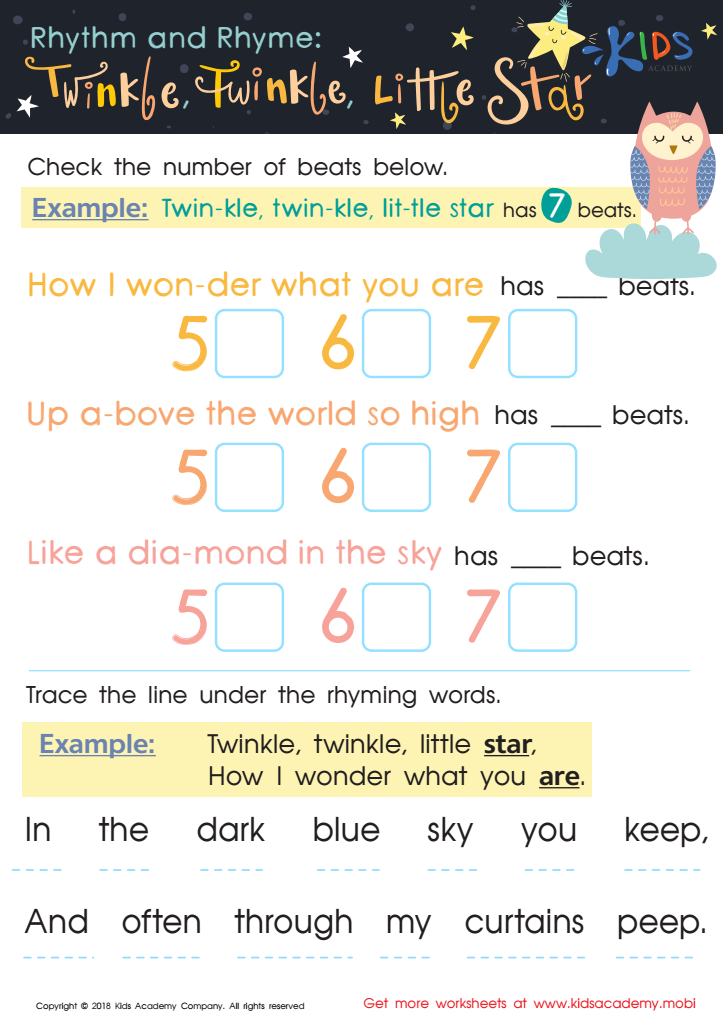
Rhythm and Rhyme: Twinkle, Twinkle, Little Star Worksheet
Kids will love learning about syllables in words with a fun children's song! Use the song Twinkle, Twinkle, Little Star to explain that each word has at least one beat. Have them clap out the beats in each word and check the boxes on this cute worksheet to identify the syllables.
 Assign to My Students
Rhythm and Rhyme: Twinkle, Twinkle, Little Star Worksheet
Worksheet
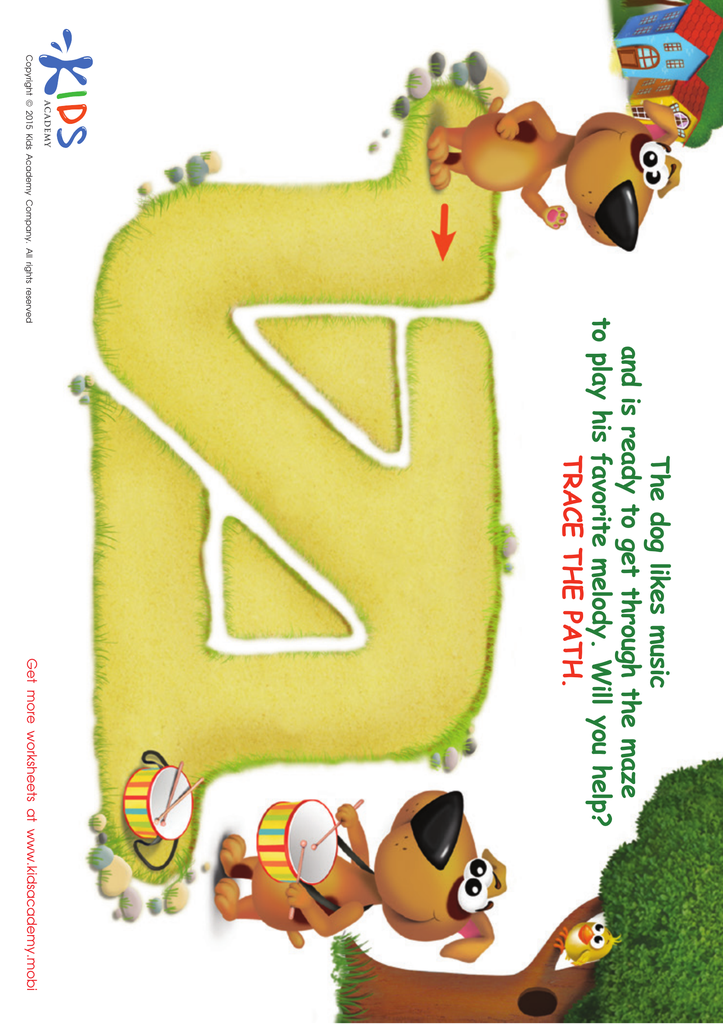
Drummer Maze Worksheet
Enjoy!
Kids Academy's new maze games are perfect for you and your little learners. Help the dog find the drum at the end of the maze! Once they reach it, you can play music together. Visit Kids Academy's website to find free printable mazes and other worksheets. Have fun!
Drummer Maze Worksheet
Worksheet
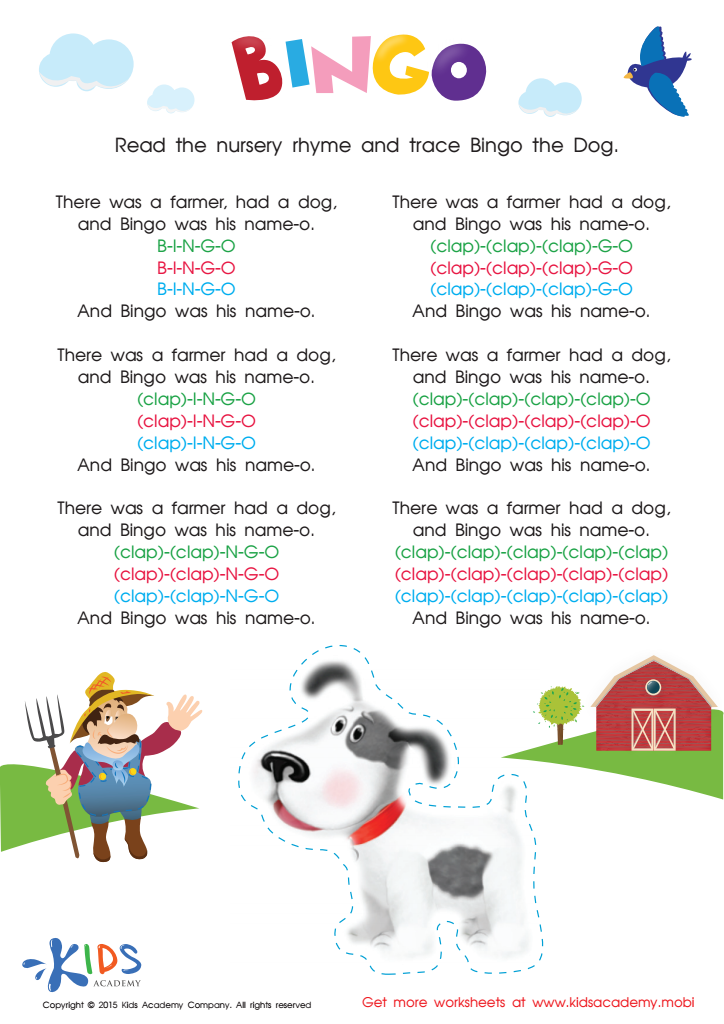
Nursery Rhymes: The Bingo Song Worksheet
Introduce The Bingo Song to your little ones. Have your kids sing some words and lines aloud, while you replace letters with claps. Add other activities: tapping, patting, jumping, and use your imagination. Print our free Bingo Song Coloring Pages and let your kids color them. Get more free worksheets at our website Kids Academy.
Nursery Rhymes: The Bingo Song Worksheet
Worksheet
Join Kids Academy for Free
Who is primarily going to use this learning content?



.jpg)



Rhythm understanding is crucial for children ages 6-9 as it plays a significant role in their overall development. At this age, children are honing their cognitive, social, and emotional skills, and rhythm serves as a bridge to enhance these areas. Recognizing and creating rhythmic patterns aids in the development of auditory discrimination, which is essential for language development and reading skills. Children with strong rhythmic abilities often excel in phonemic awareness, making it easier for them to decode words.
Additionally, rhythm activities promote motor skills and coordination. Simple actions like clapping, tapping, or dancing to a beat refine fine and gross motor skills, laying the groundwork for physical activities and sports.
From a social perspective, engaging in rhythmic activities fosters teamwork and collaboration, as children often participate in group settings such as music classes or dance. It creates a shared experience, helping to build relationships and improve social dynamics.
Lastly, rhythm understanding can enhance emotional expression and regulation. Music and movement provide an outlet for children to express themselves constructively, fostering their emotional intelligence. By prioritizing rhythm in their learning, parents and teachers can help cultivate well-rounded individuals who will thrive academically, socially, and emotionally.








