Science knowledge Worksheets for Ages 6-9
5 filtered results
-
From - To
Discover our engaging "Science Knowledge Worksheets for Ages 6-9" designed to spark curiosity and encourage exploration! Ideal for young learners, these worksheets cover essential topics such as plant life, weather patterns, animals, and the human body. Each activity promotes critical thinking and hands-on learning, making science fun and accessible. Perfect for both classroom use and home learning, our worksheets are an excellent resource for parents and educators seeking to enhance children's understanding of the world around them. Explore captivating scientific concepts while developing essential skills. Encourage your child's budding scientific mind with our thoughtfully crafted activities today!
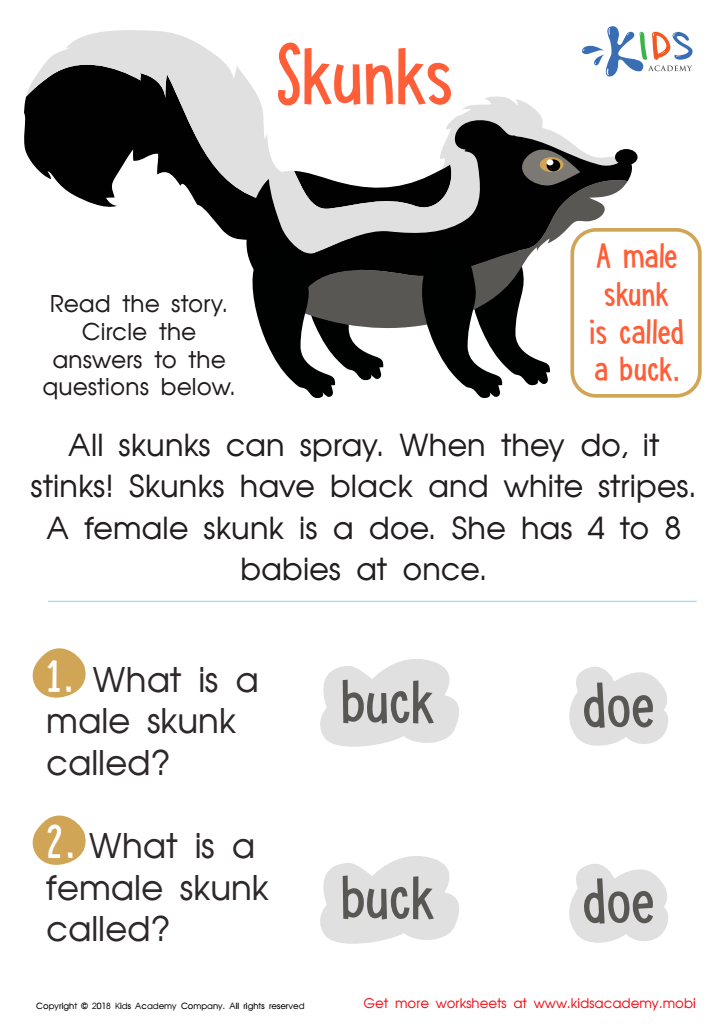
Skunks Worksheet
 Assign to My Students
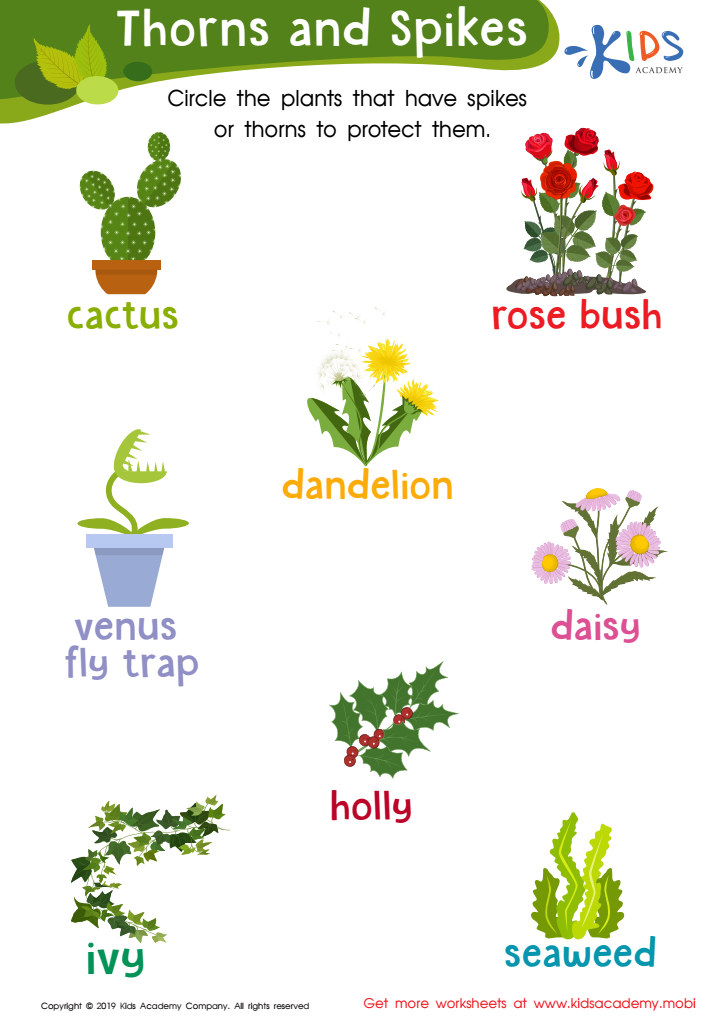
Thorns and Spikes Worksheet
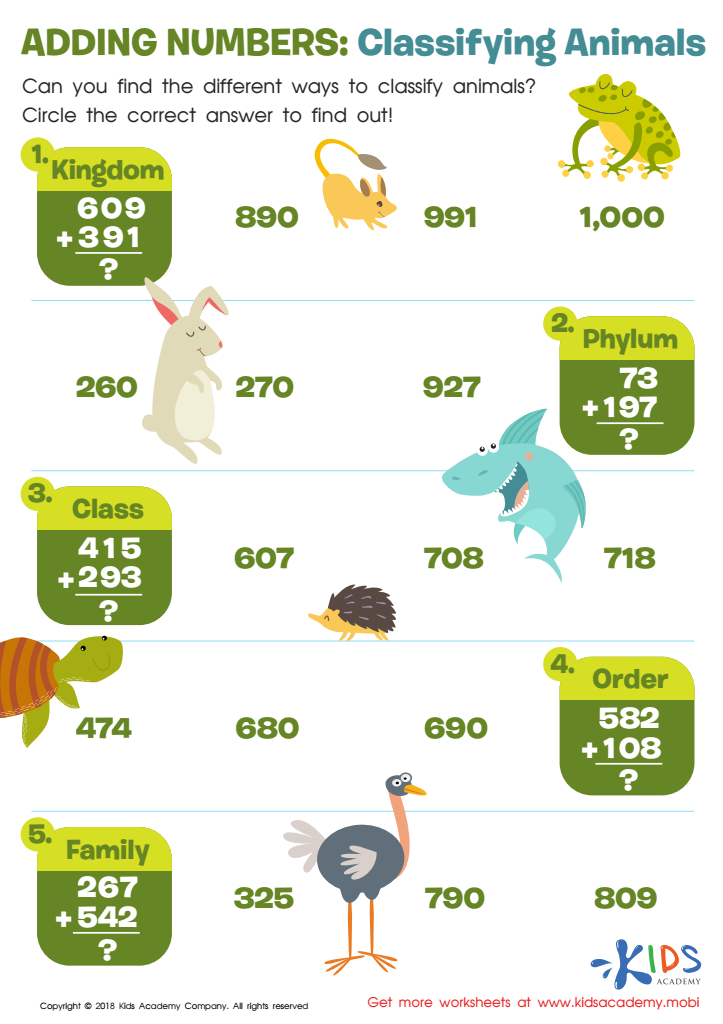
Adding Numbers: Classifying Animals Worksheet
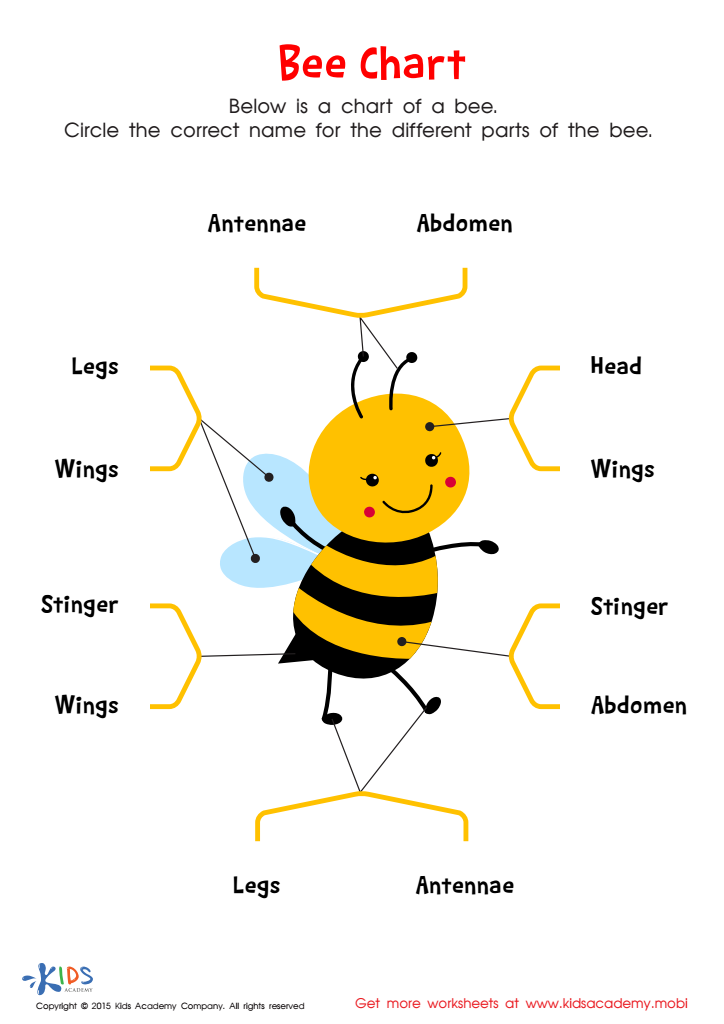
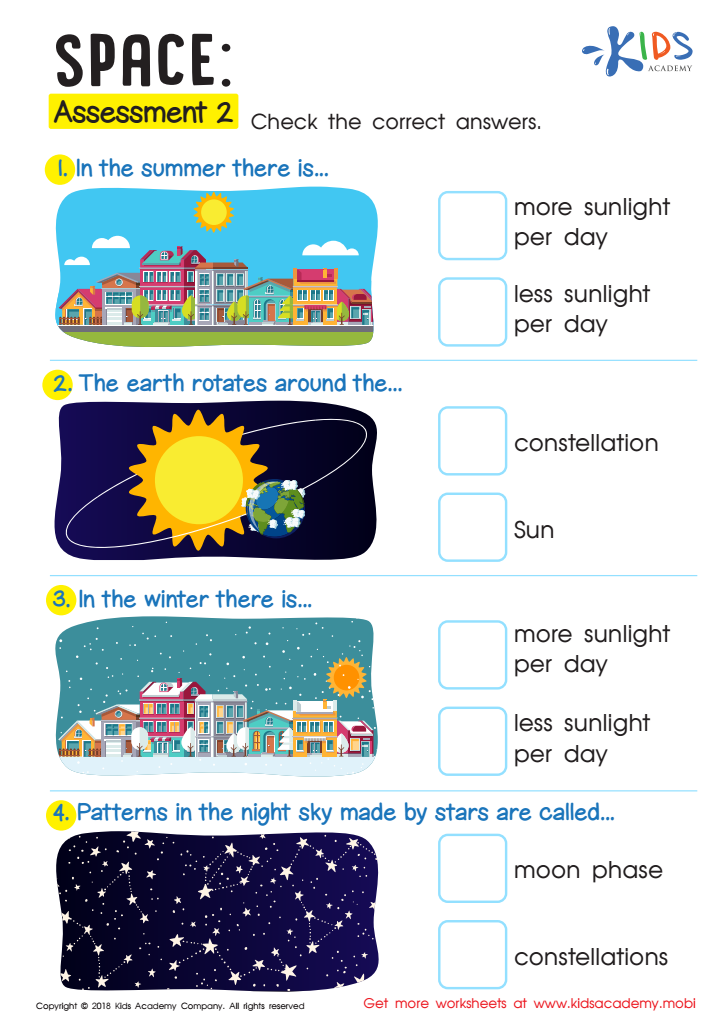
Space: Assessment 2 Worksheet








Science knowledge is vital for children aged 6-9, and parents or teachers should prioritize it for several reasons. During this developmental stage, children are naturally curious and inquisitive about the world around them. Introducing science concepts can nurture this curiosity, encouraging a love for exploration and discovery. Engaging students in hands-on experiments and observations fosters critical thinking skills and enhances problem-solving abilities, foundational skills for future learning.
Additionally, early science education promotes literacy in STEM (Science, Technology, Engineering, and Mathematics), which is increasingly important in our technology-driven society. Understanding basic scientific principles empowers children to make informed decisions and understand the world they inhabit. It helps them comprehend environments, ecosystems, and health topics, contributing to a sense of responsibility for their surroundings.
Furthermore, developing scientific skills at a young age fosters collaboration and communication, as children often work in groups to conduct experiments and discuss findings, enhancing social skills. By emphasizing science knowledge, parents and teachers lay the groundwork for lifelong learning, curiosity, and adaptability in a rapidly changing world, thus preparing children for future educational and career opportunities. In summary, fostering a robust science education is crucial for holistic development and awareness in young learners.








