Shape Recognition Worksheets for Ages 6-9 - Page 6
127 filtered results
-
From - To
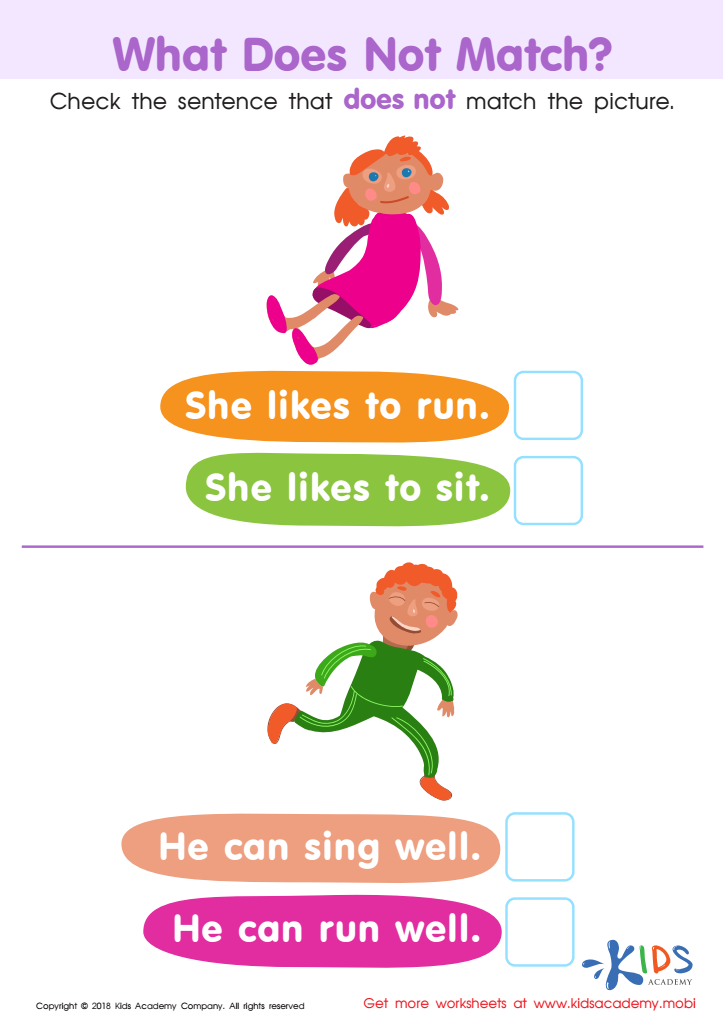
What Does Not Match? Worksheet
 Assign to My Students


.jpg)

.jpg)


Shape recognition is a foundational skill critical for children's cognitive development, especially for ages 6-9. During these formative years, children are not only expanding their vocabulary, but also developing essential problem-solving and analytical skills. Understanding shapes allows children to categorize and interpret the world around them, forming a basis for more complex mathematical concepts such as geometry and fractions later on.
Additionally, shape recognition enhances fine motor skills as children engage in activities like drawing, cutting, and constructing. These activities support hand-eye coordination and dexterity, vital for overall development.
Furthermore, recognizing shapes lays the groundwork for spatial awareness, which influences their ability to navigate environments and understand physical relationships. Such skills are not only pivotal for academic success across subjects—especially math and art—but also beneficial in daily life, aiding in understanding maps, architecture, and even technology.
Moreover, engaging in shape recognition activities can foster creativity and imagination as children explore the different forms and patterns that shapes create. Therefore, for parents and teachers, nurturing shape recognition is essential, as it supports cognitive growth, practical skills, and a love for learning that will last a lifetime.








