Telling time Worksheets for Ages 6-9
4 filtered results
-
From - To
Enhance your child's time-telling skills with our engaging worksheets, tailored for ages 6-9. Our printable resources make learning to read both digital and analog clocks a fun and interactive experience. Through a variety of exercises, children will master the concepts of hours, half-hours, and minutes. Designed by educators, these worksheets cater to different learning styles with colorful, clear, and age-appropriate content. Whether your child is a beginner or looking to reinforce their skills, our time-telling worksheets offer the perfect practice to build confidence and proficiency. Visit Kids Academy to access these valuable learning tools today!
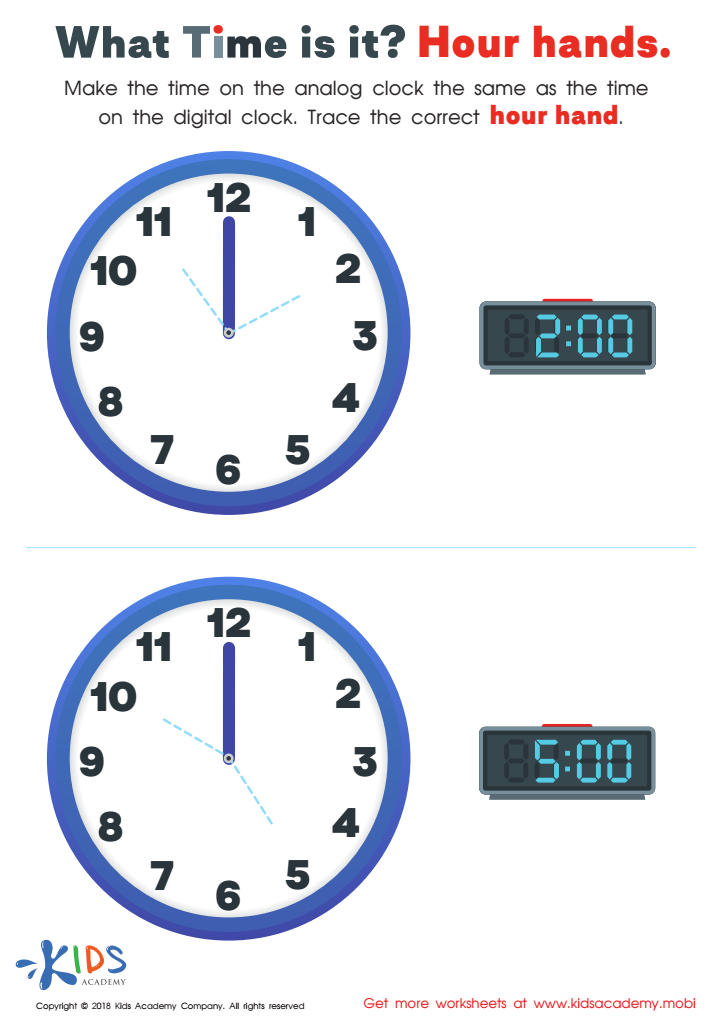
What Time Is it? Hour Hands Worksheet
 Assign to My Students





Teaching children aged 6-9 to tell time is crucial for several reasons. Firstly, it fosters independence and responsibility. Knowing how to read a clock helps children manage their daily routines, such as knowing when it's time to wake up, go to school, or participate in extracurricular activities, reinforcing their sense of responsibility.
Secondly, understanding time is a critical math skill, incorporating concepts like counting by fives, and it enhances number sense and spatial reasoning. Reading both analog and digital clocks requires cognitive skills underlying math and logic, which are vital in academic subjects.
Additionally, telling time promotes time management abilities. By comprehending durations and schedules, children can better allocate time for homework, play, and chores, fostering balanced routines and reducing stress.
Socially, being punctual is a valued trait. Learning time helps children understand the importance of being on time for social events and appointments, setting a foundation for future professional decorum.
Finally, integrating time-learning activities can be fun and interactive. Games and role-play involving clocks make learning enjoyable while solidifying concepts. Thus, parents and teachers nurturing time-telling in early childhood can significantly impact a child's cognitive development, life skills, and academic success.








