Understanding force Worksheets for Ages 6-9
3 filtered results
-
From - To
Introduce your child to the exciting world of physics with our "Understanding Force Worksheets for Ages 6-9." These engaging, printable worksheets are specially designed to help young learners grasp the fundamental concepts of force, motion, and energy. With fun activities, illustrations, and age-appropriate language, these resources make learning science enjoyable and accessible. Watch your child discover how pushes and pulls work, fostering a love for STEM subjects early on. Ideal for both classroom and home use, our worksheets will ignite curiosity and encourage a deeper understanding of the physical world around them. Discover, learn, and have fun with force!
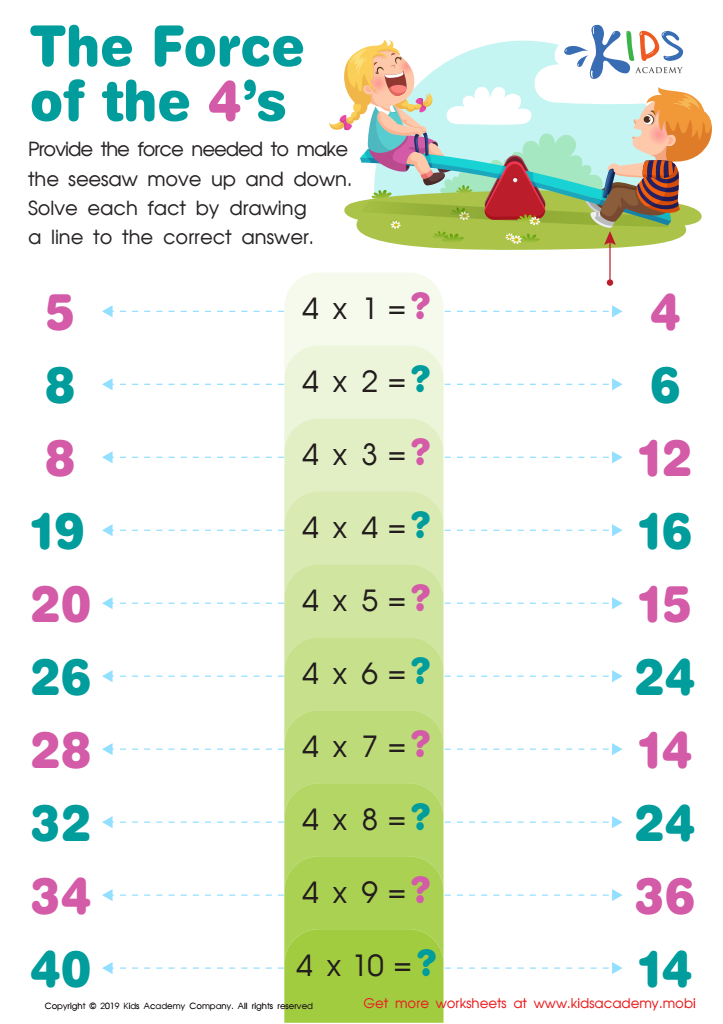
The Force of the 4's Worksheet
 Assign to My Students
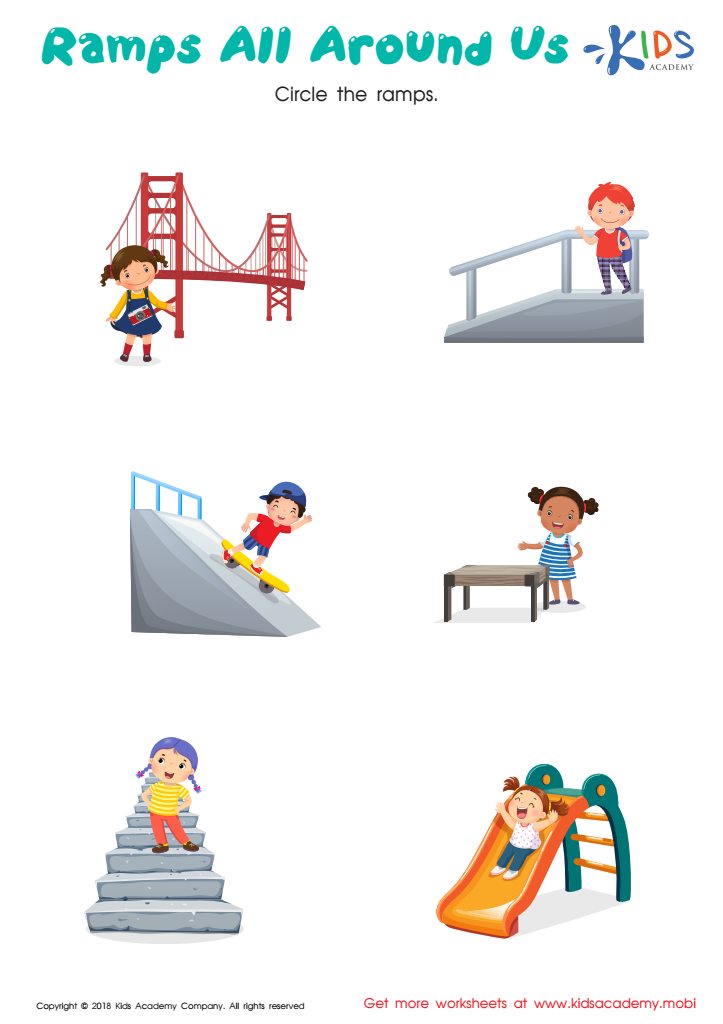
Ramps All Around us Worksheet
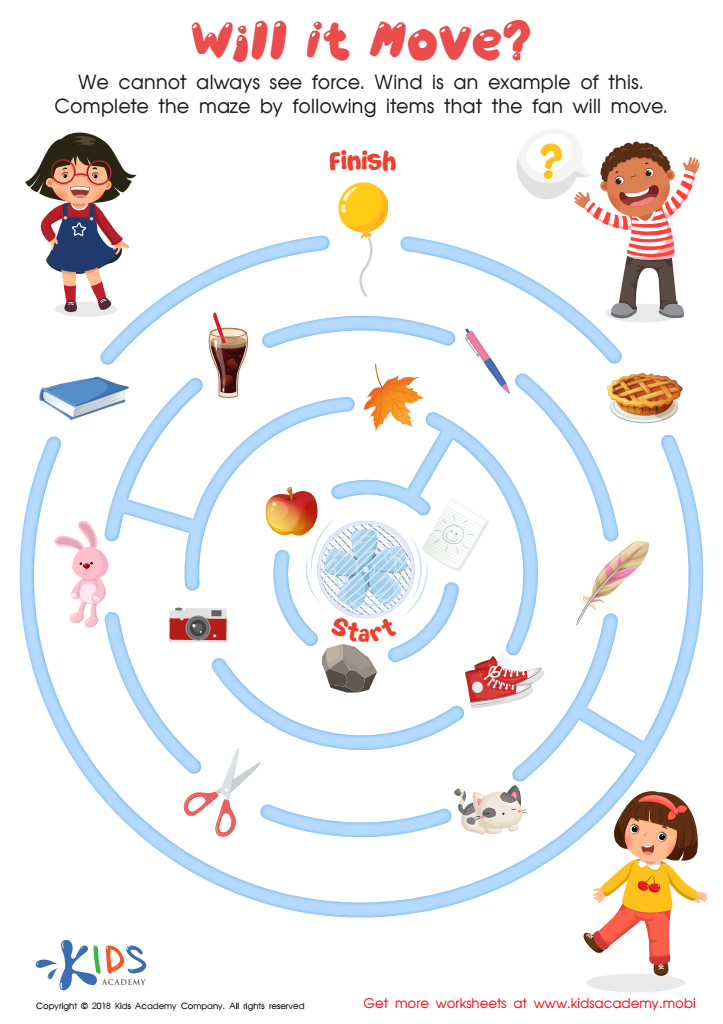
Will it Move? Worksheet







Understanding the concept of force is fundamental for early learners aged 6-9 because it lays the foundation for critical thinking and scientific literacy. At this developmental stage, children are naturally curious and eager to explore the world around them. Teaching them about force helps channel this curiosity into structured learning, fostering a deeper awareness of how everything functions.
For instance, simple experiments demonstrating gravity, push, and pull can ignite a child's fascination with physics, making complex ideas tangible and relatable. This hands-on learning improves their problem-solving skills, as they begin to make connections between cause and effect. Furthermore, understanding force enhances their comprehension of other subjects like math and engineering; concepts like measurement, balance, and motion are integral to these fields.
Additionally, early exposure to scientific ideas can build self-confidence. As children grasp new concepts and successfully perform experiments, they develop a sense of achievement and curiosity that can propel long-term academic interest. For educators and parents, integrating lessons on force into everyday activities maximizes learning opportunities and encourages lifelong inquisitiveness. This knowledge empowers children to better understand and navigate their world, fostering a generation of thinkers, creators, and problem-solvers.








