Understanding greater/less than Worksheets for Ages 6-9
4 filtered results
-
From - To
"Understanding Greater/Less Than Worksheets for Ages 6-9" are designed to help young students master the fundamental concept of comparing numbers. These engaging and interactive printables make it easy for children to grasp the idea of greater than, less than, and equal to, through a variety of exercises featuring colorful illustrations and relatable scenarios. Perfect for both classroom use and at-home learning, these worksheets enable kids to develop critical thinking and math skills while having fun. Ideal for educators and parents, our worksheets provide a structured approach to boosting a child’s confidence in math fundamentals. Try them today!
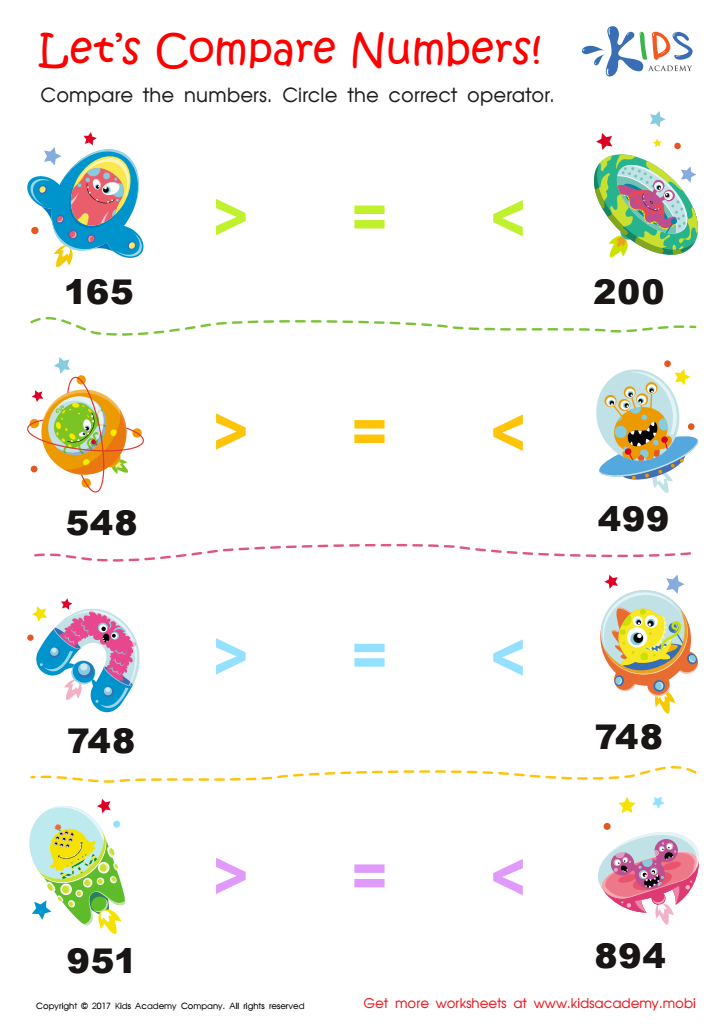
Comparing Numbers Worksheet for 2nd Grade
 Assign to My Students
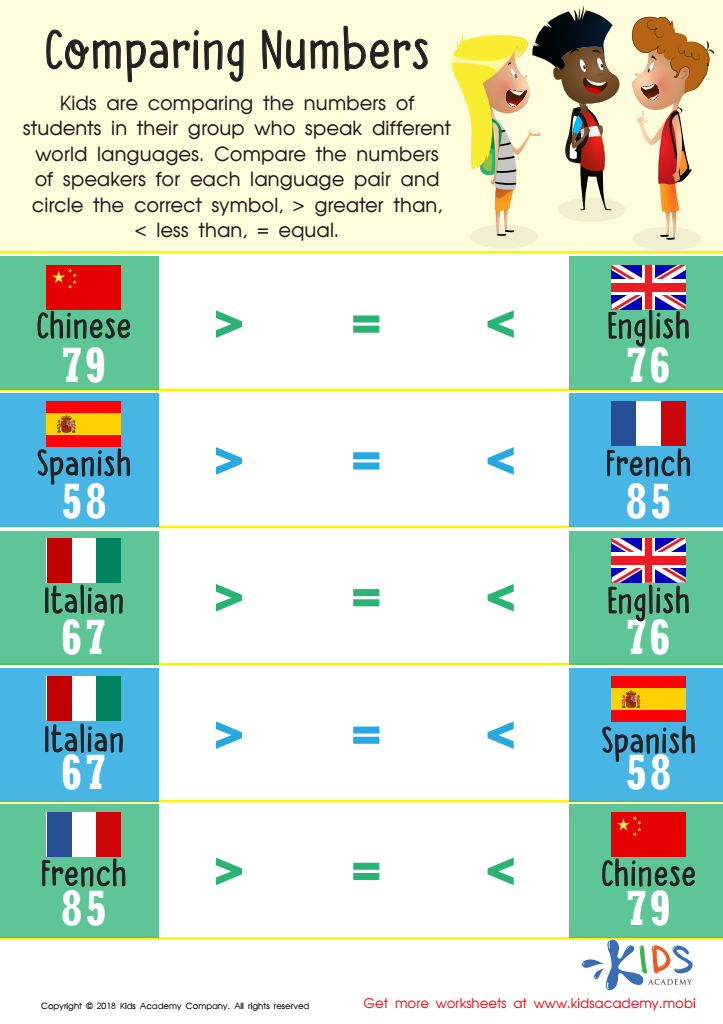
Comparing Numbers Worksheet for 1st Grade
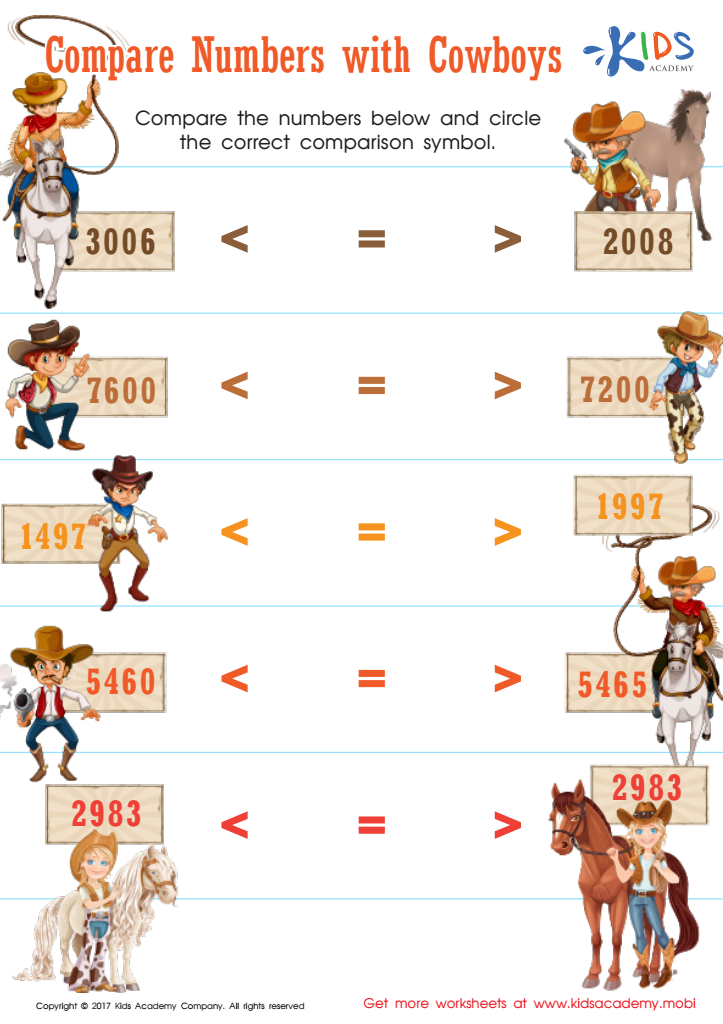
Compare Numbers Worksheet for 3rd Grade
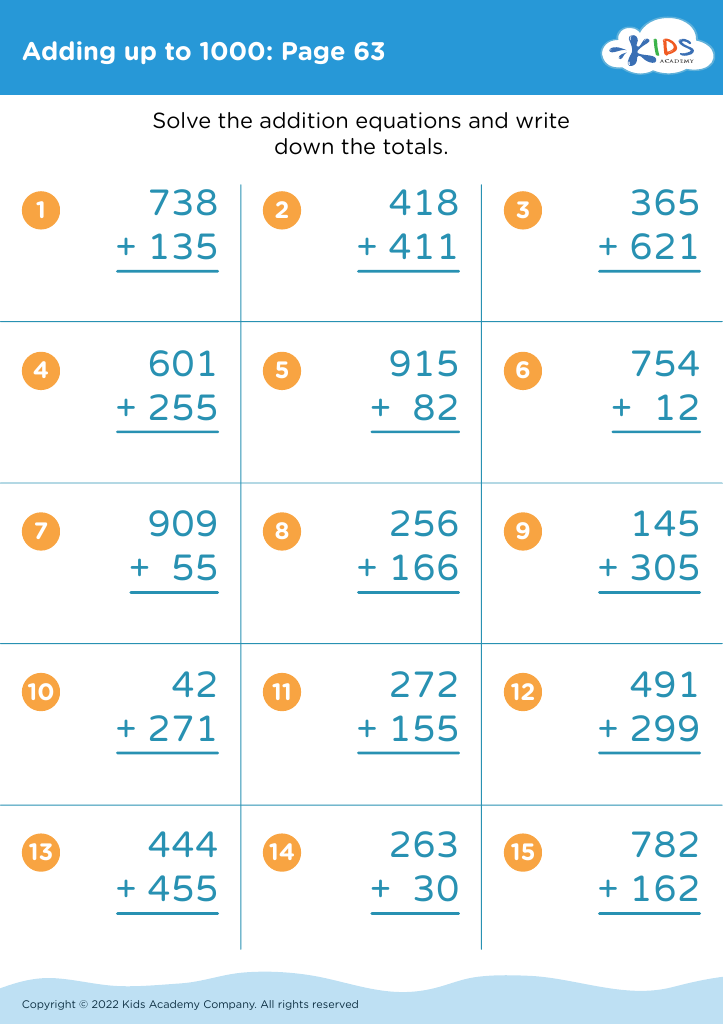








Understanding the concepts of "greater than" and "less than" is fundamental to early math education for children aged 6-9, acting as a building block for more advanced math skills. For parents and teachers, fostering this understanding is crucial because it develops numerical reasoning and comparative skills crucial in everyday life. When children grasp these concepts, they can efficiently compare quantities, which enhances their decision-making skills. For example, determining which amount of pocket money or candy is more or less involves making comparisons. This lays a foundation for practical life skills.
Moreover, these concepts are pivotal for mastering future mathematical topics like addition, subtraction, fractions, and even basic algebra. They also play a significant role in developing logical thinking and problem-solving abilities. When children can confidently understand and use "greater than" and "less than," they have an increased ability to sequence numbers, understand number value, and build a strong number sense. This fluency in basic math concepts can boost their confidence in math-related activities, which is essential for long-term academic success.
By integrating these comparisons into daily learning, parents and teachers can provide supportive environments that make learning engaging and applicable, creating a positive and encouraging mindset towards math. Hence, prioritizing this knowledge at an early age ensures a strong mathematical foundation for future learning.








