Understanding length Worksheets for Ages 6-9
3 filtered results
-
From - To
Introduce children to the fundamental concept of length with our specially designed "Understanding Length Worksheets for Ages 6-9". Aligned with educational standards, these worksheets transform learning into an engaging experience! From measuring objects using rulers to comparing lengths with relatable visuals, our exercises help develop critical thinking and problem-solving skills. Perfect for both classroom use and at-home practice, they foster confidence and proficiency in young learners. Explore diverse activities that make math fun and accessible, ensuring kids grasp the importance of measurement in everyday life. Make learning interactive and enjoyable with our expert-crafted length understanding worksheets!
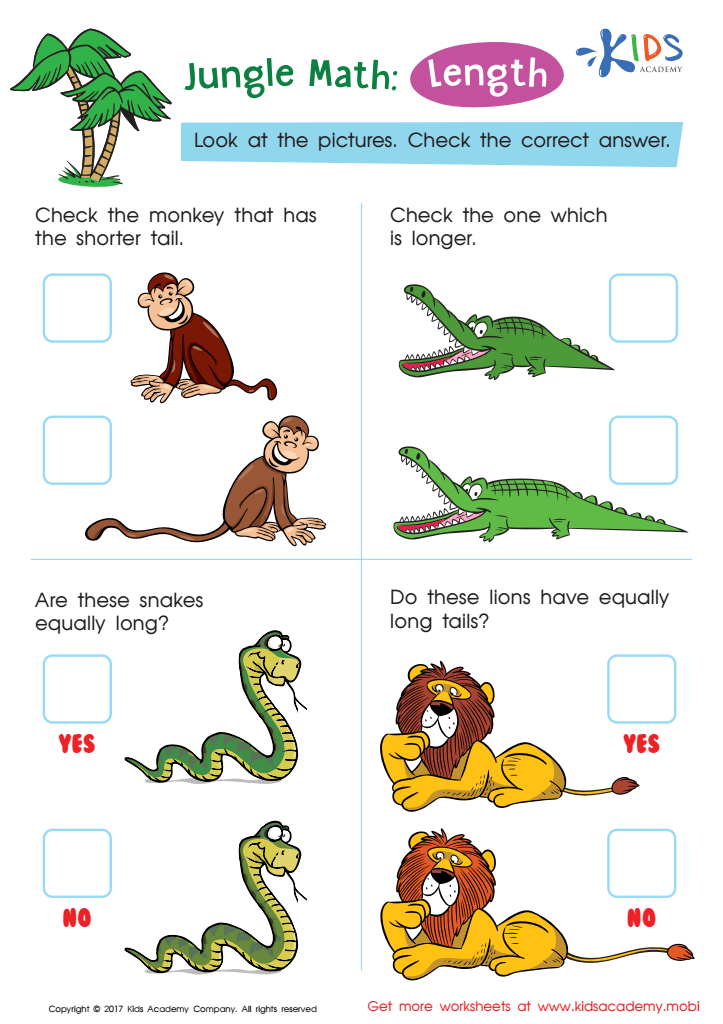
Which One Is Longer - Length Worksheet
 Assign to My Students
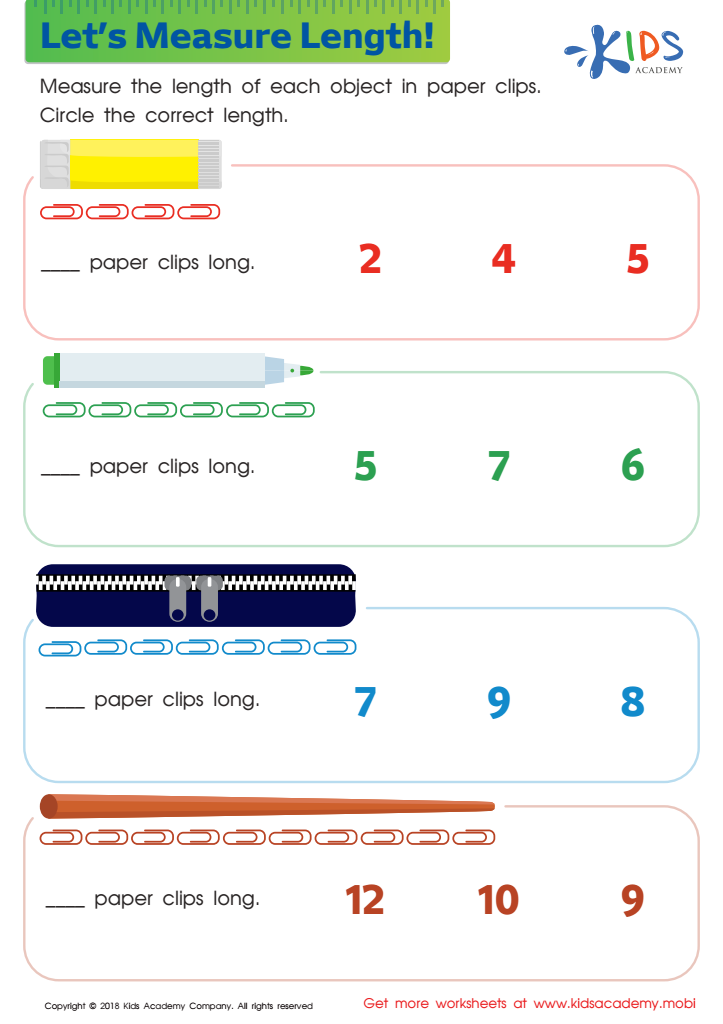
Lets Measure Length Worksheet
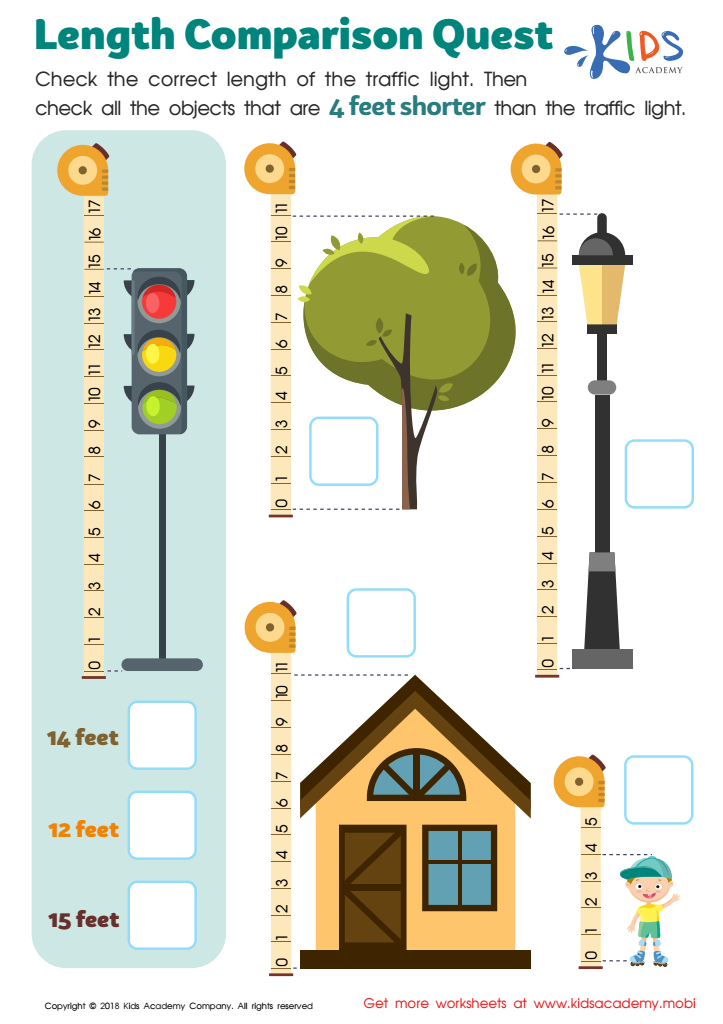
Length Comparison Quest Worksheet







Understanding length is a foundational math skill that plays a significant role in a child’s cognitive development. For children ages 6-9, being able to quantify and compare lengths fosters critical thinking and problem-solving skills. Parents and teachers should care about this because early mastery of these concepts can help children succeed not just in math, but in science, technology, and daily living tasks.
When children learn about length, they develop spatial awareness, helping them navigate their physical world more effectively. For example, knowing how long or wide something is helps them organize their spaces or gauge distances. This also ties into practical life skills like cooking (measuring ingredients), arts and crafts (cutting paper), and even playing sports (judging distances).
In the academic sphere, understanding length supports learning in various subjects. For instance, in science, children may need to measure lengths during experiments. In technology and engineering, understanding dimensions is key when building or creating objects.
Moreover, grasping the concept of length aids in the development of other mathematical skills, such as understanding area, volume, and even algebraic reasoning later on. When parents and teachers emphasize understanding length, they are setting the child up for broader academic achievement and everyday competency.








