Understanding measurement Worksheets for Ages 6-9
3 filtered results
-
From - To
Explore our "Understanding Measurement Worksheets for Ages 6-9," designed to make learning fun and engaging for young minds! These worksheets introduce essential measurement concepts, including length, weight, and volume, through colorful and interactive activities. Your child will enjoy mastering measurement basics while enhancing their math skills. Each worksheet encourages hands-on practice with real-life examples, making it easy for children to grasp complex ideas. Tailored for early learners, these resources promote confidence in problem-solving and critical thinking. Download our free printable worksheets today, and help your child embark on a measurement adventure that sets the foundation for future math success!
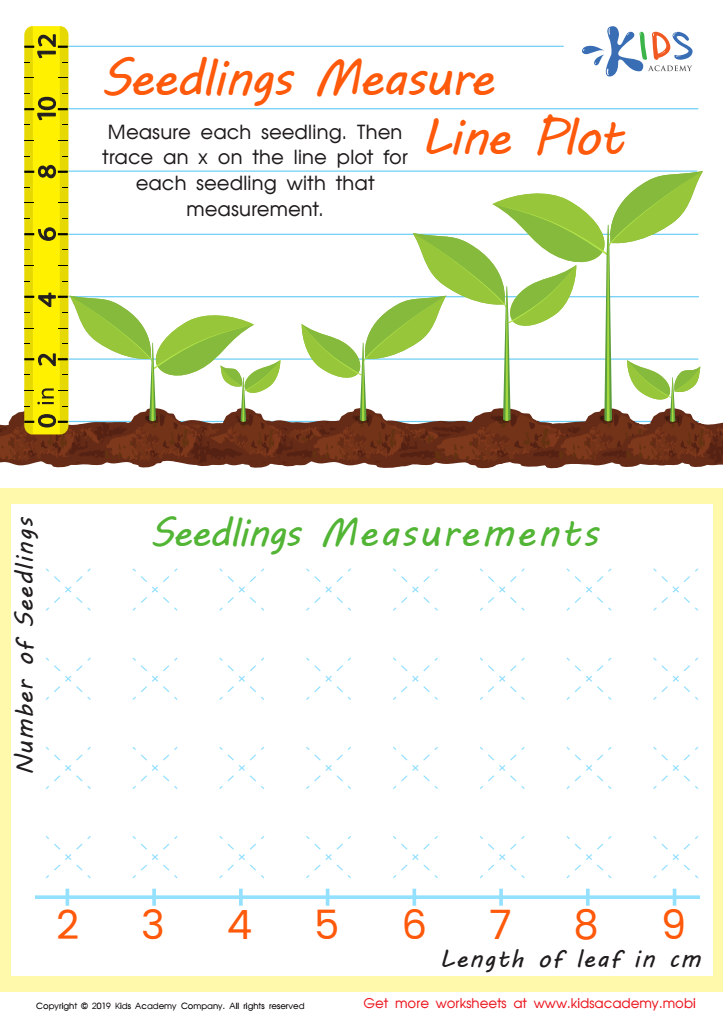
Seedling Measure Line Plot Worksheet
 Assign to My Students
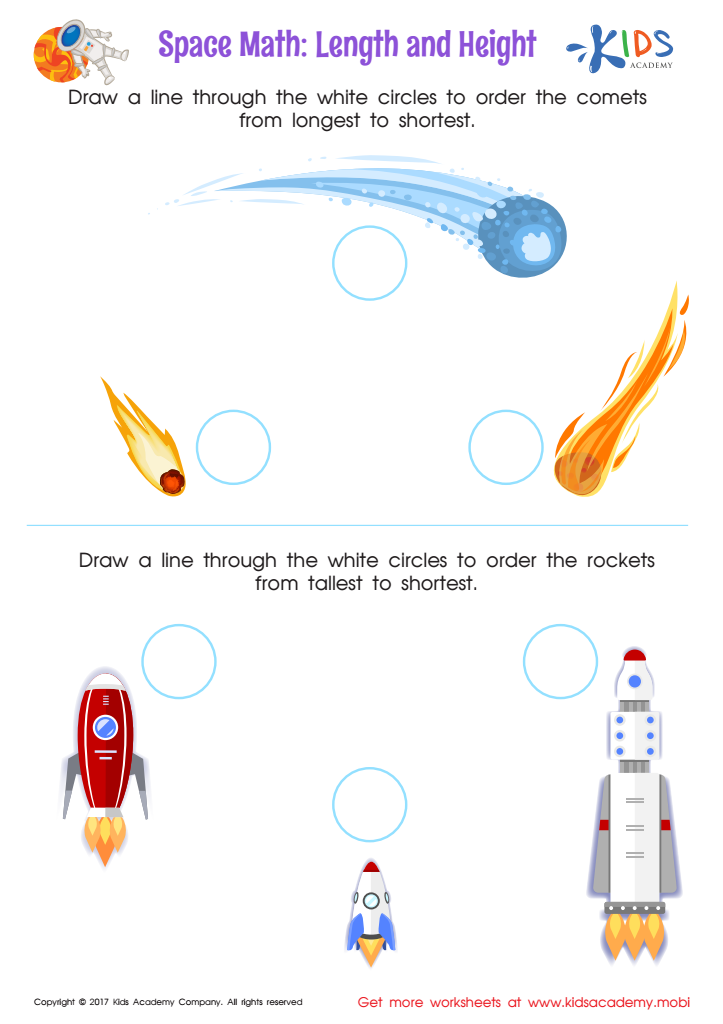
Space Math Worksheet






Understanding measurement is crucial for children aged 6-9, as it lays a foundational skill set that is essential in both everyday life and academic pursuits. At this stage, children begin to grasp concepts of length, weight, volume, and time, which helps them develop critical thinking and problem-solving skills. By introducing measurement early on, parents and teachers can foster a sense of curiosity, encouraging kids to explore their world in a structured way.
Moreover, measurement skills are intertwined with various subjects, such as science, math, and art. For example, through measuring ingredients in cooking or dimensions in a craft project, students can see real-world applications of math. This hands-on engagement enhances their understanding and retention of concepts.
Additionally, mastering measurement provides children with the tools to analyze data effectively, setting the stage for more advanced studies later on. Early proficiency in measurement can boost confidence and reduce anxiety associated with mathematical tasks in later schooling. Therefore, parents and teachers should be actively involved in facilitating learning experiences that include measurement activities, ensuring children not only learn but also appreciate this vital skill as they grow.








