Understanding number relationships Worksheets for Ages 6-9
6 filtered results
-
From - To
Explore our engaging "Understanding Number Relationships" worksheets designed for children aged 6-9! These worksheets help young learners grasp essential math concepts through fun activities that reconstruct number connections and enhance their problem-solving skills. With an array of exercises focusing on addition, subtraction, patterns, and comparisons, children will build a strong numerical foundation. Each worksheet is crafted to promote critical thinking and increase mathematical confidence in a playful environment. Perfect for parents and teachers alike, these resources make learning math an enjoyable experience! Download and inspire your child's love for numbers today. Transform their math journey with our interactive worksheets!
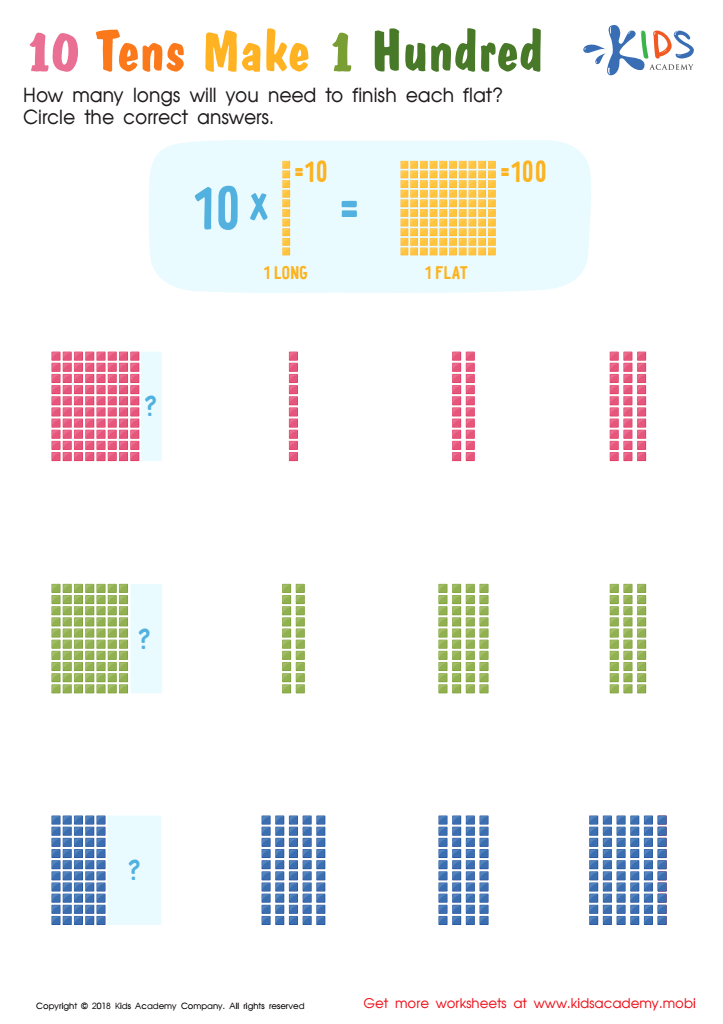
10 Tens Make 1 Hundred Worksheet
 Assign to My Students
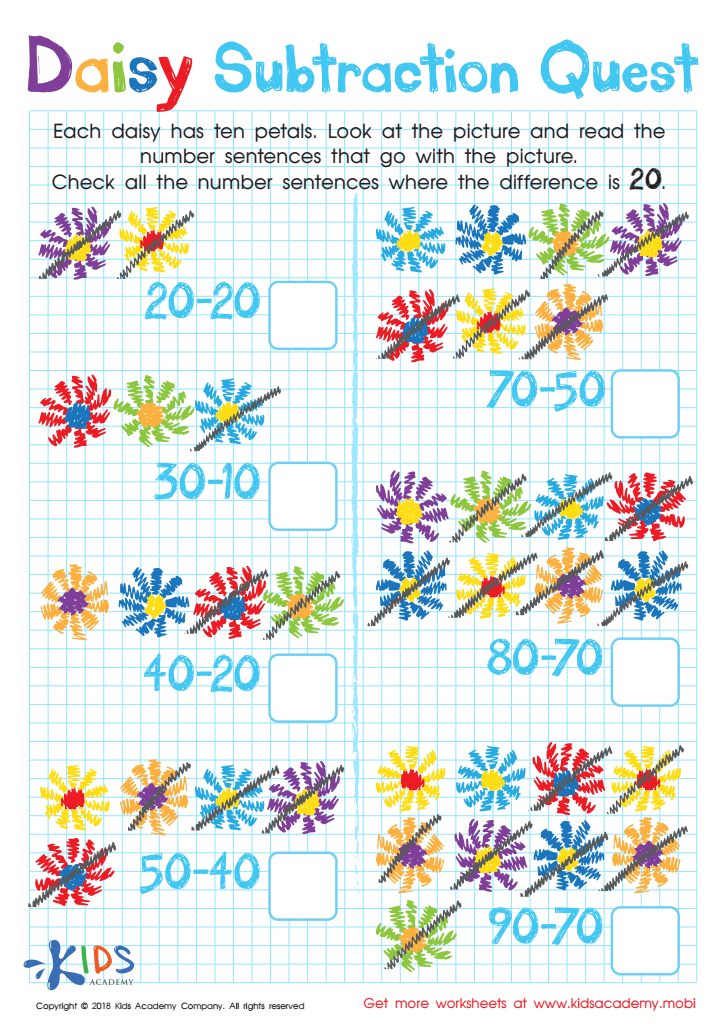
Daisy Subtraction Quest Worksheet
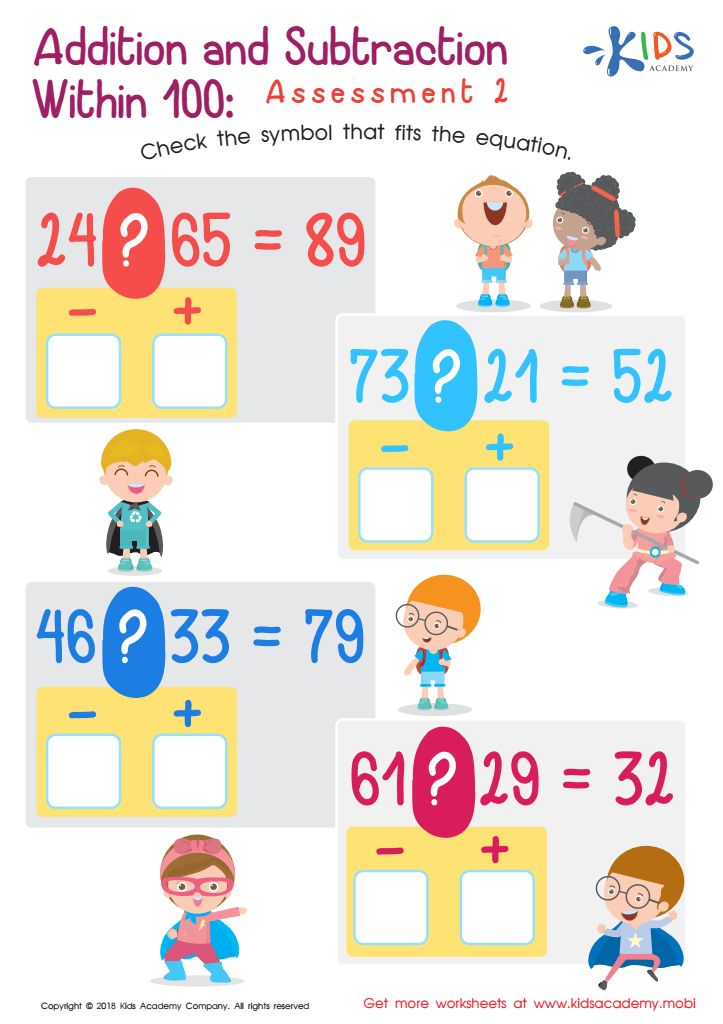
Addition and Subtraction Within 1: Assessment 2 Worksheet
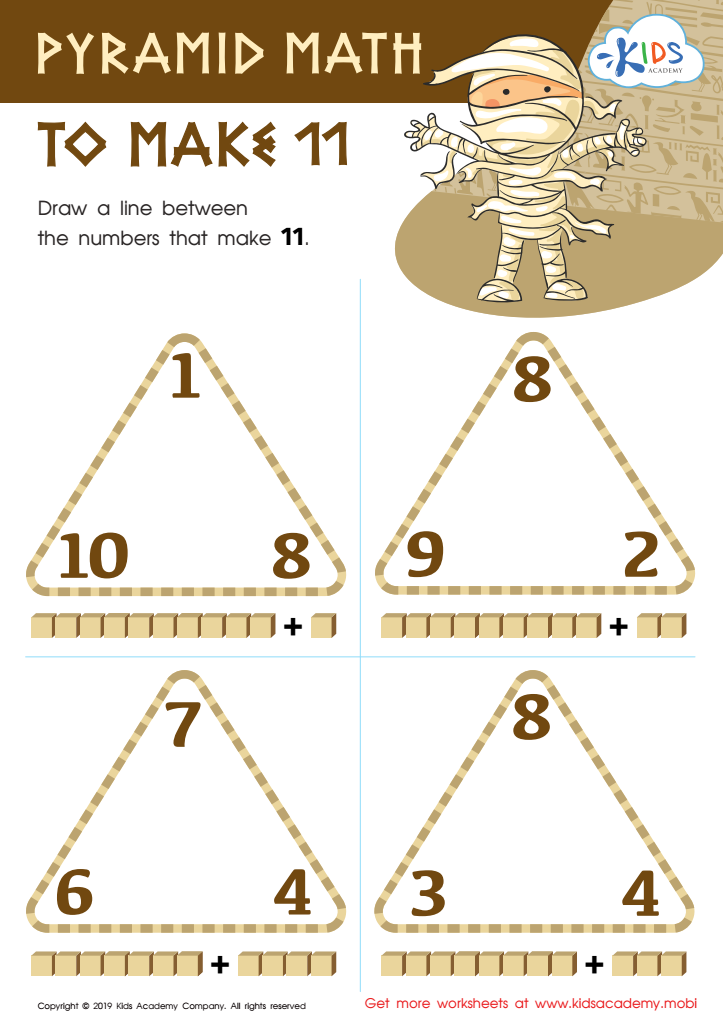
Pyramid Math to Make 11 Worksheet
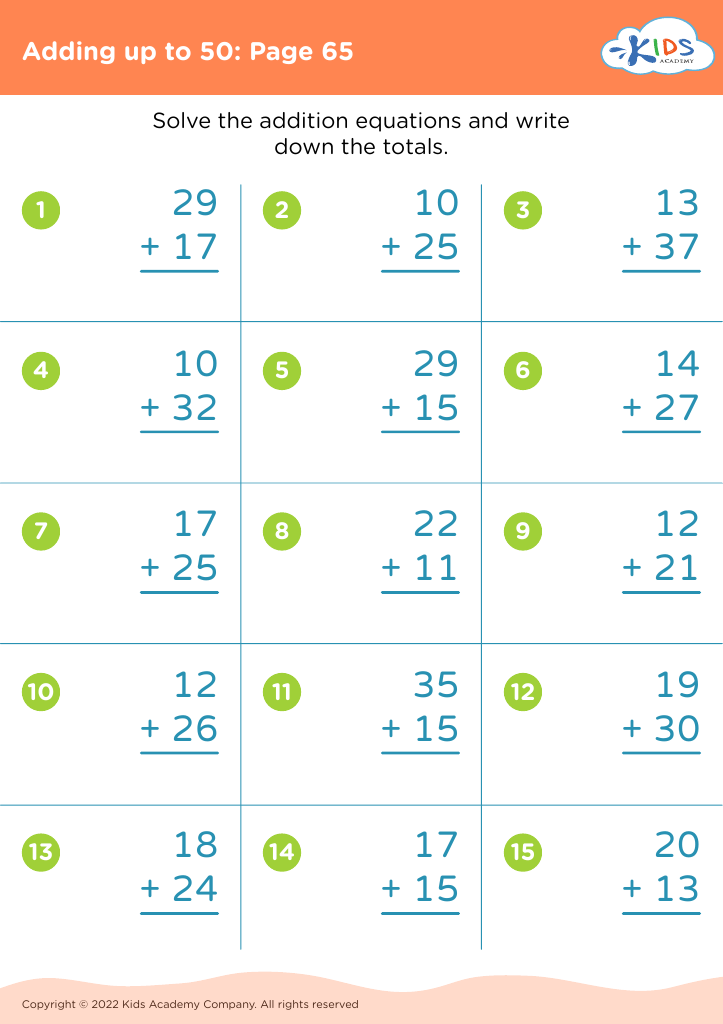






Understanding number relationships for children aged 6-9 is crucial for several reasons. At this stage, children are transitioning from basic counting to a deeper understanding of how numbers interact. Recognizing relationships between numbers lays the groundwork for essential mathematical concepts such as addition, subtraction, multiplication, and division. It also promotes number sense, which helps children estimate, reason, and make informed mathematical decisions.
When parents and teachers prioritize understanding number relationships, they are fostering critical thinking skills that last a lifetime. This foundational knowledge helps students identify patterns, improve problem-solving abilities, and gain confidence in handling quantitative information. Moreover, a solid grasp of number relationships enhances connections to real-world applications, such as budgeting, shopping, and even basic cooking measurements, making learning more relatable and engaging.
Additionally, early mastery of number relationships can help prevent future difficulties in more advanced math topics, reducing anxiety and struggles as children progress in their education. Overall, encouraging children to explore and understand these relationships not only nurtures their mathematical abilities but also equips them with essential life skills, setting the stage for ongoing academic success.








