
Understanding pollination Worksheets for Ages 6-9
4 filtered results
Difficulty Level
Grade
Age
-
From - To
Subject
Activity
Standards
Introducing our "Understanding Pollination Worksheets for Ages 6-9" - an engaging way to teach young learners about the vital process of pollination! These beautifully designed worksheets offer a variety of activities that introduce children to the roles of bees, butterflies, and wind in helping plants grow. By blending art, science, and fun facts, children will develop a deeper appreciation and understanding of nature. Perfect for classroom use or at-home learning, these worksheets encourage curiosity and interaction, making science accessible and enjoyable. Watch your students' knowledge bloom with Kids Academy’s expertly crafted pollination worksheets!
Favorites
With answer key
Interactive
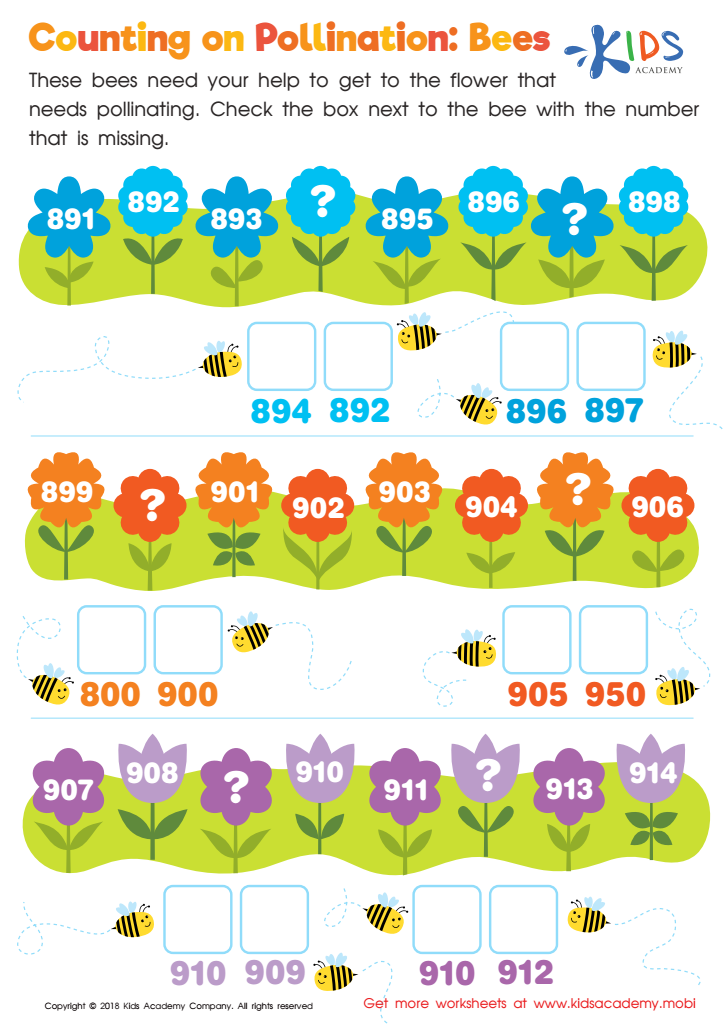
Counting on Pollination: Bees Worksheet
This downloadable worksheet helps kids improve their math skills while having fun - they'll help the bees pollinate the flowers by finding the missing number. It's an entertaining way to practice number patterns, sequences and number line skills, aiding in fast and efficient math computations.
 Assign to My Students
Counting on Pollination: Bees Worksheet
Worksheet
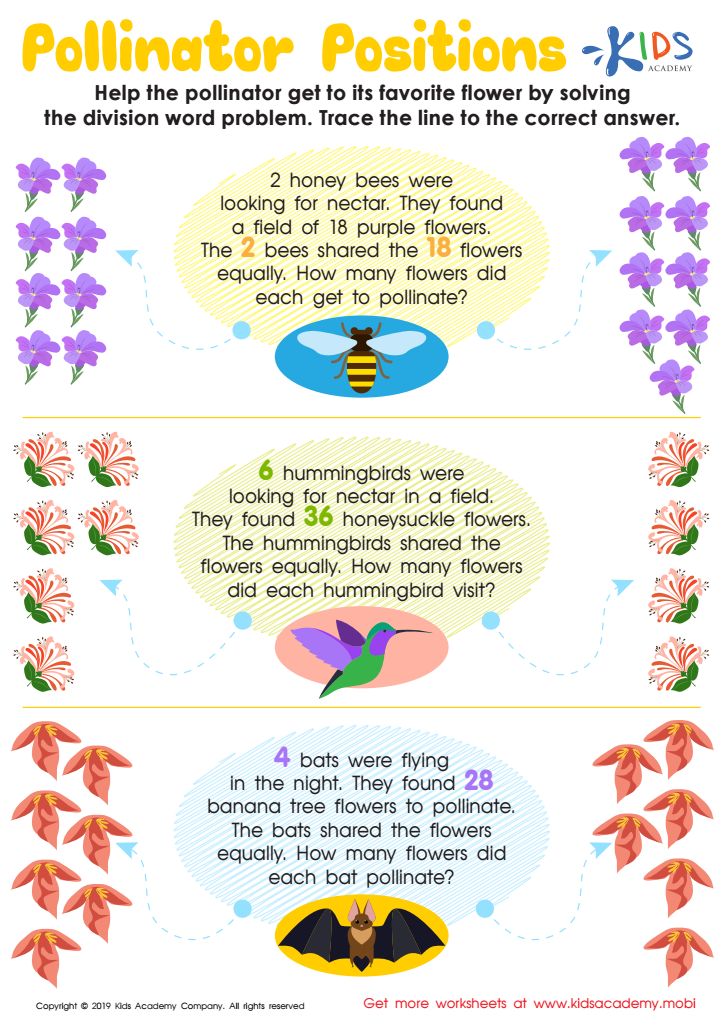
Pollinator Positions Worksheet
Kids will love learning about pollinators and how vital they are. Help their favorite friends get to the right flowers with this fun PDF. Children can solve the problems without even knowing they're doing division; just read the word problems and use the highlighted numbers. Finish by tracing the lines to the correct quotient!
Pollinator Positions Worksheet
Worksheet
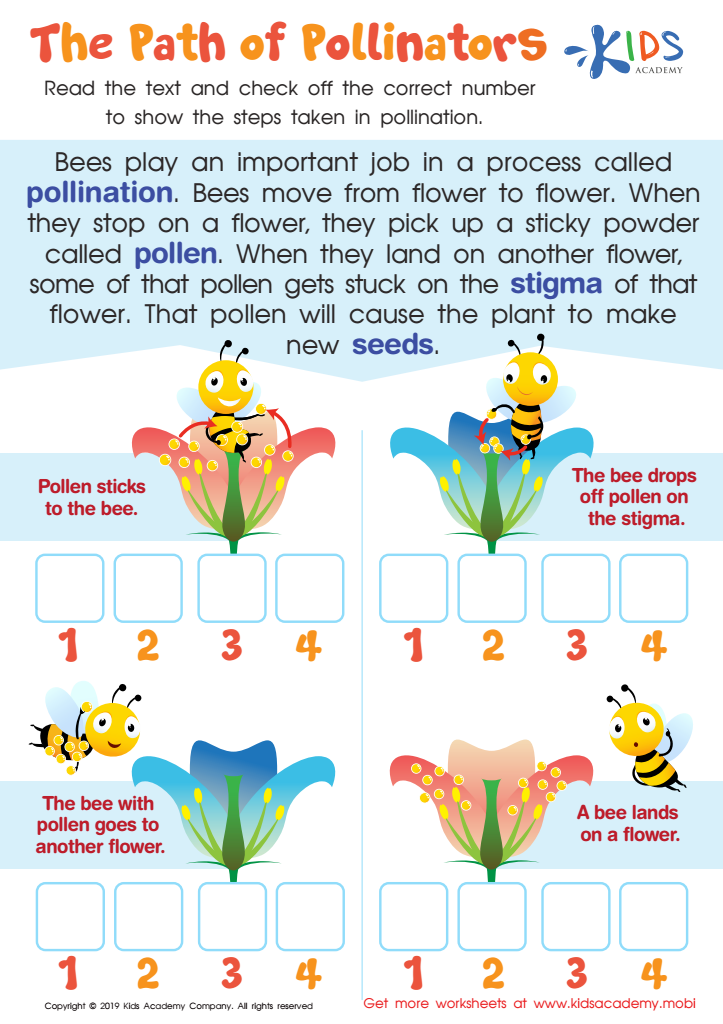
The Path of Pollinators Worksheet
Bees play a vital role in pollination: they transfer pollen between flowers, allowing them to produce new seeds. Without bees, we'd have less flowers and vegetation. Explain the process to your students and have them check off the right number to show the steps in pollination.
The Path of Pollinators Worksheet
Worksheet
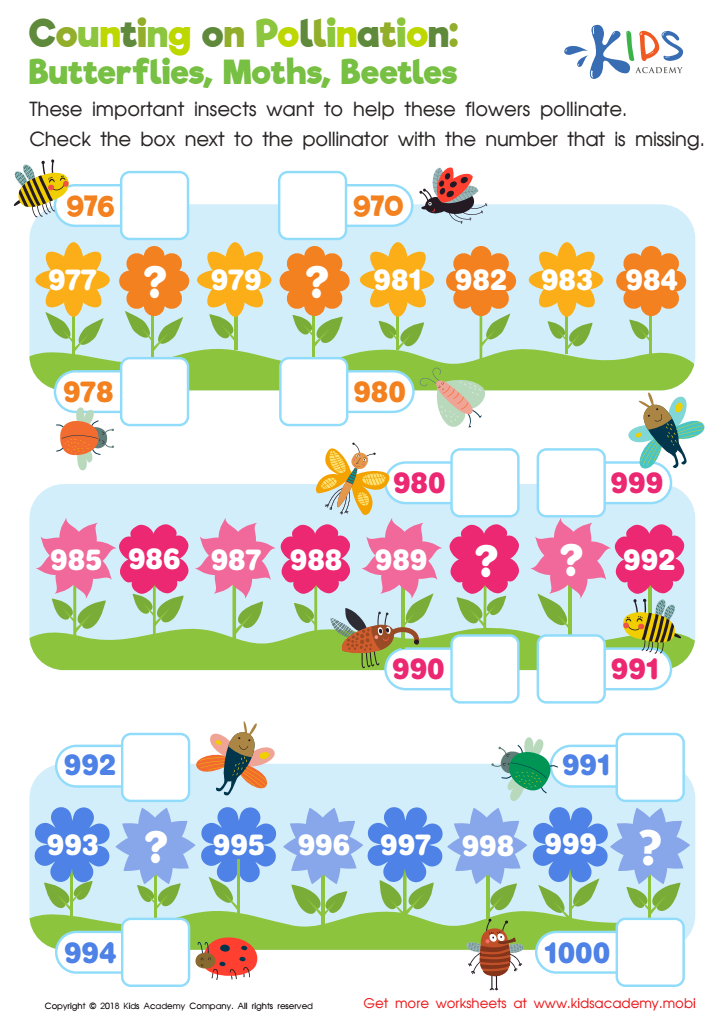
Counting on Pollination: Butterflies, Moths, Beetles Worksheet
A number line can help boost computation accuracy and efficiency. It can also be used with more advanced numbers. Help your child practice by having them identify missing numbers in sequences. This fun worksheet lets them help the pollinators in the process, as they strengthen their number sense.
Counting on Pollination: Butterflies, Moths, Beetles Worksheet
Worksheet
Join Kids Academy for Free
Who is primarily going to use this learning content?





Understanding pollination is crucial for young children aged 6-9 for several educational and developmental reasons. First, learning about pollination helps children appreciate the vital role that bees, butterflies, and other pollinators play in our ecosystem. This knowledge fosters a sense of environmental stewardship and respect for nature, encouraging them to protect these essential creatures.
Second, understanding pollination ties into fundamental science curricula regarding plant life cycles, food chains, and ecosystems. By grasping how pollination leads to the production of fruits, vegetables, and seeds, children gain insight into where their food comes from and the importance of healthy ecosystems for food production. This foundational knowledge is crucial for future scientific learning and everyday life awareness.
Moreover, learning about pollination can enhance cognitive and observational skills. Activities like garden-based learning and nature walks engage children’s senses and offer hands-on experiences, making abstract concepts more tangible and memorable.
Parents and teachers fostering an early interest in pollination can also support emotional and social development. Working on group projects or discussing what they've learned helps build teamwork, communication skills, and curiosity-driven inquiry. Overall, understanding pollination is an excellent way to inspire a lifelong interest in science, conservation, and appreciation of the interconnectedness of life.








