Uppercase identification Worksheets for Ages 6-9
5 filtered results
-
From - To
Enhance your child's literacy skills with our engaging Uppercase Identification Worksheets designed for ages 6-9! These worksheets provide a fun and interactive way for young learners to recognize and differentiate uppercase letters. With a variety of activities, including tracing, matching, and coloring, your child will develop essential foundational skills while boosting their confidence in reading and writing. Perfect for classroom use or at-home practice, our printable resources cater to diverse learning styles. Encourage your child's love for learning with these easy-to-use worksheets that make uppercase letter recognition a breeze! Start their journey to literacy today!
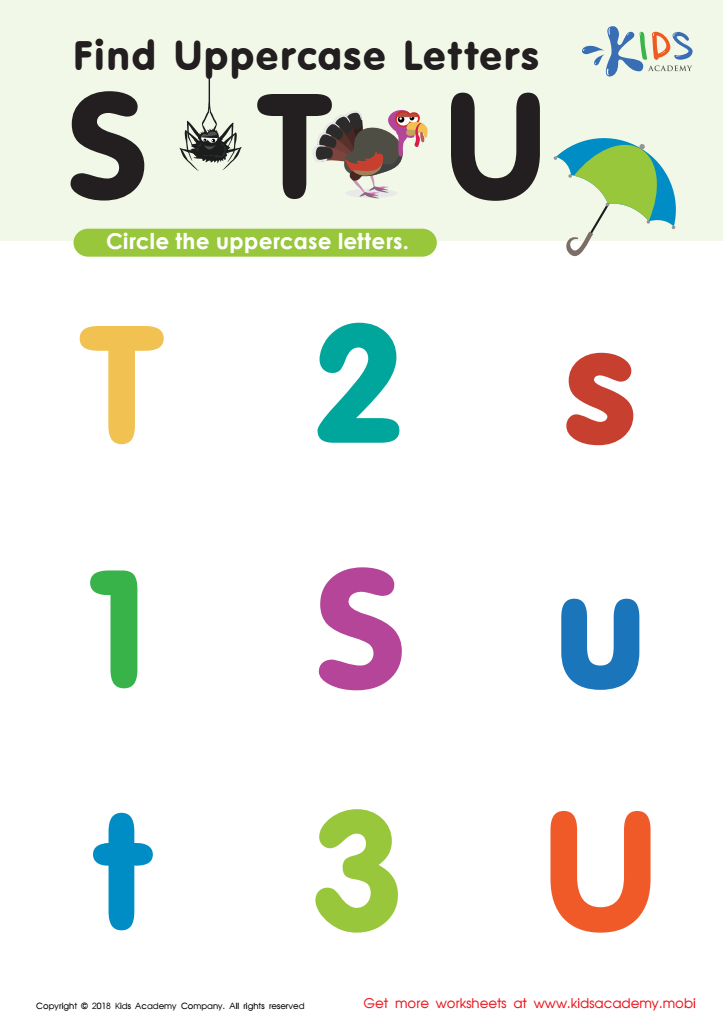
Find Uppercase Letters Worksheet
 Assign to My Students
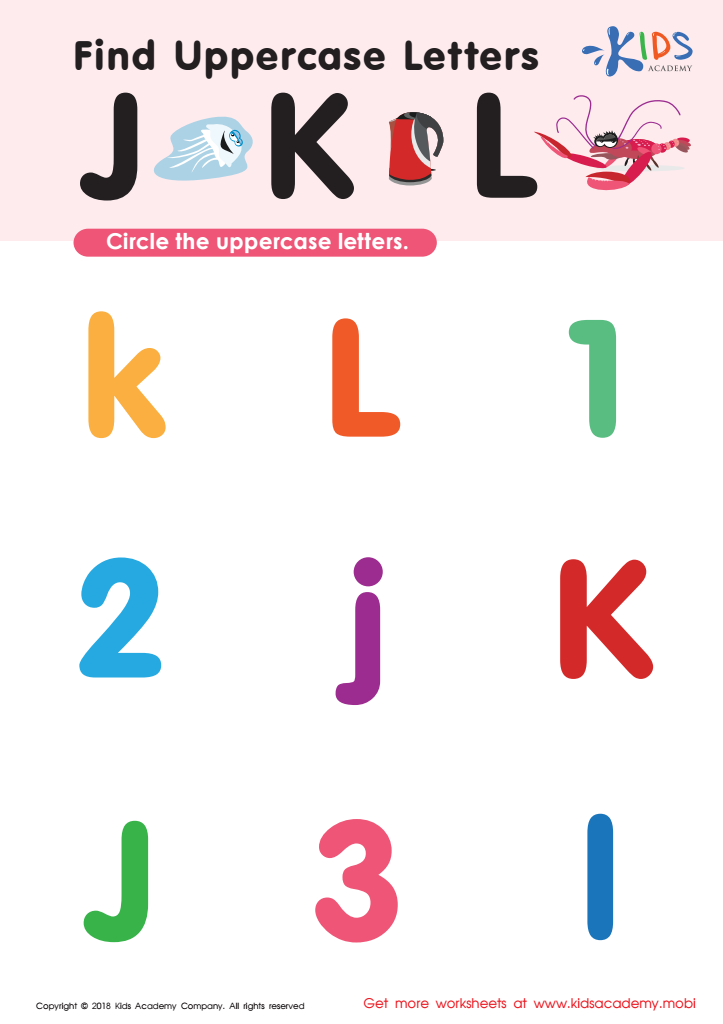
Find Uppercase Letters J, K, and L Worksheet
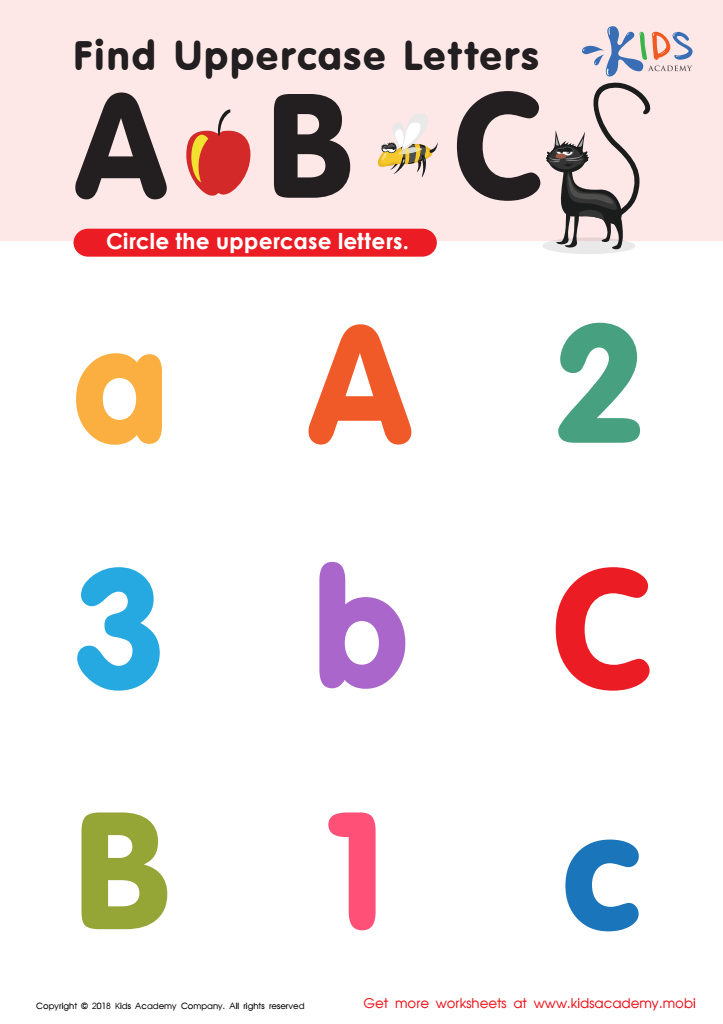
Find Uppercase Letters A, B, and C Worksheet
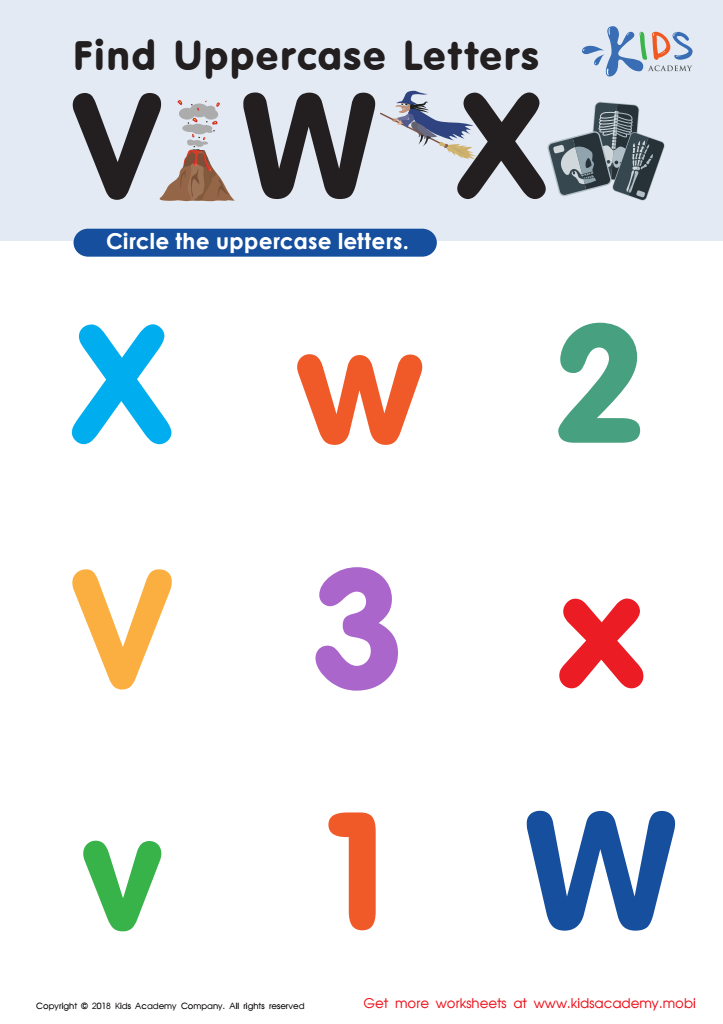
Find Uppercase Letters V, W, X Worksheet
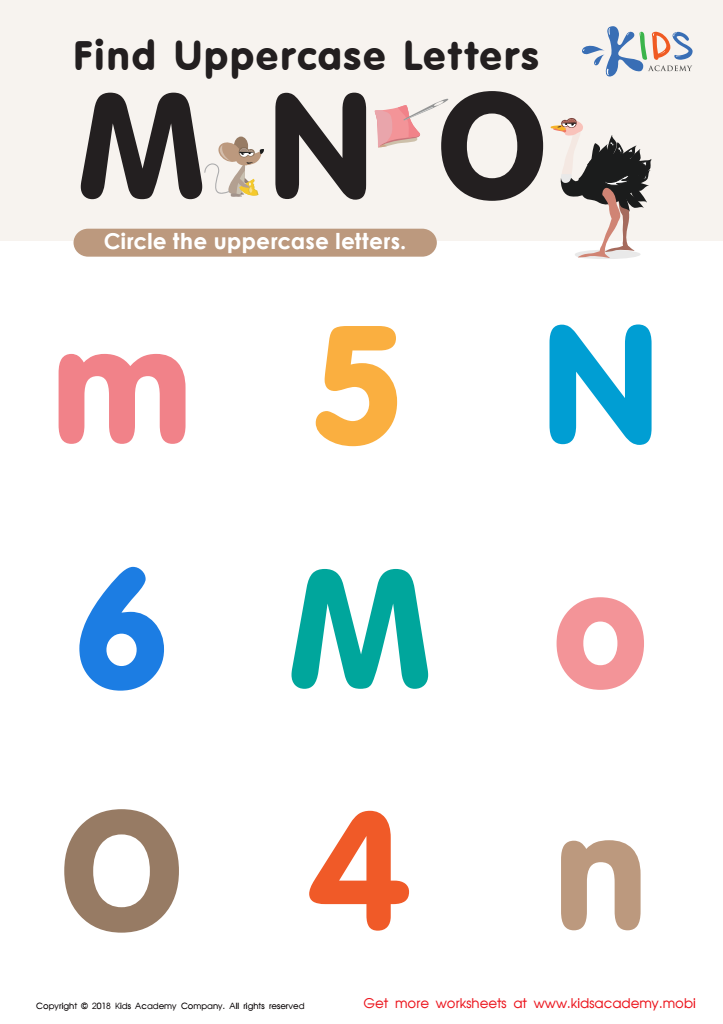
Find Uppercase Letters M, N, and O Worksheet







Uppercase letter identification is crucial for children aged 6-9 as it forms the foundation for literacy development. During this stage, children transition from learning basic phonics to reading more complex texts. Recognizing uppercase letters is essential for reading fluency, as they frequently appear at the beginning of sentences, proper nouns, and important headings.
Teachers and parents play a pivotal role in supporting this skill through engaging activities. By encouraging the identification of uppercase letters, they help foster confidence in young readers, enhancing their ability to decode words and comprehend texts. Mastery in recognizing uppercase letters also aids in writing, allowing children to properly format sentences and enhance their overall communication skills.
Furthermore, uppercase letters are often used in educational contexts—such as in titles and signs—which children need to recognize for effective learning. Understanding uppercase letters also intersects with social skills, as children learn to identify personal names, thus strengthening their self-image and social understanding. Overall, promoting uppercase letter identification is an investment in a child’s literacy journey, paving the way for successful reading, writing, and communication skills. This holistic approach to literacy nurtures academic growth and boosts children’s enthusiasm for learning.








