
Visual representation Worksheets for Ages 6-9
3 filtered results
Difficulty Level
Grade
Age
-
From - To
Subject
Activity
Standards
Enhance your child's learning with our engaging Visual Representation Worksheets designed specifically for ages 6-9. These worksheets turn challenging concepts into easy-to-understand visuals, aiding in the development of essential learning skills. From pictographs to bar charts, children transform numerical data into vibrant pictures, fostering both creativity and analytical thinking. Ideal for young learners, our printable activities support both classroom teaching and homeschooling, making learning a fun and interactive experience. Start exploring now and watch your child master visual data presentation with ease, boosting their confidence and academic prowess.
Favorites
With answer key
Interactive
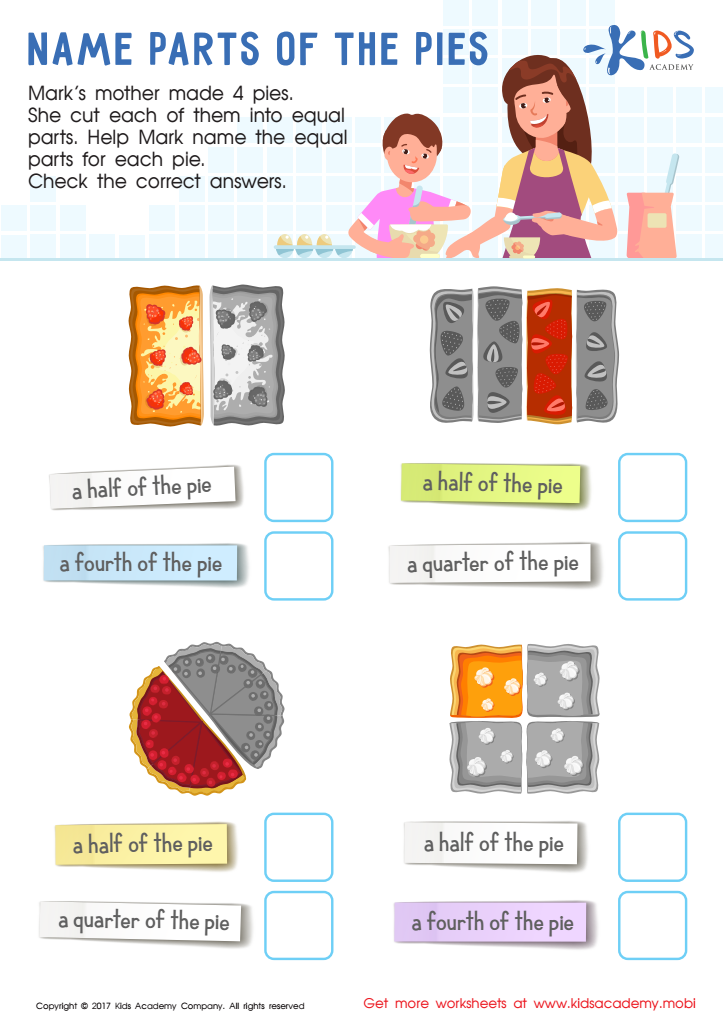
Name Parts of the Pies Worksheet
Mark and his mom are making pies. He's dividing them into equal parts and needs help to name them. Let your students aid him by checking the correct answer for each picture. Have them think of their own roles in the kitchen when they're done. How do they help their moms?
 Assign to My Students
Name Parts of the Pies Worksheet
Worksheet
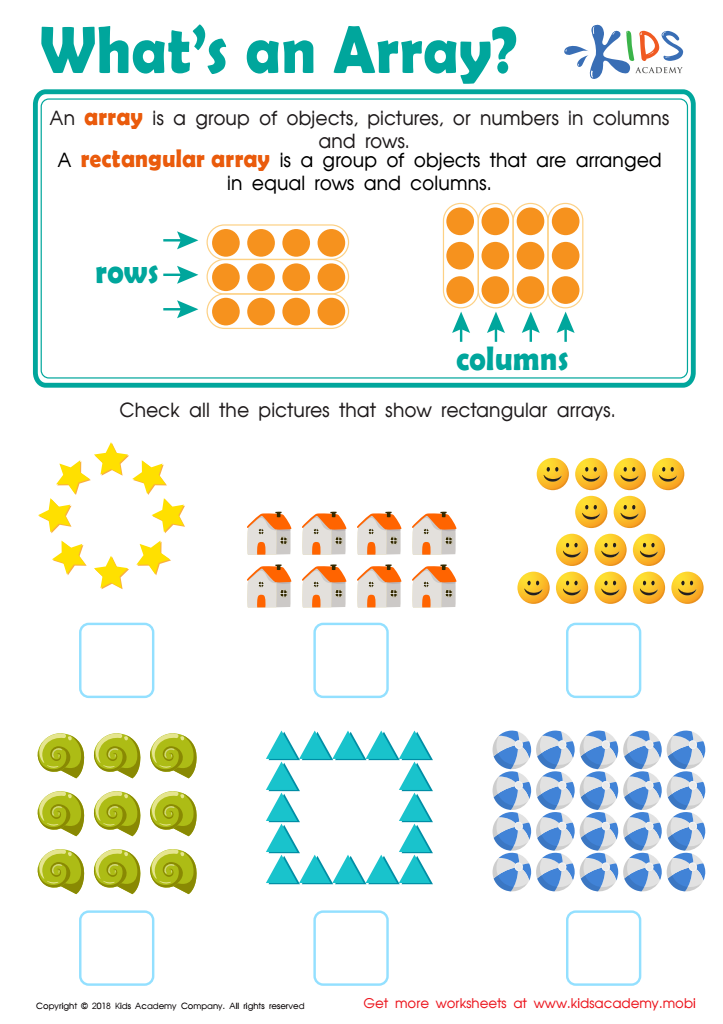
What's an Array? Worksheet
Explain to your child that an array is a group of objects, pictures, or numbers in columns and rows. Show them a rectangular array is a group of objects in equal rows and columns. Guide them to check the pictures in the worksheet to spot any rectangular arrays. Help them remember this concept.
What's an Array? Worksheet
Worksheet
Join Kids Academy for Free
Who is primarily going to use this learning content?








Visual representation plays a pivotal role in the cognitive and academic development of children aged 6-9 for several reasons. First and foremost, at this early elementary stage, children often think in concrete terms rather than abstractly. Visual aids such as pictures, charts, graphs, and illustrations help to make abstract concepts more understandable and engaging. They can bridge the gap between concrete experiences and abstract thinking, enabling children to grasp difficult ideas more readily.
Additionally, visual representation caters to diverse learning styles. Every child is unique and learns differently; some kids are visual learners and grasp information better through imagery rather than text. Including visual elements can enhance comprehension for these children, making lessons more inclusive and effective.
Moreover, visuals can capture and retain a child's attention better than text. Early grade students typically have shorter attention spans, and colorful, engaging visuals can make lessons more captivating, increasing student engagement and promoting better retention of information. This aspect is particularly important for establishing a strong foundation for later learning.
Lastly, using visuals also hones important skills such as observation, interpretation, and critical thinking. When children analyze images or diagrams, they practice interpreting data and making informed decisions, crucial skills for future academic success. Therefore, both parents and teachers should utilize visual representation to enrich learning experiences for young students.








