Weather identification Worksheets for Ages 6-9
6 filtered results
-
From - To
Discover engaging Weather Identification Worksheets tailored for ages 6-9 at KidsAcademy.mobi! Our expertly designed worksheets make learning about weather patterns fun and interactive. Perfect for budding meteorologists, these printables help children identify and understand various weather conditions through exciting activities, colorful illustrations, and simple explanations. From sunny days to stormy nights, kids will master weather terms and concepts, enhancing observation and critical thinking skills. Ideal for both home and classroom use, these resources support comprehensive learning while keeping young minds captivated and curious. Start exploring and support your child's weather knowledge with Kids Academy's educational worksheets today!
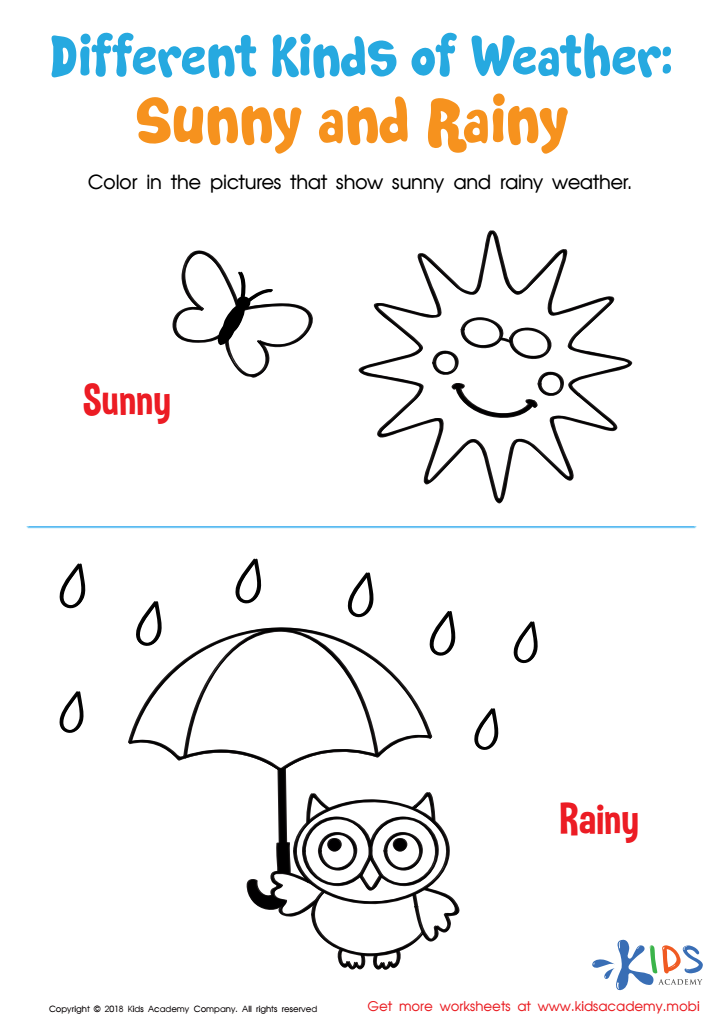
Different Kinds of Weather: Sunny and Rainy Worksheet
 Assign to My Students
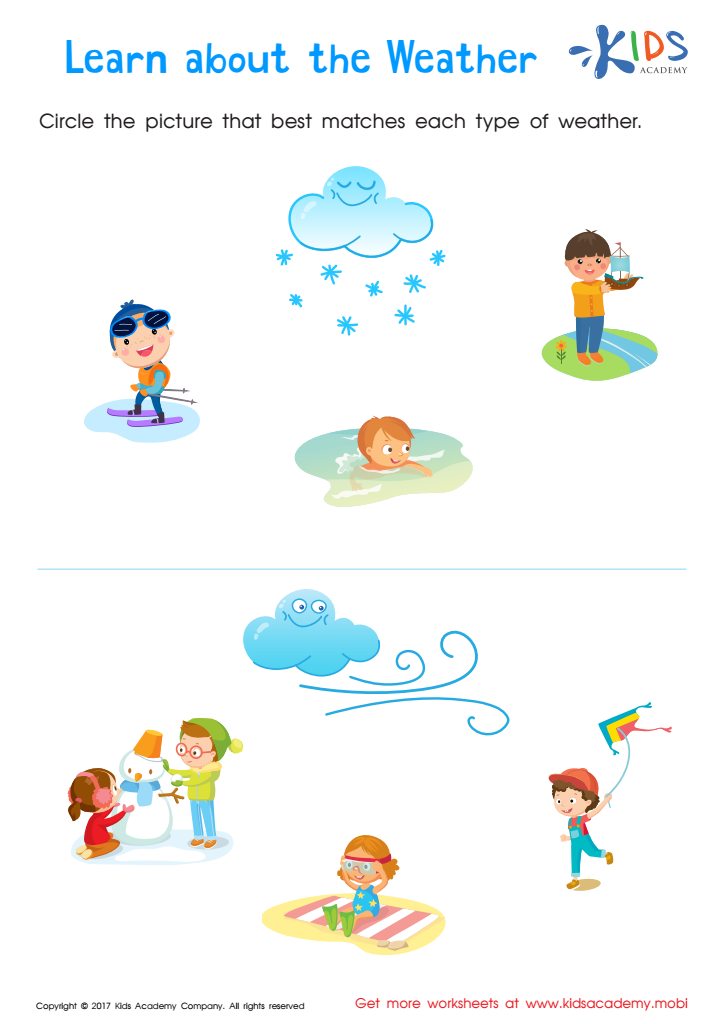
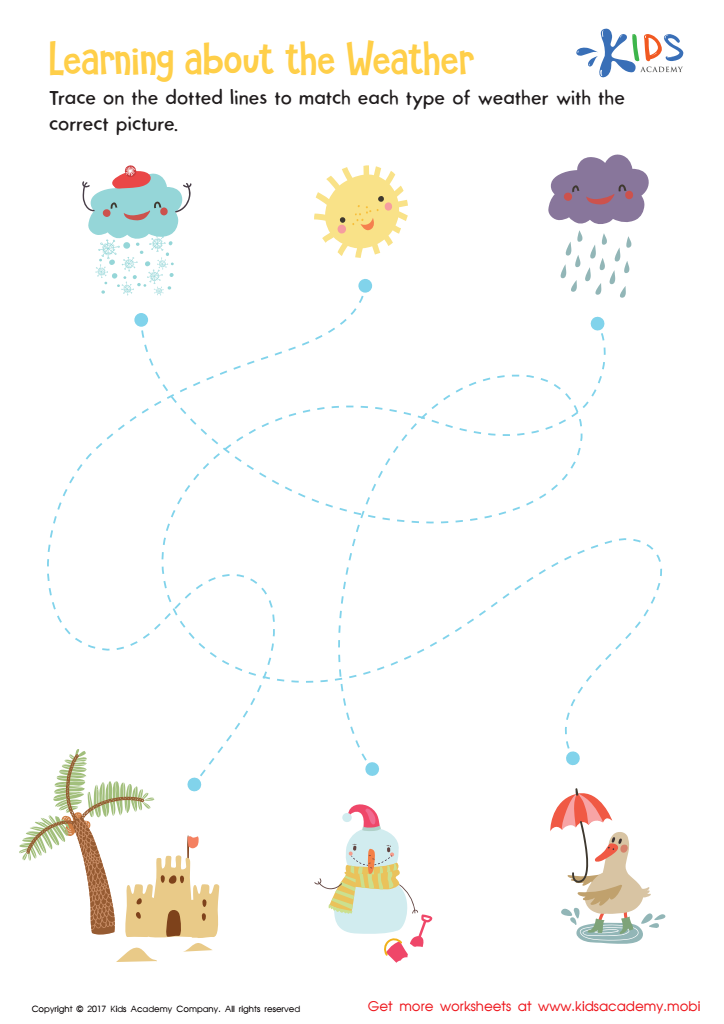
About the Weather Printable
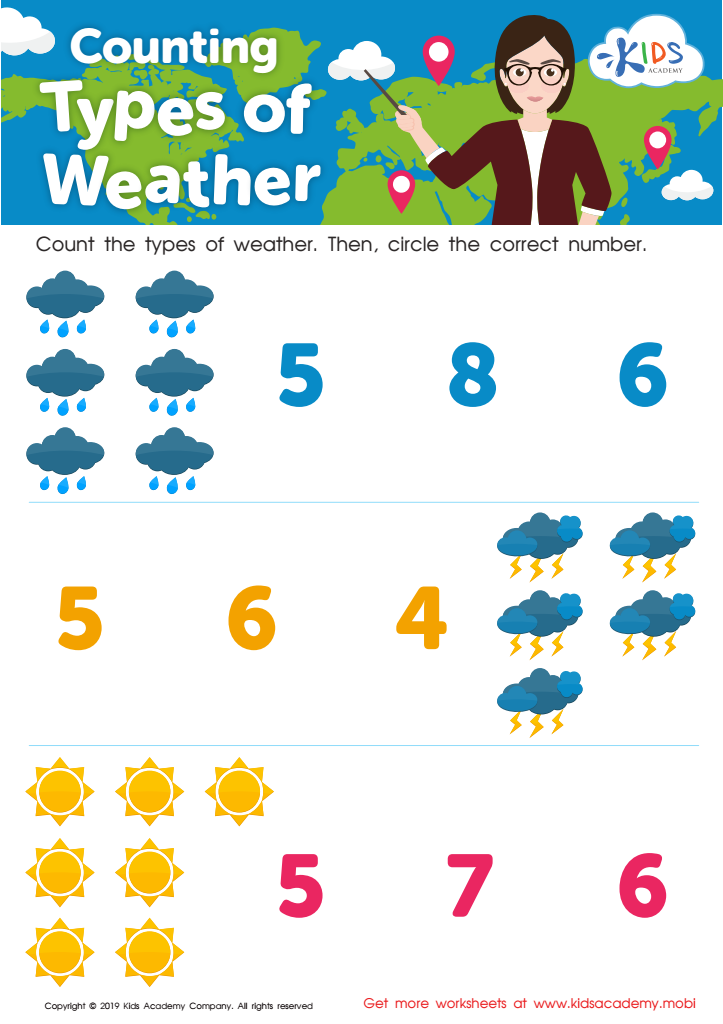
Counting Types of Weather Worksheet
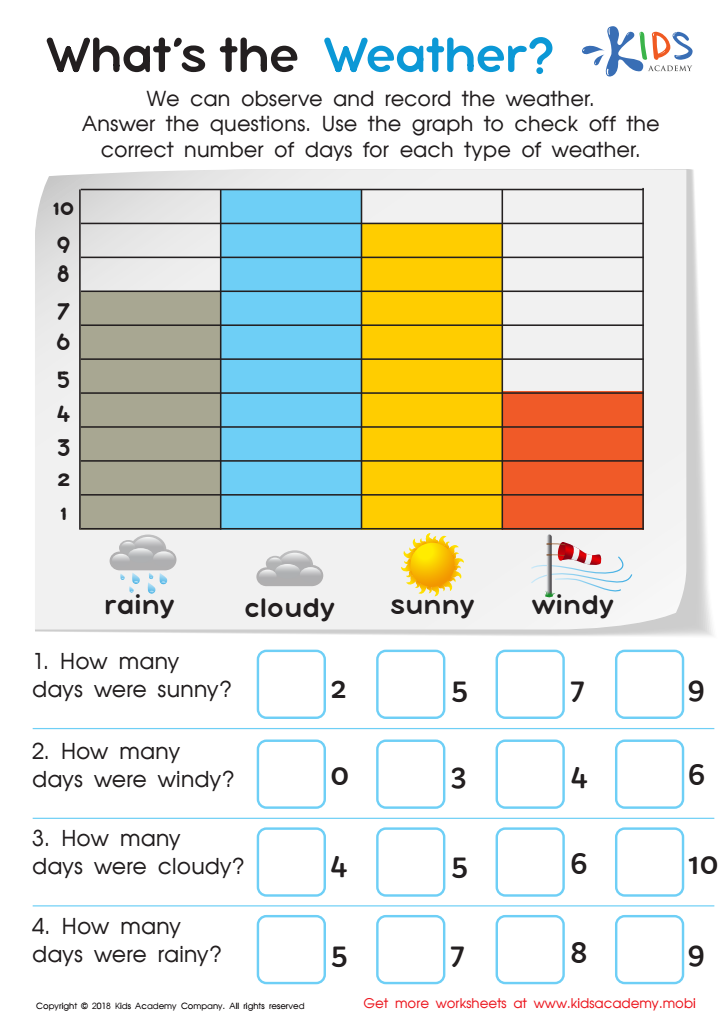
What's the Weather? Worksheet








Understanding weather is crucial for children aged 6-9 for several important reasons. Firstly, an awareness of weather fosters safety. By recognizing signs of storms, heatwaves, or cold fronts, children can learn to take appropriate actions, such as dressing warmly or seeking shelter during a storm. Safety awareness builds a foundation for making informed decisions in their daily lives, reducing potential risks.
Secondly, learning about weather aids cognitive development and stimulates curiosity. Discussing concepts such as wind, rain, and other weather phenomena encourages critical thinking and observation skills. Children begin to ask questions and make predictions about the natural world around them, fostering scientific and inquisitive minds.
Moreover, engagement with weather topics can help develop language and communication skills. Describing weather conditions, sharing observations, and following forecasts provide meaningful context for learning new vocabulary and practicing effective communication.
In addition, integrating weather identification into educational activities can enhance other subjects. For example, tracking temperatures can reinforce math skills through graphing, while reading weather-related stories can improve literacy. The natural excitement and curiosity about immediate surroundings make weather a compelling subject for children, blending practical knowledge with hands-on learning experiences and nurturing a well-rounded educational foundation.








