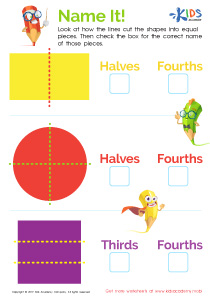
Basic geometry knowledge 2D Shapes Worksheets for Ages 6-9
3 filtered results
Difficulty Level
Grade
Age
-
From - To
Subject
Activity
Standards
Discover the world of shapes with our "Basic Geometry Knowledge 2D Shapes Worksheets" specially designed for ages 6-9. These engaging and educational worksheets help young learners understand, identify, and draw basic 2D shapes like squares, circles, triangles, and more. Each printable sheet encourages critical thinking and spatial awareness, laying a strong math foundation. Perfect for classroom use or at-home practice, our worksheets offer fun, interactive ways for kids to apply and expand their geometric skills. Download today and watch your child’s confidence in math shapes up beautifully!
Favorites
With answer key
Interactive
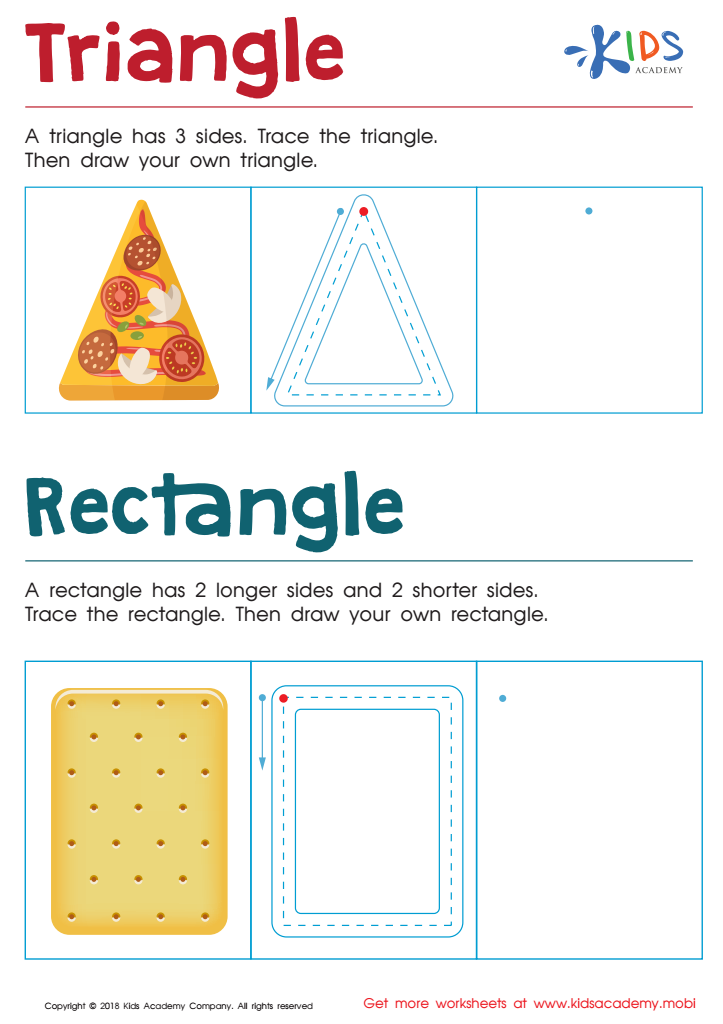
Triangle Rectangle Worksheet
This printable worksheet helps kids draw rectangles and triangles. Have your child trace the pizza and cracker shapes to become familiar, then try their own. Perfect for second graders! Coloring and creativity make this fun and educational.
 Assign to My Students
Triangle Rectangle Worksheet
Worksheet


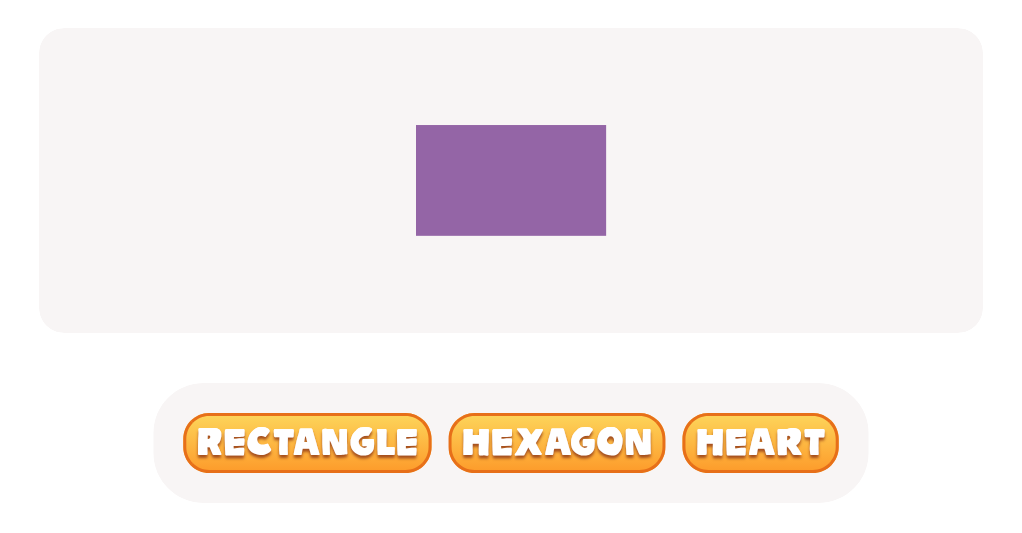
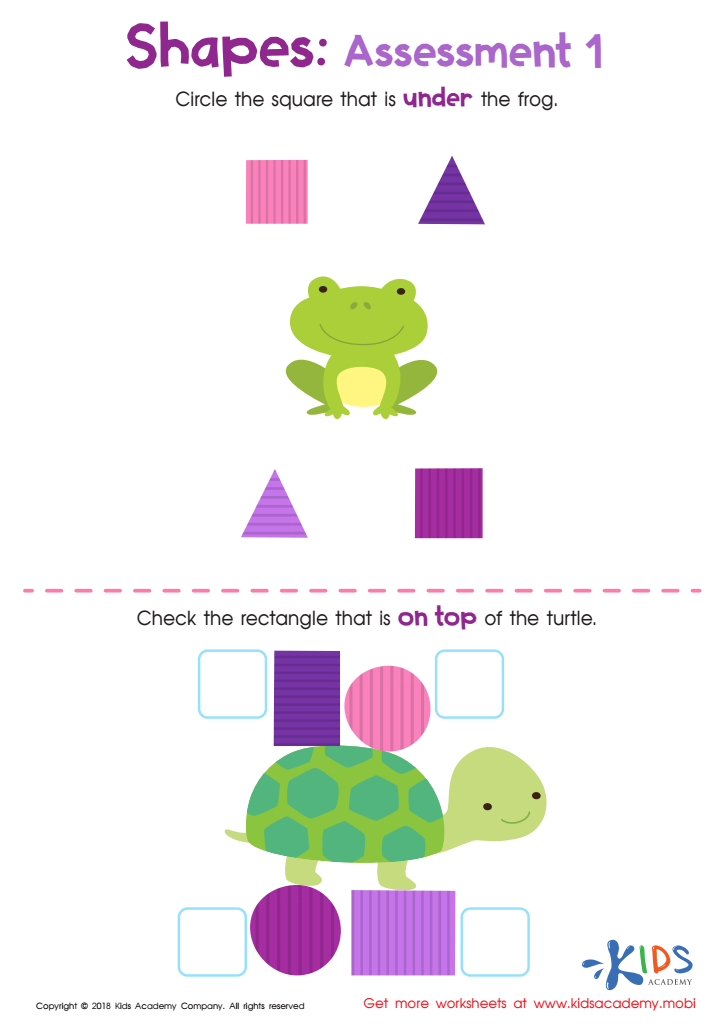
Geometry – Assessment 1 Worksheet
This activity helps preschoolers find shapes "on top of" and "under" animals. They must identify the correct shapes assigned to them. It's a great way to learn geometry and placements of objects.
Geometry – Assessment 1 Worksheet
Worksheet
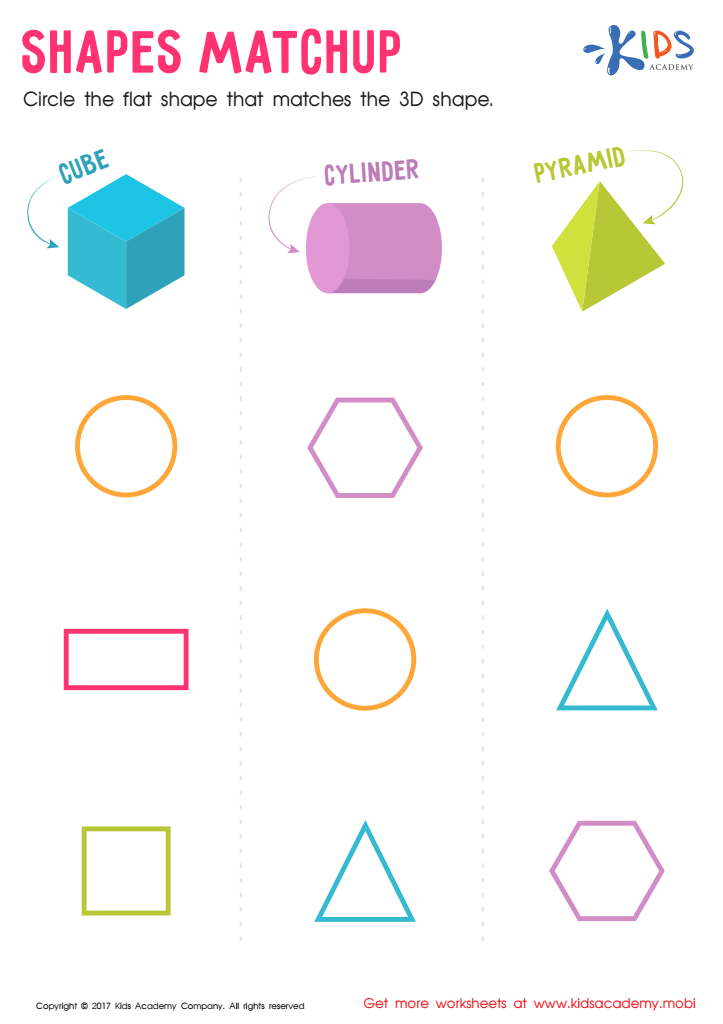
Shapes Matchup Worksheet
Explain to your kids that 3D shapes are the view from another angle, offering depth, height and width. This worksheet encourages them to match the 3D shapes to their 2D form. They can circle the flat shapes that match the 3D shapes in the printout.
Shapes Matchup Worksheet
Worksheet
Join Kids Academy for Free
Who is primarily going to use this learning content?








Parents and teachers should place significant emphasis on the foundational knowledge of 2D shapes for children between the ages of 6 and 9 because it serves as a critical building block for their overall cognitive development and future academic success. Learning about basic geometry and 2D shapes helps young students develop essential skills such as spatial awareness, problem-solving, and logical reasoning. These cognitive skills are not only fundamental for advanced mathematical concepts but also play a crucial role in everyday life activities like understanding maps, organizing spaces, and even in art.
Moreover, recognizing and distinguishing different shapes enhances children's visual perception and fine motor skills, which are crucial for effective reading and writing. Introducing geometry concepts at an early age makes it easier for children to grasp more complex ideas later on, as they will already have a strong foundational understanding. Furthermore, engaging children with geometry activities can make learning fun and interactive, nurturing a lifelong love for mathematics and critical thinking.
Incorporating 2D shapes into early education also aligns with various curriculum standards worldwide, ensuring that children meet necessary educational benchmarks. Thus, fostering a solid understanding of basic geometry supports both immediate learning outcomes and long-term academic achievement.