Addition Practice Adding up to 1000 Misc Worksheets for Ages 6-9
5 filtered results
-
From - To
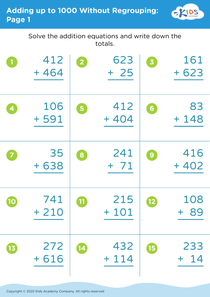
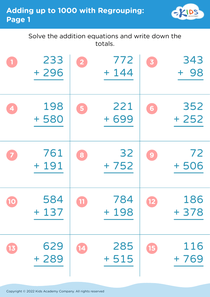
Strengthen your child's math skills with our Addition Practice worksheets designed for ages 6-9! Our extensive collection of engaging worksheets focuses on adding numbers up to 1000, providing a fun, hands-on experience that boosts confidence and proficiency. Perfect for classroom use or at-home practice, these resources include various exercises that challenge young learners while keeping them entertained. Whether your child is mastering basic addition or tackling more complex problems, our colorful and diverse worksheets cater to all skill levels. Explore our Addition Practice materials to help your child succeed in math while enjoying the learning process!
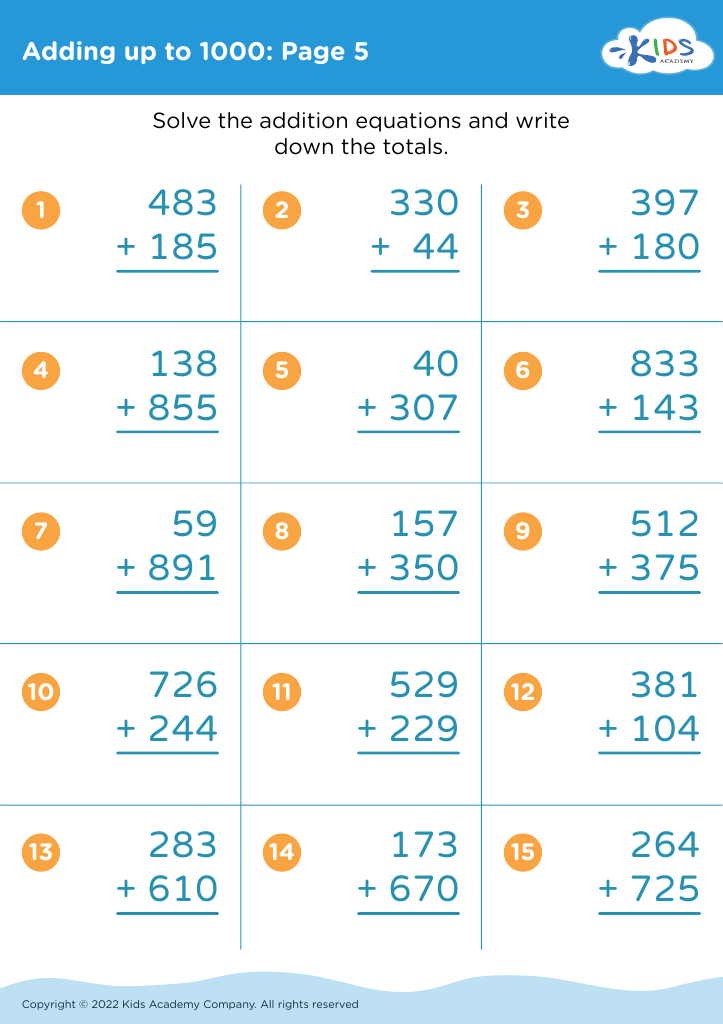
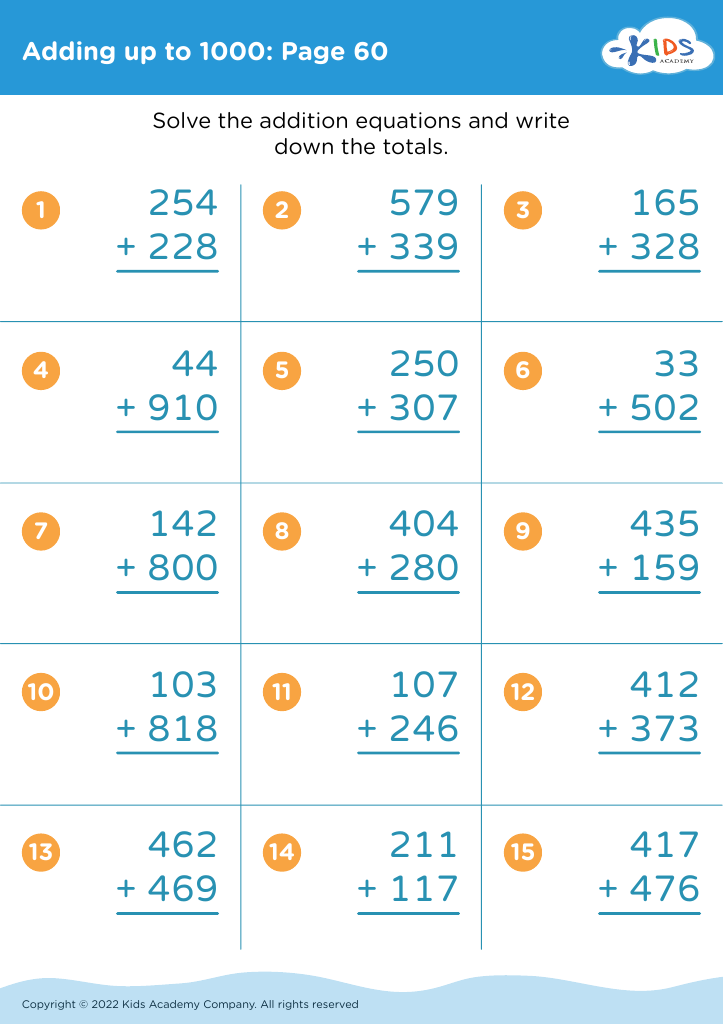
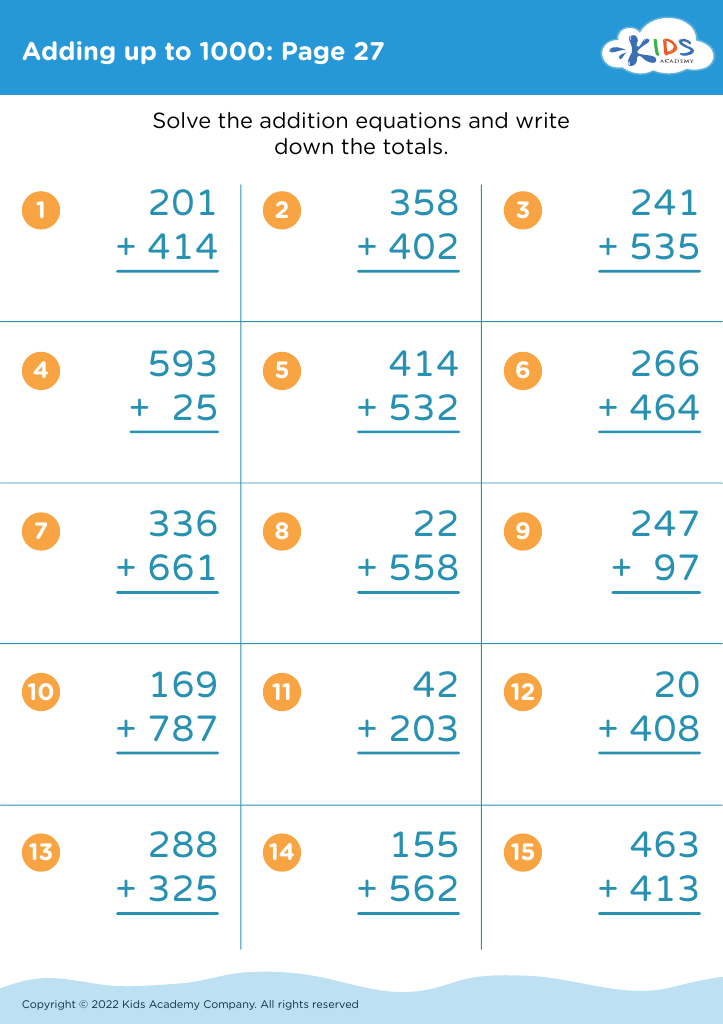
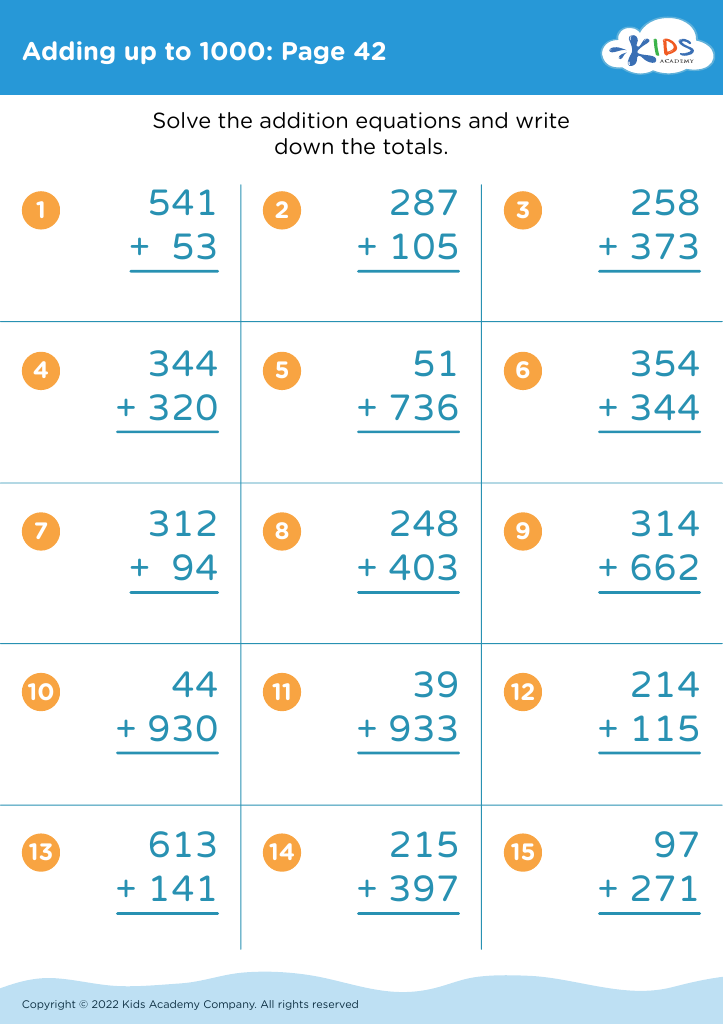
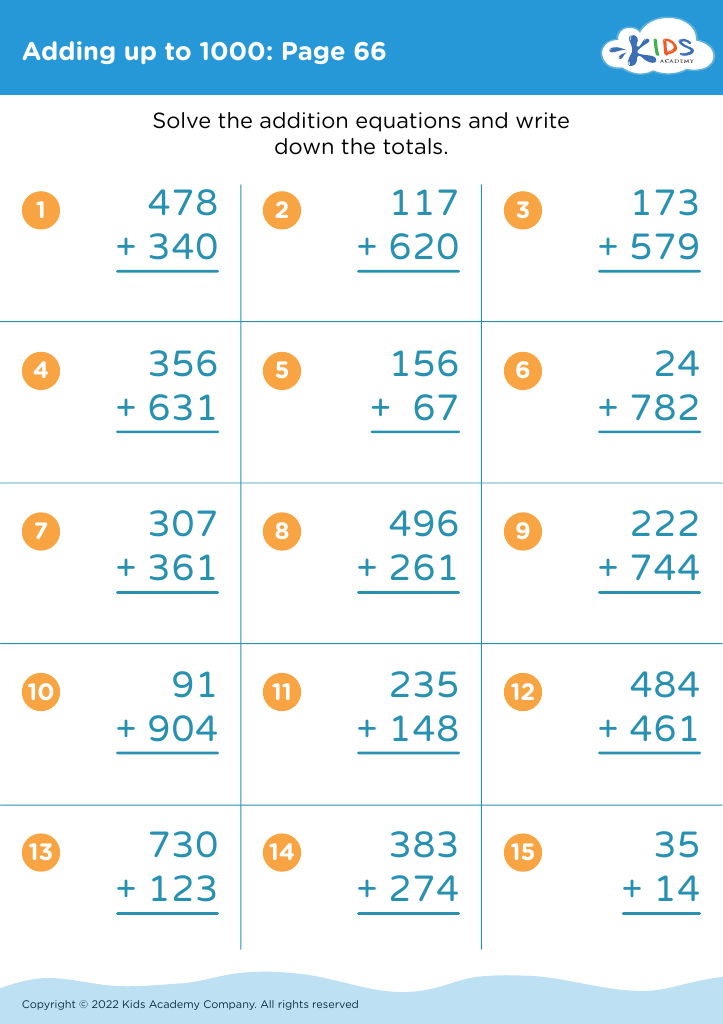


Addition practice for children ages 6-9, particularly activities involving adding up to 1000, is crucial for several reasons. First and foremost, mastering addition forms the foundational skills necessary for more complex mathematical concepts. Children in this age group are particularly impressionable and establishing a strong math foundation will boost their confidence and competence as they advance in school.
Additionally, practicing addition helps to develop critical thinking skills. By solving diverse problems, children learn to recognize patterns, improve their problem-solving abilities, enhance their logic skills, and gain a deeper understanding of numerical relationships.
Furthermore, engaging in addition activities fosters a love for math, paving the way for positive attitudes toward the subject throughout their academic journey. Parents and teachers can encourage learning through fun games, interactive tools, and competitive exercises, which are not only educational but also entertaining. This engagement is crucial for keeping children's interest alive.
Lastly, as students move forward in their educational paths, they will encounter real-world applications of math. Being proficient in basic addition entails readiness for future challenges in both academics and everyday situations, thus laying the groundwork for lifelong success. Therefore, practicing addition up to 1000 is vital for holistic development in young learners.