Fraction comparison Adding up to 1000 Misc Worksheets for Ages 6-9
6 filtered results
-
From - To
Explore our engaging "Fraction Comparison Adding up to 1000 Misc Worksheets" designed for children ages 6-9! These interactive resources help young learners master the concept of fractions through fun and stimulating activities. With a variety of exercises, students will compare and analyze fractions while developing their mathematical skills. Our worksheets not only encourage critical thinking but also make learning fractions enjoyable. Ideal for classroom settings or home practice, these resources are perfect for reinforcing foundational math concepts. Download now to promote your child’s understanding of fractions, helping them build confidence and success in their math journey!
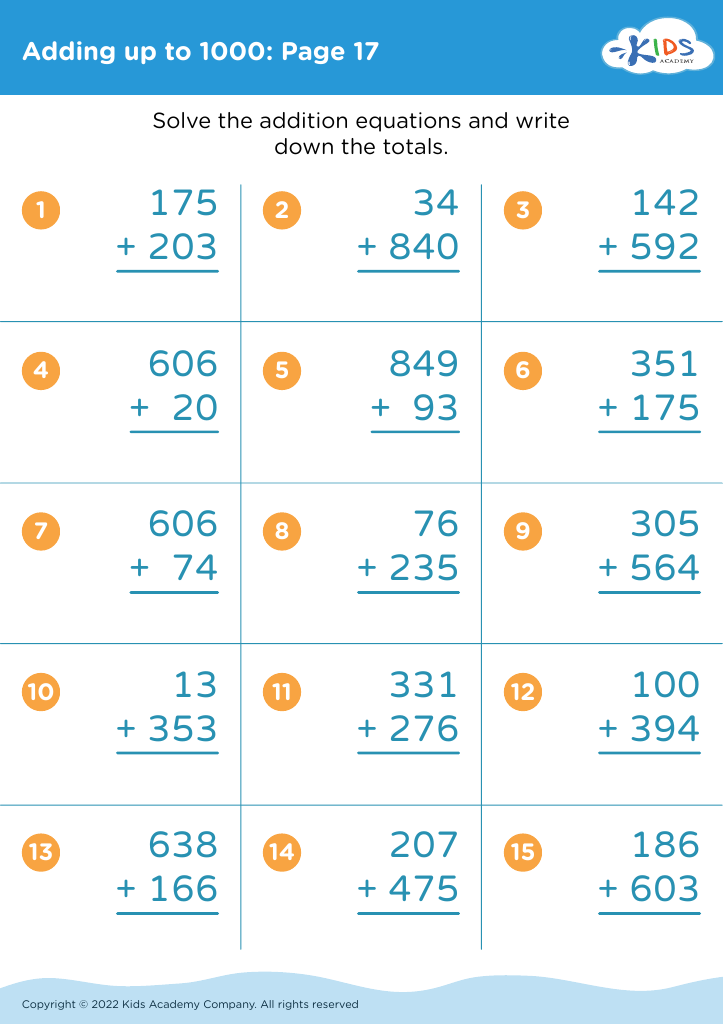
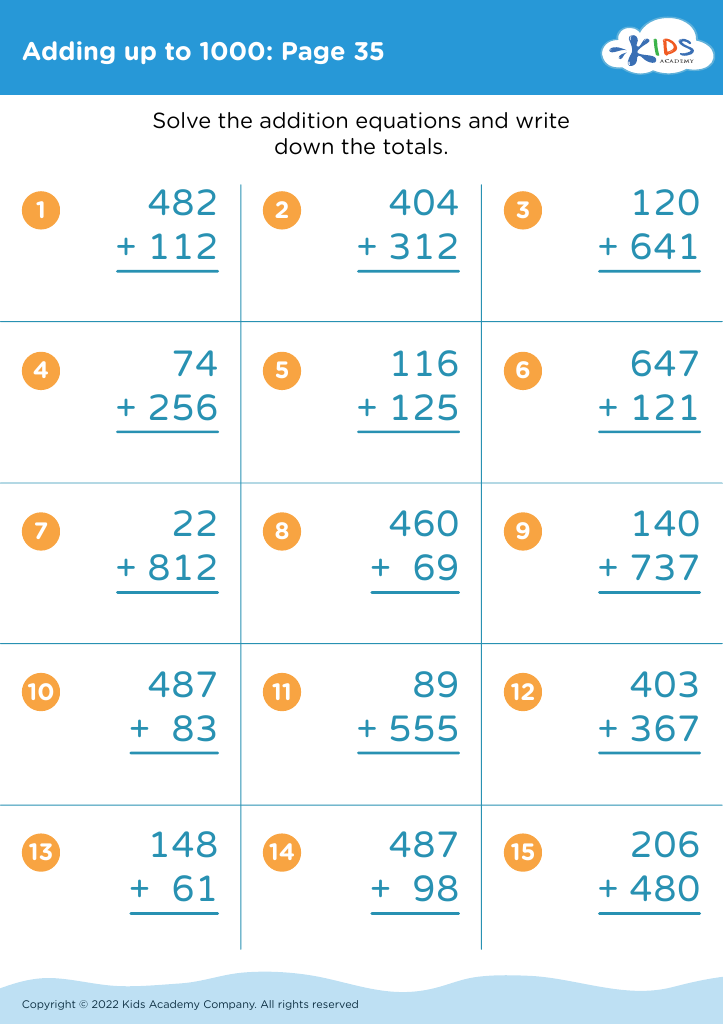
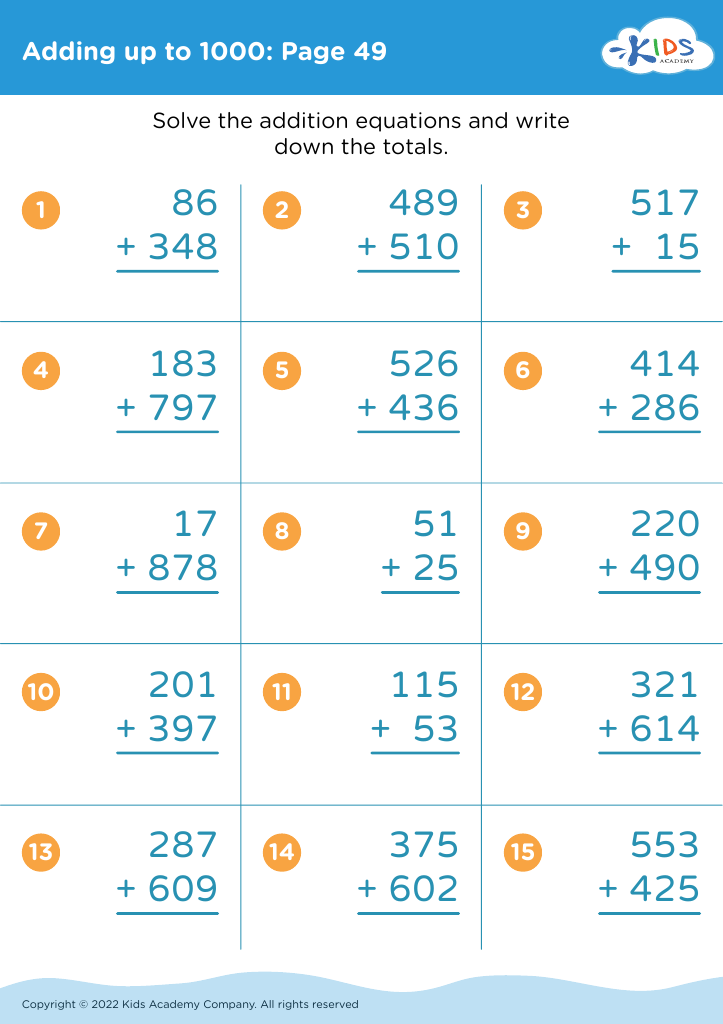
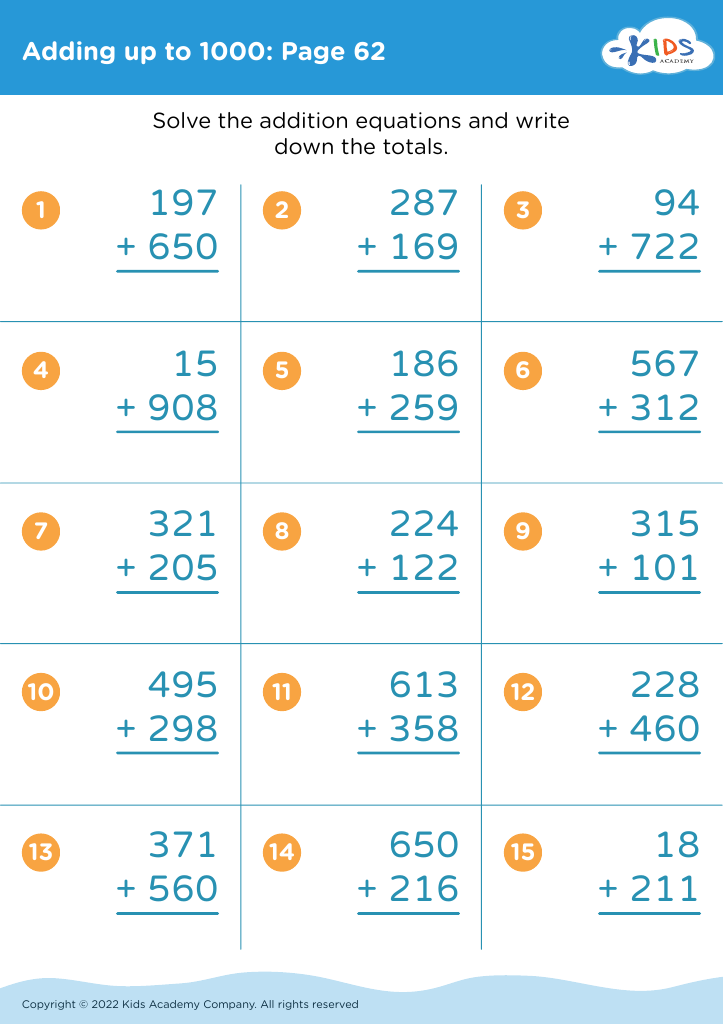
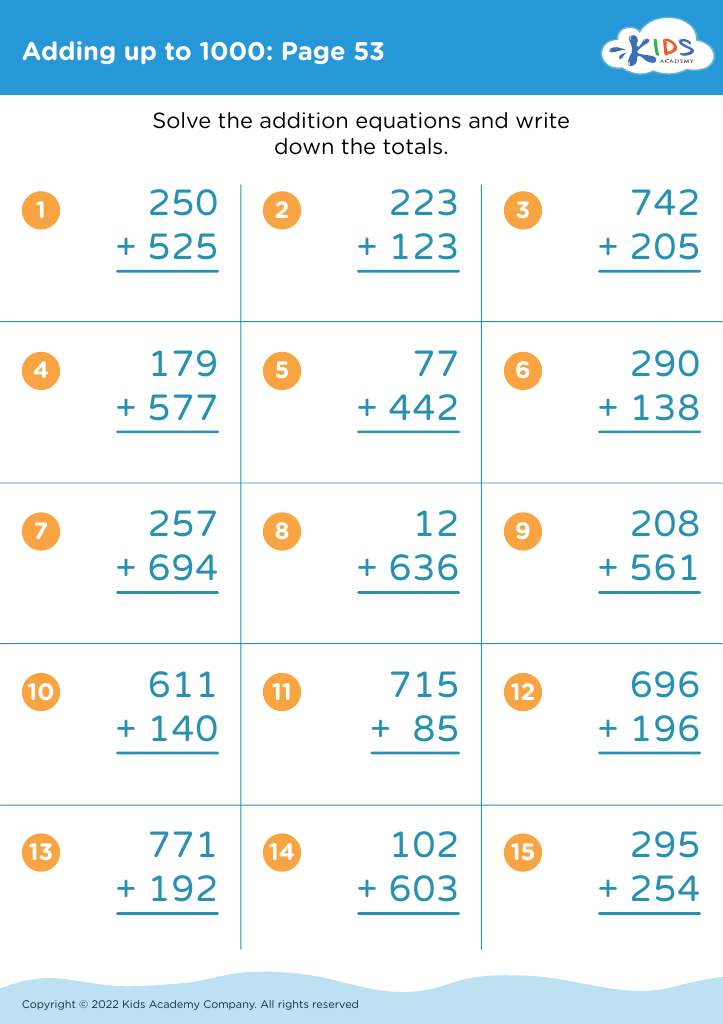
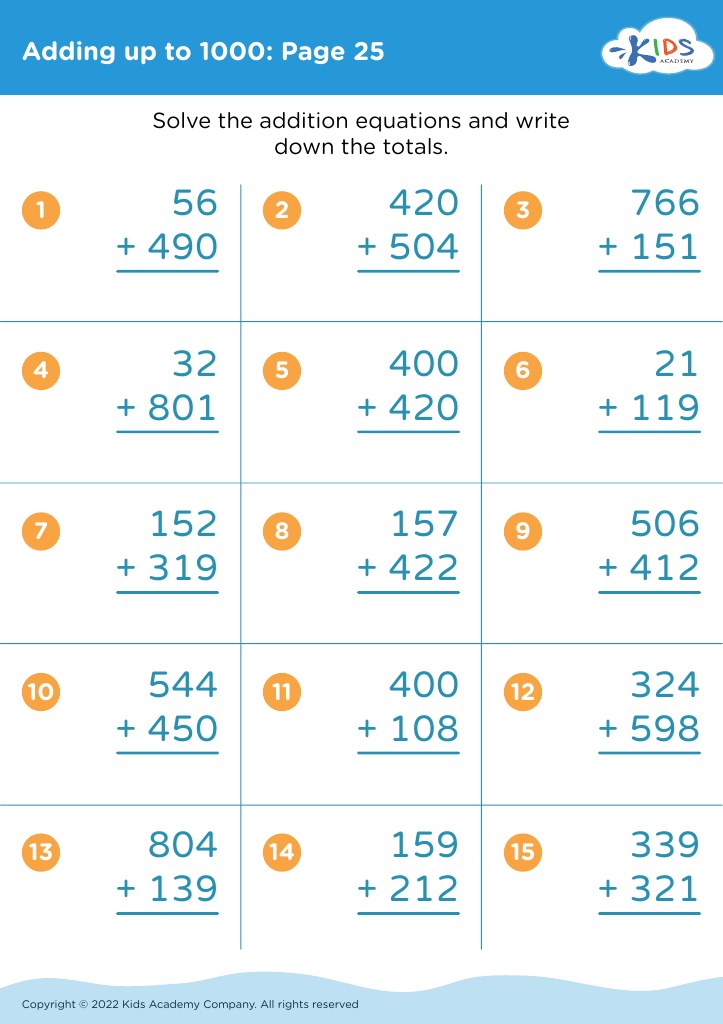


Parents and teachers should prioritize teaching fraction comparison and the concept of adding up to 1000 for children aged 6-9, as these foundational skills are crucial for developing their mathematical understanding. At this age, children are naturally curious and eager to grasp concepts that will support their problem-solving abilities throughout their lives.
Understanding fractions helps children learn how to compare parts of a whole, an essential skill not just in mathematics but in daily life as well. For example, they will encounter situations where they must compare sizes, portions, or make decisions involving sharing. By developing this skill early, students gain confidence in tackling more complex concepts in future grades.
Furthermore, introducing the notion of adding up to 1000 reinforces place value and the base-10 system, bolstering students' number sense. This foundational knowledge lays the groundwork for more advanced arithmetic operations later on. Engaging in fraction comparison and large number addition cultivates critical thinking and enhances problem-solving skills, both of which are vital for academic success.
Ultimately, these early mathematical concepts empower children to navigate a world rich in numbers, thereby fostering both their academic growth and practical life skills.