Understand fractions Adding up to 1000 Misc Worksheets for Ages 6-9
3 filtered results
-
From - To
Explore our "Understand Fractions: Adding Up to 1000 Misc Worksheets" designed for children ages 6-9. These engaging and interactive worksheets introduce young learners to the concept of fractions while reinforcing their addition skills up to 1000. Each activity encourages students to visualize, interpret, and practice fractions in manageable steps, making math both fun and accessible. With vibrant illustrations and clear instructions, our resources help students build a strong foundation in understanding numerators, denominators, and how fractions fit into the larger numbers. Ideal for classroom or home use, these worksheets support children's mathematical growth and confidence. Start your journey to fraction mastery today!
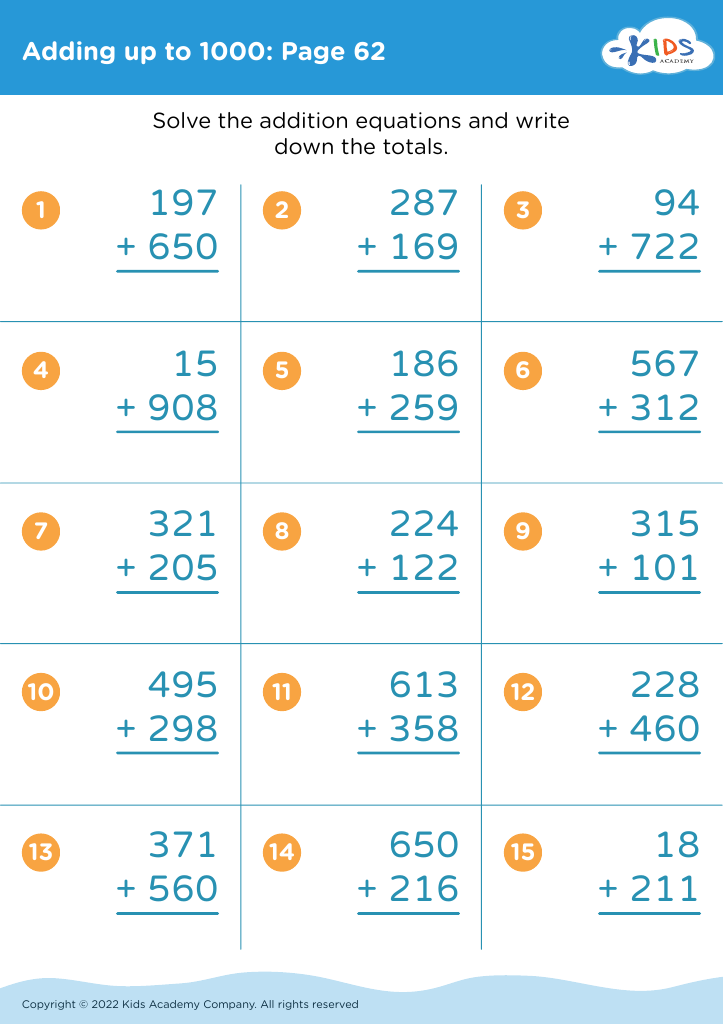
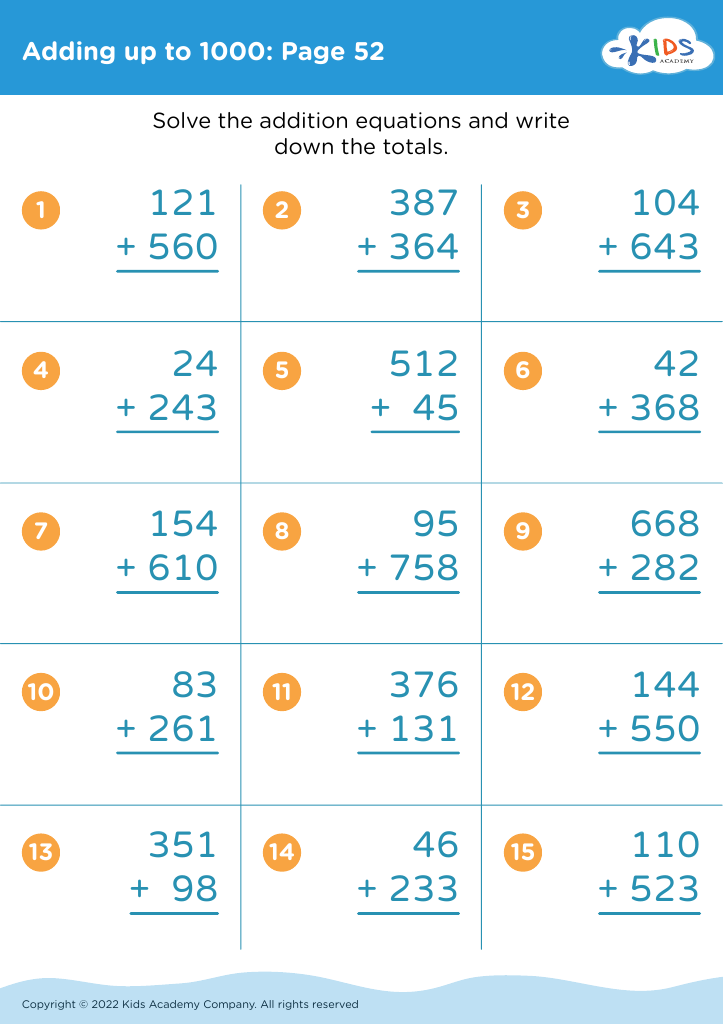
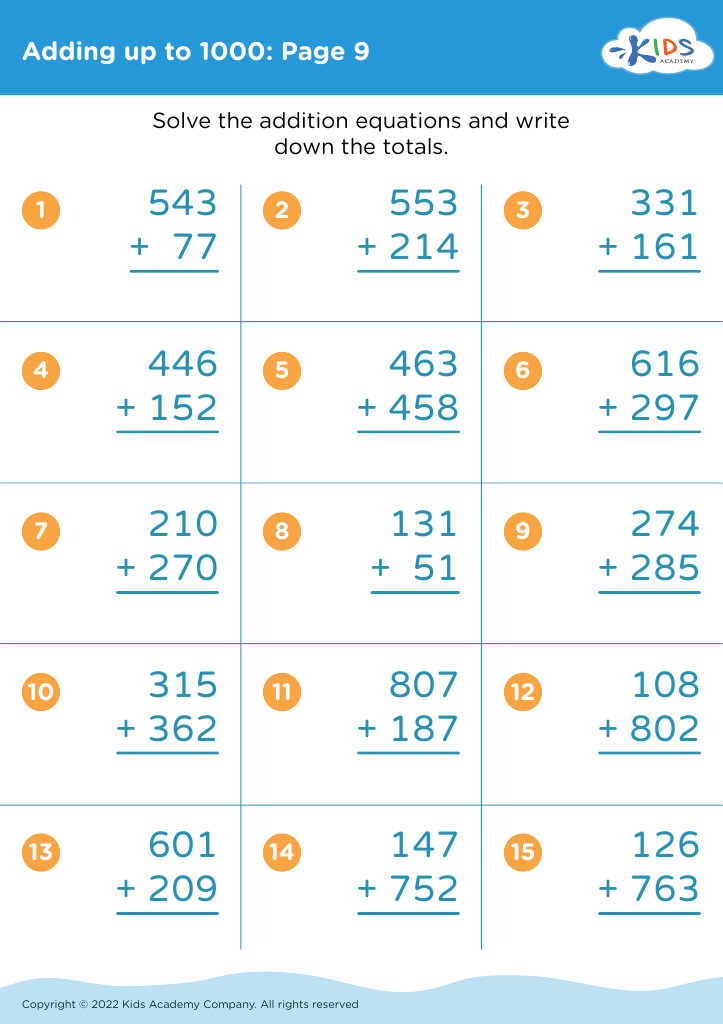


Understanding fractions is essential for children aged 6-9, laying the groundwork for their mathematical journey. As they begin to grasp basic concepts, mastering fractions fosters critical thinking and problem-solving skills. Incorporating fractions into lessons, such as adding fractions that sum up to 1000, introduces young learners to the idea of parts and wholes, which is a vital mathematics skill.
Teaching fractions helps children relate to everyday situations. Whether it’s slicing a pizza or measuring ingredients for cookies, these experiences make learning tangible and relevant. Furthermore, strong fractions skills bolster overall proficiency in math, paving the way for success in more complex areas like algebra and geometry.
Parents and teachers should care because a solid understanding of fractions correlates with higher academic achievement. It builds confidence, encourages perseverance, and nurtures a love for learning. Engaging with fractional concepts at a young age prevents future struggles in mathematics, ensuring children are prepared for higher-level challenges. Moreover, promoting cooperative activities involving fractions helps children develop social skills and teamwork abilities. Ultimately, prioritizing this foundational knowledge equips young learners with essential life skills while enhancing their academic journey.