Understanding fractions Adding up to 1000 with Regrouping Worksheets for Ages 6-9
18 filtered results
-
From - To
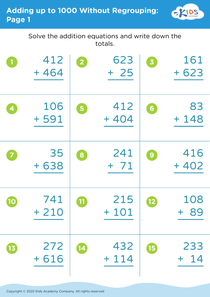
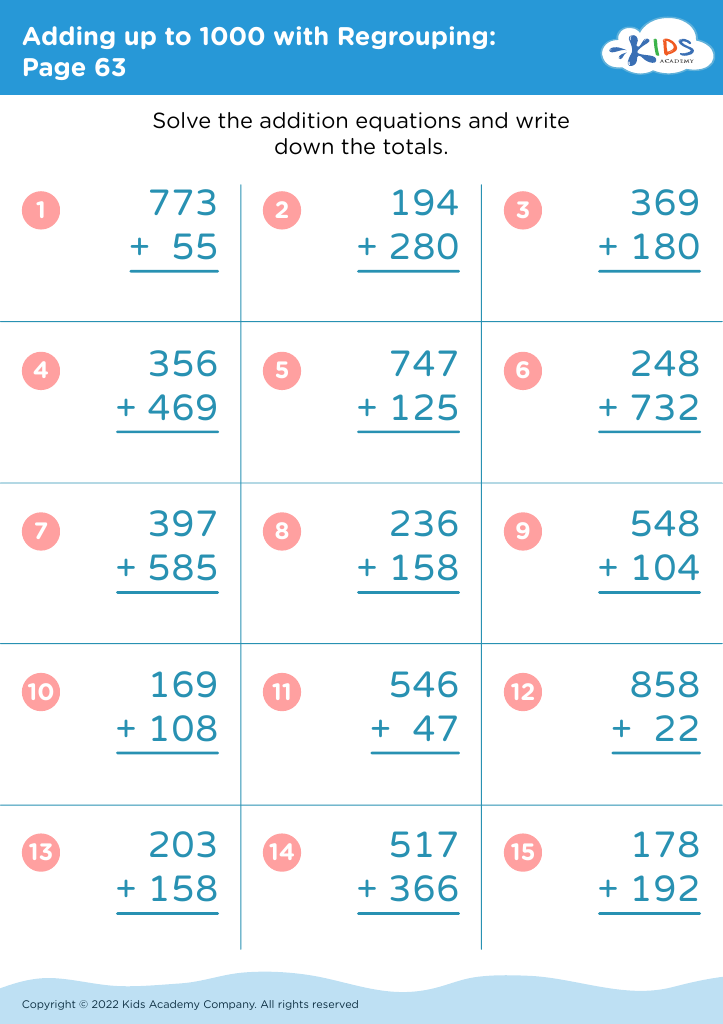
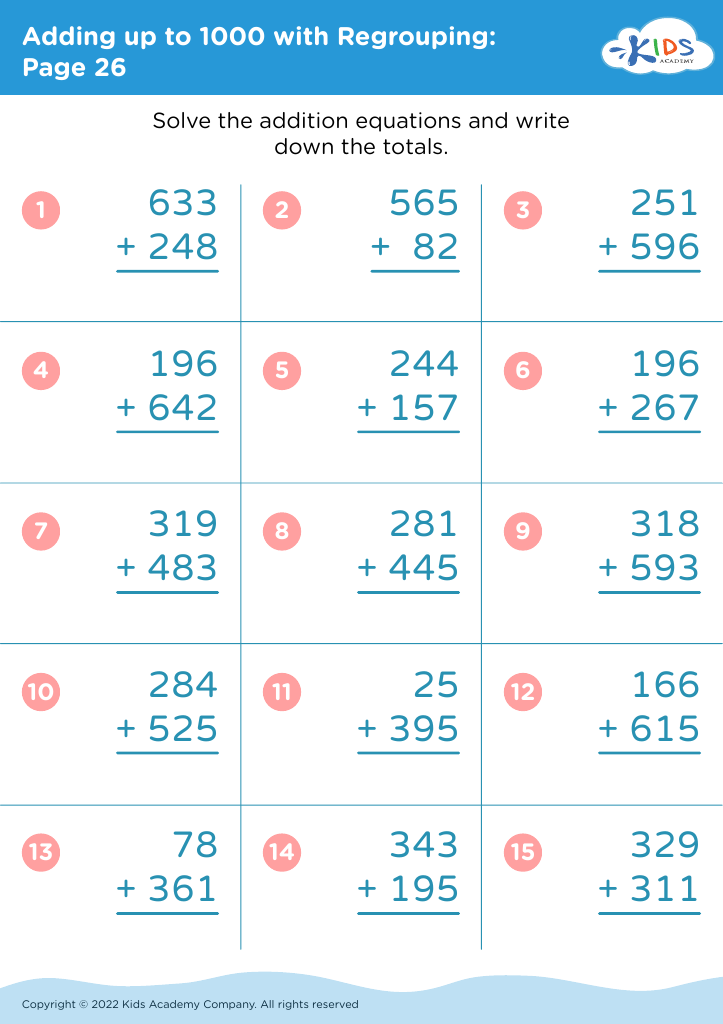
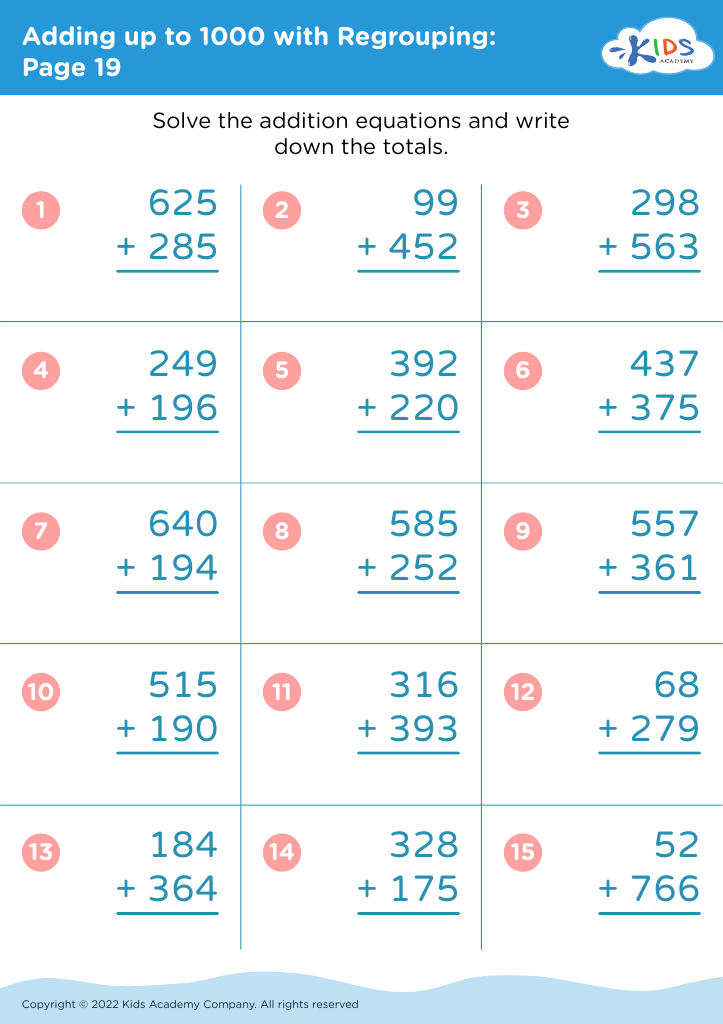
Welcome to our "Understanding Fractions Adding Up to 1000 with Regrouping Worksheets" page, designed specifically for children aged 6-9! These engaging worksheets aim to bolster your child's understanding of fractions in the context of addition and regrouping strategies. Through fun exercises and interactive challenges, young learners will master identifying and combining fractions, while also enhancing their math skills. Our worksheets are crafted to make learning fractions enjoyable and accessible, empowering students with the confidence needed to tackle math concepts effectively. Start exploring our comprehensive resources today, and help your child build a solid foundation in mathematics!
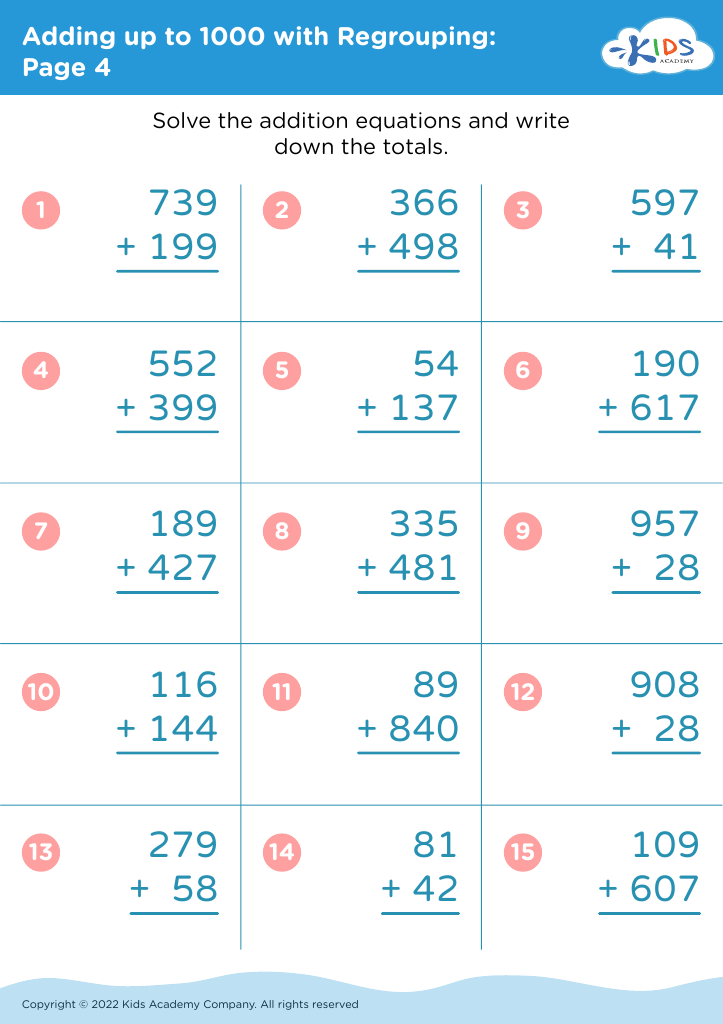
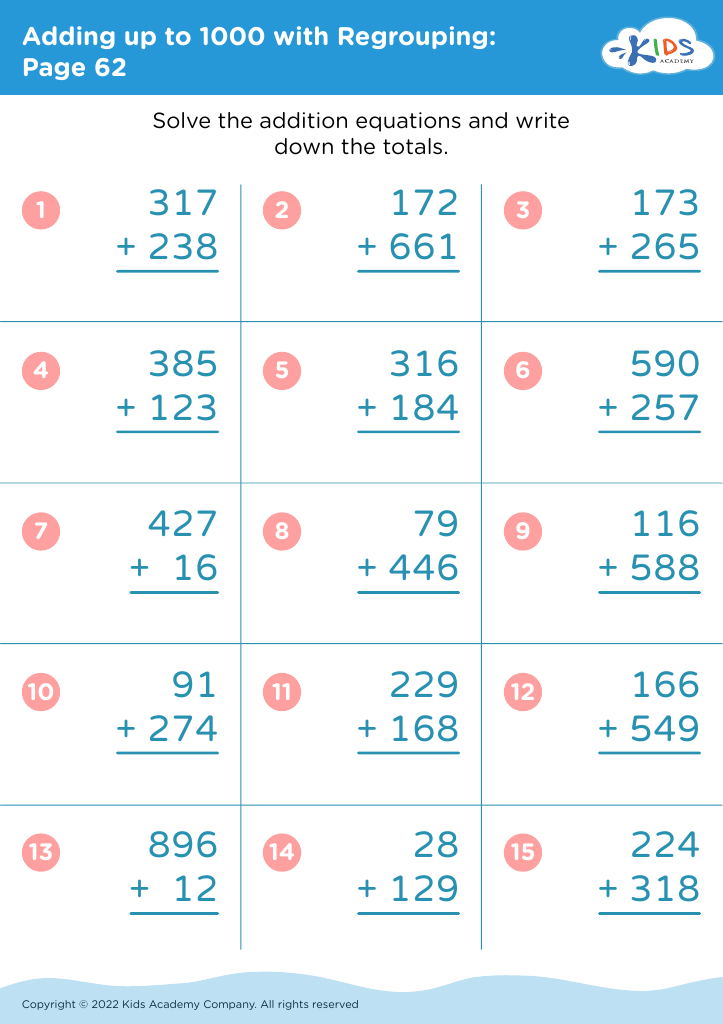
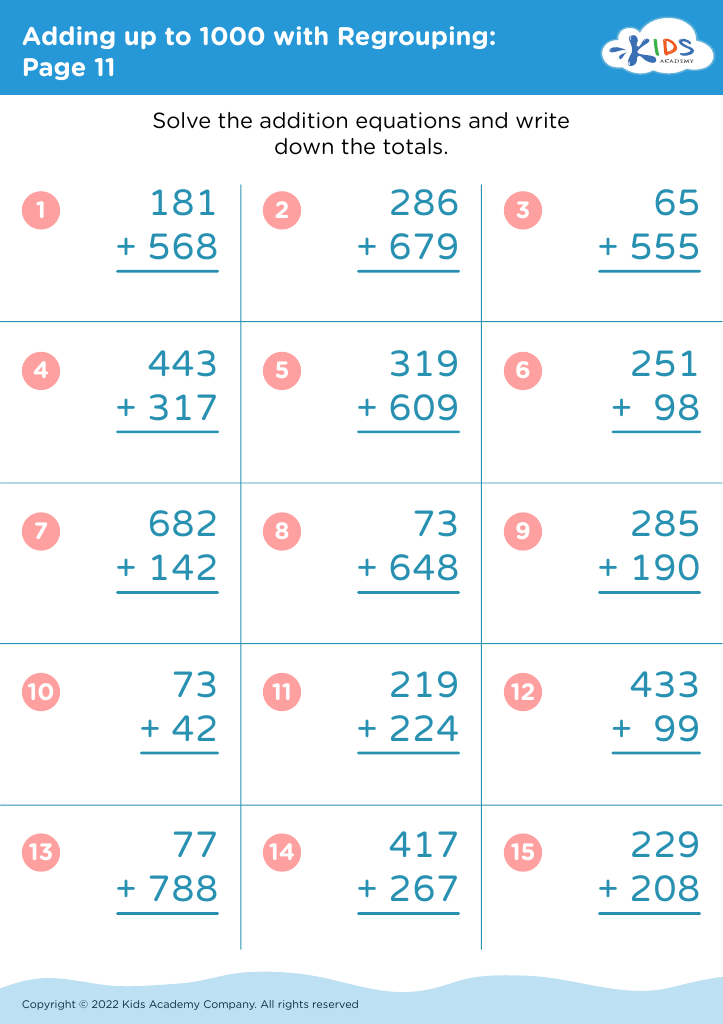
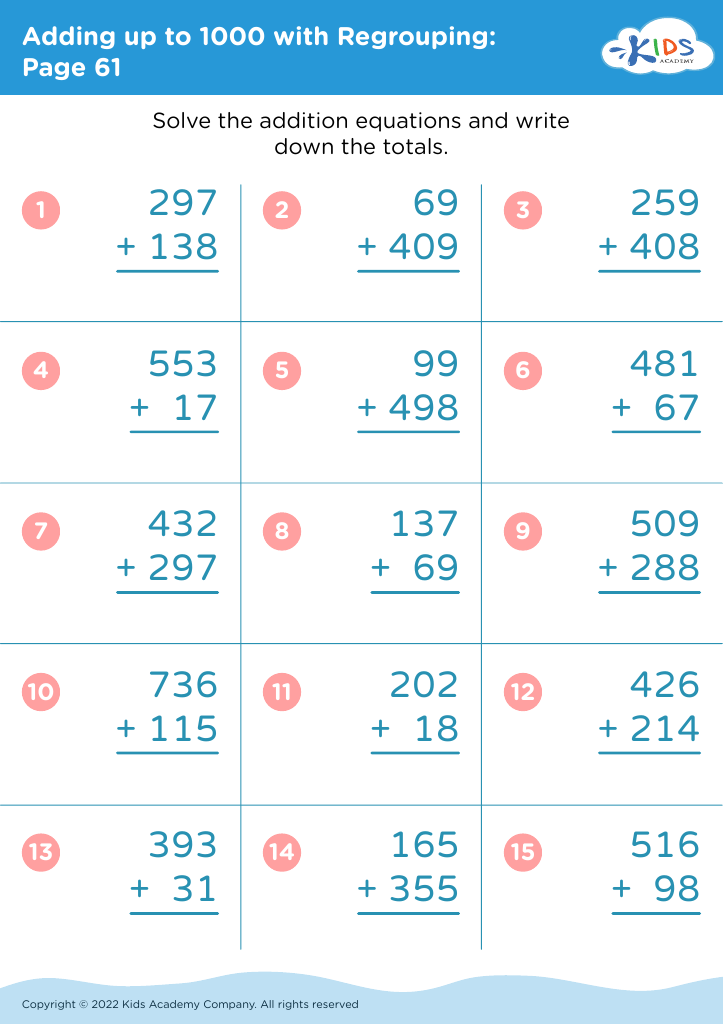
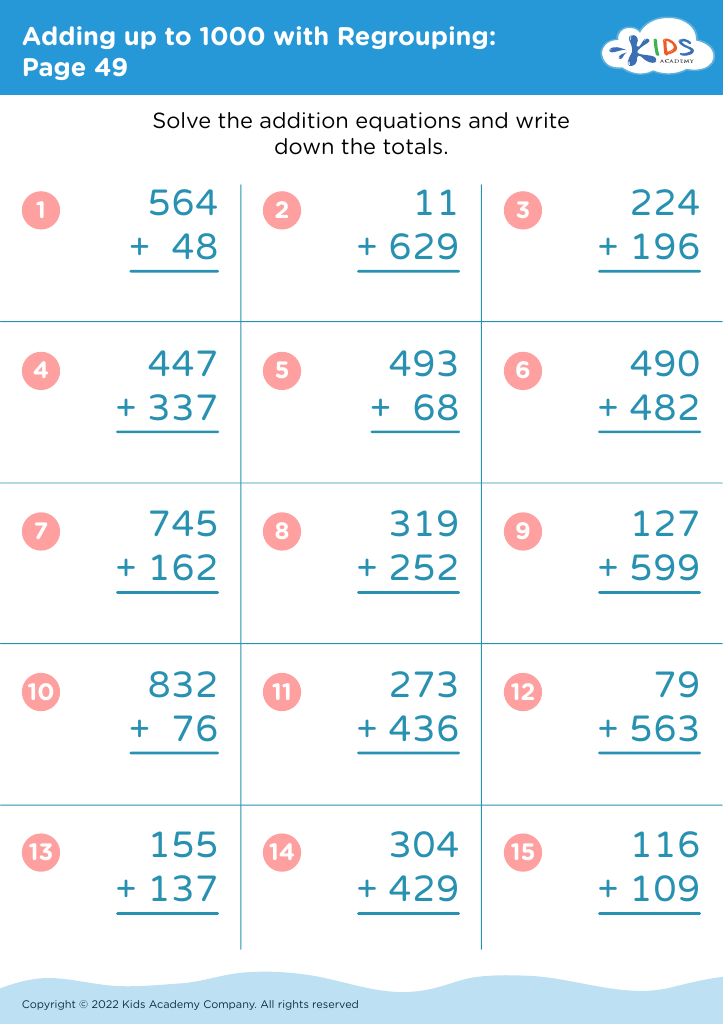
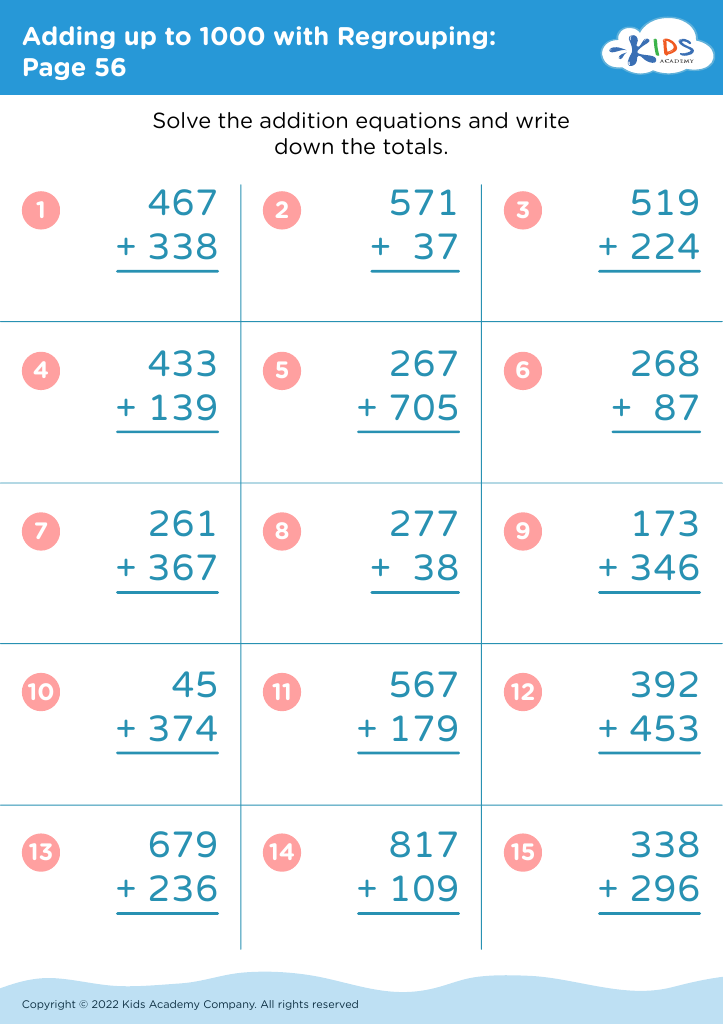
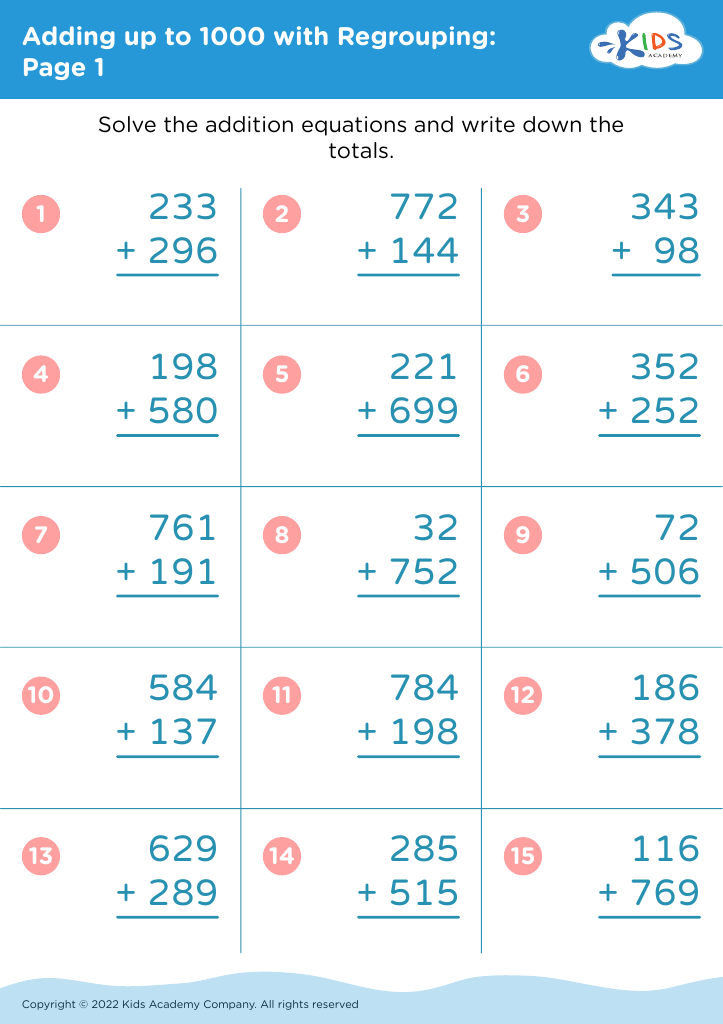
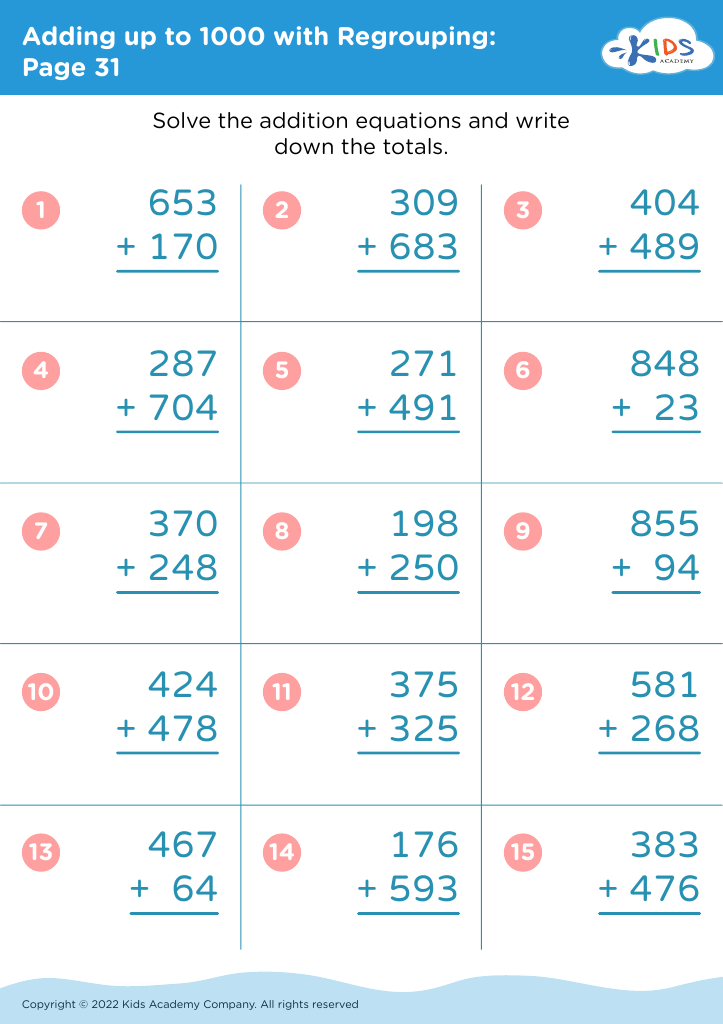
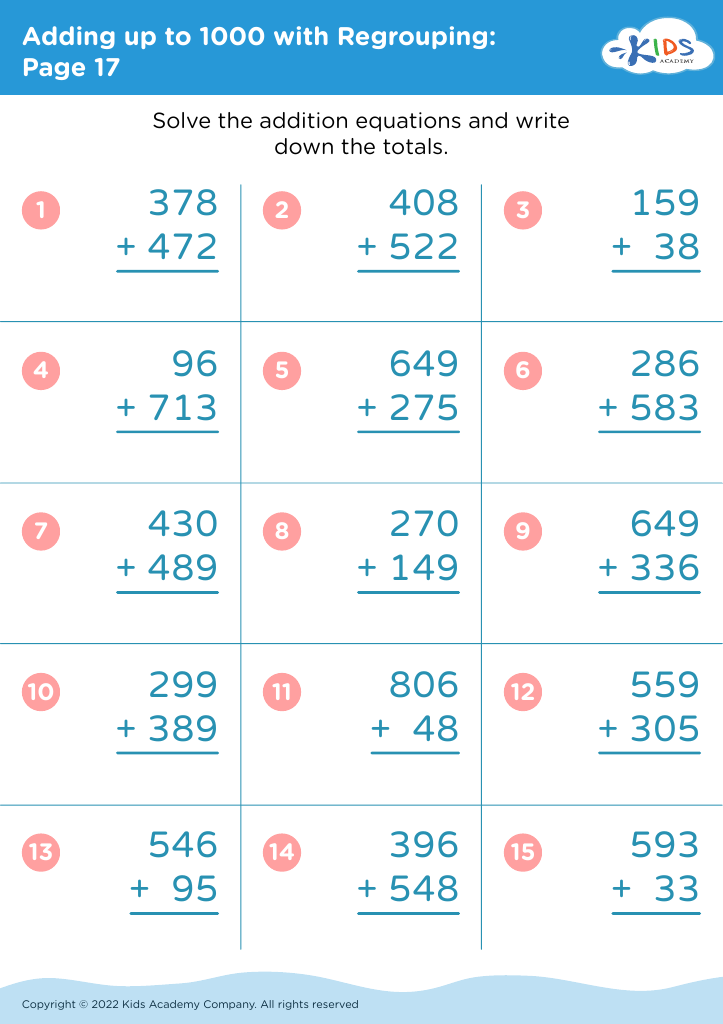
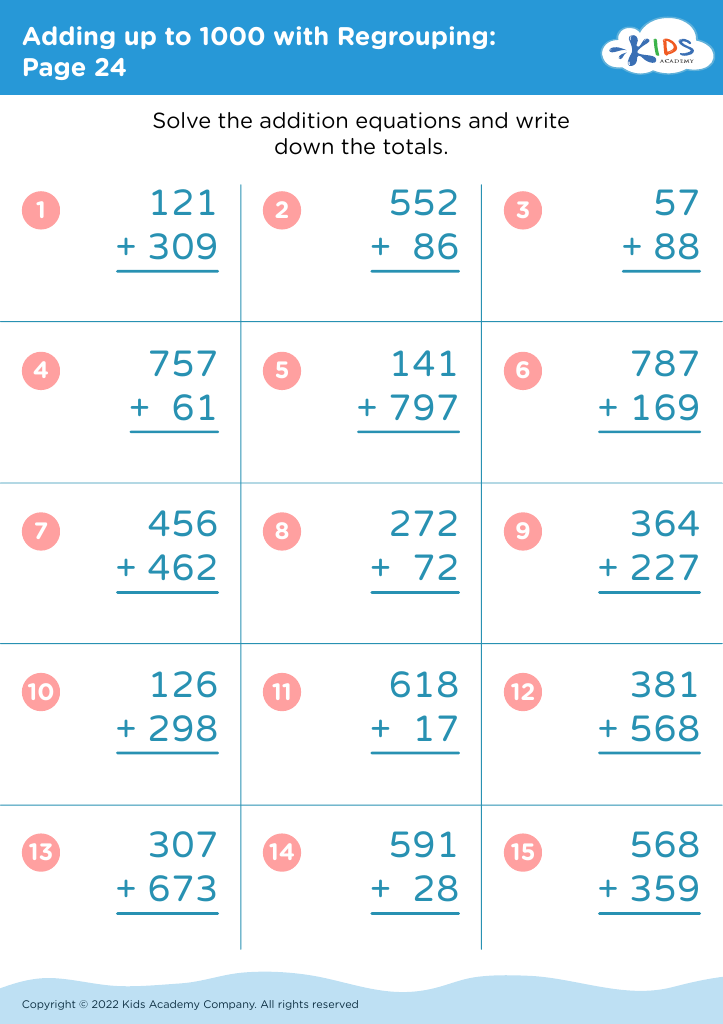
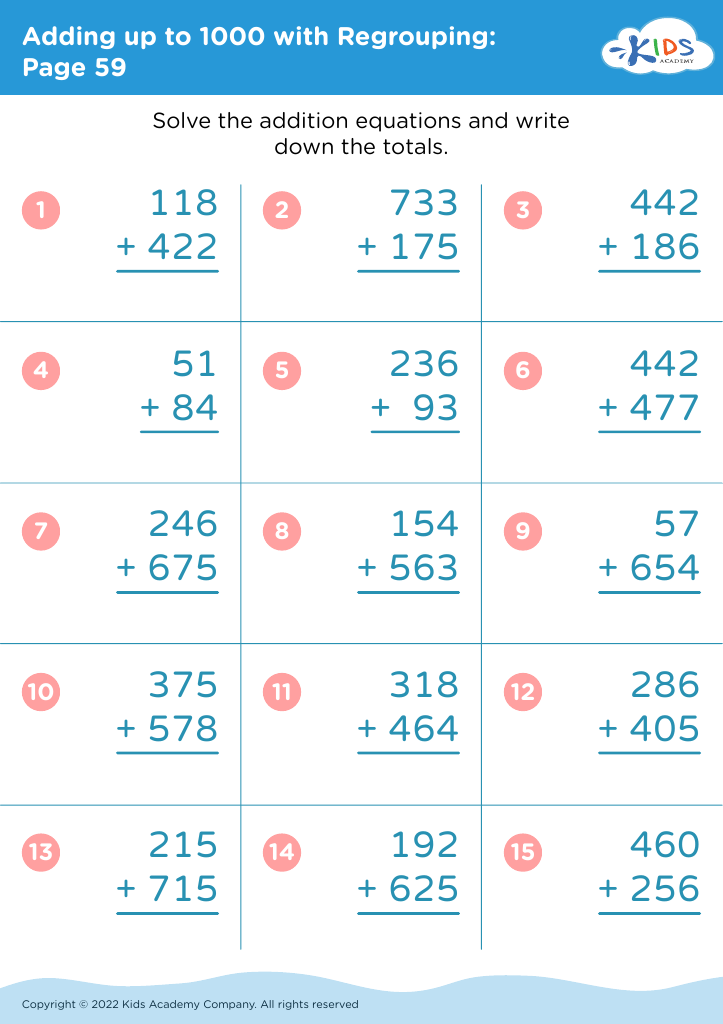
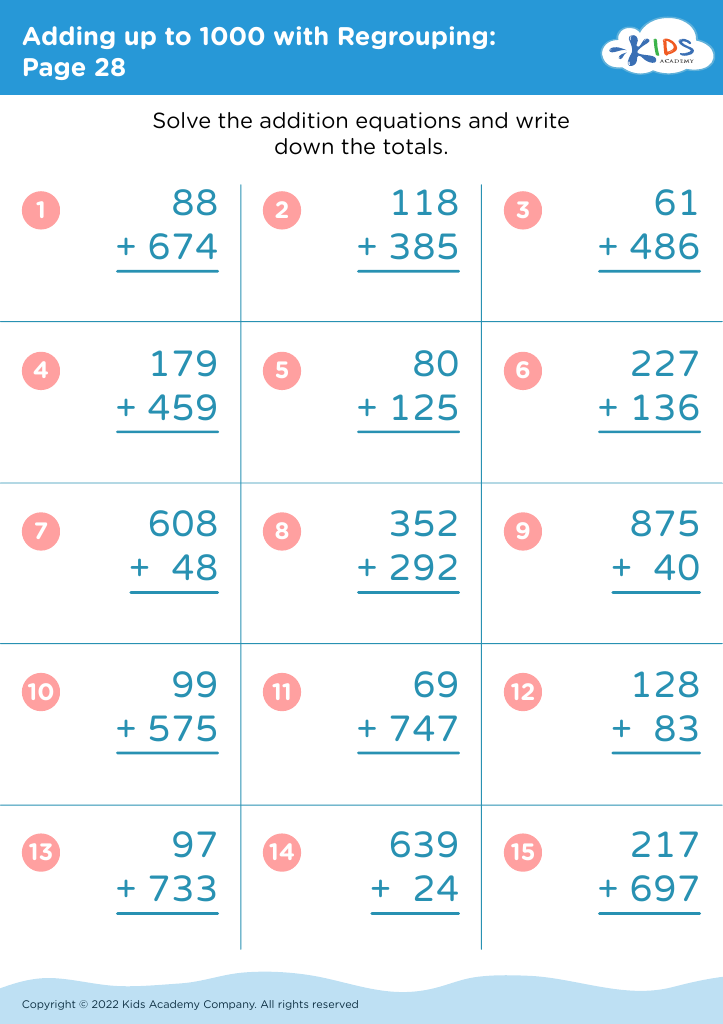
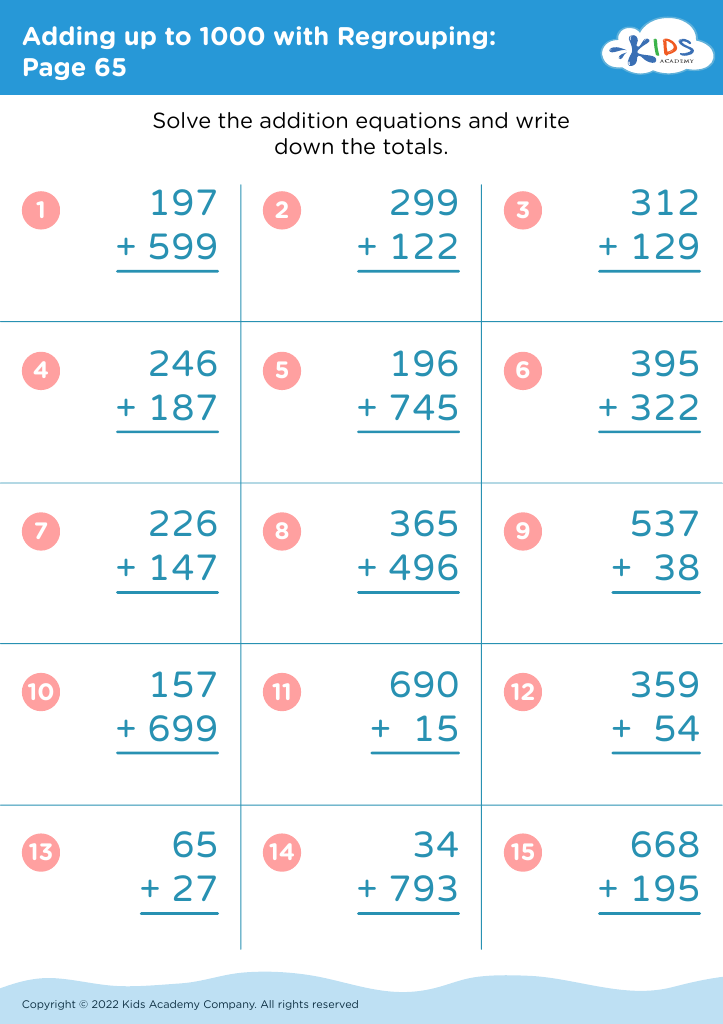
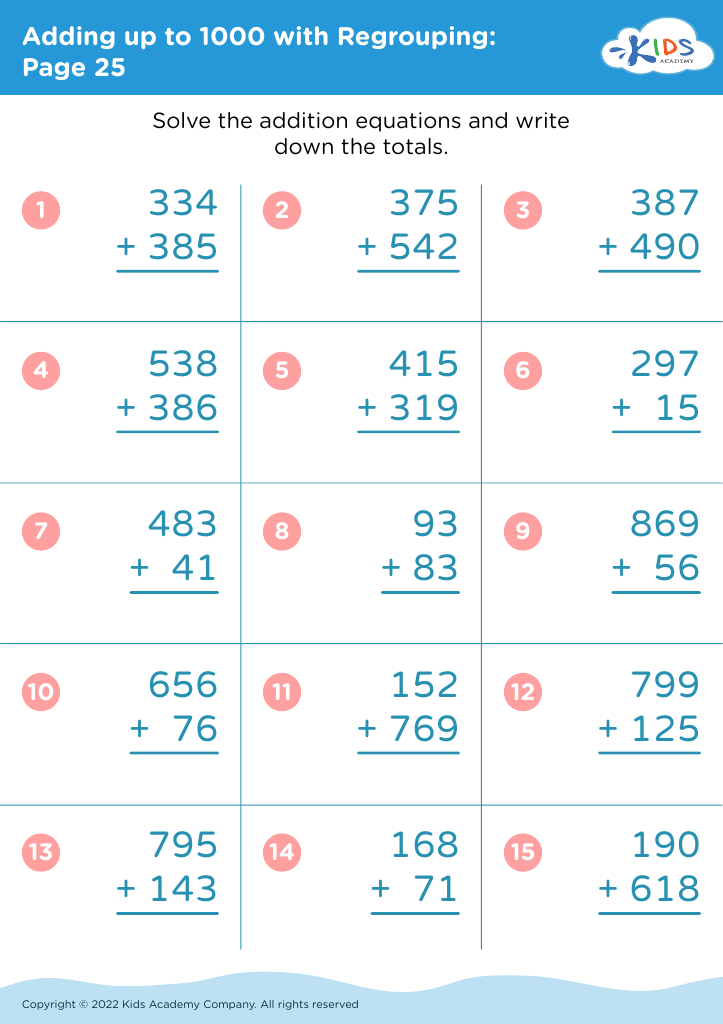
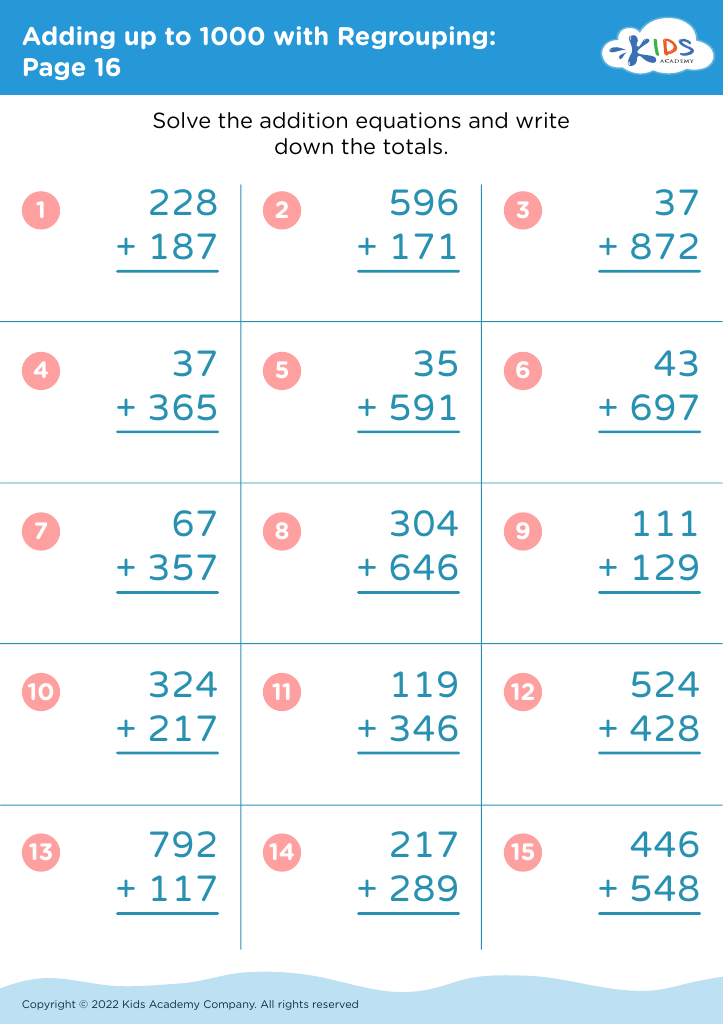


Understanding fractions and adding up to 1000 with regrouping are essential mathematical skills for children aged 6-9. For parents and teachers, nurturing these skills is crucial for several reasons.
Firstly, a strong grasp of fractions is foundational for higher-level math. As children progress in their education, concepts involving ratios, proportions, and percentages become prevalent. Learning fractions early ensures a smoother transition to these advanced topics.
Secondly, adding numbers up to 1000 with regrouping develops critical thinking and problem-solving abilities. It encourages children to think logically and work systematically, promoting resilience and perseverance when faced with challenges.
Integrating these skills also helps to boost confidence. Children who master these concepts are likely to experience positive reinforcement, which can enhance their overall attitude towards learning math.
Additionally, these skills have practical applications. Knowledge of fractions helps in everyday situations, such as cooking or shopping, while regrouping deepens their numerical understanding and aids in mental arithmetic.
Ultimately, prioritizing a solid foundation in these areas not only ensures academic success but also fosters a love for learning, encouraging lifelong skills that are applicable beyond the classroom. This investment in their education yields long-term benefits, making it vital for parents and teachers to engage with these concepts.