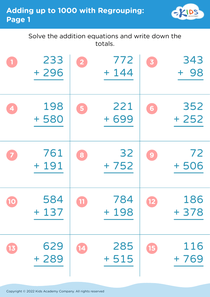
Improve reading skills Adding up to 1000 Without Regrouping Worksheets for Ages 6-9
6 filtered results
-
From - To
Enhance your child’s reading and math skills with our “Improve Reading Skills: Adding Up to 1000 Without Regrouping” worksheets, designed for ages 6-9. These engaging activities integrate fundamental math concepts with reading comprehension practice, making learning both enjoyable and effective. As your child practices addition up to 1000 without regrouping, they will also develop essential vocabulary and sentence structure options, boosting literacy skills alongside mathematical understanding. Perfect for reinforcing classroom lessons or providing homework support, these worksheets encourage independent learning and critical thinking. Download now to give your child the tools they need for academic success!
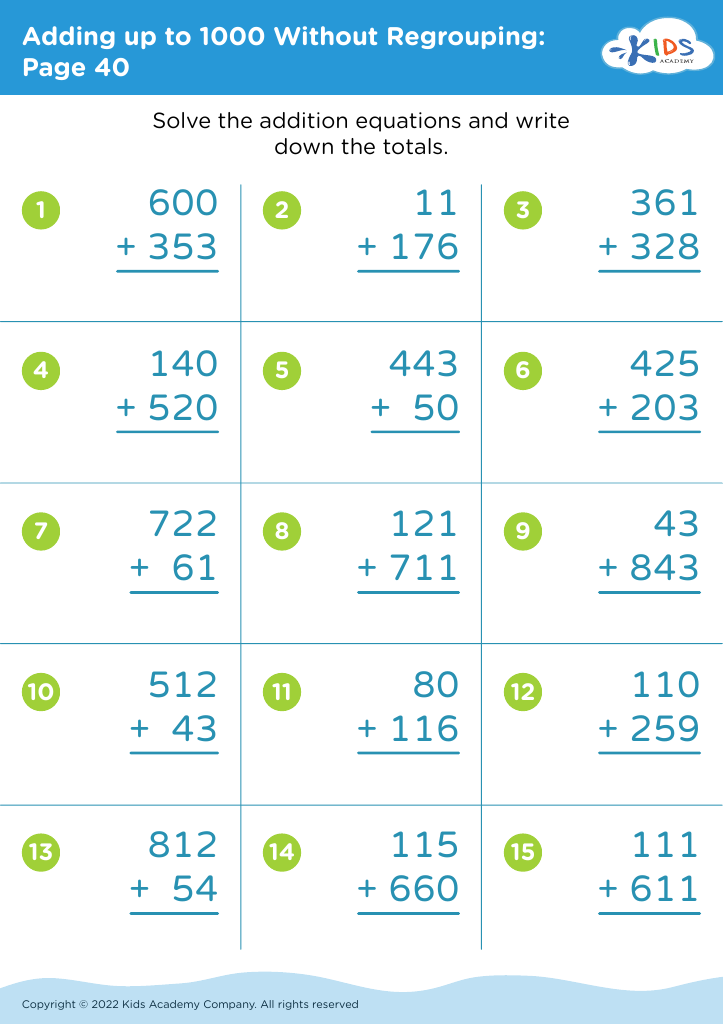
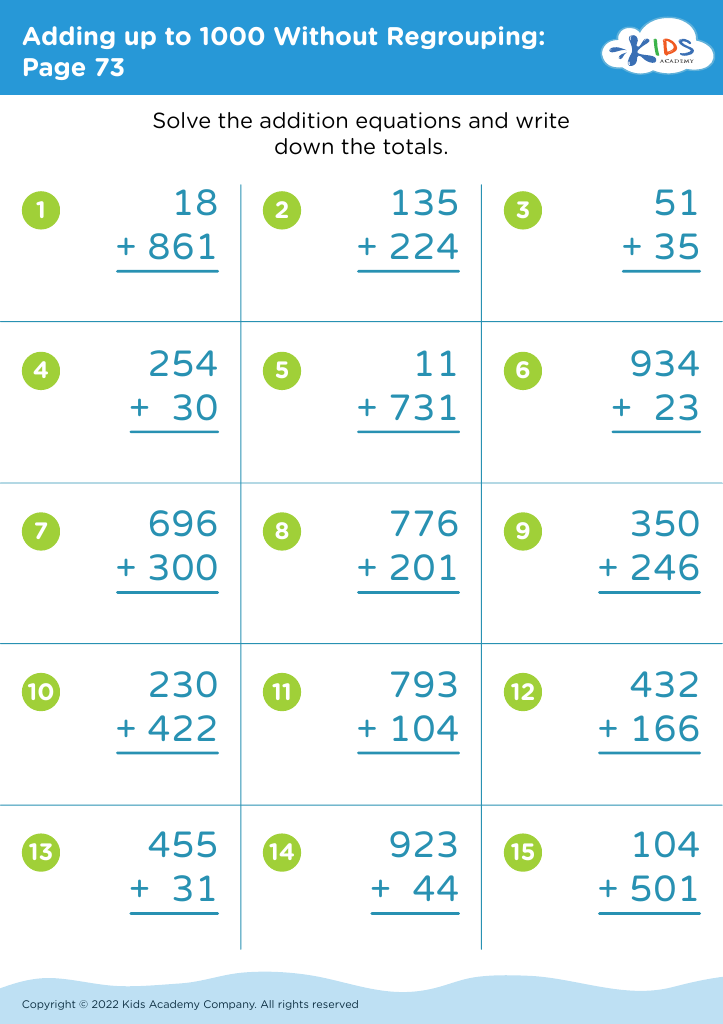
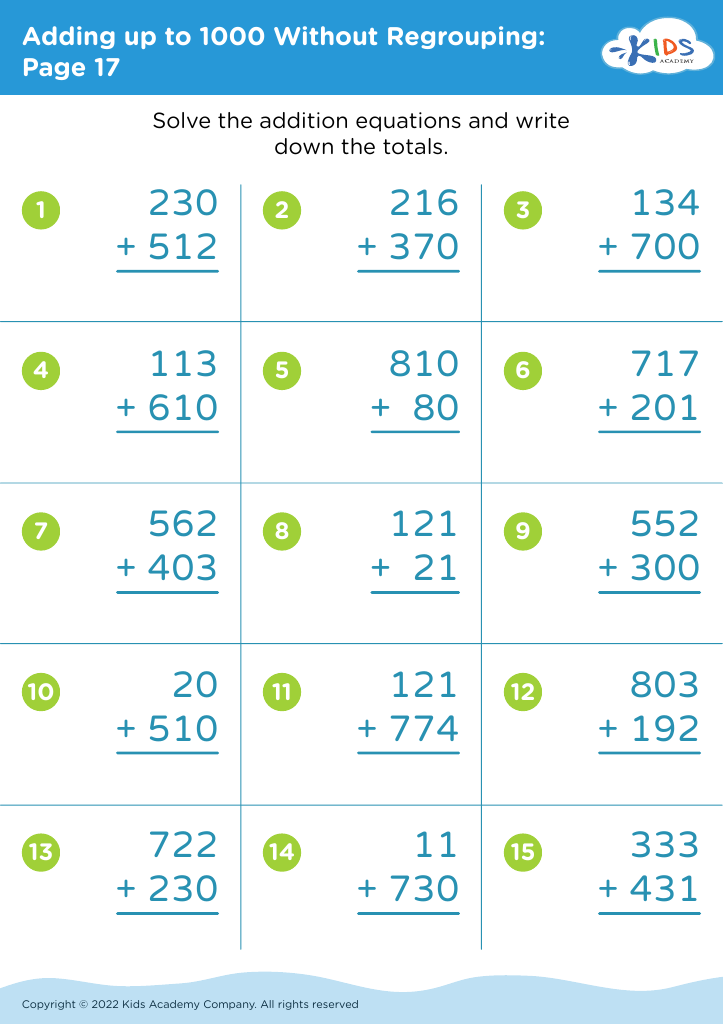
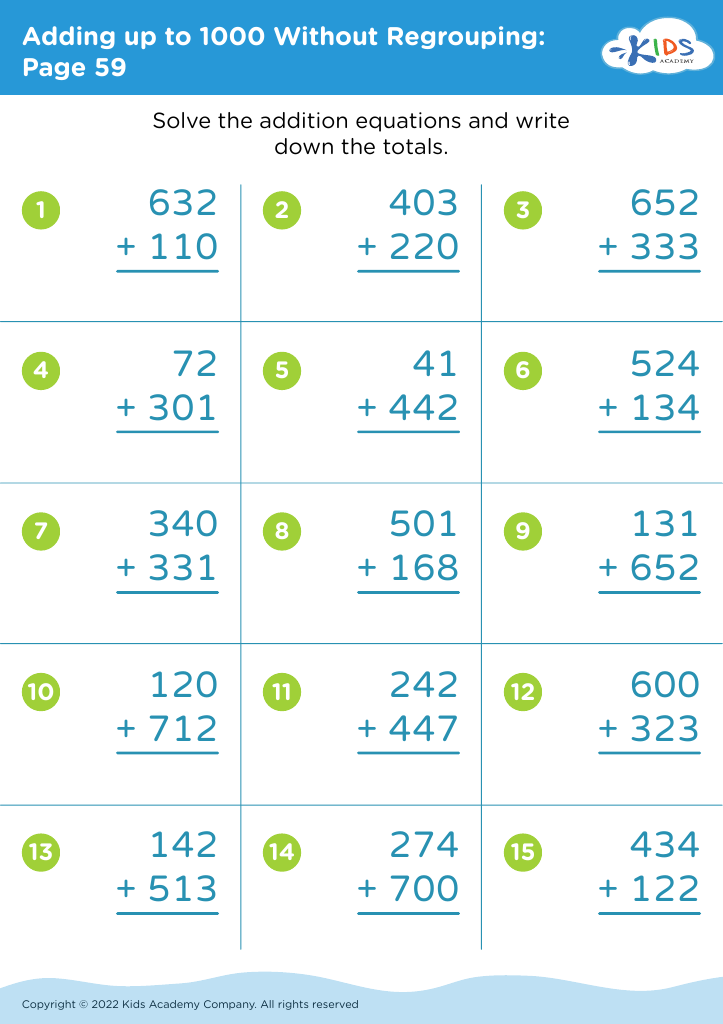
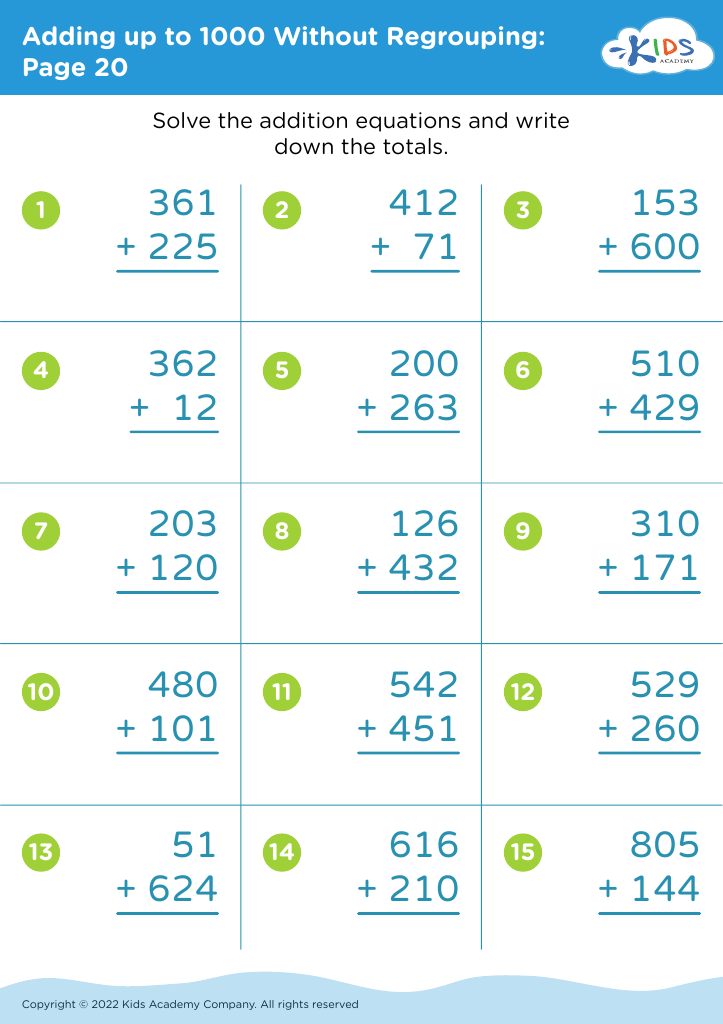
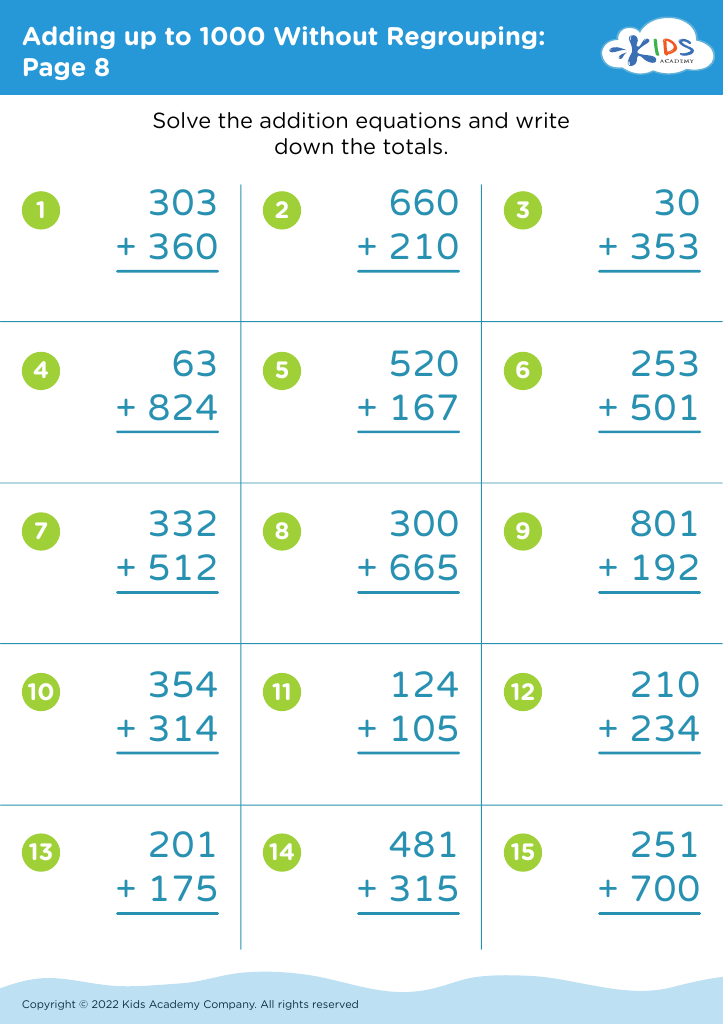


Improving reading skills and mathematical proficiency, such as adding up to 1000 without regrouping, is crucial for children ages 6-9 for several reasons. First, strong reading skills serve as the foundation for all areas of learning. Reading proficiency allows children to comprehend instructions, engage with various subjects, and develop critical thinking skills. Enhanced reading abilities also foster a love for literature, which enriches vocabulary and promotes creativity.
Similarly, developing addition skills without regrouping strengthens a child's numerical understanding. This skill builds the groundwork for more complex mathematical concepts and problem-solving abilities. Early practice in addition boosts confidence, promotes mental math skills, and aids in the development of logical thinking.
Moreover, these skills together support a child's overall academic success. Teachers and parents who prioritize literacy and numeracy from a young age set children on a path toward lifelong learning. Engaging children in reading and math games at home or in the classroom also enhances social skills and builds resilience as they tackle challenges together.
Furthermore, strong foundational skills in reading and math influence future achievement, ensuring that children are not only prepared for upcoming educational milestones but are also equipped to navigate daily life with competence. Supporting these areas in early education reflects a commitment to a child’s holistic development.