Basic Addition Adding up to 1000 Worksheets for Ages 6-9
6 filtered results
-
From - To
Welcome to our Basic Addition worksheets designed specifically for children ages 6-9! These engaging resources help young learners master fundamental addition skills, focusing on sums up to 1000. With a variety of fun, age-appropriate exercises, your child will build confidence as they explore different addition strategies. Each worksheet is crafted to enhance understanding, encouraging practice through interactive problems and colorful illustrations. Ideal for both classroom and home use, our worksheets make learning math enjoyable. Equip your child with essential math skills today and watch them thrive in their academic journey! Download our Basic Addition worksheets and start the adventure in learning!
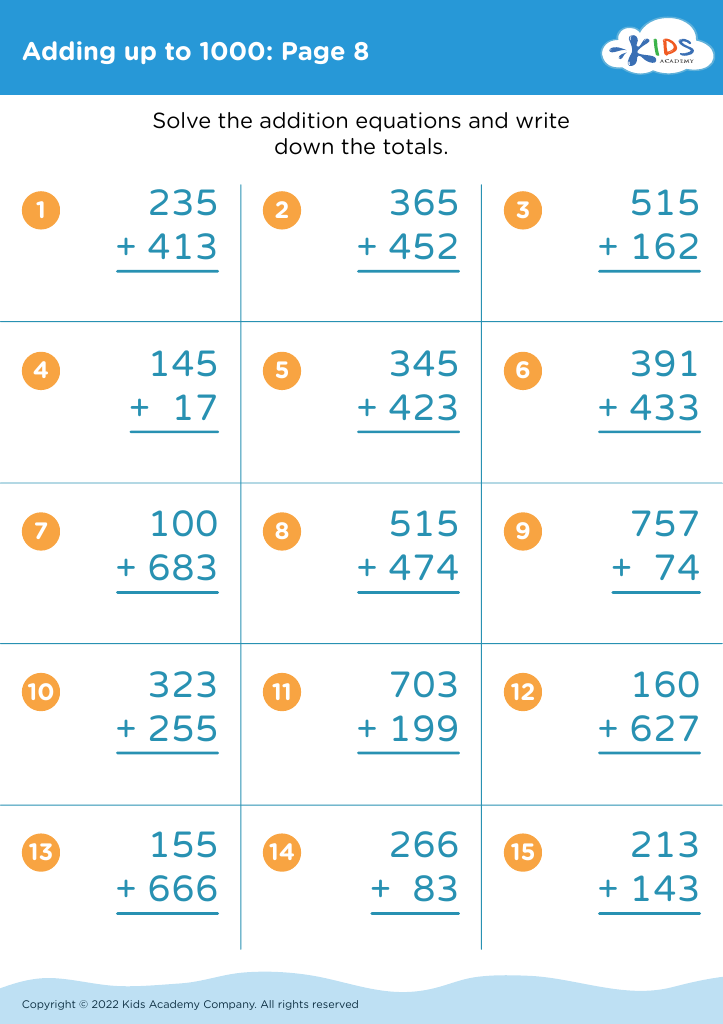
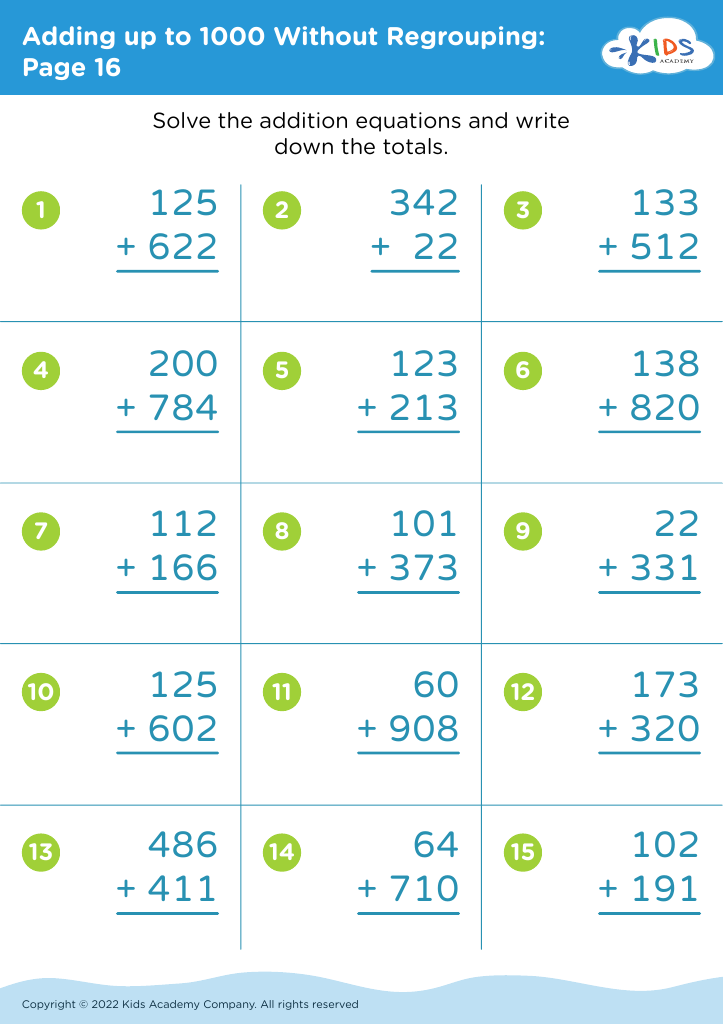
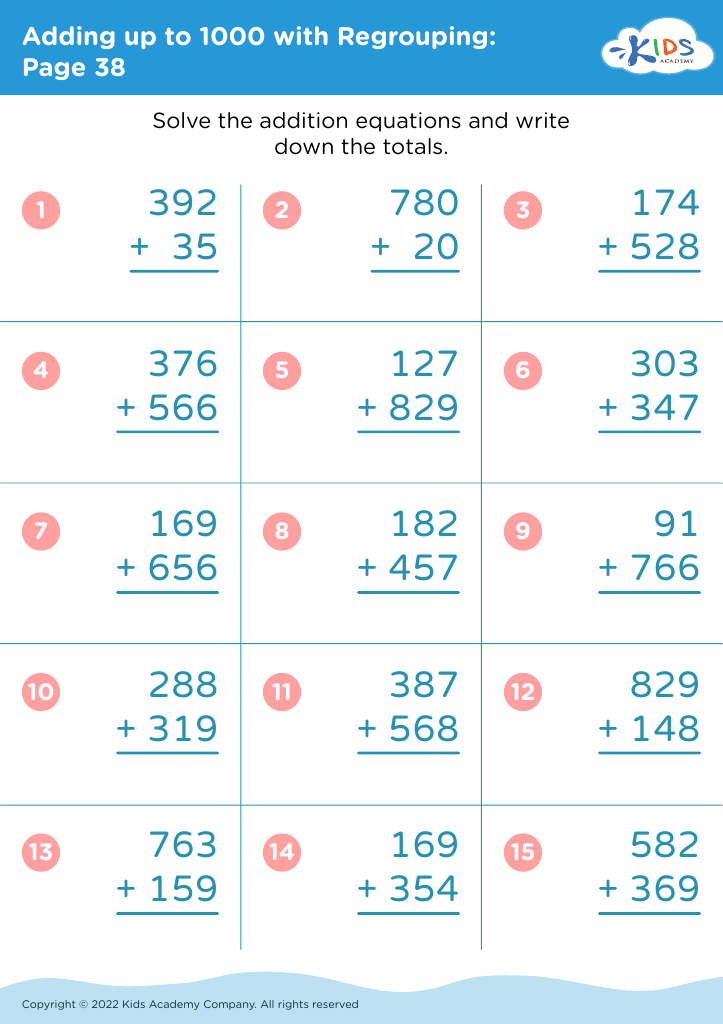
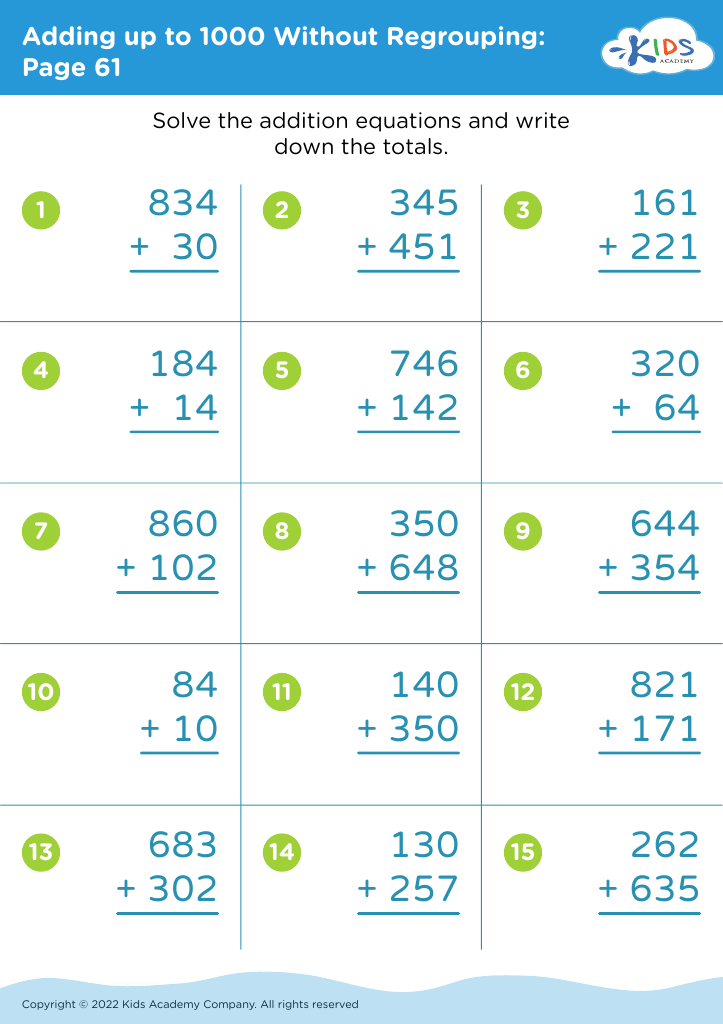
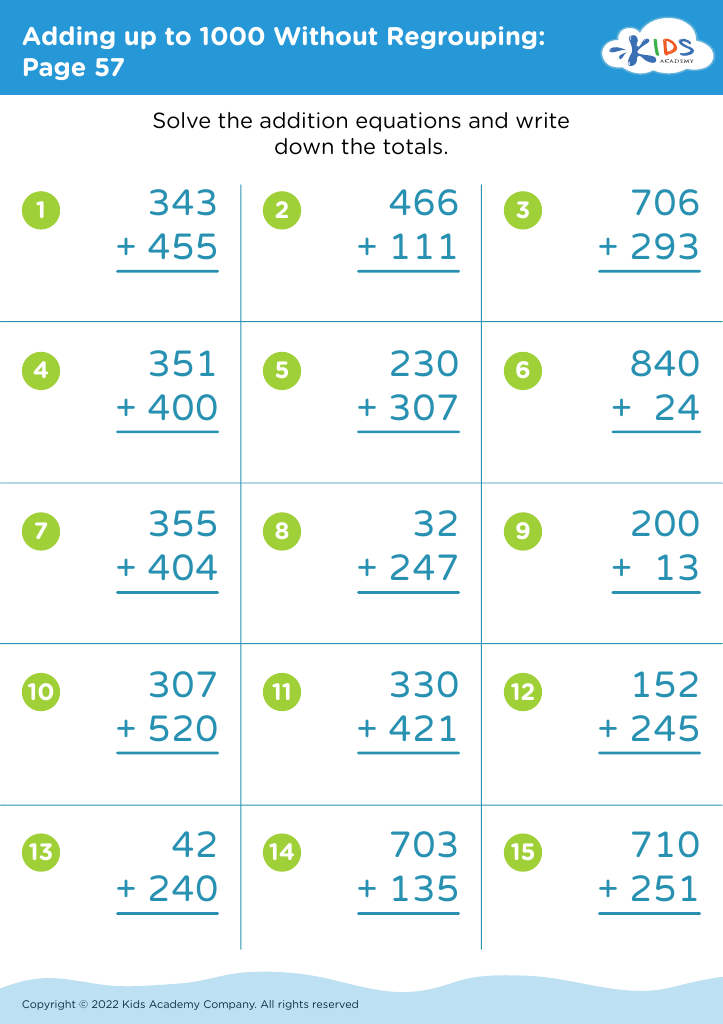
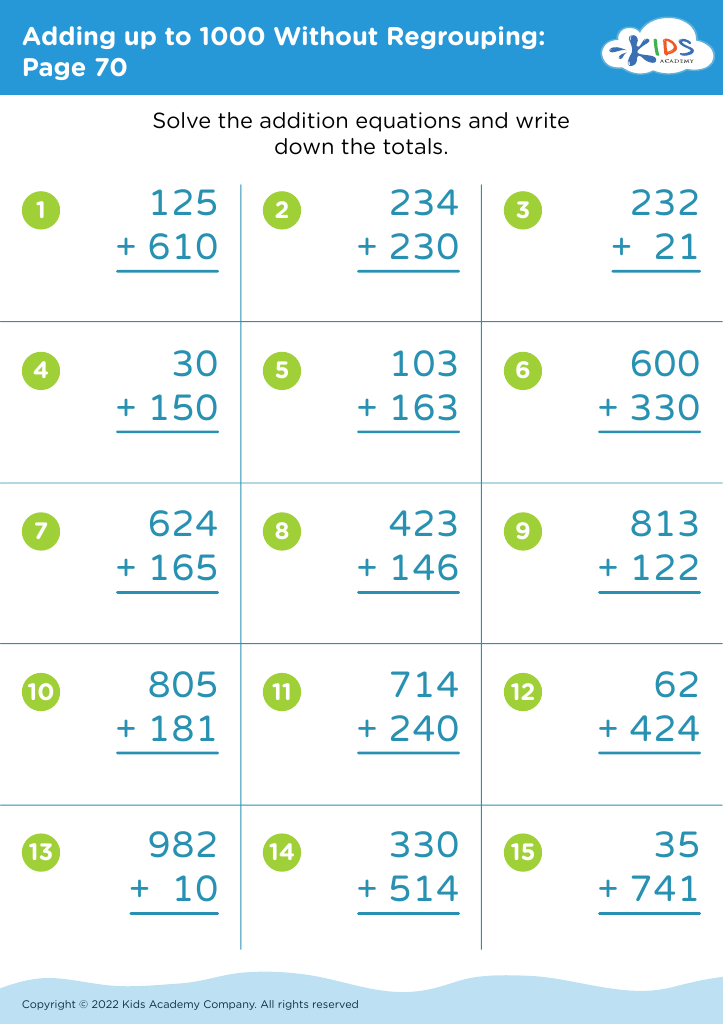



Basic addition skills, particularly addition up to 1000, are foundational for children aged 6-9. By mastering these skills, students build confidence in their mathematical abilities, which supports future learning. Understanding how to add numbers effectively equips children not only for school-related tasks but also for everyday problem-solving situations, such as managing money or understanding time.
Teachers and parents should care about this foundational skill because it fosters critical thinking and enhances cognitive development. As children learn to process and combine information through addition, they refine their logical reasoning, an essential asset in both mathematics and broader academic pursuits.
Moreover, early proficiency in addition sets the stage for more complex mathematical concepts such as multiplication, division, and even algebra later on. It helps develop number sense, contributing to overall numerical fluency.
Encouraging practice in addition can also provide children with a sense of achievement, enhancing their motivation and enthusiasm for learning. Additionally, engaging parents in their child's learning process by reinforcing these concepts at home creates a supportive environment that promotes academic success. Therefore, emphasizing basic addition is vital to a child's educational journey and their overall cognitive and personal development.








