Recognizing Patterns Adding up to 1000 Worksheets for Ages 6-9
6 filtered results
-
From - To
Discover engaging "Recognizing Patterns Adding up to 1000" worksheets designed for children aged 6-9! These worksheets help young learners explore the concept of patterns while honing their addition skills up to 1000. Through fun and interactive exercises, kids will identify and apply number patterns, improving their problem-solving abilities and boosting their confidence in math. Perfect for classroom use or at-home learning, these worksheets make mathematics fun! With colorful visuals and clear instructions, students will enjoy uncovering the patterns that make math more approachable. Start your child's journey to becoming a confident mathematician today!
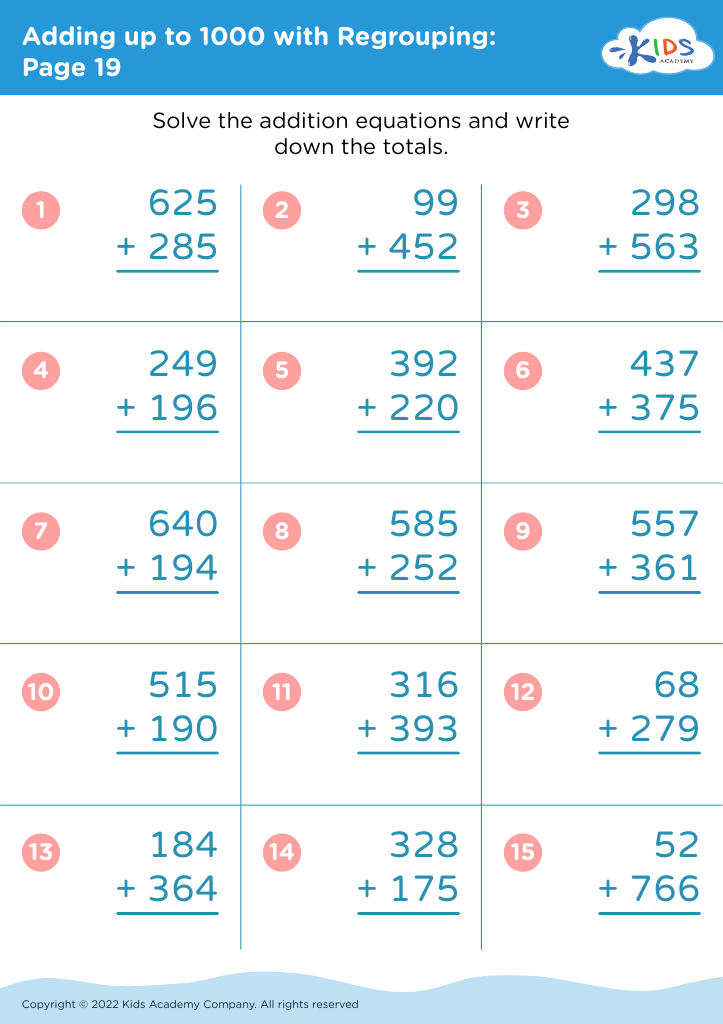
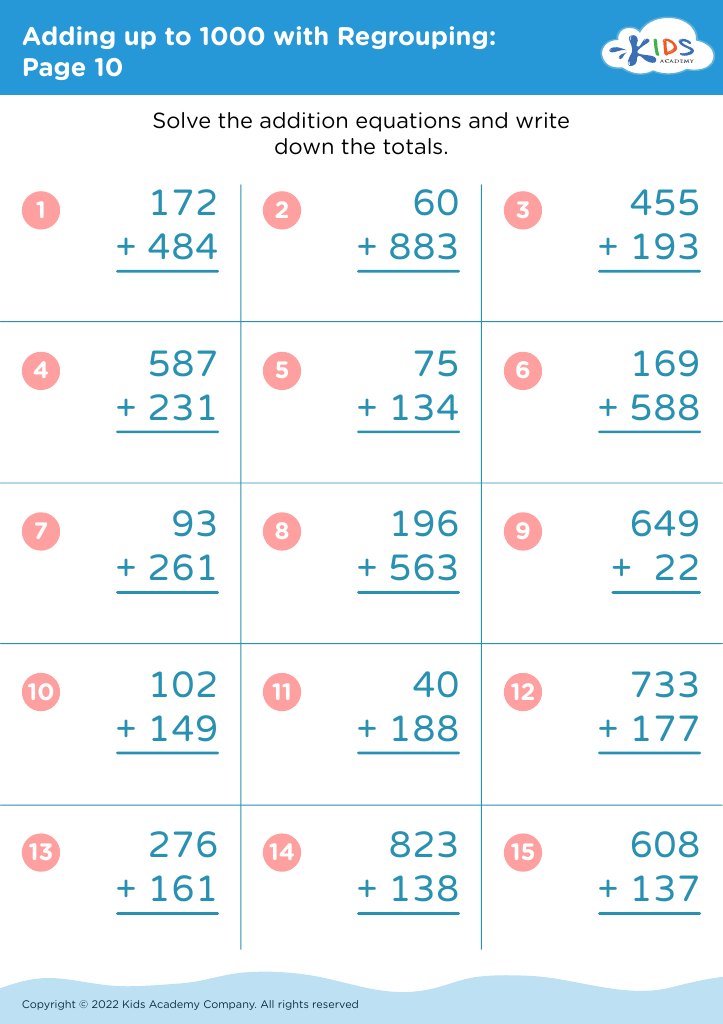
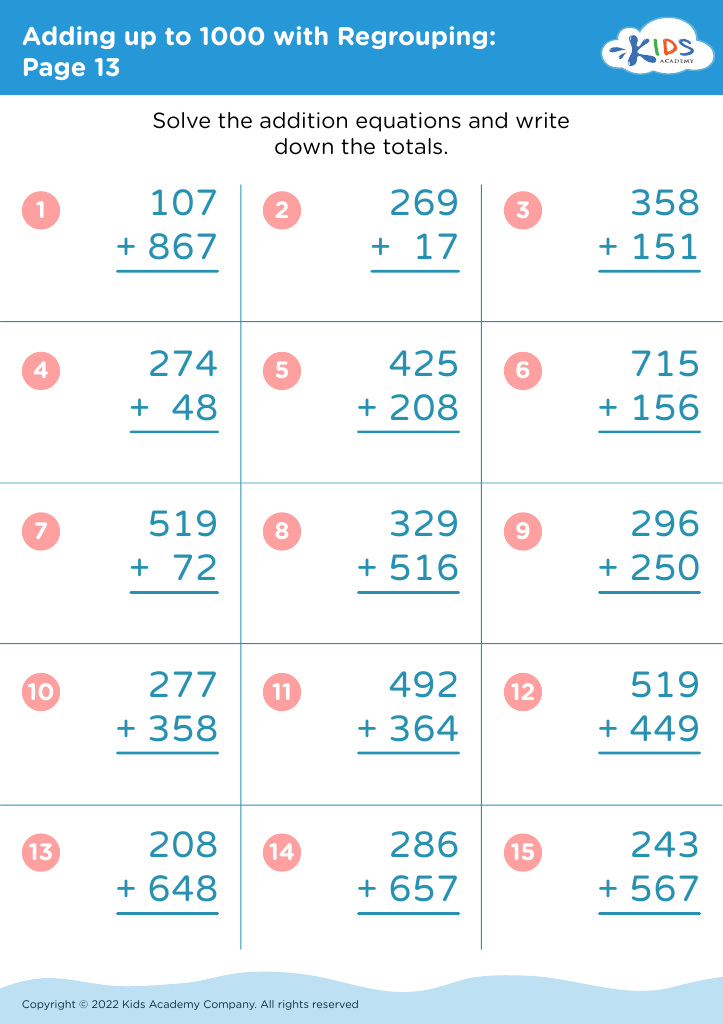
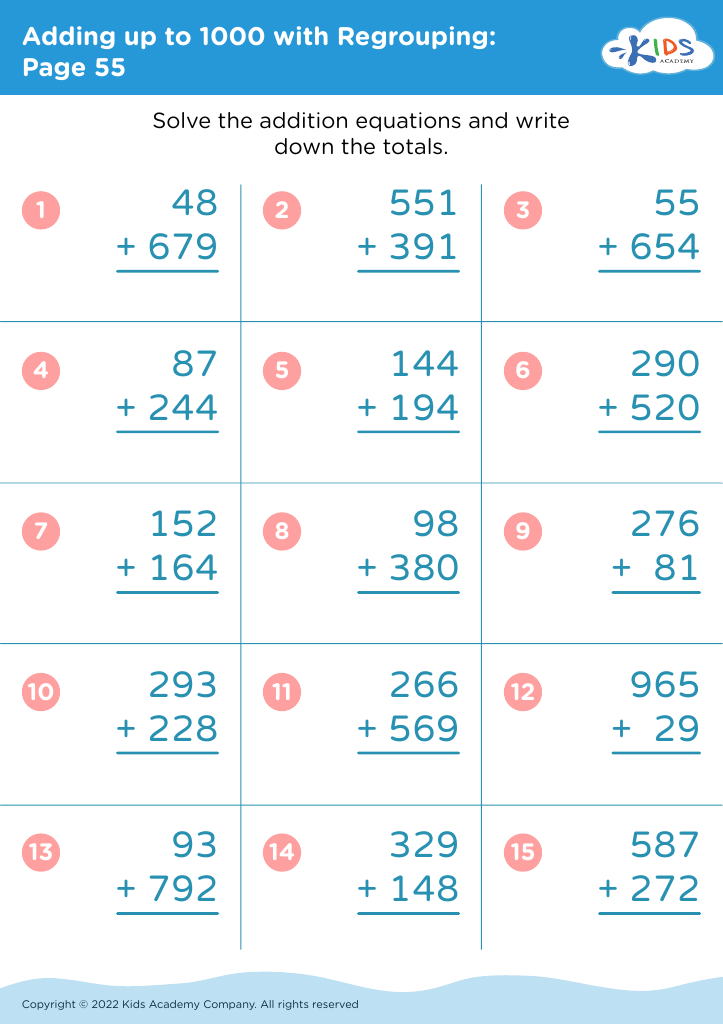
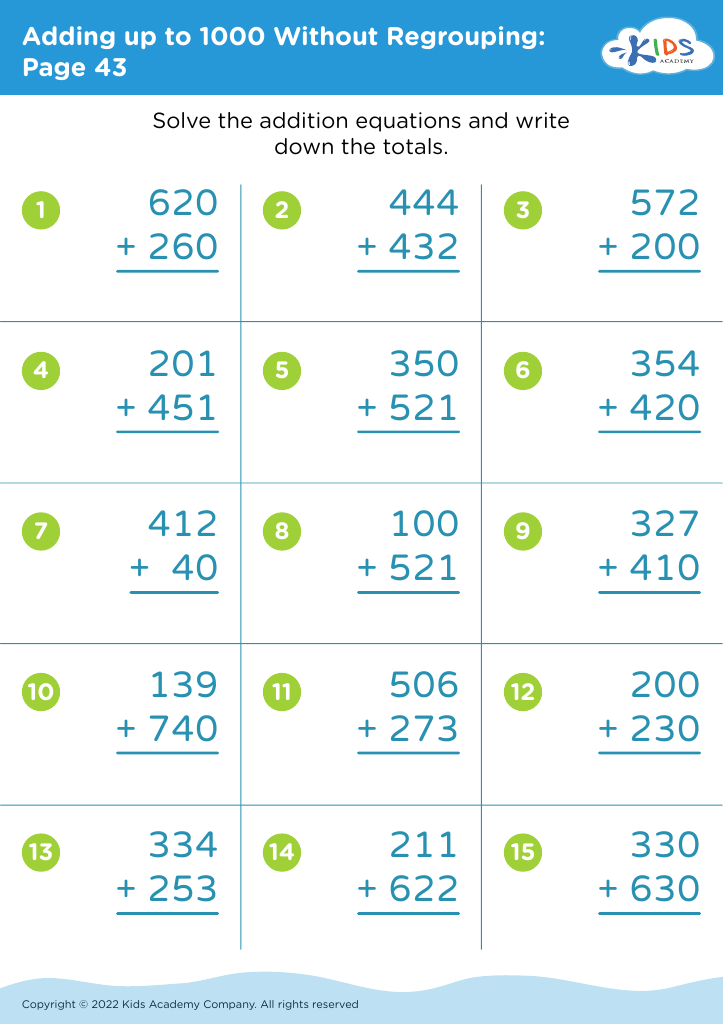
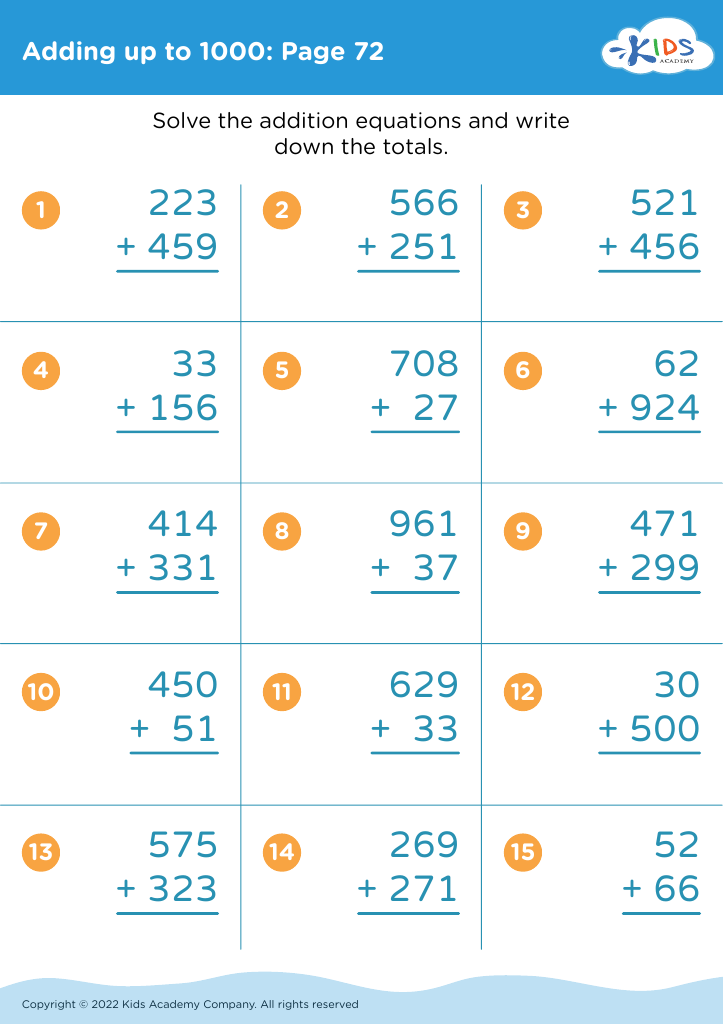



Recognizing patterns in numbers is a fundamental skill that significantly contributes to mathematical proficiency for children aged 6-9. Understanding patterns, especially those adding up to 1000, fosters critical thinking and enhances problem-solving abilities. When children identify these patterns, they learn to anticipate number relationships, which builds a strong foundation for more complex mathematical concepts in later years.
For parents and teachers, encouraging this skill is essential, as it promotes engagement and excitement around math. By recognizing patterns, children are better equipped to apply addition and subtraction strategies effectively, ultimately increasing their confidence and self-reliance in math.
Moreover, pattern recognition naturally integrates into daily life, from understanding sequences in everyday situations to organizing data in subjects like science and geography. This daily relevance ensures that children see the practical implications of what they're learning, reinforcing its value and importance.
Thus, parents and teachers can cultivate a love for mathematics and ensure academic success by prioritizing the recognition of patterns that culminate in significant numbers like 1000. With sustained practice, children will not only excel in mathematics but also develop a mindset that embraces patterns and logical reasoning in all areas of their education and beyond.








