Simplifying Fractions Adding up to 1000 Worksheets for Ages 6-9
6 filtered results
-
From - To
Our "Simplifying Fractions Adding up to 1000 Worksheets for Ages 6-9" expertly introduce young learners to the fascinating world of fractions and numbers. Designed for young mathematicians, these worksheets provide engaging exercises aimed at simplifying fractions in equations adding up to 1000. Tailored to the 6-9 age group, they combine vibrant visuals with age-appropriate challenges, fostering crucial math skills through fun and interactive learning activities. Ideal for both classroom use and home practice, these worksheets help children build confidence in their math abilities while laying a strong foundation for future math success. Embrace a simplified approach to fractions today!
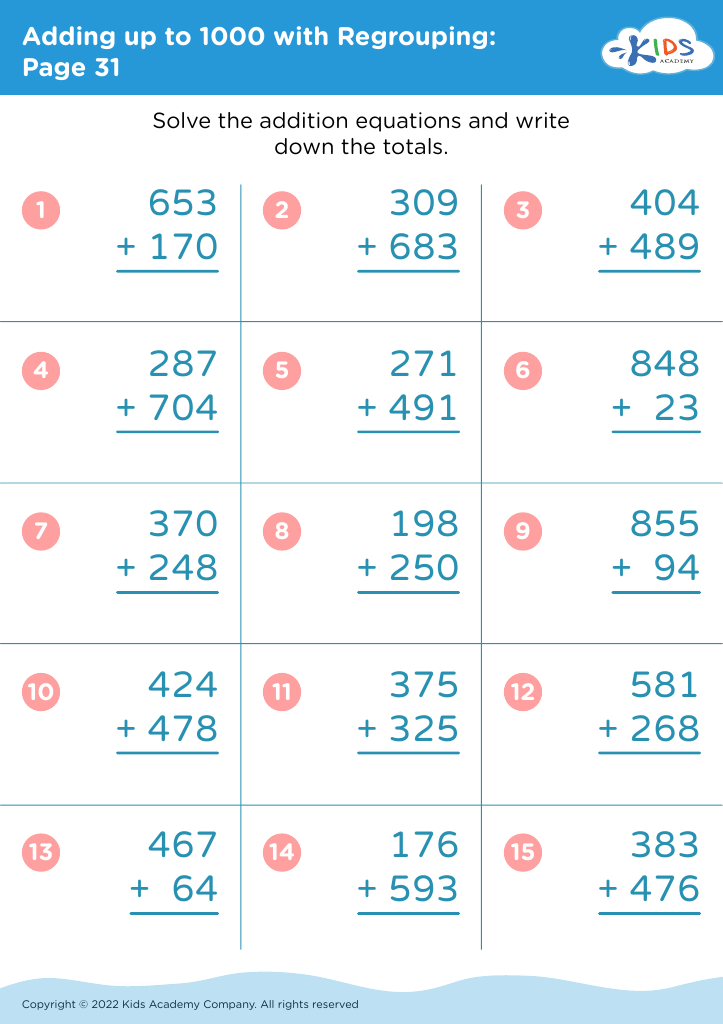
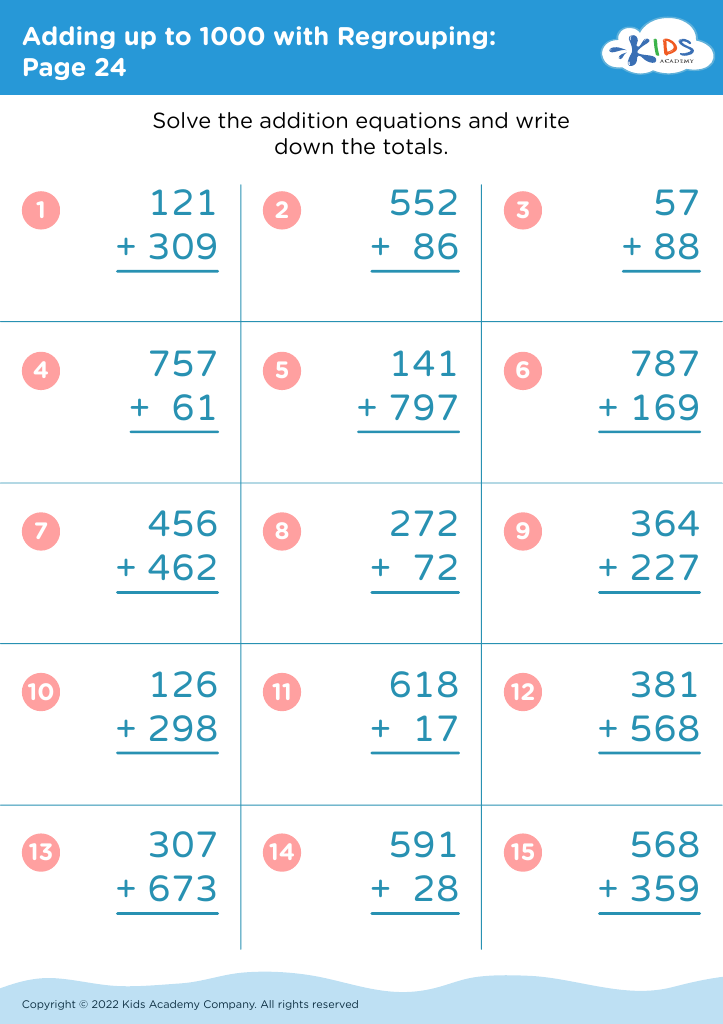
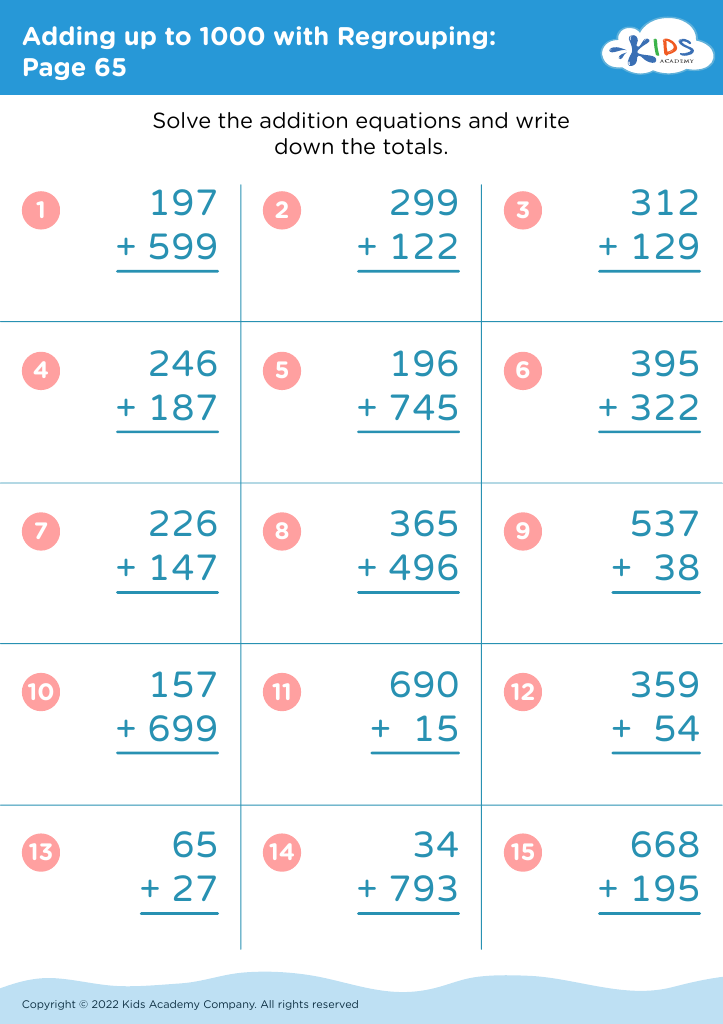
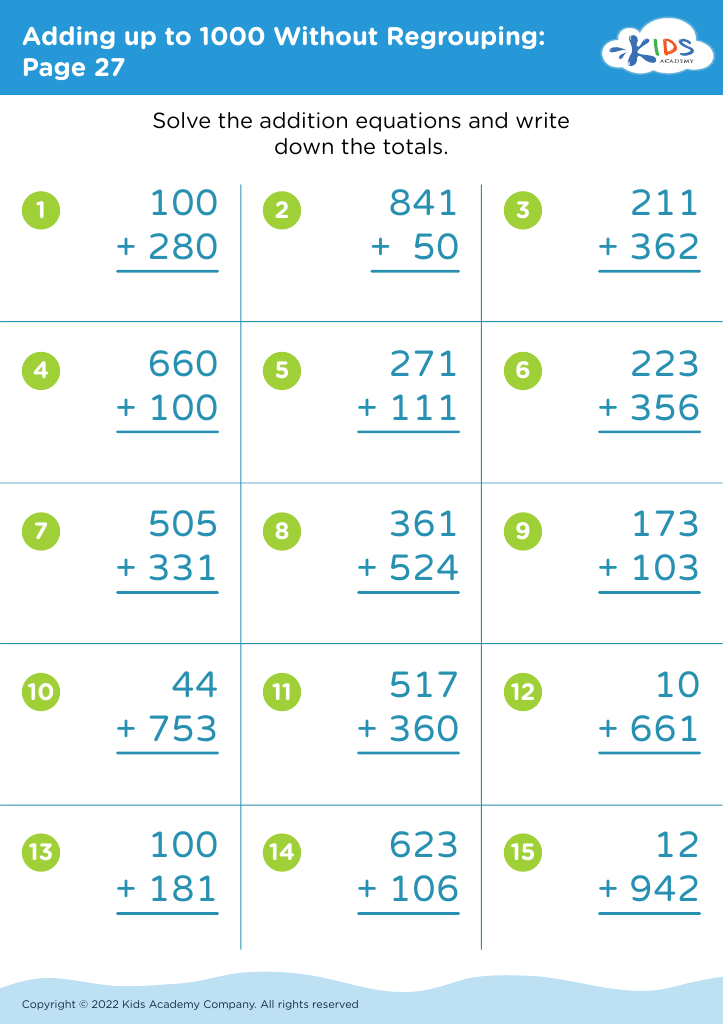
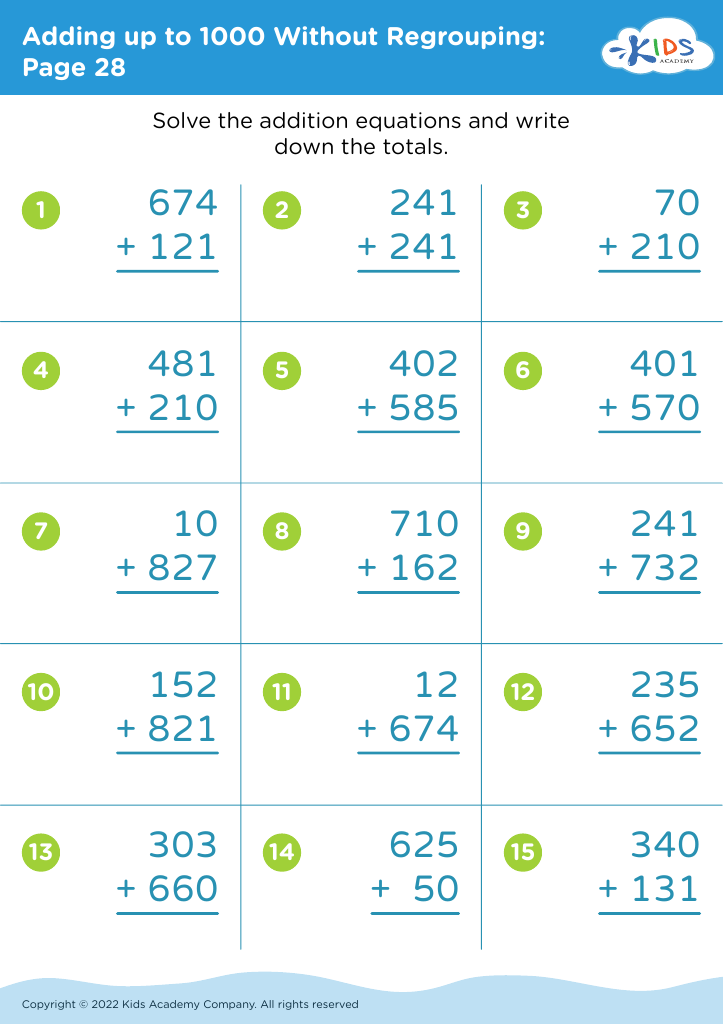
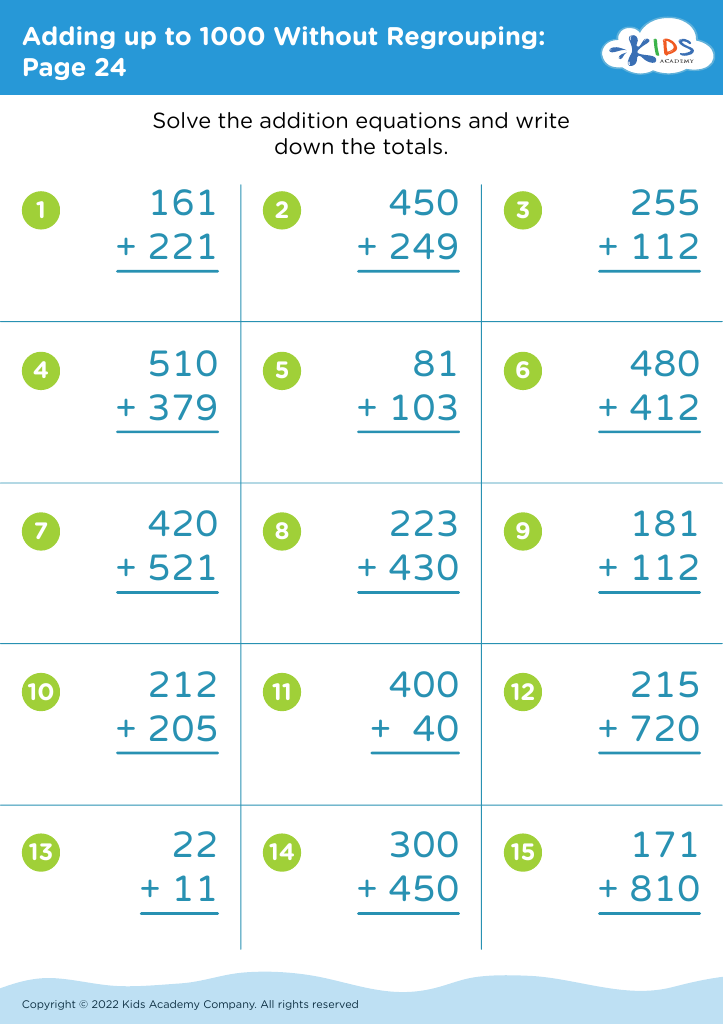



Teaching children aged 6-9 to simplify fractions that add up to 1000 helps build their foundational math skills and instills a love for numbers. Simplification offers practice in number recognition, division, multiplication, and basic fraction concepts, reinforcing key arithmetic skills essential for higher-level math.
For parents and teachers, this practice ensures that children understand the relationship between whole numbers and parts of a whole. It teaches organization and strengthens problem-solving abilities, as students must follow sequential steps to simplify fractions correctly. Crucially, simplifying also helps to keep the numbers manageable and comprehensible, reducing potential frustration or anxiety about big numbers and complex calculations.
Mastering this skill at a young age bolsters confidence and builds a positive attitude towards math. It prepares children for future concepts such as ratios, proportions, and even algebra. Engaging lessons, fun activities, and practical applications can make learning enjoyable, allowing kids to see math’s relevance. Additionally, working with numbers up to 1000 introduces a sense of scale and magnitude through a hands-on, visual approach.
Thus, guiding children in simplifying fractions not only supports their academic journey but equips them with analytical tools needed in everyday life, promoting lifelong mathematical literacy and enthusiasm.








