Cognitive Development Addition & Subtraction Worksheets for Ages 6-9 - Page 2
26 filtered results
-
From - To
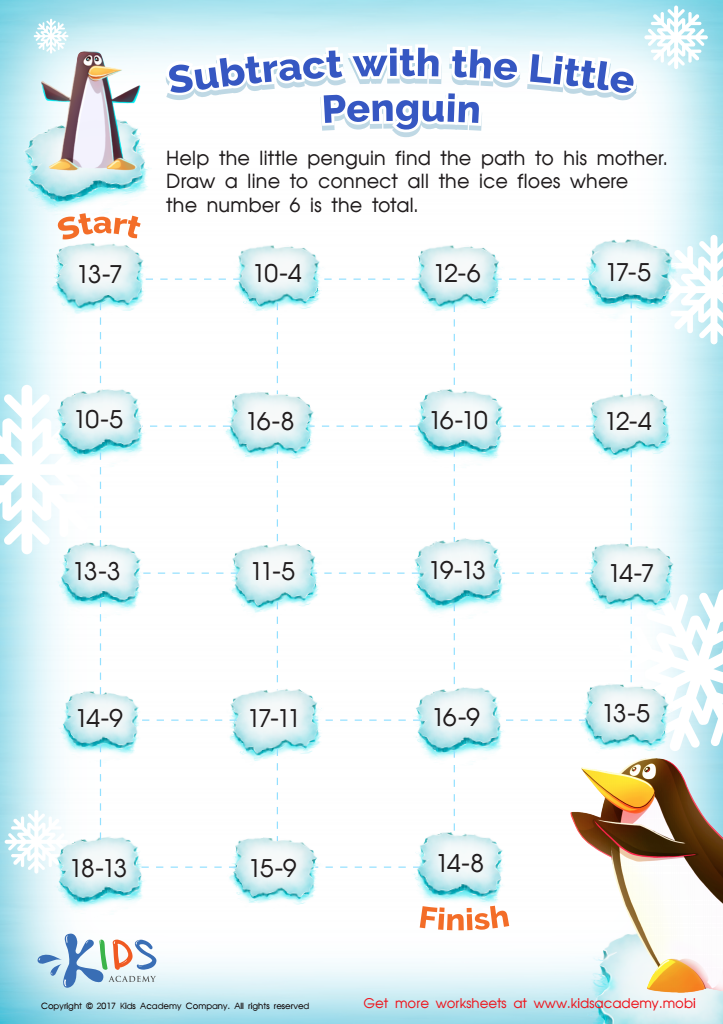
Subtract With The Little Penguin Substraction Worksheet
 Assign to My Students
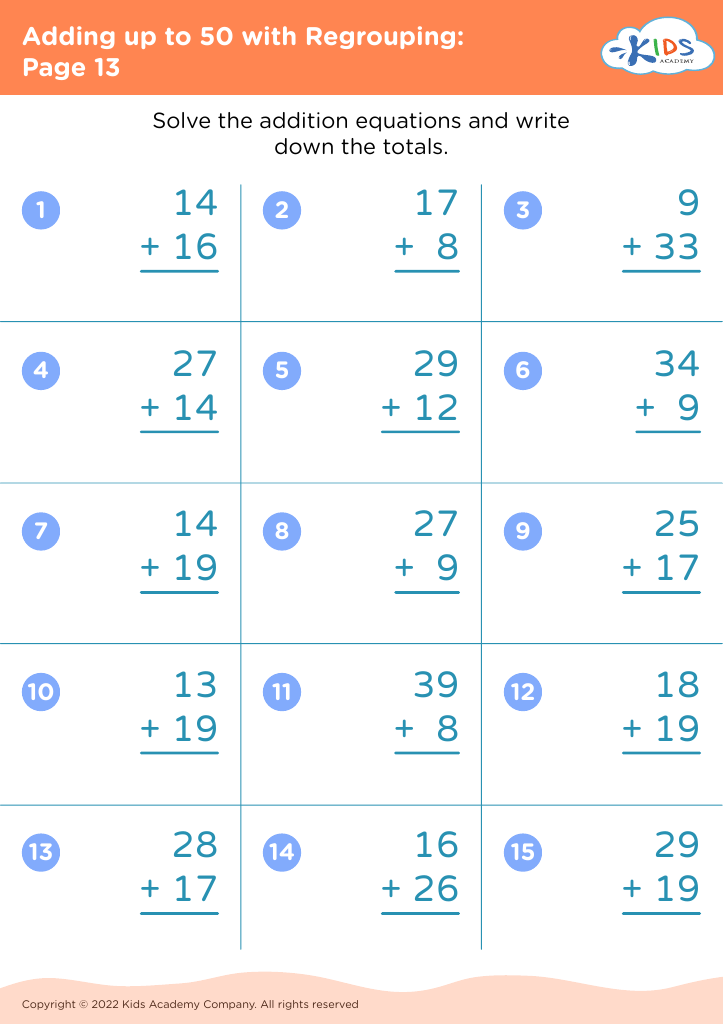








Parents and teachers should prioritize cognitive development in addition and subtraction for children aged 6-9 because these are fundamental skills that serve as building blocks for future mathematical understanding and everyday problem-solving. During this critical developmental period, children's brains are highly adaptable and capable of significant growth. Introducing addition and subtraction helps enhance their cognitive abilities, such as memory, logical thinking, and pattern recognition.
Mastery of these basic arithmetic operations promotes confidence in math, reducing anxiety and fostering a positive attitude towards the subject. As children learn to add and subtract, they concurrently develop patience, attention to detail, and persistence—traits valuable beyond the domain of mathematics.
Proficiency in these skills also equips children to handle more complex math concepts in later years, such as multiplication, division, and fractions, forming a strong foundation for advanced topics in algebra and geometry. Additionally, addition and subtraction are everyday functionalities, vital for tasks like handling money, measuring ingredients for a recipe, and understanding time management.
Therefore, fostering cognitive development in addition and subtraction in early learners is integral to their academic success and practical life skills, ultimately influencing their overall cognitive and intellectual growth.








