Develop analytical thinking Addition & Subtraction Worksheets for Ages 6-9
3 filtered results
-
From - To
Enhance your child's analytical thinking with our engaging addition and subtraction worksheets designed for ages 6-9! These carefully crafted activities promote problem-solving skills, critical thinking, and mathematical reasoning. As children work through fun puzzles and scenarios, they develop a deeper understanding of arithmetic concepts, laying a solid foundation for advanced math learning. Our printable worksheets encourage independent learning and can be easily integrated into home or classroom settings. With colorful designs and diverse exercises, kids will love honing their skills while becoming confident in their mathematical abilities. Get started today and inspire a love for learning in your young mathematicians!
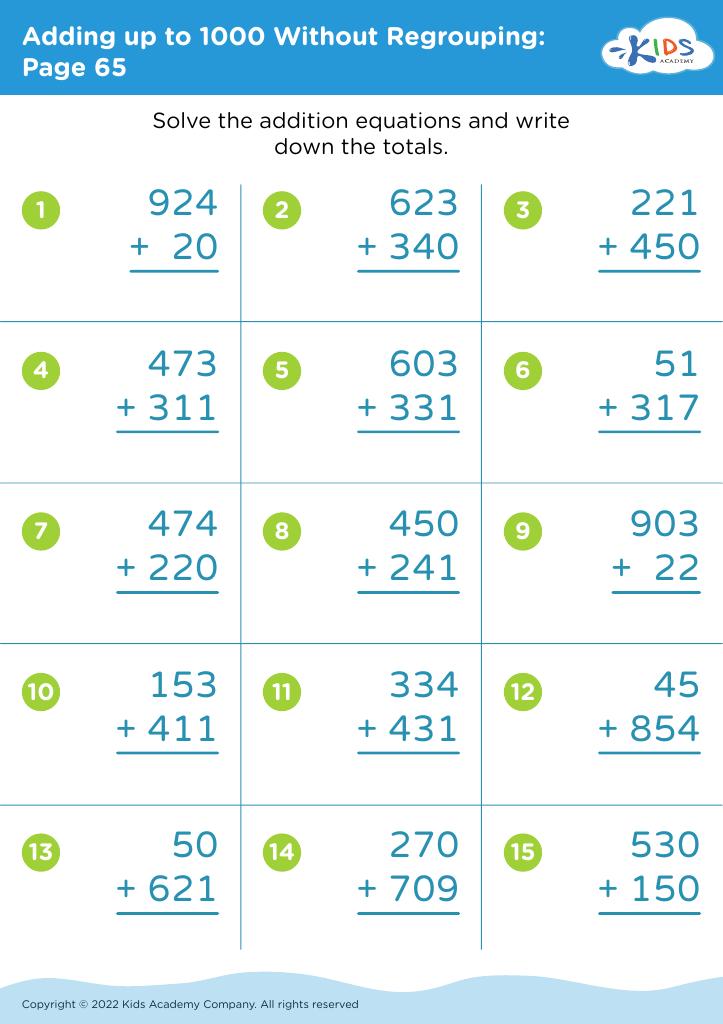
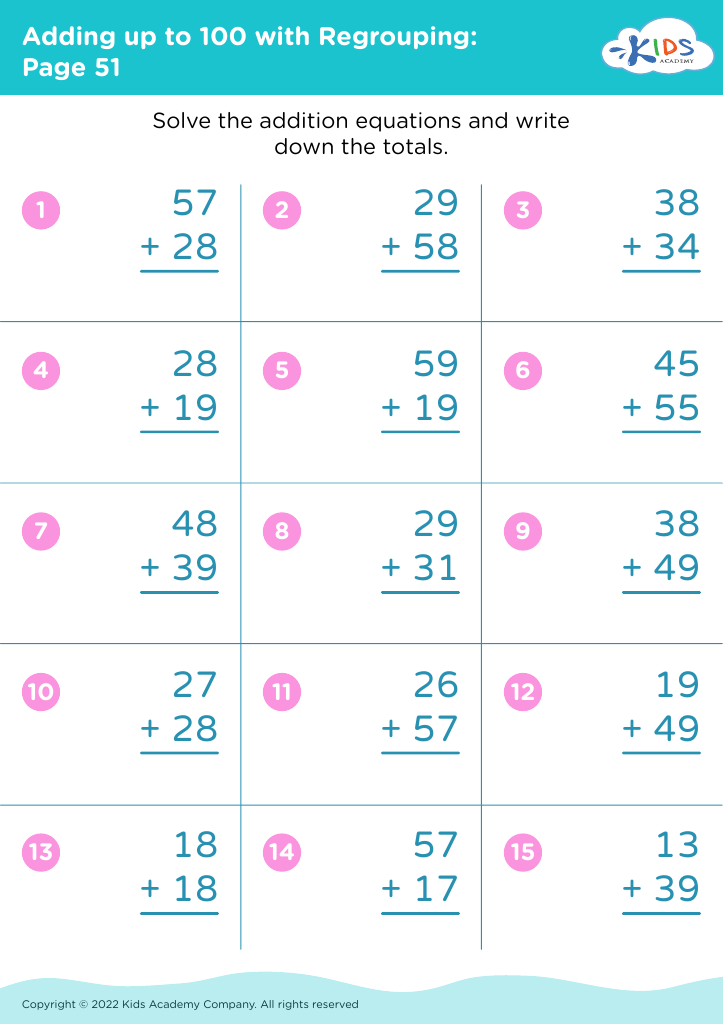
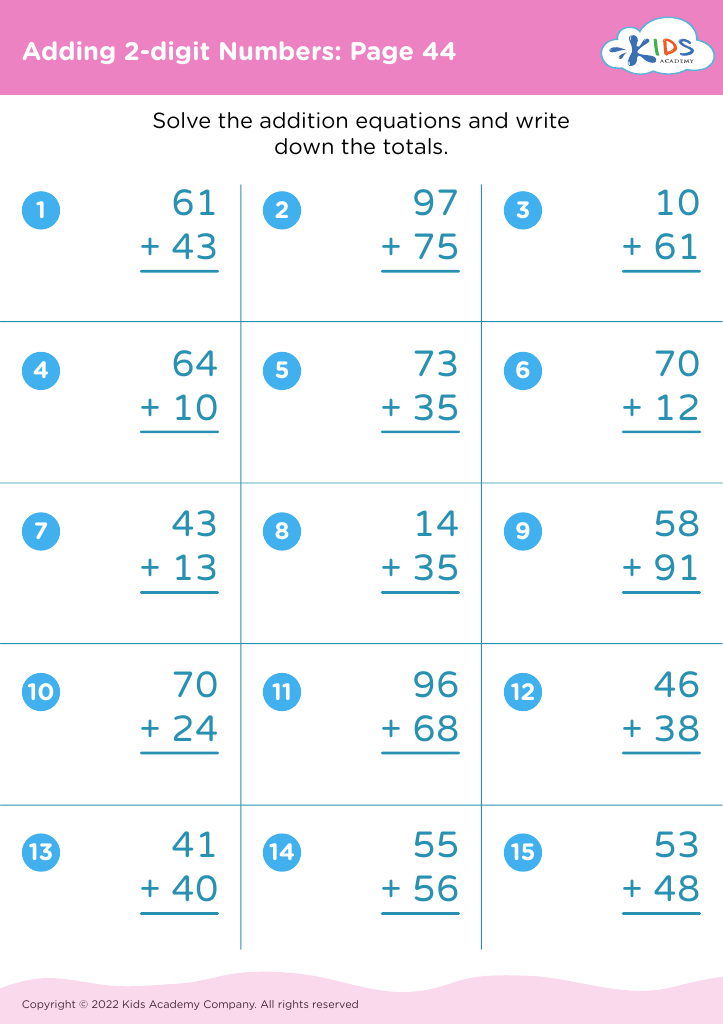








Developing analytical thinking skills in children aged 6-9, particularly in the context of addition and subtraction, is crucial for several reasons. First, these foundational math skills foster critical reasoning and problem-solving abilities. When children engage with addition and subtraction, they learn to assess situations, recognize patterns, and make logical decisions about the quantities involved. This analytical framework extends beyond mathematics, equipping them to tackle complex challenges in various subjects and everyday scenarios.
Moreover, mastery of basic arithmetic helps build children's confidence in their abilities. As they become proficient in addition and subtraction, they are more likely to feel empowered to participate actively in their further education. Early mathematical competence can also enhance cognitive development and influences their self-esteem positively.
Furthermore, parents and teachers play an essential role in nurturing these skills. Through engaging activities, such as games and real-life problem situations, educators can turn learning into an enjoyable experience. Ultimately, fostering analytical thinking through addition and subtraction not only supports academic success but also prepares children for a future where critical thinking and adaptability are indispensable. Ensuring they have a strong grasp of these concepts lays the groundwork for lifelong learning and cognitive flexibility.








