Improving problem-solving skills Addition & Subtraction Worksheets for Ages 6-9
3 filtered results
-
From - To
Unlock your child’s problem-solving potential with our engaging Addition and Subtraction Worksheets, meticulously designed for ages 6-9. Our expertly crafted activities foster mathematical understanding through fun and interactive challenges. These worksheets not only focus on basic arithmetic but also encourage critical thinking and strategy development. As children work through relatable real-life problems, they enhance their reasoning skills and boost their confidence in mathematics. Perfect for both classroom use and home study, our resources ensure a well-rounded approach to learning. Help your child turn math challenges into triumphs with these effective tools that make problem-solving a rewarding adventure!
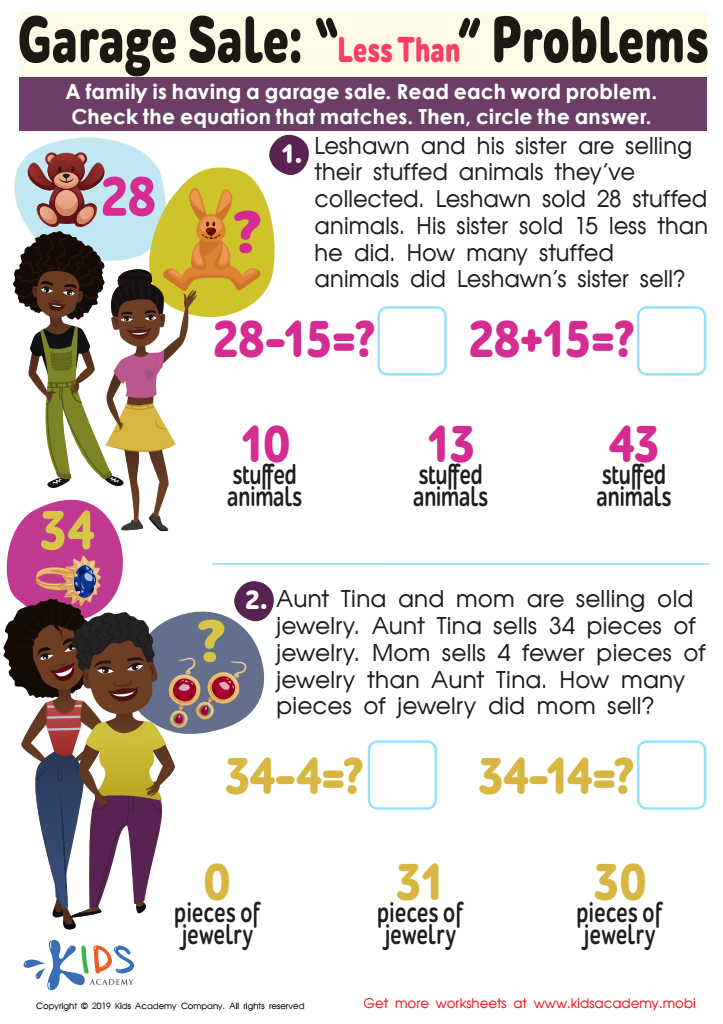
Garage Sale Less Than Worksheet
 Assign to My Students
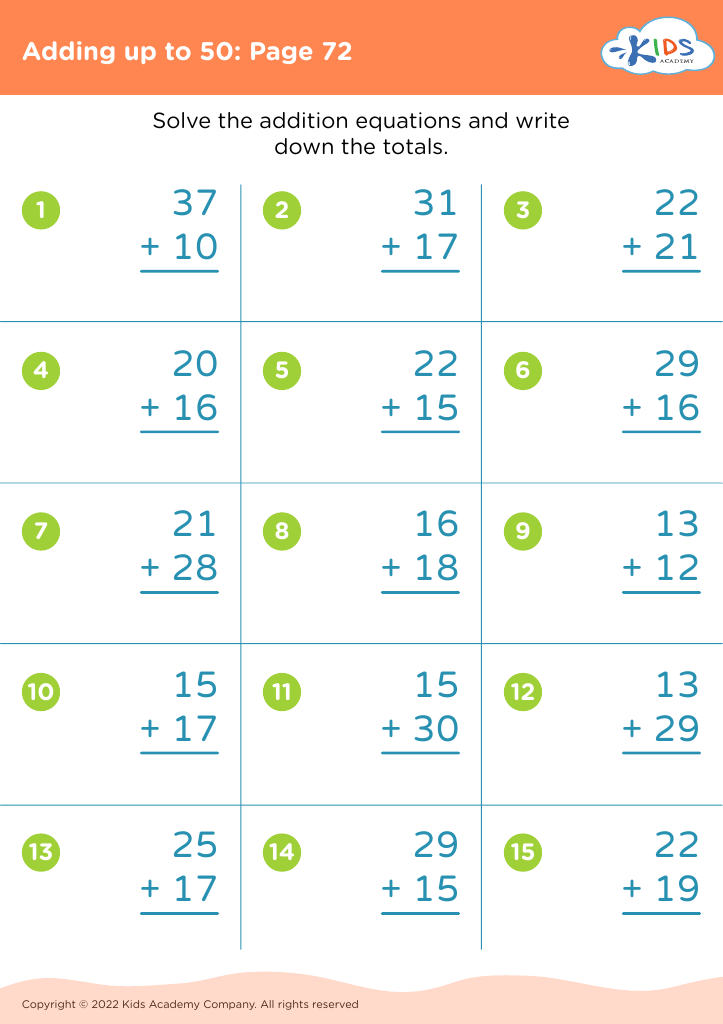
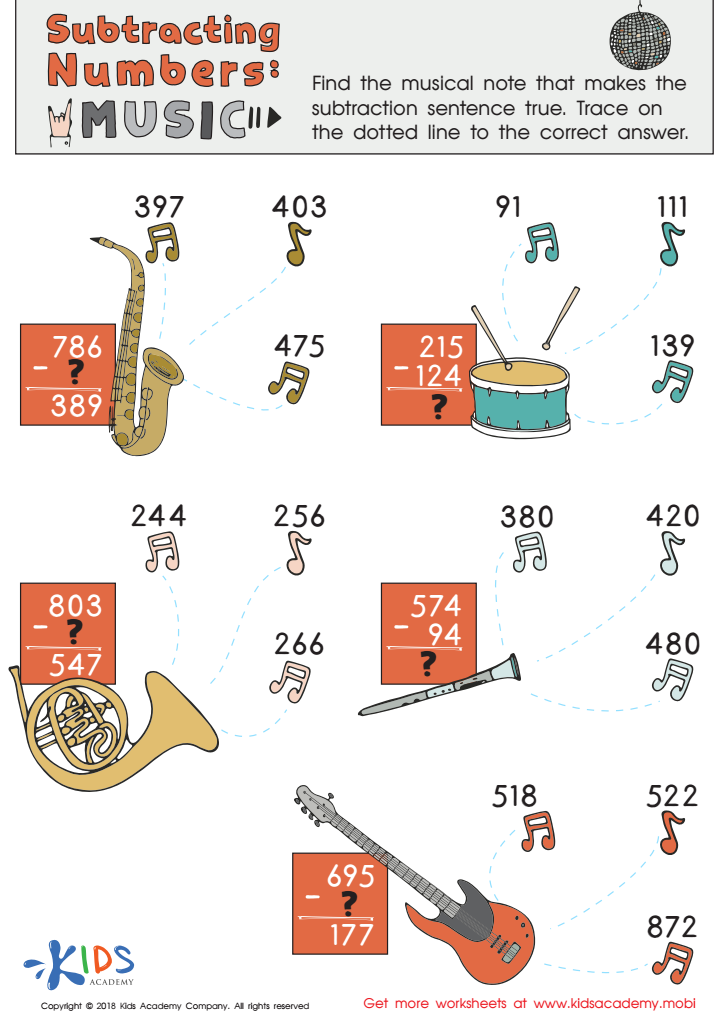
Subtracting Numbers: Music Worksheet








Improving problem-solving skills in addition and subtraction for children aged 6-9 is crucial for several reasons. First, mastering these foundational math skills sets the stage for future success in more complex mathematical concepts. Children during this age are developing critical thinking abilities, and honing their problem-solving skills encourages them to approach challenges with confidence and creativity.
Moreover, effective problem-solving skills promote independence. As kids learn to navigate mathematical problems, they become adept at finding multiple solutions, enhancing their analytical thinking and resilience. This skill transcends academics and prepares children for real-world situations, fostering their ability to tackle various challenges outside the classroom.
Additionally, children in this age range are highly engaged and motivated to learn through interactive and hands-on activities. Teachers and parents can create an enjoyable learning environment by incorporating games and practical applications, making math thrilling rather than daunting. This positive association with math can instill a lifelong love for learning and encourage a growth mindset.
Lastly, strong problem-solving skills in addition and subtraction build confidence. When students succeed in overcoming challenges, it fosters self-esteem, motivating them to take on further academic pursuits. Therefore, prioritizing these skills is not just about math; it’s about nurturing well-rounded, confident learners ready to tackle future challenges.








