Learning addition Addition & Subtraction Worksheets for Ages 6-9
3 filtered results
-
From - To
Explore our engaging and interactive Addition & Subtraction Worksheets designed specifically for children aged 6-9. These worksheets provide a variety of exercises that help young learners master essential math skills through fun and captivating activities. From simple addition problems to more complex subtraction challenges, our resources cater to diverse learning needs. Encouraging practice at home and in the classroom, these worksheets foster critical thinking and improve number sense. With clear instructions and colorful visuals, children will feel motivated and excited to tackle math concepts. Start your child’s journey to mathematical confidence today with our expertly crafted worksheets!
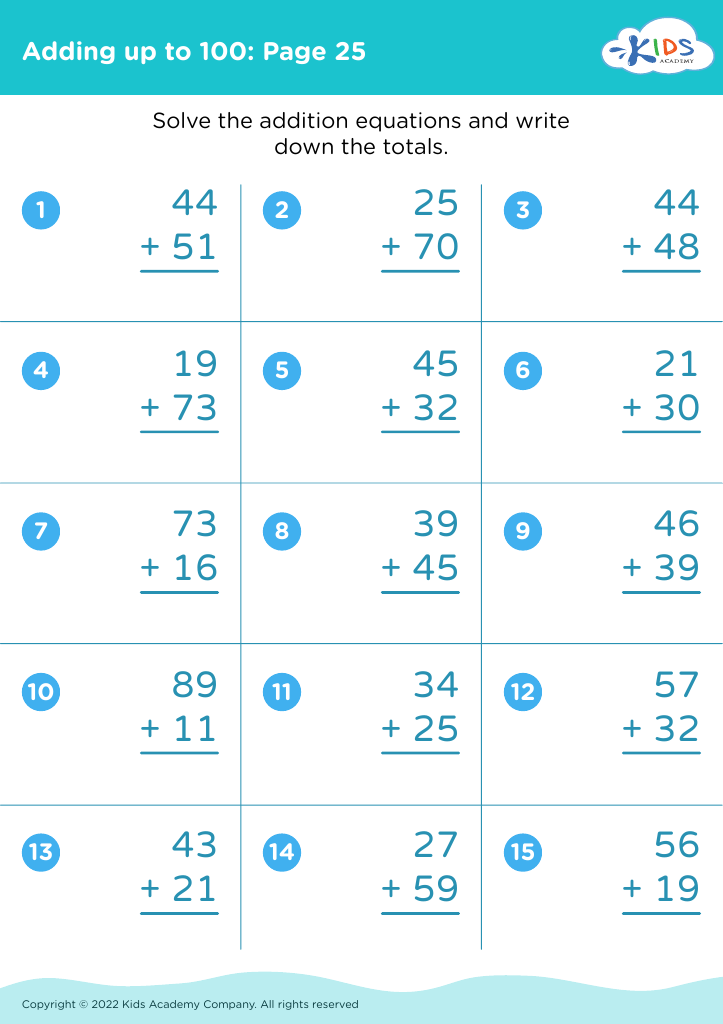
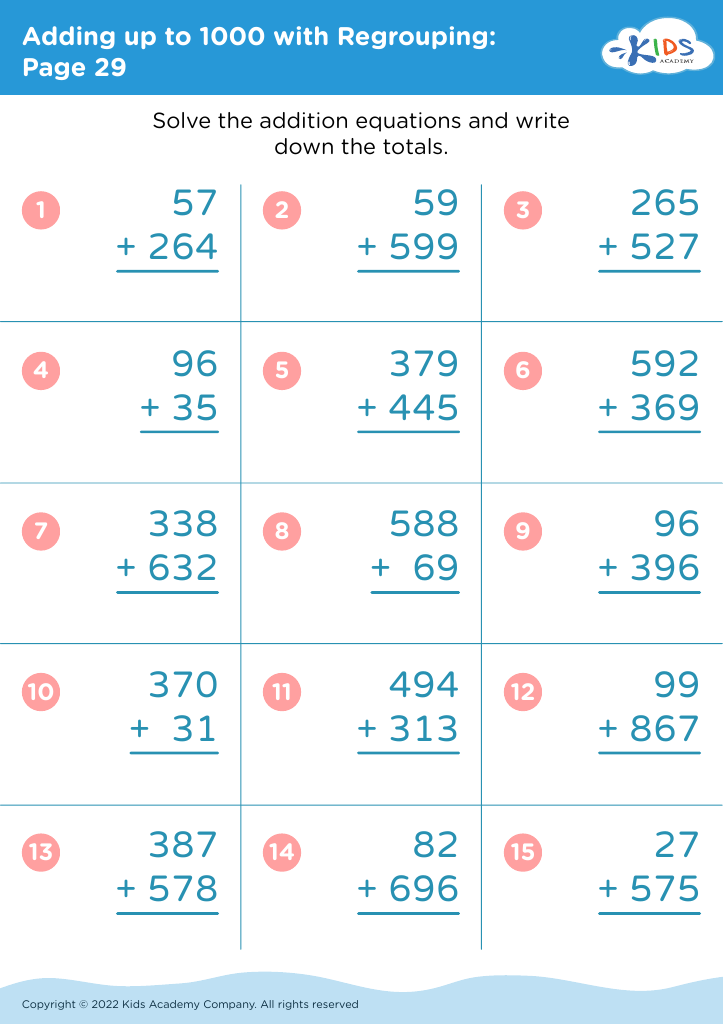
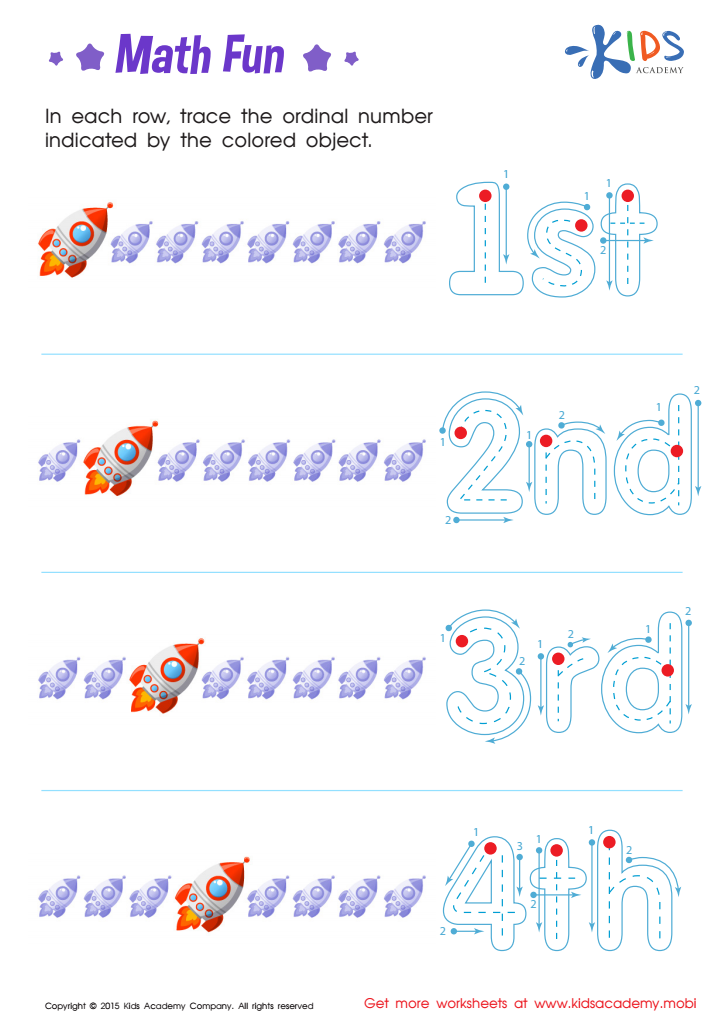
Ordinal Numbers: Math Fun Worksheet
 Assign to My Students








Parents and teachers should prioritize learning addition and subtraction for children aged 6-9, as these fundamental mathematical skills lay the groundwork for future academic success. Mastering these operations helps build a strong number sense, enabling children to understand more complex mathematical concepts later on.
At this age, children are developing critical thinking and problem-solving skills. Addition and subtraction enhance cognitive abilities by encouraging them to analyze, strategize, and apply logical reasoning to everyday situations. For instance, handling money, telling time, and measuring ingredients in cooking all rely on basic arithmetic.
Moreover, confidence in math can significantly impact a child’s attitude towards learning. Children who struggle with addition and subtraction may develop a fear of mathematics, leading to aversion in subsequent learning. Conversely, those who grasp these concepts early are more likely to enjoy math and tackle more advanced subjects, such as multiplication and division, with enthusiasm.
Furthermore, addition and subtraction enhance communication skills by providing children with the vocabulary and tools necessary to discuss mathematical ideas. By prioritizing these skills, parents and teachers can foster a positive learning atmosphere, ensuring children stand on solid ground for their future educational journeys.








