Practicing mental arithmetic Addition & Subtraction Worksheets for Ages 6-9
3 filtered results
-
From - To
Boost your child’s math skills with our Practicing Mental Arithmetic Addition & Subtraction Worksheets designed for ages 6-9. These fun and engaging worksheets help young learners enhance their mental calculation abilities, build a solid foundation in basic math, and improve problem-solving skills. Perfect for classroom use or at-home practice, our worksheets provide a variety of exercises that focus on rapid mental math and reinforce addition and subtraction concepts. Help your child develop confidence in math while making learning enjoyable. Visit Kid’s Academy for a wide range of expertly designed resources to support your child's educational journey.
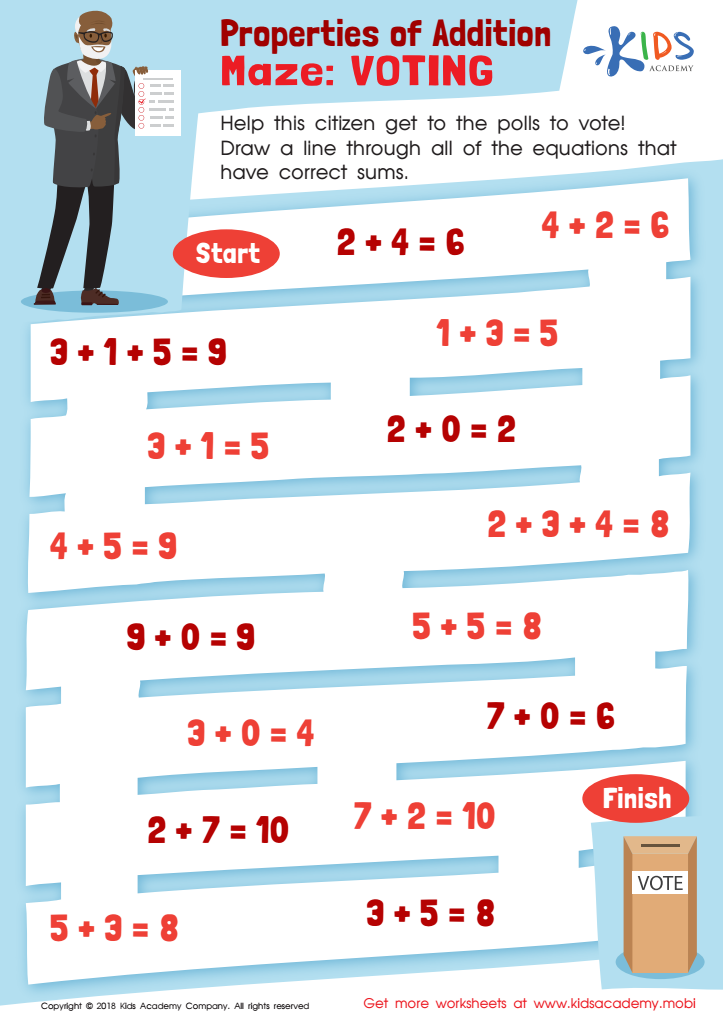
Properties of Addition Maze: Voting Worksheet
 Assign to My Students
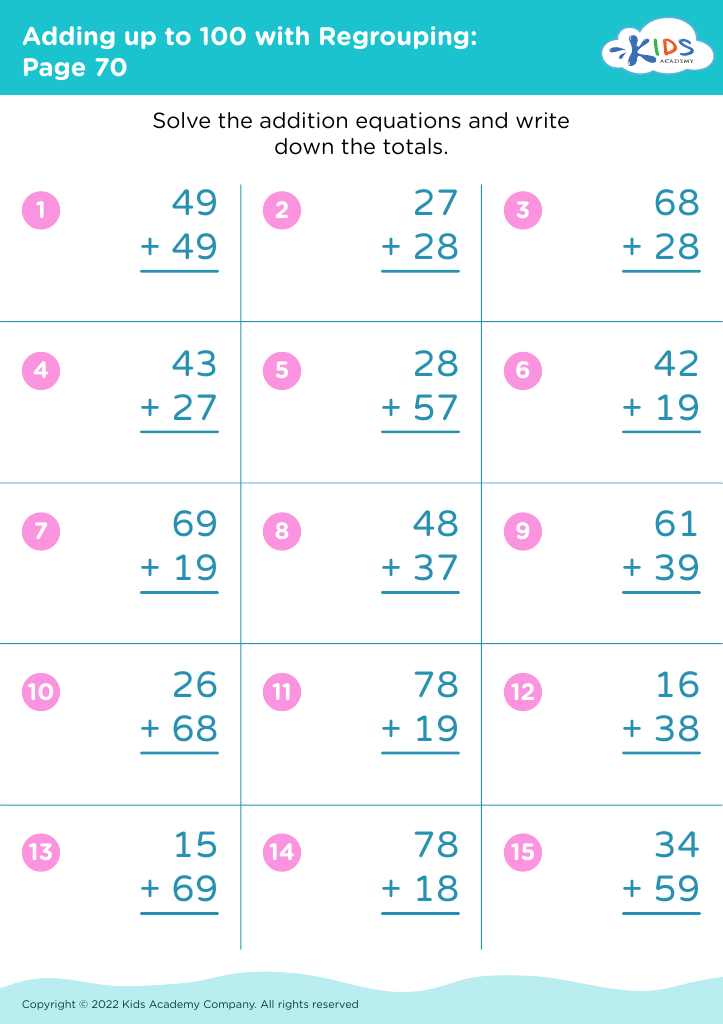
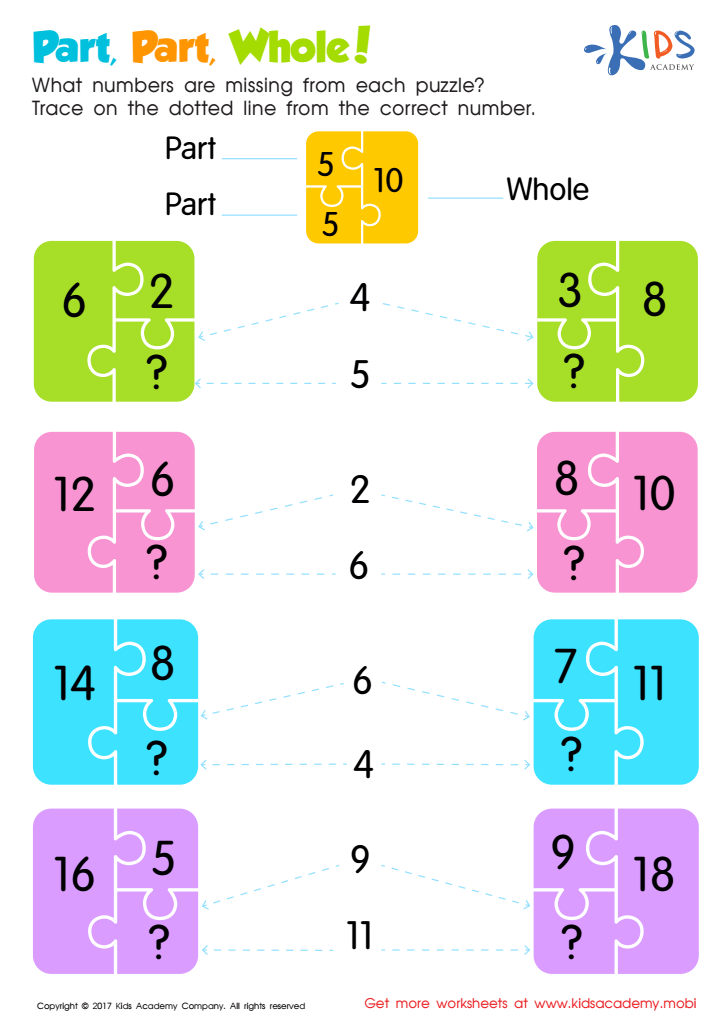
Part, Part, Whole Worksheet








Practicing mental arithmetic, especially addition and subtraction, is crucial for children aged 6-9 for several reasons. Firstly, this mental exercise significantly strengthens their cognitive abilities. It enhances memory, concentration, and problem-solving skills, which are foundational for future academic success. Mental arithmetic helps in developing quick-thinking skills, allowing kids to approach various challenges more effectively and confidently.
Furthermore, early proficiency in these basic math operations builds a strong foundation for more complex mathematical concepts. As children progress through their education, they'll encounter fractions, multiplications, and algebraic problems. The ease with which they can break down these problems often stems from their comfort and skill with simple addition and subtraction.
Practicing mental arithmetic also promotes number sense. This is an intuitive understanding of numbers and their relationships, which aids in real-life decision-making situations such as budgeting, measuring, and even time management. Beyond academics, it cultivates a child's confidence and self-esteem, manifesting in their overall development.
In summary, mental arithmetic is not just about performing calculations quickly. It's pivotal in nurturing lifelong skills that contribute to a child's academic journey and personal growth. Therefore, parents and teachers should prioritize this practice during the crucial early years.








