Understanding ordinal numbers Addition & Subtraction Worksheets for Ages 6-9
3 filtered results
-
From - To
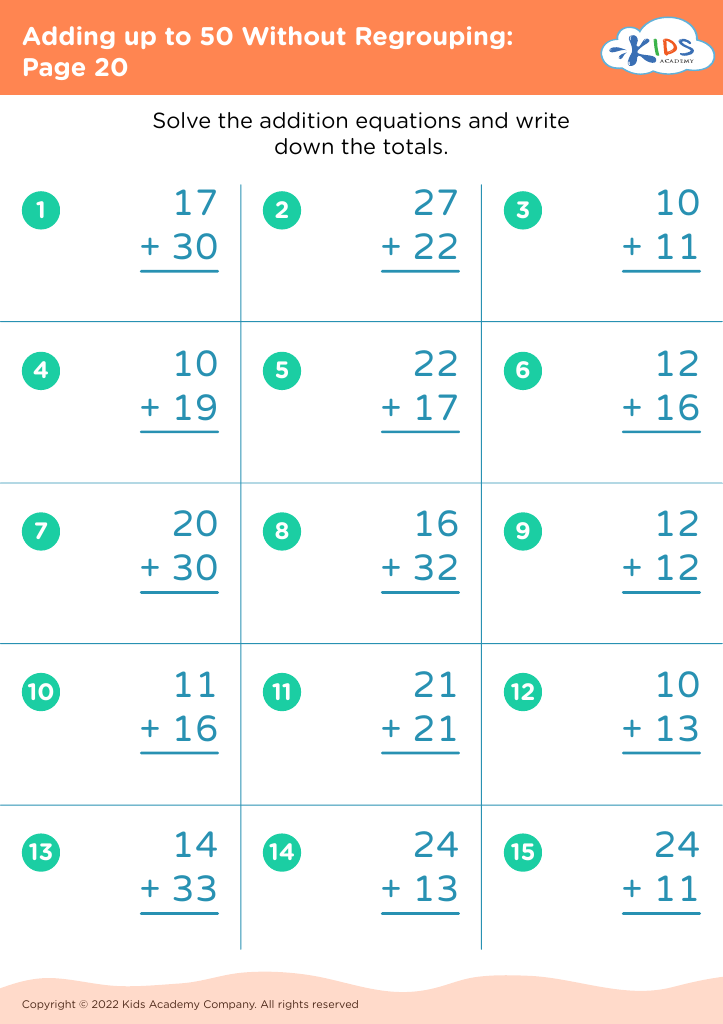
Welcome to our "Understanding Ordinal Numbers Addition & Subtraction Worksheets" designed for children ages 6 to 9! These engaging and interactive worksheets help young learners grasp the concept of ordinal numbers while practicing essential addition and subtraction skills. Featuring vibrant illustrations and age-appropriate exercises, our resources make math fun and accessible. Children will learn to identify positions (first, second, third, etc.) and apply their knowledge to solve practical math problems. Perfect for both classroom use and at-home learning, these worksheets foster critical thinking and enhance mathematical fluency. Dive into this exciting educational journey today!
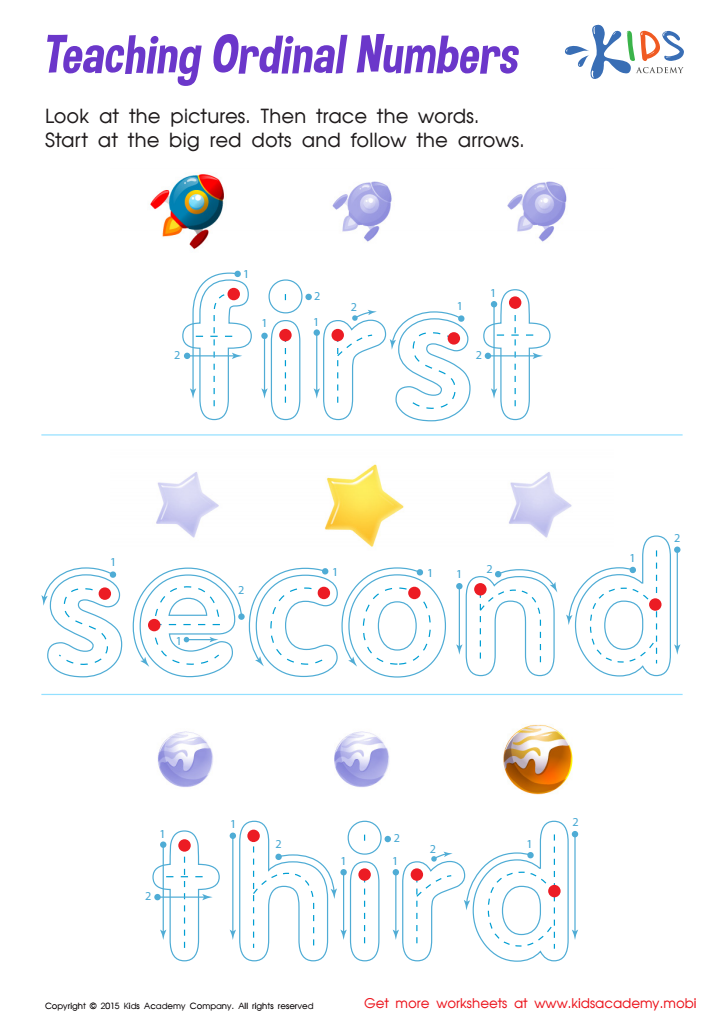
Ordinal Numbers: Teaching Ordinal Numbers Printable
 Assign to My Students
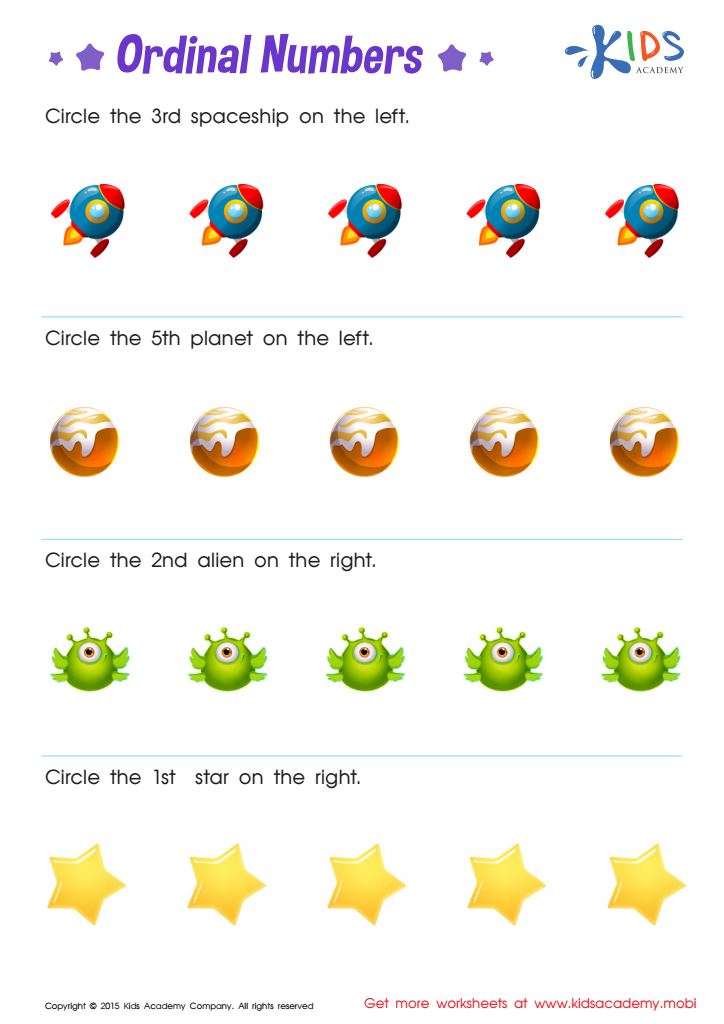
Ordinal Numbers: Space Ordinals Worksheet








Understanding ordinal numbers and basic addition and subtraction is essential for children aged 6-9 as it lays a foundation for critical mathematical skills and cognitive development. Ordinal numbers signify position or order—like first, second, and third—which helps children grasp sequencing, comparison, and organization. This concept is particularly relevant in everyday scenarios, such as sports rankings, classroom management, and even planning events. Parents and teachers who emphasize ordinal numbers aid in developing children's logical thinking and analytical abilities.
Simultaneously, proficiency in addition and subtraction allows children to comprehend and engage with their environment. Mastery of these fundamental operations not only supports everyday activities—like managing money, telling time, or sharing equally—but also encourages problem-solving skills, promotes confidence in their abilities, and fosters a love for mathematics. Additionally, these skills serve as building blocks for more complex mathematical concepts they will encounter in later grades.
By actively supporting their children in these areas, parents and teachers reinforce a positive educational experience that can inspire lifelong learning and curiosity, ultimately contributing to a more informed and capable future generation. Their involvement conveys the importance of mathematics as a vital life skill.








