Filters

34 filtered results

Clear all filters
Favorites
With answer key
Interactive

34 filtered results

Difficulty Level

Grade


Check out this FREE Trial Lesson on Addition & Subtraction for age 6-9!

A

Favorites
With answer key
Interactive
  • 6-9
  • Understanding patterns
  • Addition & Subtraction
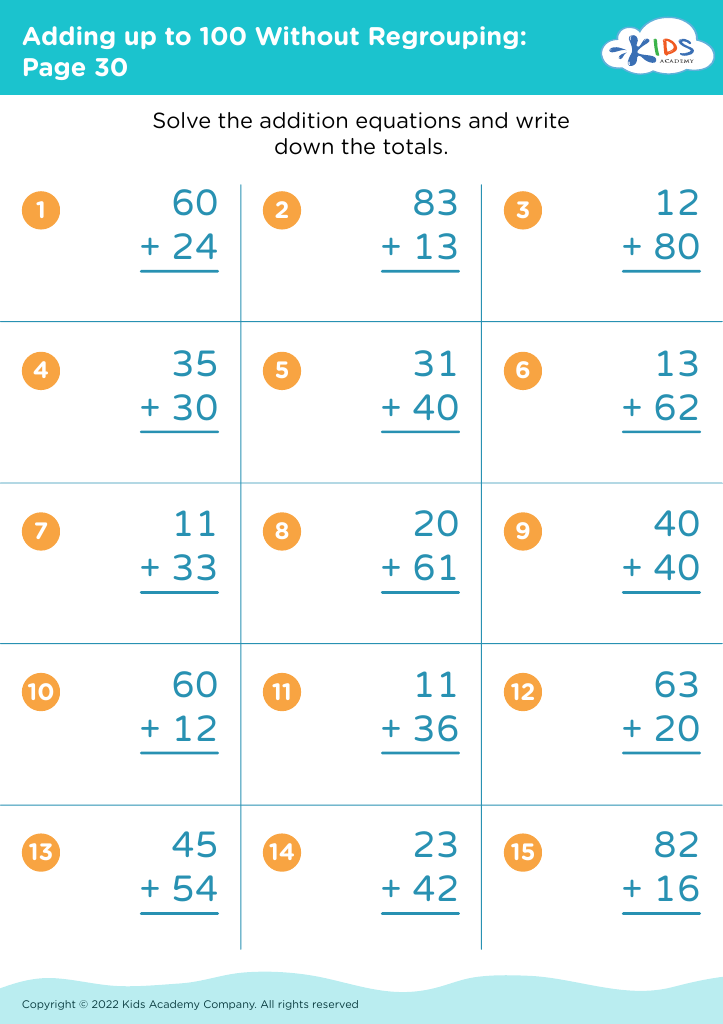
Adding up to 100 Without Regrouping: Page 30
Worksheet
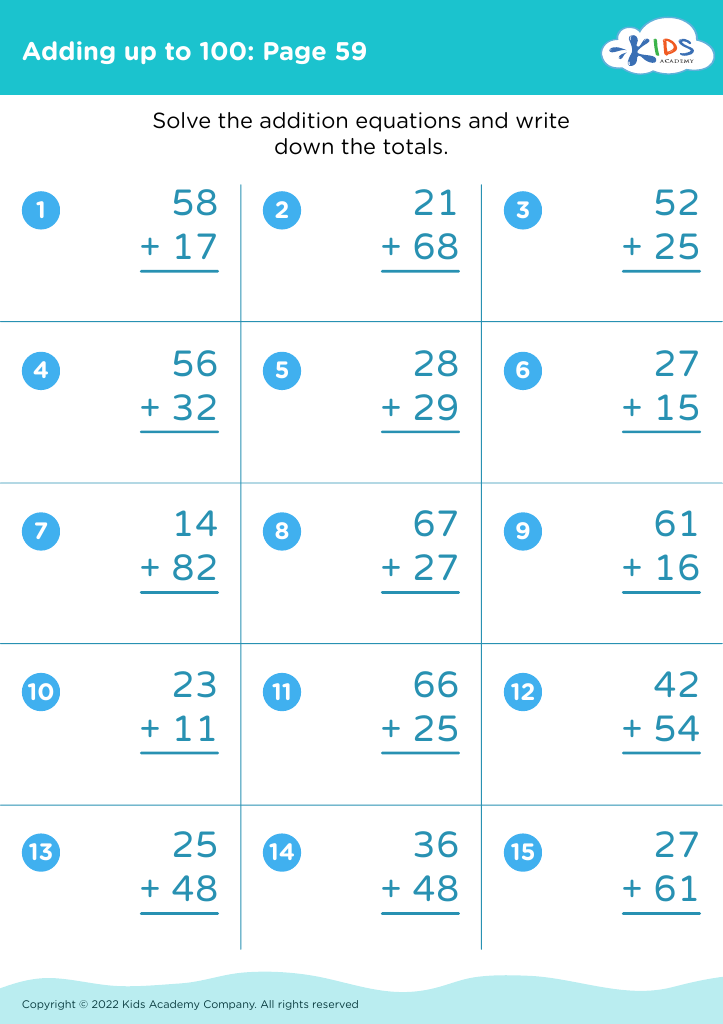
Adding up to 100: Page 59

Adding up to 100: Page 59

Adding up to 100: Page 59
Worksheet
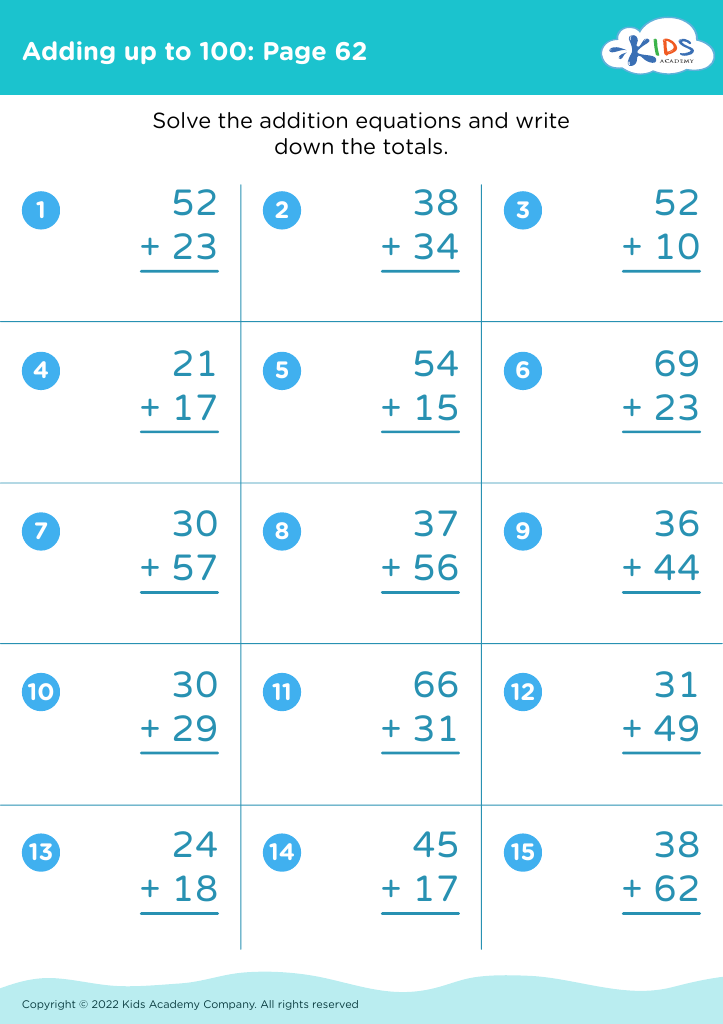
Adding up to 100: Page 62

Adding up to 100: Page 62

Adding up to 100: Page 62
Worksheet
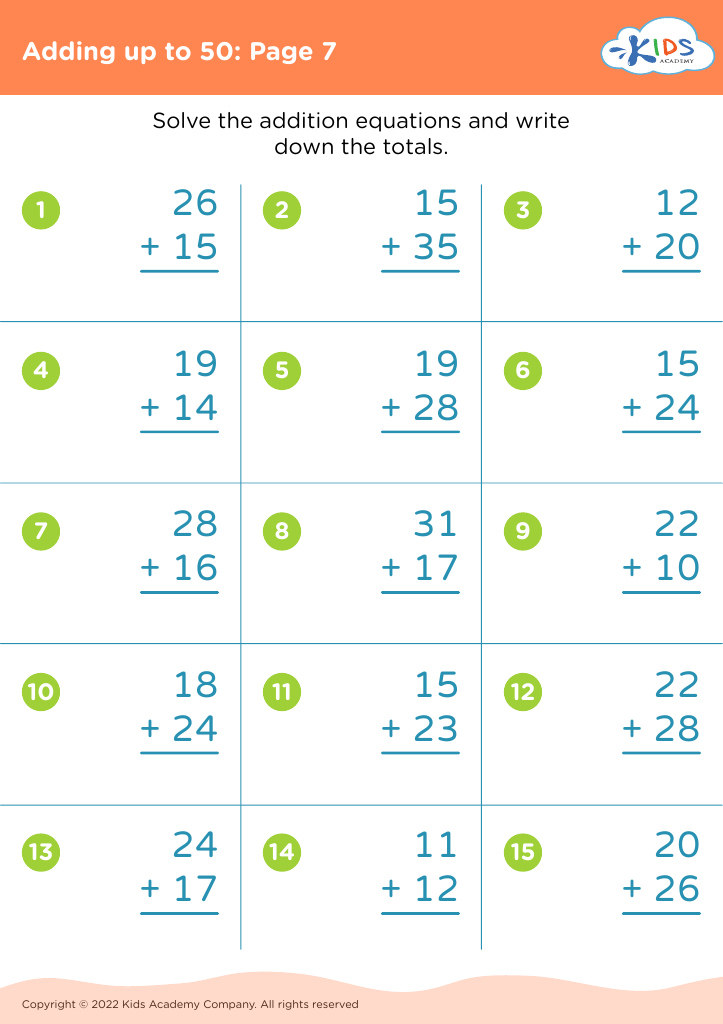
Adding up to 50: Page 7

Adding up to 50: Page 7

Adding up to 50: Page 7
Worksheet
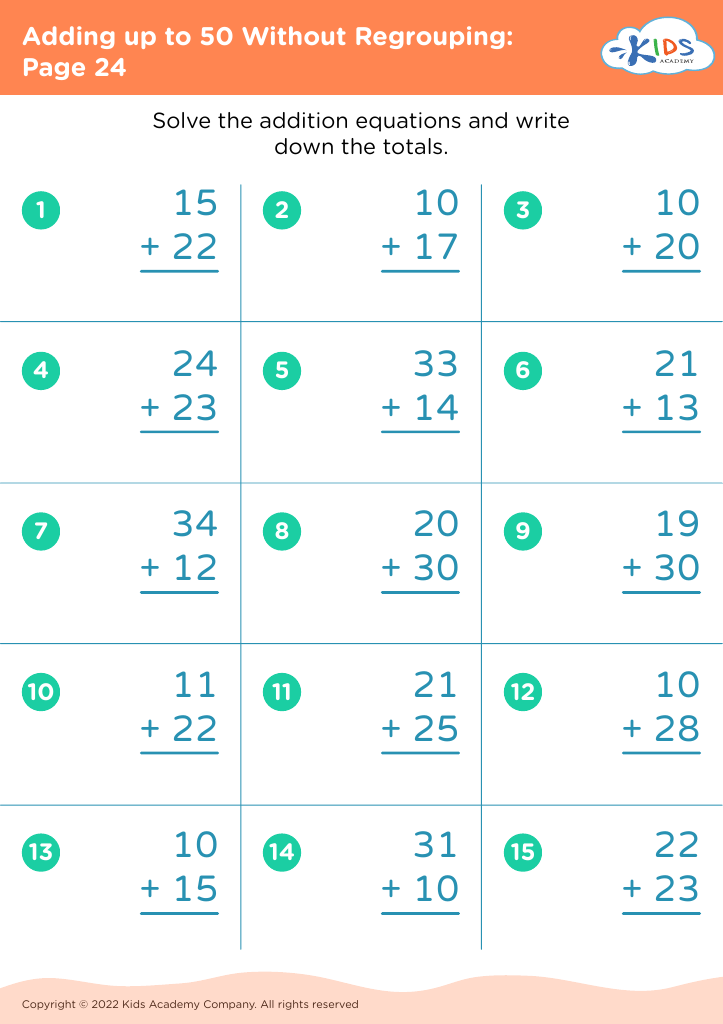
Adding up to 50 Without Regrouping: Page 24
Worksheet
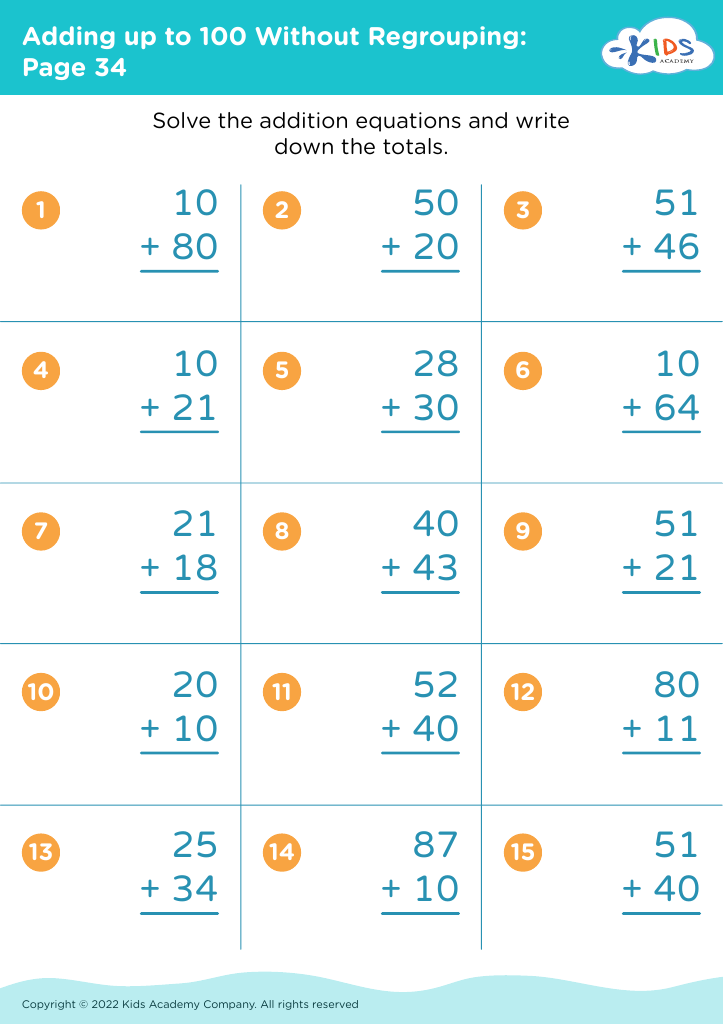
Adding up to 100 Without Regrouping: Page 34
Worksheet
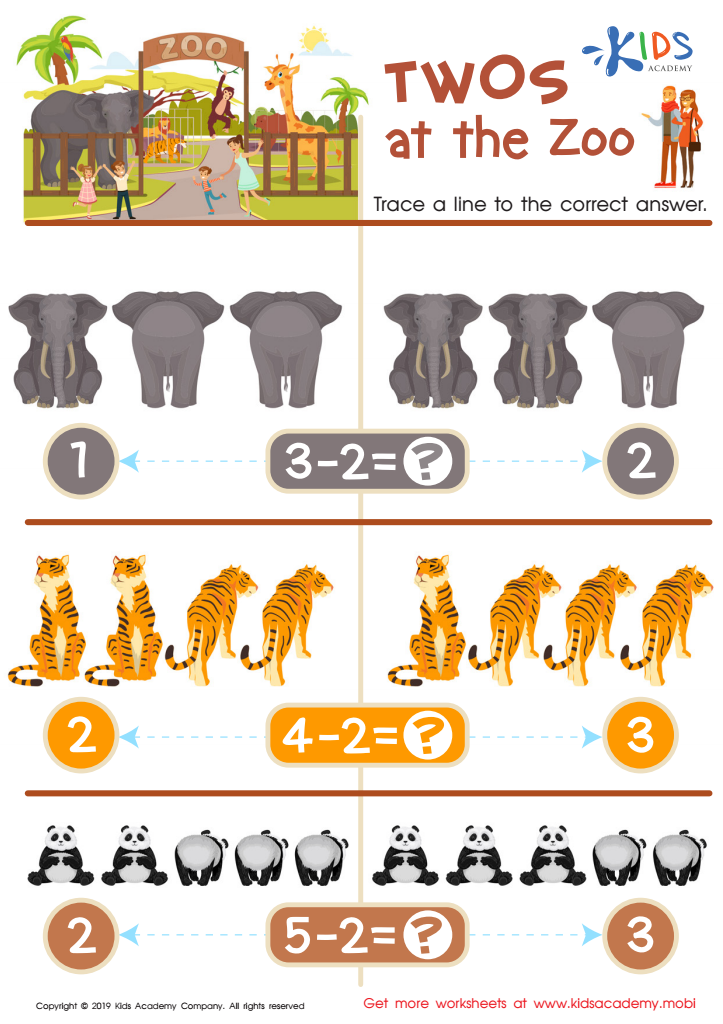
Twos at the Zoo Worksheet

Twos at the Zoo Worksheet

At the zoo, your kids can have fun with animals. Ask them to name their favorite ones and identify them in the printout. Count animals in each group together, then help your kids solve the equations and trace a line to the answer. It's an enjoyable way to combine learning and exploration!
Twos at the Zoo Worksheet
Worksheet
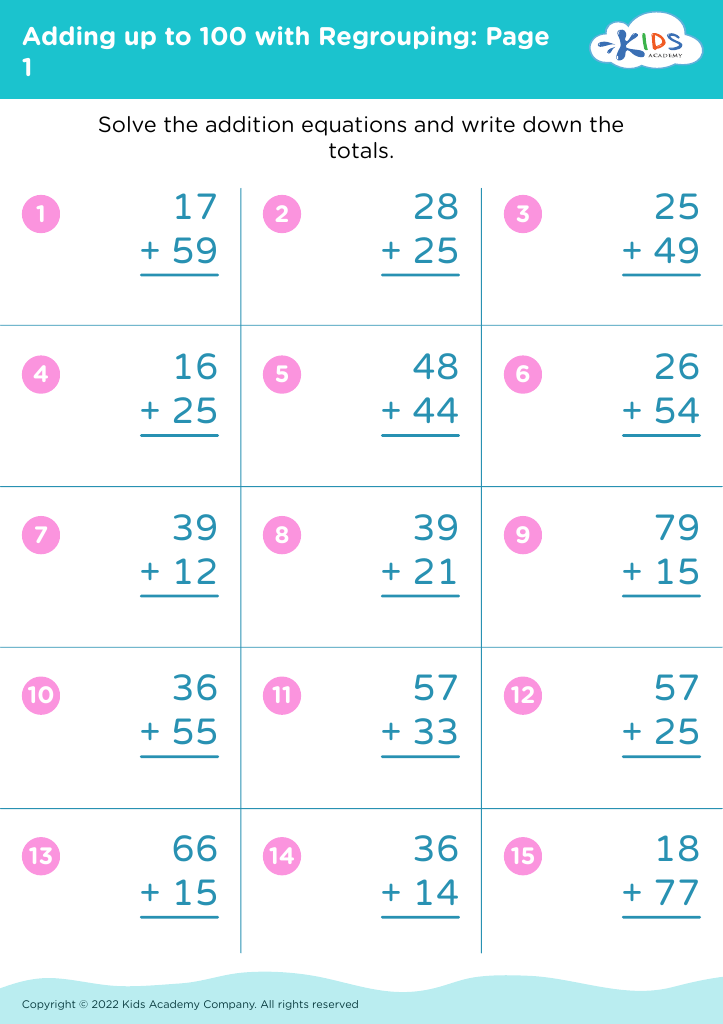
Adding up to 100 with Regrouping: Page 1
Worksheet
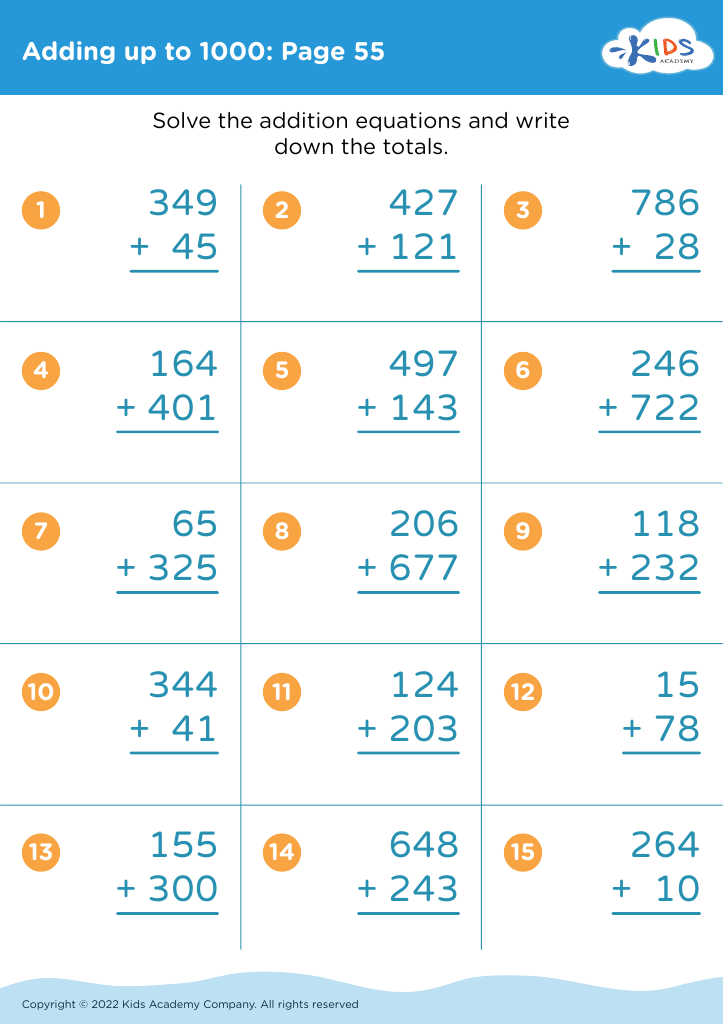
Adding up to 1000: Page 55

Adding up to 1000: Page 55

Adding up to 1000: Page 55
Worksheet
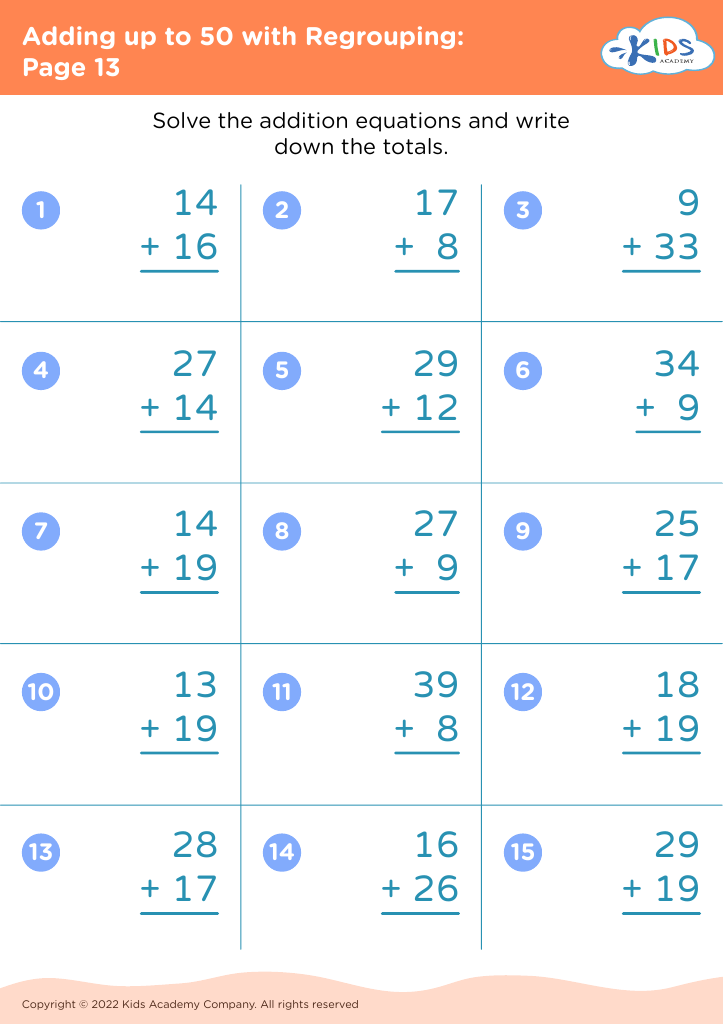
Adding up to 50 with Regrouping: Page 13
Worksheet


Understanding patterns in addition and subtraction is crucial for children ages 6-9 as it lays the groundwork for their mathematical proficiency. At this developmental stage, children are moving from concrete to more abstract mathematical concepts. Recognizing patterns helps them identify relationships between numbers, which enhances their problem-solving skills and fosters a deeper understanding of arithmetic.

When children see that adding or subtracting a certain number often follows a predictable sequence, it makes math less intimidating and more engaging. For instance, they might notice that adding two increases an even number to the next even number, helping to cement the concepts of parity and reinforcing reasoning skills. Parents and teachers who emphasize these patterns can guide children toward finding efficient methods for completed calculations, furthermore enhancing their confidence in math.

Additionally, this understanding improves mental math abilities and prepares children for higher level concepts such as multiplication and division, where patterns become even more significant. Overall, fostering a love for patterns during this critical stage not only strengthens mathematical understanding but also supports critical thinking, problem-solving, and future success in all areas of learning.