Comparing numbers Addition Worksheets for Ages 6-9
4 filtered results
-
From - To
Unlock the magic of math with our "Comparing Numbers Addition Worksheets for Ages 6-9". Carefully designed to blend fun with learning, these worksheets help children master comparing numbers while honing their addition skills. Perfectly matched for early learners, our resources encourage critical thinking, problem-solving, and a love for numbers. By combining vibrant illustrations with engaging exercises, kids improve their mathematical fluency and confidence. Ideal for classroom activities or homeschooling, these worksheets provide a foundation for future math success. Equip your child with the tools to excel in math with Kids Academy's expertly crafted learning materials.
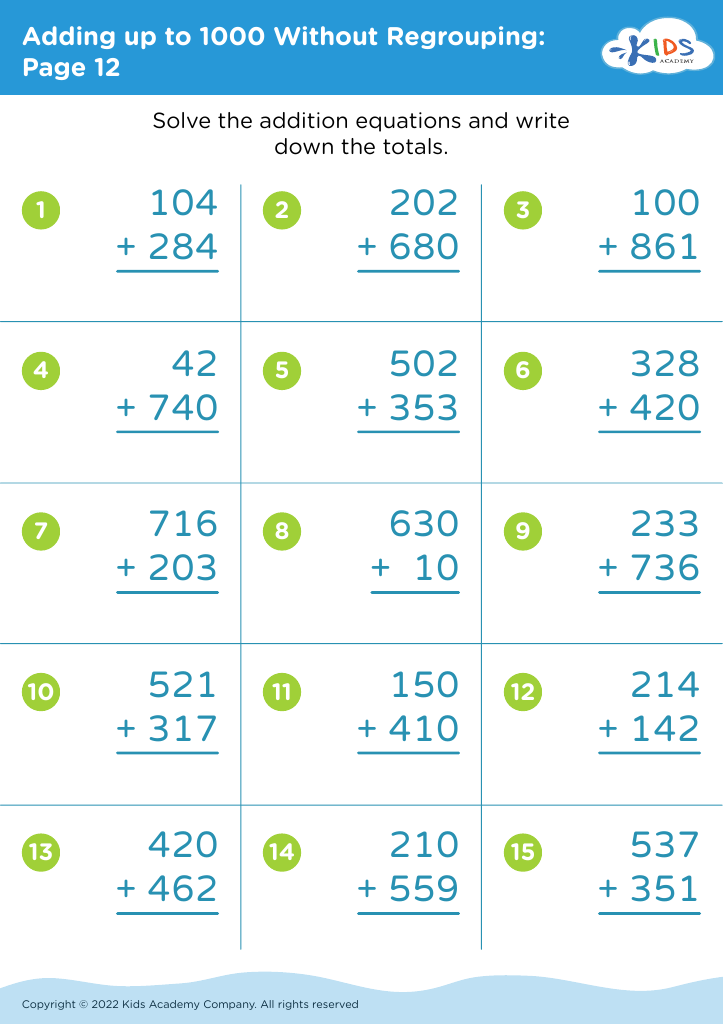
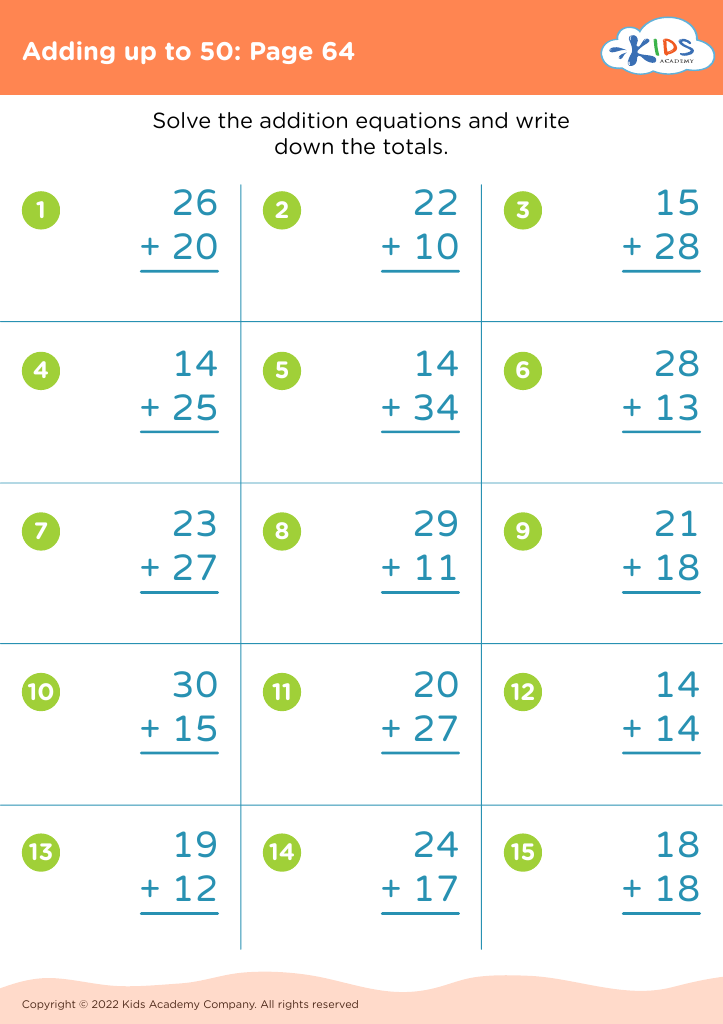
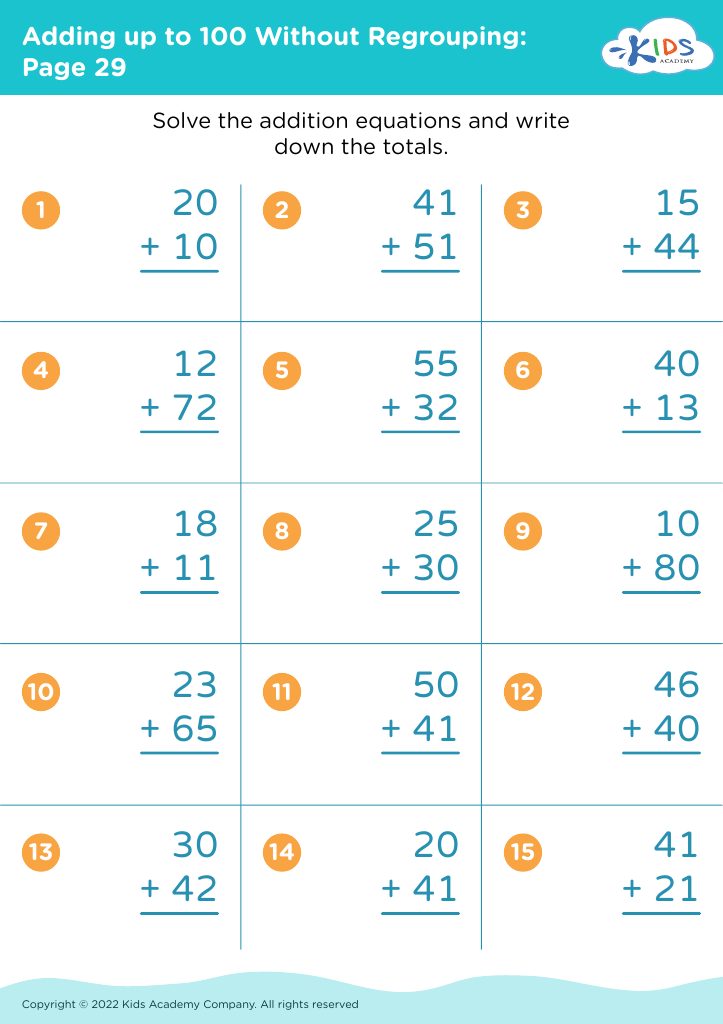
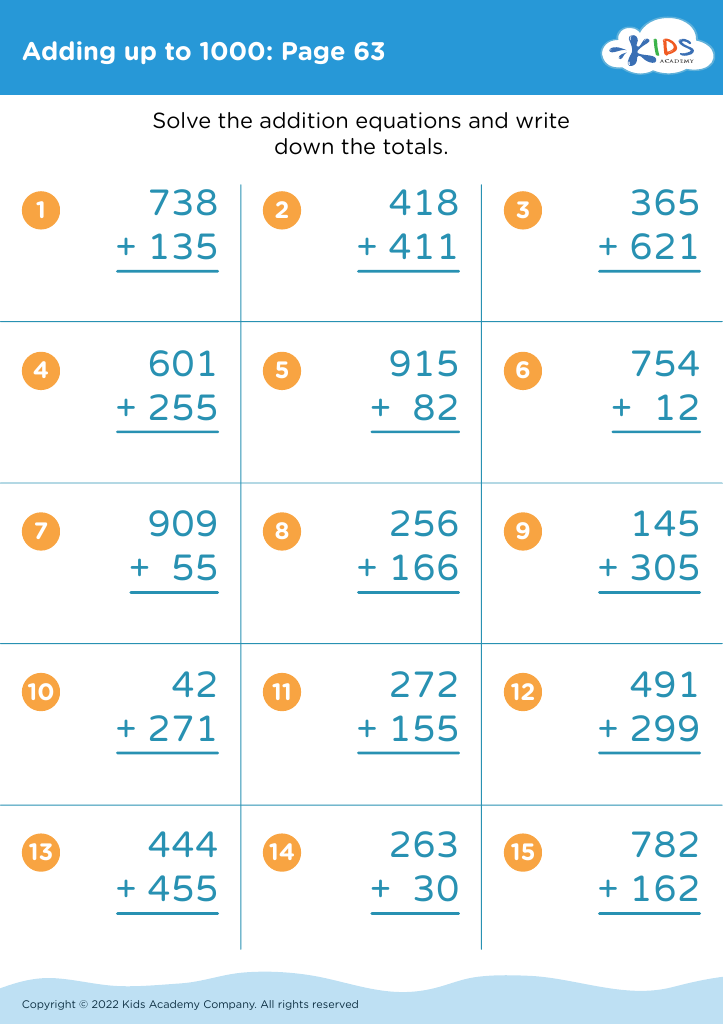








Parents and teachers should care about comparing numbers and addition for children ages 6-9 because these fundamental math skills are the building blocks for future mathematical understanding and everyday problem-solving. At this developmental stage, kids are primed to grasp basic concepts, and mastering these early can increase their confidence and competence in math.
Comparing numbers helps children understand numerical relationships and the concepts of greater than, less than, and equal to. This ability is crucial for everything from simple arithmetic to more complex math problems they will encounter later. Moreover, it fosters logical thinking and analytical skills, which are vital not just in math, but in science, technology, and even critical aspects of day-to-day decision-making.
Addition is equally important, as it forms the basis for almost all other arithmetic operations, including multiplication and algebra. Proficiency in addition enables children to perform calculations quicker and more accurately, aiding them in academic pursuits and practical scenarios, such as handling money or planning. When children become comfortable with these math skills at an early age, it lays a strong foundation for their educational journey, making future learning less daunting and more enjoyable. Therefore, instilling these skills early enhances cognitive development and sets children up for long-term success.








