
Critical thinking development Addition Worksheets for Ages 6-9
3 filtered results
Difficulty Level
Grade
Age
-
From - To
Subject
Activity
Standards
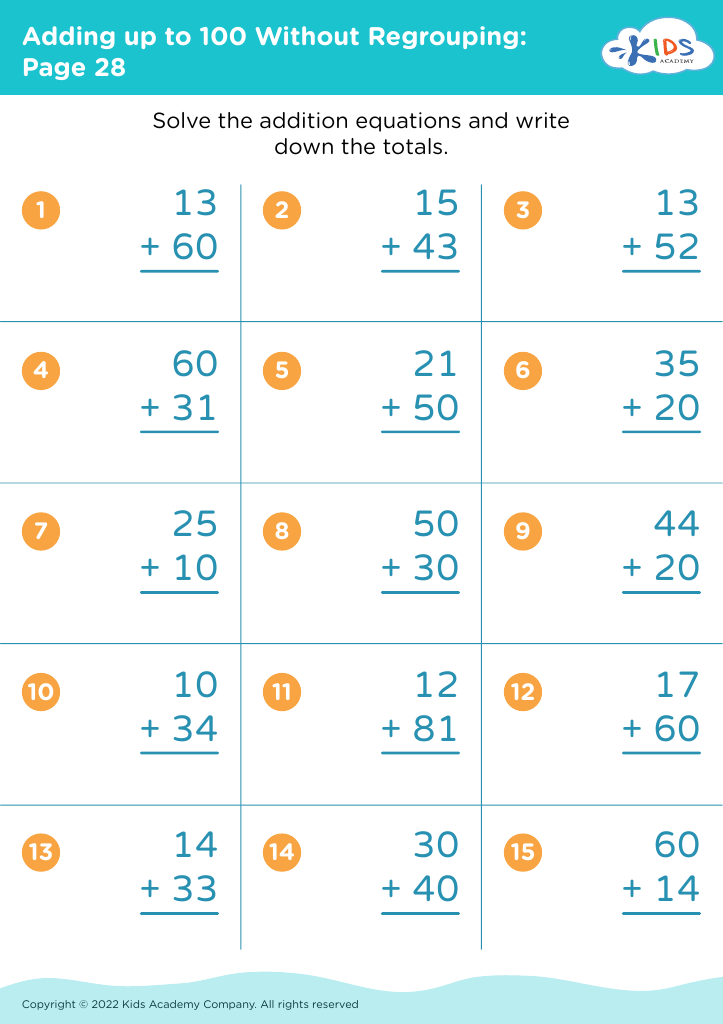
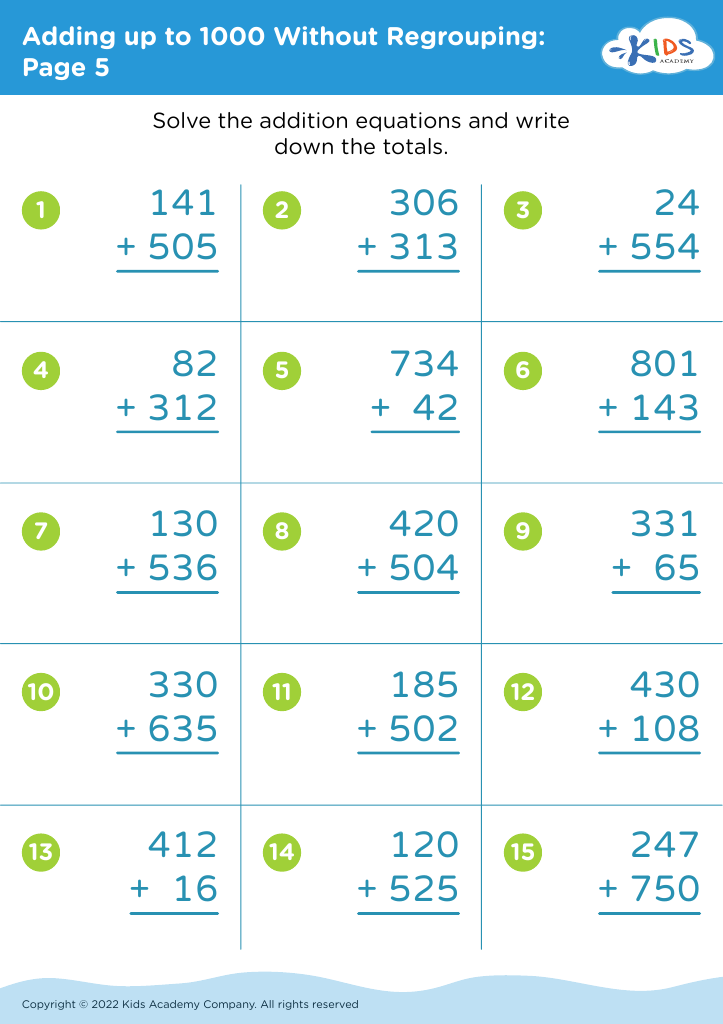
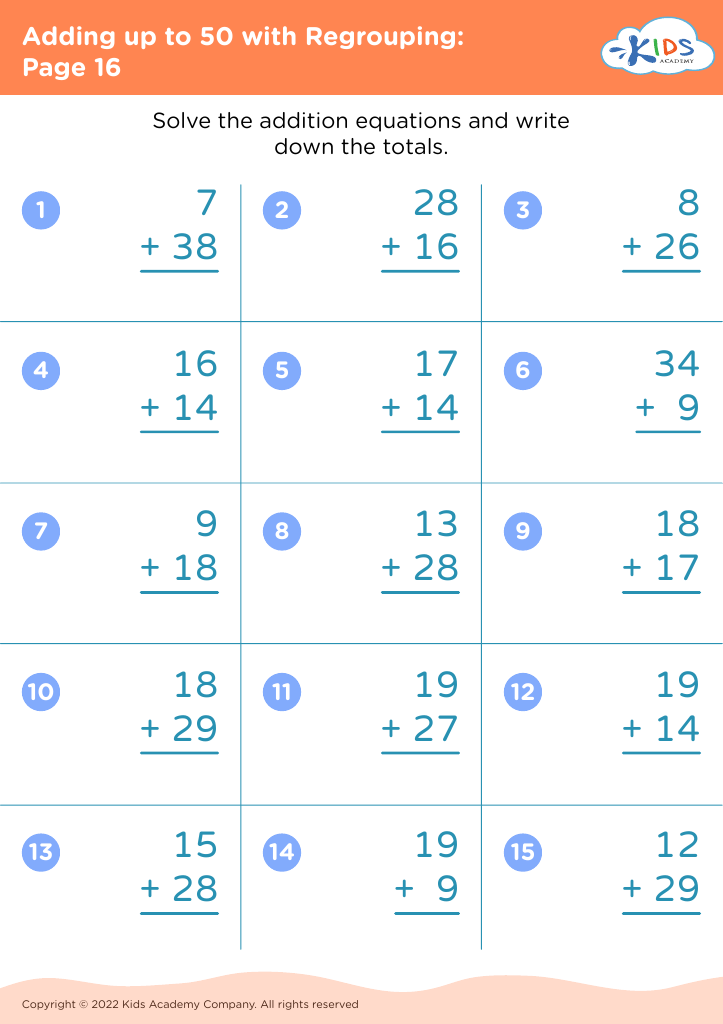
Discover our "Critical Thinking Development Addition Worksheets for Ages 6-9," designed to enhance your child's math skills while promoting analytical thinking. These engaging worksheets combine traditional addition exercises with stimulating problem-solving activities to boost your child's logical reasoning and cognitive abilities. Perfect for young learners, our printable worksheets not only reinforce fundamental math concepts but also encourage students to think critically, solve problems efficiently, and make informed decisions. Ideal for both classroom and homeschool settings, our resources foster a love for learning and prepare children for academic success by nurturing their critical thinking aptitude.
Favorites
With answer key
Interactive
Join Kids Academy for Free
Who is primarily going to use this learning content?








Critical thinking is an essential skill for children, setting the foundation for their future learning and decision-making abilities. For ages 6-9, the development of this skill is particularly crucial as children transition from early childhood into more structured learning environments. Encouraging critical thinking at this stage means helping children learn how to analyze information, solve problems creatively, and make informed decisions.
When parents and teachers focus on developing critical thinking in children, it fosters a sense of curiosity and love for learning. It teaches kids to ask questions and think for themselves rather than just memorizing facts. This form of thinking stimulates brain development and enhances cognitive abilities, which contributes to better performance in school and other activities.
Moreover, critical thinking skills enable children to evaluate situations, understand consequences, and empathize with others. As a result, they'll make better decisions, maintain healthier relationships, and handle conflicts more effectively. These competencies extend beyond academics, equipping children with the tools they need to navigate the complexities of life.
Incorporating critical thinking in math problems also deepens understanding. Instead of merely executing arithmetic operations, children learn to reason through each step, giving them stronger conceptual comprehension and proficiency. Early investment in critical thinking ultimately prepares children for a complex world, ensuring their long-term success and well-being.








